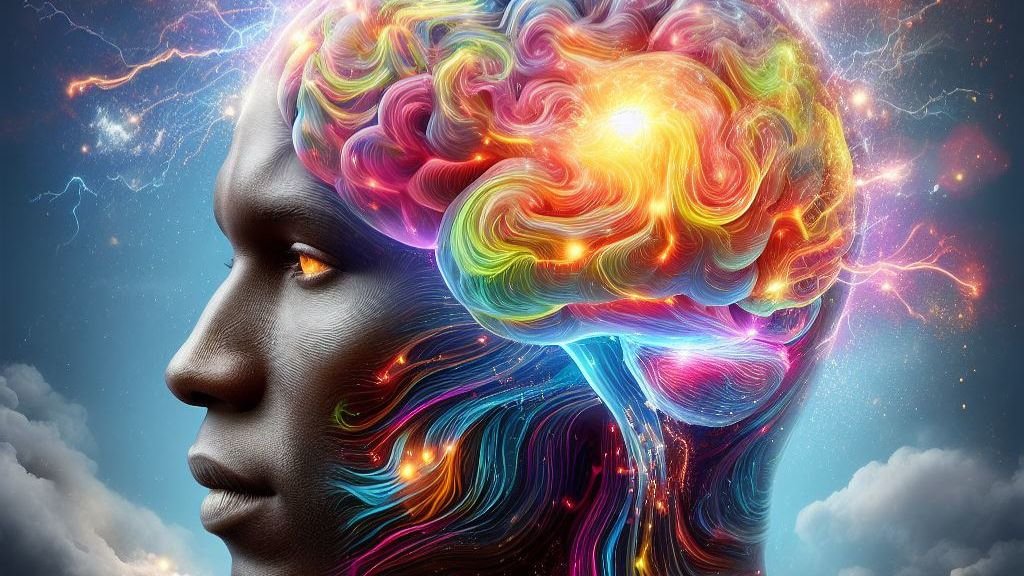

Most of us grow up with a simple story: your brain makes your mind, and when the brain stops, the lights go out. It sounds tidy, scientific, and safe. But as neuroscience and physics dig deeper into reality, that tidy story is starting to look more like a rough draft than a final explanation.
There’s a wild, unsettling alternative: maybe consciousness isn’t something the brain produces, like electricity from a power plant. Maybe it’s something more like the internet, already there, with the brain acting as a router or receiver. That idea pushes against almost everything many people think they know about science, death, and what it means to be alive – and yet, it refuses to go away.
The Cracks in the “Brain Creates Mind” Story
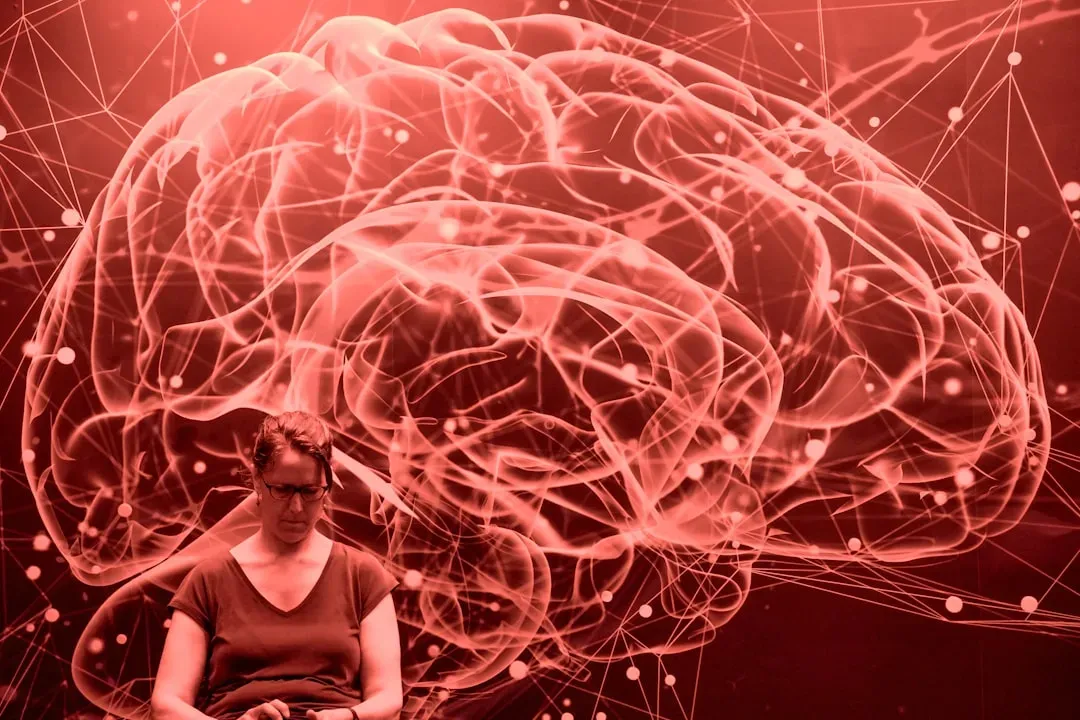
Let’s start with the standard view: consciousness is an emergent property of complex brain activity. In plain language, once neurons get complicated enough, boom – subjective experience appears. Sounds reasonable, but when scientists actually try to explain how electrical spikes in brain tissue become the feeling of tasting coffee or remembering your childhood bedroom, the explanation falls apart.
Neuroscientists have mapped countless brain regions and measured patterns linked to perception, memory, and decision-making. They’ve found correlations almost everywhere. But correlation is not the same as explanation, and the hard question remains untouched: how do physical processes give rise to a first-person inner life at all? So far, no widely accepted theory can bridge this gap in a testable, detailed way, and that “hard problem” is what pushes some serious thinkers to consider that maybe the brain is not the whole story.
Panpsychism: Consciousness as a Fundamental Feature of Reality

One of the boldest ideas gaining attention is panpsychism – the view that consciousness, in extremely simple forms, is a basic property of the universe, much like mass or charge. On this view, even fundamental particles might have rudimentary “proto-experiences,” nothing like human awareness but still some tiny glimmer of subjectivity. Complex brains then organize and integrate these basic bits into the rich, unified consciousness we recognize as our own.
It sounds almost spiritual, but many modern versions of panpsychism are strictly naturalistic: no magic, no miracles, just a different starting assumption about what exists. The appeal is that it sidesteps the impossible leap from dead, unconscious matter to vivid experience by saying experience was never completely absent in the first place. Instead of being an unlikely byproduct, consciousness becomes woven into the fabric of reality, with brains functioning more like mirrors or amplifiers than factories.
Is the Brain a Receiver Rather Than a Generator?
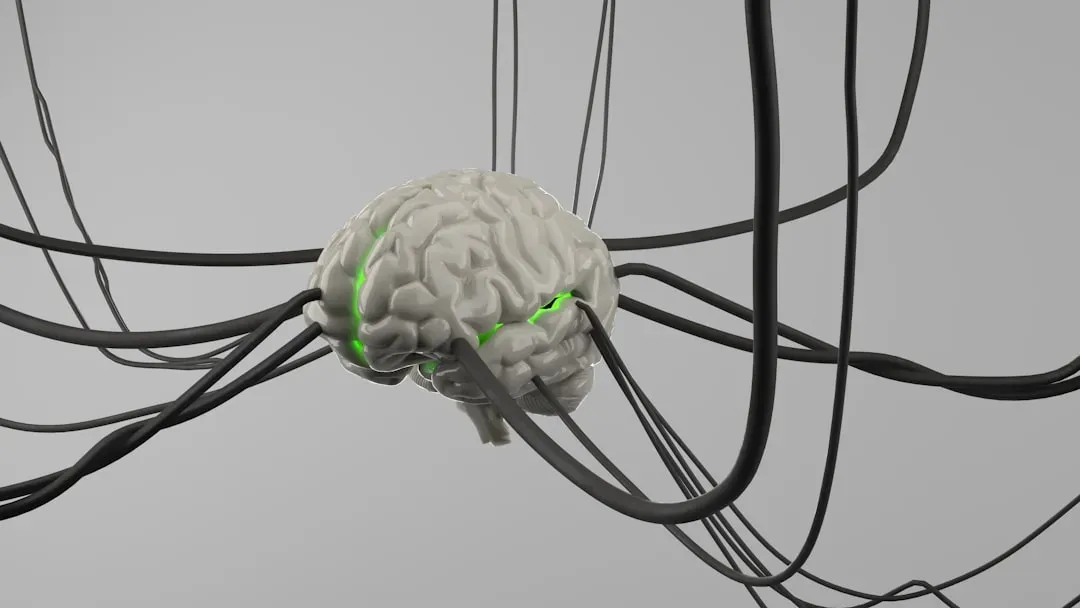
If consciousness permeates the universe, the brain might not be producing it out of nothing, but tuning into it. Think of a radio: destroy the radio, and the music stops in your living room, but the signal is still broadcast in the air. Some researchers and philosophers use this kind of metaphor to suggest that when the brain is damaged, the capacity to receive or organize consciousness breaks down, even if consciousness itself is more fundamental and not limited to the skull.
This idea might help explain certain puzzling phenomena, like cases where people show surprisingly normal cognition with drastically reduced brain tissue, or near-death experiences reported during periods of minimal brain activity. These reports are controversial and not straightforward proof of anything, but they create enough tension with the simple “brain-as-generator” model that alternative frameworks get a second look. The receiver model doesn’t solve everything, yet it flips the default assumption of where the “signal” of awareness comes from.
Quantum Puzzles and the Role of the Observer
Physics adds its own layer of weirdness to the story. In quantum mechanics, the act of measurement seems to “collapse” a range of possibilities into a concrete outcome. For decades, this raised the difficult question of what exactly counts as an observer and whether consciousness plays any special role in that process. While many physicists now avoid linking consciousness directly to quantum measurement, the question never fully disappears because quantum theory still leans heavily on the idea of observation and information.
Some speculative models suggest that consciousness and the fundamental structure of reality might be deeply entangled, not in a mystical sense, but in a technical one, where information and awareness are inseparable aspects of the same underlying process. None of these ideas are settled science, and many are hotly debated, but the persistent link between observation, information, and physical states keeps consciousness from being an easy side note in physics. Instead, it keeps poking at the edges of how we think the universe actually works.
Integrated Information and the Idea of a Conscious Universe
One of the most discussed scientific theories of consciousness today is Integrated Information Theory (IIT). It argues that consciousness corresponds to how much and how irreducibly information is integrated in a system. The more tightly and uniquely a system weaves information together, the more conscious it is. A human brain, with its vast interconnected networks, scores extremely high on this scale.
Here’s the twist: if IIT is right in its broad outline, then any system with non-trivial integrated information has some degree of consciousness, however tiny. That would mean not just animals, but potentially even very simple networks or structures could possess a flicker of subjective experience. This nudges science toward a picture where consciousness isn’t a rare latecomer, but a graded property of organized matter throughout the universe. Brains, in that view, are simply intense hubs in a much wider ocean of awareness.
Spiritual Traditions and Modern Science Crossing Paths

Long before brain scans and quantum equations, many spiritual and philosophical traditions described consciousness as fundamental and universal. They talked about reality as a kind of shared field of awareness, with individual minds being like waves on a vast ocean. For a long time, mainstream science and these views lived on completely separate islands, often dismissing each other outright.
Now, though, the conversation is shifting. Not because science is suddenly becoming religious, but because some rigorous theories and puzzling data happen to echo what those traditions have claimed in more poetic language. While scientists and philosophers still demand testable models and clear definitions, the knee-jerk dismissal of anything that sounds “universal” or “field-like” about consciousness is softer than it used to be. It’s a strange twist when ancient meditation manuals and modern neuroscience papers start sounding like they’re at least talking about similar questions, even if their answers differ.
Why This View of Consciousness Changes Everything
If consciousness really does permeate the universe, the implications are huge. It would mean we’re not isolated minds trapped in meat machines, but localized expressions of a deeper, shared reality. Our sense of separation might be more like a user interface than a final truth, a useful illusion that helps us navigate daily life but hides the roots of what we are.
That shift could ripple into how we treat animals, ecosystems, and even technology, if we start to see consciousness not as a rare luxury but as something more widespread. It might also soften the fear of death for some people, if they start to think of consciousness as something they participate in rather than own. At the very least, it forces us to admit we don’t fully understand what awareness is or where it comes from, and that humility might be the most important step toward genuinely figuring it out.