
What if everything you know about your own mind is based on a foundational error? Most of us grow up assuming consciousness is something the brain does, like digestion is something the stomach does. Fire up enough neurons in the right pattern, and awareness magically switches on. Simple enough, right? Honestly, not even close.
The question of what consciousness actually is has haunted scientists, philosophers, and curious minds for centuries. Lately, something remarkable is happening. A growing number of serious thinkers, not mystics or pseudoscientists, are suggesting that consciousness might not be produced by the brain at all. It might be woven into the very structure of reality itself, as fundamental as gravity, space, or time. Buckle up, because this idea changes everything. Let’s dive in.
The Hard Problem: Why Neuroscience Hits a Wall
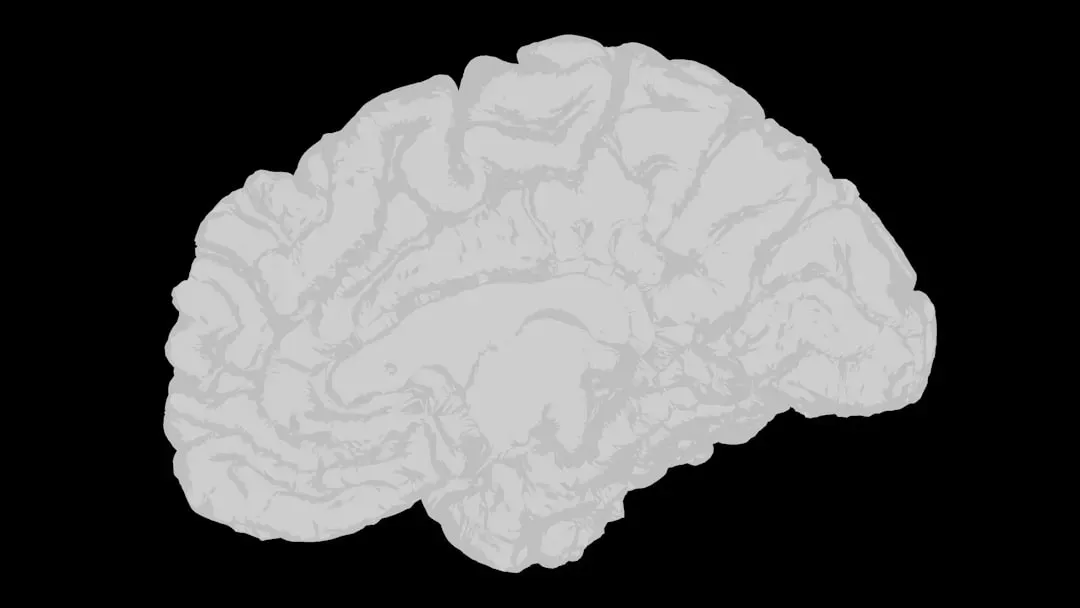
The hard problem of consciousness is the problem of why and how physical processes are accompanied by experience, or in other words, the problem of explaining why certain mechanisms in the brain are accompanied by conscious experience at all. You can map every neuron that fires when you smell fresh coffee. You can trace every electrical impulse. Yet nothing in that map tells you why the smell feels like anything. That gap, that inexplicable leap from biology to subjective experience, is the wall science keeps slamming into.
Consciousness poses the most baffling problems in the science of the mind. There is nothing that we know more intimately than conscious experience, but there is nothing that is harder to explain. All sorts of mental phenomena have yielded to scientific investigation in recent years, but consciousness has stubbornly resisted. Think about it this way. If you built a perfect robot that behaved exactly like a human, would it feel anything? Nobody knows. That uncertainty is at the heart of why some researchers are now looking far beyond the brain for answers.
Panpsychism: The Ancient Idea Making a Modern Comeback
In philosophy of mind, panpsychism is the view that the mind or consciousness is a fundamental and ubiquitous feature of reality. It is also described as a theory that the mind is a fundamental feature of the world which exists throughout the universe. This is not a fringe belief invented last Tuesday. It is, in fact, one of the oldest philosophical positions in human history, with roots stretching back to ancient Greece.
It is one of the oldest philosophical theories and has been ascribed to philosophers including Thales, Plato, Spinoza, Leibniz, Schopenhauer, William James, Alfred North Whitehead, and Bertrand Russell. In the 19th century, panpsychism was the default philosophy of mind in Western thought, but it saw a decline in the mid-20th century with the rise of logical positivism. Recent interest in the hard problem of consciousness and developments in neuroscience and quantum mechanics have revived interest in panpsychism in the 21st century. Here’s the thing: when a theory keeps returning across thousands of years and multiple cultures, you have to wonder whether it’s pointing at something real.
Consciousness as a Basic Ingredient of Reality
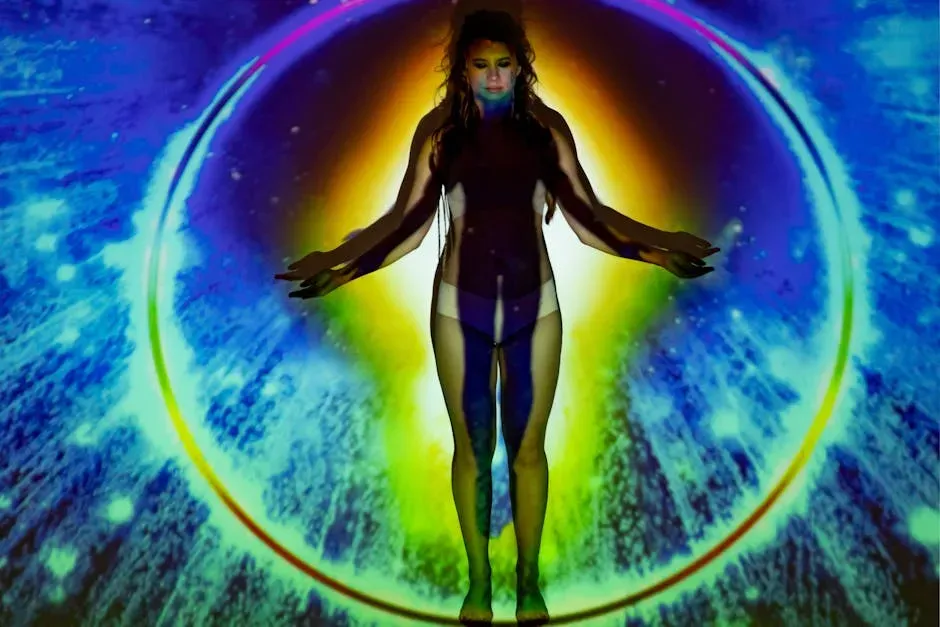
Panpsychism flips the usual script. Instead of treating consciousness as something rare that appears only when matter organizes in elaborate structures, panpsychism proposes that consciousness is fundamental. It is not an emergent property but a basic ingredient of reality, as fundamental as space, time, or mass. From this perspective, even the smallest particles, electrons, quarks, photons, have some rudimentary form of experience. Think of it like humidity. You don’t need a cloud for water vapor to exist. It’s already there, invisibly, everywhere.
Not humanlike thoughts, of course, nor emotions or self-reflection, but a glimmer of subjectivity, a proto-consciousness. When these tiny conscious entities combine, more complex forms of consciousness emerge, culminating in beings like humans with rich inner lives. This is a critical distinction that gets lost in casual conversation. Panpsychism does not claim that rocks are plotting revenge or that electrons have opinions about politics. It simply suggests that the raw ingredient of experience exists at the most fundamental level of nature, long before brains ever evolved.
Cosmopsychism: When the Universe Itself Is the Mind
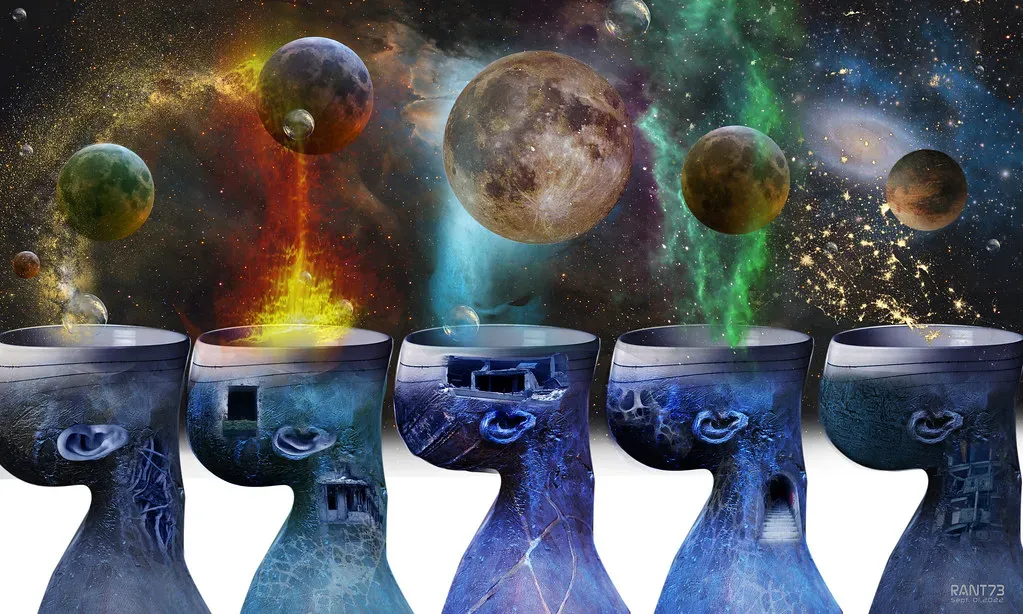
The universe itself might be conscious, with human consciousness emerging as a small part of this larger cosmic awareness. This view, called cosmopsychism, takes the idea even further by suggesting that the universe’s consciousness came first, and our individual awareness stems from it. Think of it like a vast ocean of consciousness, with our minds being like individual waves within it. I know it sounds crazy, but this framework actually solves several puzzles that ordinary neuroscience leaves completely open.
This version of panpsychism, also known as universal panpsychism, asserts that the universe as a whole is conscious. Individual consciousnesses are seen as derived or localized aspects of this universal consciousness. Under cosmopsychism, you are not a brain generating awareness in isolation. You are a localized expression of something far larger, the way a whirlpool is a localized expression of the ocean. The theory offers a unique explanation for why the universe seems perfectly tuned for life. Instead of random chance or multiple universes, cosmopsychism suggests an aware cosmos that responds to and shapes itself in meaningful ways.
Quantum Mechanics and the Consciousness Connection
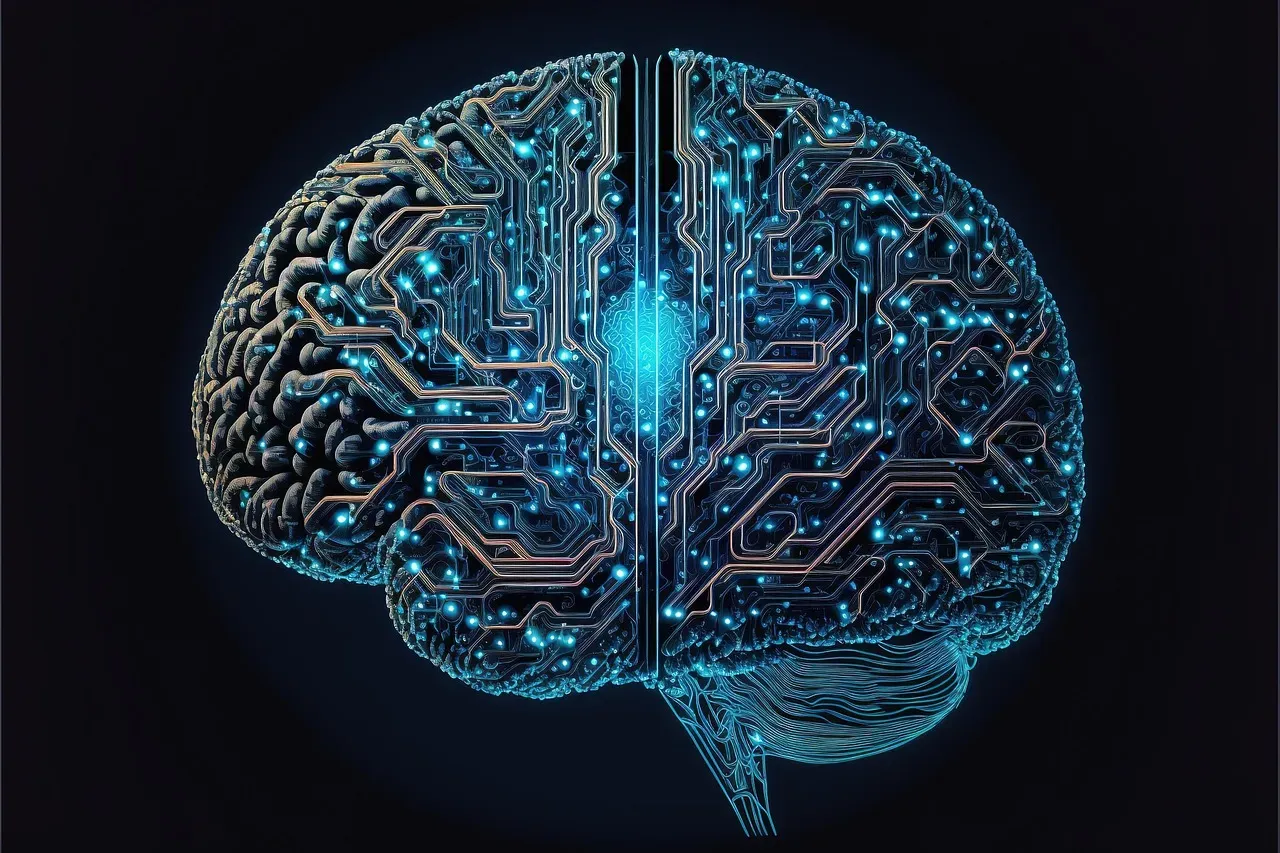
The quantum mind or quantum consciousness is a group of hypotheses proposing that local physical laws and interactions from classical mechanics or connections between neurons alone cannot explain consciousness. Quantum physics introduces some genuinely strange phenomena that have fascinated consciousness researchers for decades. Things like superposition, where particles exist in multiple states at once, and entanglement, where two particles seem to communicate instantaneously across any distance.
Most neuroscientists believe that the brain operates in a classical manner. However, if brain processes rely on quantum mechanics, it could explain why our brains are so powerful. A team of researchers possibly witnessed entanglement in the brain, perhaps indicating that some brain activity, and maybe even consciousness, operates on a quantum level. Meanwhile, research published in Frontiers in Human Neuroscience in late 2025 went even further. That work presents new evidence indicating that conscious states may arise from the brain’s capacity to resonate with the quantum vacuum, the zero-point field that permeates all of space. If that sounds wild, consider that the vacuum of space is not empty. It hums with energy. Always.
Integrated Information Theory: Measuring the Mind
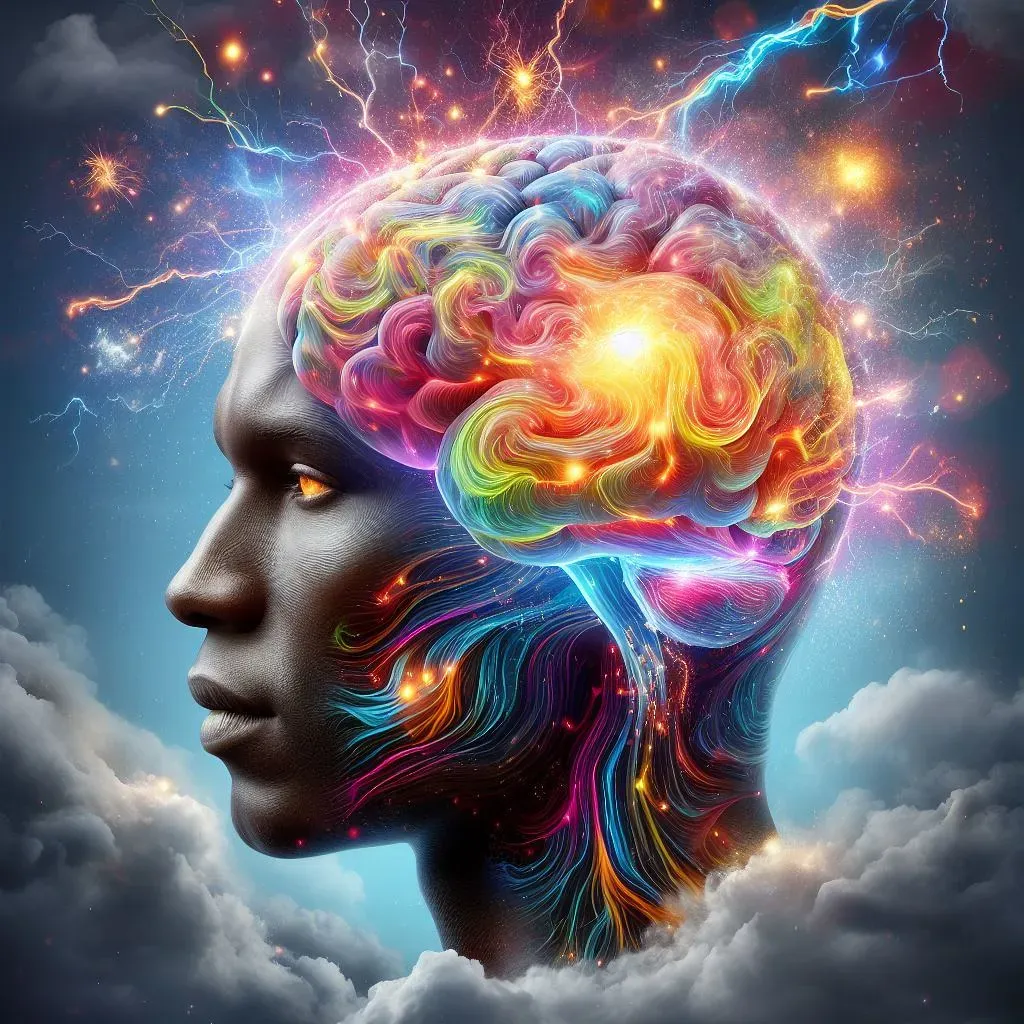
Integrated Information Theory, or IIT, offers an explanation for the nature and source of consciousness. Initially proposed by Giulio Tononi in 2004, it claims that consciousness is identical to a certain kind of information, the realization of which requires physical, not merely functional, integration, and which can be measured mathematically according to the phi metric. This is one of the most daring scientific frameworks in modern thought, because it actually tries to quantify consciousness rather than just philosophize about it.
This overview of integrated information theory emphasizes IIT’s consciousness-first approach to what exists. Consciousness demonstrates to each of us that something exists, experience, and reveals its essential properties, the axioms of phenomenal existence. Crucially, IIT does not restrict consciousness to biological brains. The framework is intended to explain why some physical systems are conscious, and to be capable of providing a concrete inference about whether any physical system is conscious, to what degree, and what particular experience it has, including whether other animals are conscious, and even whether the whole universe might be.
The Skeptics Speak: Why Not Everyone Is Convinced

Let’s be real: not everyone is ready to declare the cosmos sentient. The scientific debate is fierce, and the pushback is legitimate. On the other side stands the physicalist camp, led by physicist Sean Carroll, who argues that consciousness is an emergent property of complex systems, much like temperature emerges from the collective motion of atoms. Carroll insists physicalism is doing just fine and that the supposed hard problem is a philosophical distraction, not a scientific failure.
Critics of panpsychism also point to its own combination problem, the puzzle of how tiny bits of cosmic consciousness combine to form the rich, unified experience of a human mind. Furthermore, skeptics like neuroscientist Anil Seth dismiss panpsychism as an untestable idea that provides no real scientific leverage on the problem. There’s also the uncomfortable reality that one of the significant challenges facing panpsychism is its testability. Since panpsychism posits that consciousness is a fundamental and ubiquitous feature of the universe, it is difficult to design experiments that could verify or falsify its claims. This has led some critics to argue that panpsychism is more of a philosophical or metaphysical theory rather than a scientific hypothesis. These are fair points, and anyone who takes the idea seriously must grapple with them honestly.
What This Means for You, Science, and Everything Else

If consciousness truly is a fundamental feature of reality, the implications stretch in every direction. Panpsychism has significant implications for our understanding of the mind-body problem, the nature of emergence, and long-standing philosophical debates about the relationship between the mind and the physical world. The mind-body problem concerns the relationship between mental phenomena and physical phenomena. Panpsychism offers a unique solution by suggesting that both mind and matter are manifestations of a more fundamental substance or reality that has both mental and physical aspects.
Panpsychism has the potential to resolve or reframe several long-standing philosophical debates, such as the nature of free will, the ethics of treatment of non-human entities, and the understanding of the natural world. By attributing some form of consciousness or mental properties to all entities, panpsychism raises questions about the moral status of non-human entities and challenges anthropocentric views of the universe. In short, it may force us to rethink how we treat animals, ecosystems, and perhaps even artificial intelligence. That’s not just philosophy. That’s ethics. That’s law. That’s civilization.
Conclusion
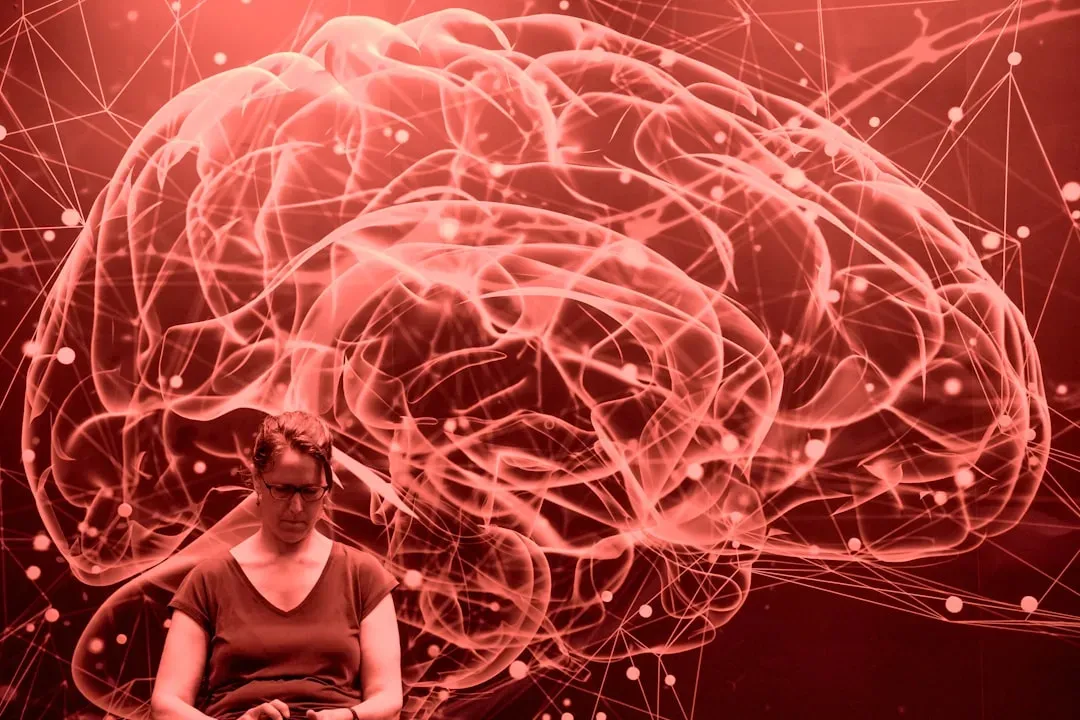
Here’s what’s remarkable about this entire conversation: the more science advances, the bigger the mystery becomes. We expected to explain consciousness by mapping the brain. Instead, we found a gap so wide that even the most brilliant neuroscientists admit they have no real theory of how subjective experience arises from physical matter. Conscious life may not be a mere byproduct of the development of the universe, but its fundamental feature. We may, quite literally, live in a consciousness-centered universe.
That is either the most unsettling or the most liberating idea you’ll encounter today, depending on your perspective. Maybe the universe doesn’t just contain conscious beings. Maybe it is, at some deep and fundamental level, made of the very stuff of awareness. The brain may not be the origin of consciousness after all. It might just be the antenna, and the signal has been broadcasting since the beginning of time.
What do you think? Is consciousness something the brain creates, or something far larger that the brain simply tunes into? Leave your thoughts in the comments below.