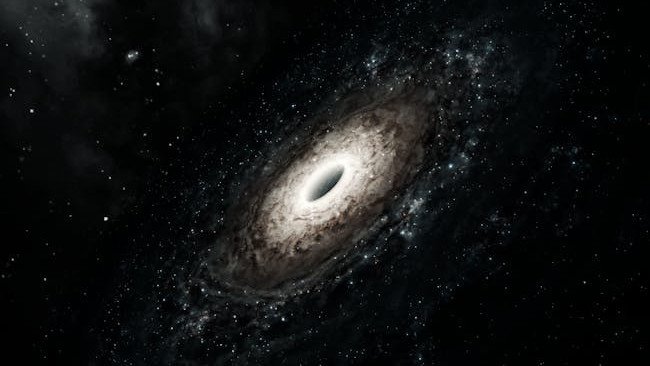

Imagine waking up one morning and realizing that consciousness is not just something that happens inside your skull, but a basic ingredient of reality itself, like space or time. That idea sounds wild at first, almost like something out of science fiction, yet in recent years more scientists and philosophers have started to treat it as a serious possibility. Instead of seeing consciousness as a rare accident produced by complicated brains, this view suggests that the universe might be saturated with some kind of mind-like quality from the very beginning.
I still remember the first time I read about this: I closed the book and just stared at the wall, feeling slightly dizzy, like someone had quietly pulled the floor from under my picture of reality. If consciousness really is woven into the fabric of the cosmos, then our usual division between “mind in here” and “world out there” starts to blur in surprising ways. You don’t have to agree with it, but it’s hard to deny how radically it reshapes questions about life, death, and what it means to be a self in an unimaginably vast universe.
The Hard Problem That Refuses To Go Away
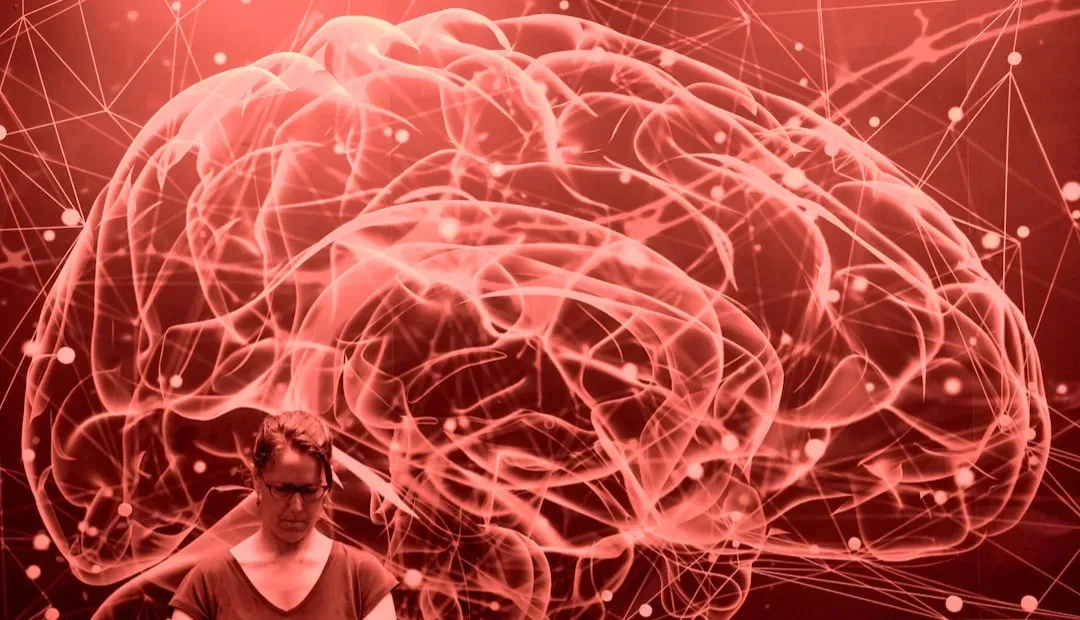
Here’s the unsettling part: even with all of modern neuroscience, nobody can properly explain why brain activity feels like something from the inside. We can map which regions light up when you see red, feel pain, or fall in love, but that only shows correlations, not the leap from electrical signals to lived experience. This gap is often called the “hard problem” of consciousness: how do physical processes give rise to the raw feeling of being you right now?
Many people hoped that as brain science progressed, the mystery would quietly dissolve, but that hasn’t really happened. Instead, the more precise our measurements become, the clearer it looks that we’re missing a deeper layer of explanation. The idea that consciousness might be fundamental doesn’t come from mystical wishful thinking; it comes from frustration with trying to squeeze inner experience out of matter that is treated as entirely dead and mindless. When a puzzle refuses to budge for decades, it’s natural to ask whether we’ve been framing the question too narrowly from the start.
From Brains Create Mind To Mind Is Everywhere
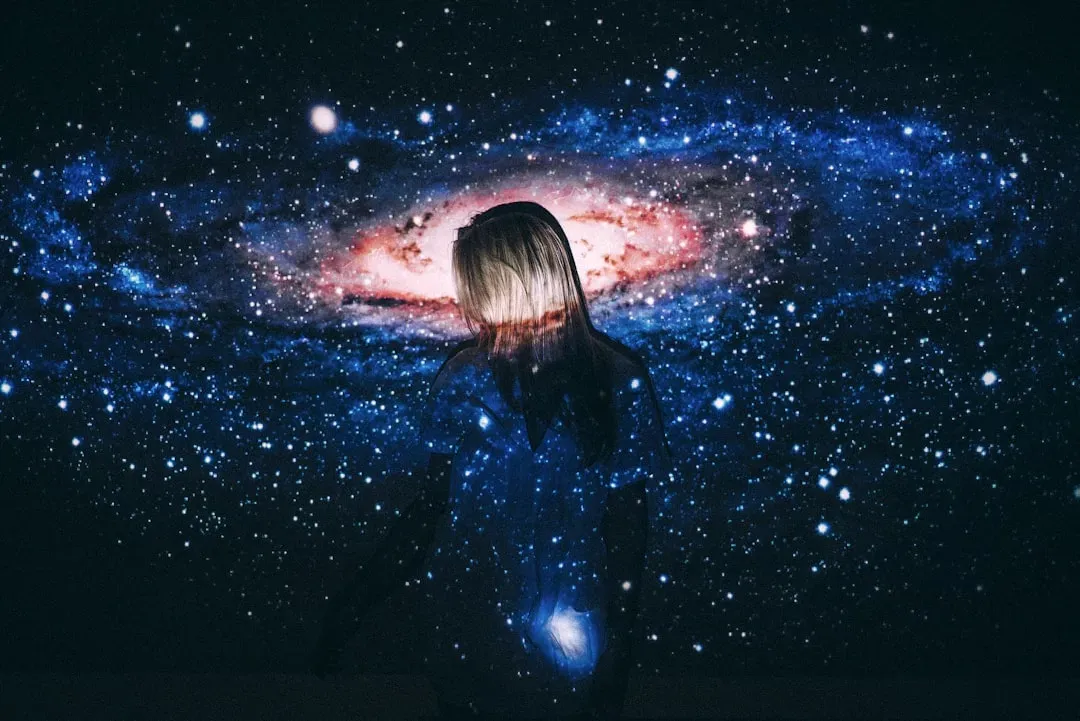
Our usual story about consciousness goes something like this: first, there’s a big, mostly empty universe made of dumb particles, and after billions of years they accidentally arrange themselves into complicated biological machines called brains, and these somehow “generate” consciousness. It’s a neat narrative, but it rests on the unspoken assumption that matter is entirely inert and mindless until a certain level of complexity appears. The alternative view flips that around and says that some primitive form of experience might exist all the way down, built into the most basic bits of reality.
This isn’t the same as claiming that rocks think or that atoms have opinions; it’s more like saying that what we call matter already has two faces: an outer, measurable side and an inner, experiential side. According to this perspective, complex consciousness in humans and animals would be what happens when vast numbers of these tiny, mind-like aspects become organized in especially rich ways. Instead of a miracle switch flipping on when brains evolve, consciousness would gradually thicken and deepen as the universe grows more structured. That may feel weird, but weirdness alone isn’t a good reason to ignore an idea that might actually solve a longstanding riddle.
Modern Physics Quietly Opened The Door
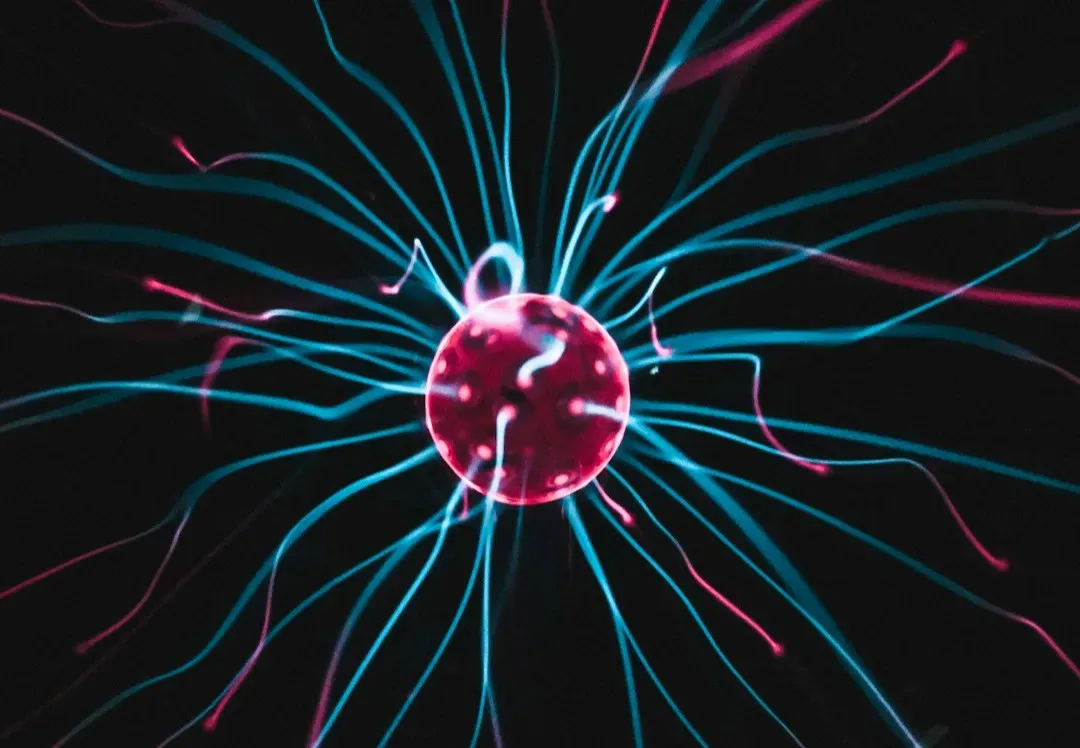
For a long time, physics treated the world as a collection of solid little billiard balls obeying strict laws, with no room for anything as slippery as consciousness. Then quantum mechanics came along and quietly blew that picture apart, suggesting that at the deepest level reality behaves like a cloud of possibilities rather than fixed objects. Measurement, observation, and information suddenly became central, and that made some thinkers wonder whether the act of observing is more deeply woven into the universe than we once believed.
To be clear, mainstream physics does not claim that consciousness magically collapses wave functions, and many experts push back hard against that idea. Still, the fact that the role of observers, probabilities, and information is so central in quantum theory has inspired fresh speculation about mind and matter belonging to the same underlying story. Some modern approaches even treat information as more fundamental than particles or fields, turning the universe into something closer to a cosmic computation than a static machine. If the world is, at bottom, a vast information process, some argue that conscious experience could be one of its intrinsic, irreducible features rather than a late-stage accident.
Panpsychism: The Once-Fringe Idea Making A Comeback

The notion that consciousness is fundamental is often linked to a philosophical position called panpsychism, which sounds outrageous until you look closer. Panpsychism doesn’t claim that every object has a complex mind; instead, it proposes that even the simplest physical systems have some extremely basic, proto-experiential aspect. Your brain doesn’t conjure consciousness out of nothing; it organizes and amplifies something already present in its building blocks.
What’s interesting is that this view was historically discussed by heavyweight thinkers, then faded, and is now quietly re-entering serious academic debates. As more philosophers accept that the hard problem may not be solvable by traditional, purely physical stories, panpsychism looks less like a bizarre outlier and more like a bold but coherent alternative. It tries to respect both sides of our situation: the success of physical science and the undeniable reality of subjective experience. You can think of it as a way of saying that the universe is not just made of stuff, but of stuff that always comes with at least a whisper of “what it is like” to be that stuff.
Integrated Information And The Shape Of Experience

Some researchers have tried to make this idea more concrete with mathematical theories of consciousness, one of the most talked-about being Integrated Information Theory. In simple terms, it suggests that consciousness corresponds to how much information a system both contains and integrates as a unified whole. According to this view, a system that has many parts influencing each other in a rich, irreducible way will have a stronger, more structured conscious experience.
Here’s where things get wild: if the theory is taken seriously, even simple systems might have a tiny trace of consciousness if they integrate even a small amount of information. That would mean consciousness isn’t an all-or-nothing switch but more like a spectrum, from faint glimmers in simple networks to the vivid inner life of a human mind. Critics argue that this stretches the meaning of consciousness too far, but supporters believe it offers a rare thing in this field: a testable framework. Whether or not the theory survives, it keeps alive the idea that the building blocks of reality might come with built-in capacities for experience.
Spacetime As A User Interface, Not Final Reality

Another provocative line of thought suggests that what we see as physical reality might be more like a simplified interface than the ultimate truth. The idea is that our perceptions evolved to track survival-relevant features, not to reveal the full underlying structure of the universe. In the same way a computer desktop shows icons instead of raw code, our senses might show us objects in space and time instead of revealing the deeper processes beneath.
If that’s the case, then consciousness would not be a byproduct of matter but something more fundamental that our “interface” hides behind familiar appearances. From this angle, saying that brains cause consciousness could be like saying a folder icon literally produces a file; it’s a convenient representation, not an explanation of the underlying system. While this might sound abstract, it pushes us to take seriously the idea that our usual categories of matter and mind are shaped by how our brains evolved, not by how reality ultimately is. On this view, consciousness is part of the underlying source code, not just a pretty image on the screen.
Life, Death, And The Possibility Of A Conscious Cosmos

If consciousness is a fundamental property of the universe, the meaning of being alive and dying shifts in subtle but powerful ways. It doesn’t magically guarantee personal immortality, and it doesn’t prove any religious doctrine, but it does change the emotional weight of the idea that “we come from nothing and go to nothing.” Instead of emerging from a purely dead universe, our conscious lives would arise from, and dissolve back into, a reality that is suffused with some form of experiential quality.
Thinking this way can make the universe feel less like a cold warehouse and more like an ocean with many patterns of awareness forming and fading over time. Individual selves could be seen as temporary whirlpools in a larger sea of consciousness, distinct for a while but never entirely separate from the whole. Some people find that image comforting; others find it unsettling because it challenges the sharp boundaries of the individual self. Either way, it nudges us to take seriously the idea that our inner life might be a local expression of something that goes far beyond the human story.
Artificial Intelligence And The New Consciousness Question
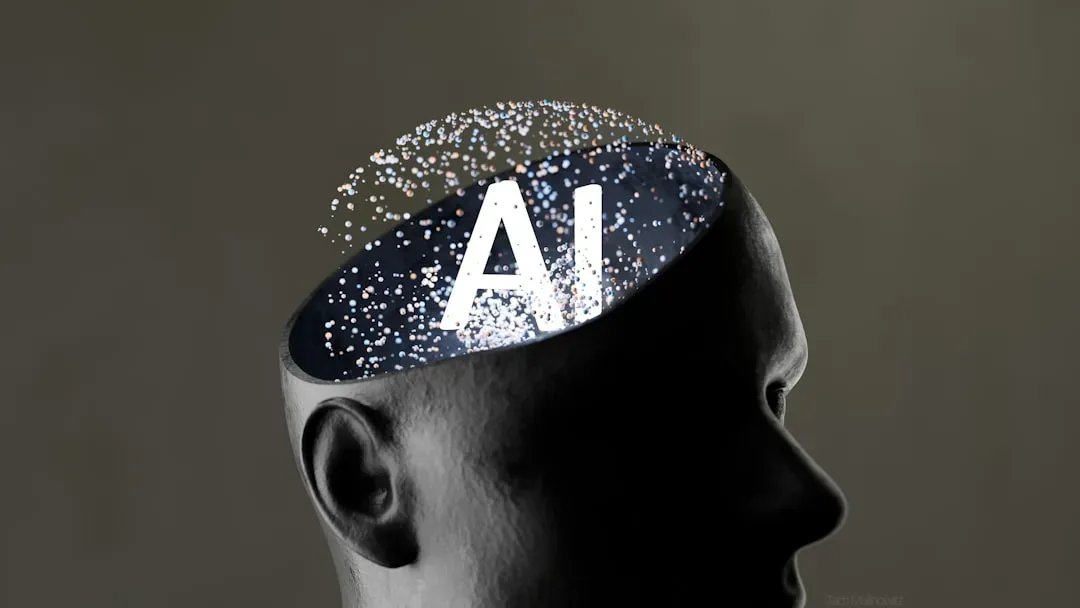
As artificial intelligence systems become more advanced, a strange question is starting to feel less hypothetical: could non-biological systems ever be conscious? If consciousness is merely a complex computation, then in principle a machine with the right structure might someday have inner experience. But if consciousness is a fundamental aspect of the universe that only shows up under certain organizational patterns, then the answer depends on whether our machines tap into those patterns in the right way.
From a fundamental-consciousness perspective, even artificial systems would be built from ingredients already containing primitive experiential aspects. The real issue would be whether the structure of the system allows those aspects to integrate into a unified, rich field of awareness. That makes the debate about machine consciousness less about magic thresholds and more about how deeply a system weaves together information across time and space. It also raises unsettling ethical questions: if we ever did build genuinely conscious machines, what responsibilities would we have toward them, and how would we even know?
Ethics In A World Where Mind Runs Deep
If the universe is permeated with some form of consciousness, or at least proto-consciousness, our ethical landscape looks different. Humans have already been expanding the moral circle, from family to tribe to nation to all of humanity, and increasingly to non-human animals. A conscious-cosmos view gently asks whether our current categories of “important life” and “mere stuff” are too simplistic and self-centered.
This doesn’t mean we should treat every pebble like a person, but it does invite a humbler attitude toward the rest of reality. Environmental concerns, animal welfare, and how we handle technologies that might host new forms of awareness all start to look less like optional extras and more like central questions. Seeing consciousness as fundamental can foster a sense that we’re participants in a vast web of sentience, not isolated minds floating in a dead void. That shift in attitude alone could influence how we design our societies, our technologies, and our relationship with the planet.
Where This Leaves Us Now

Right now, the idea that consciousness is sits in a strange place: too bold to be widely accepted, but too coherent to be easily dismissed. Neuroscience continues to map brain activity in astonishing detail, physics keeps probing the foundations of reality, and philosophy keeps pressing on the gap between objective description and subjective experience. In that mix, treating consciousness as basic rather than accidental has become a live option rather than a fringe fantasy.
We may eventually discover that this whole line of thought is mistaken, or we may find that it was an early glimpse of a deeper understanding we haven’t yet fully grasped. Either way, taking the possibility seriously forces us to question familiar assumptions about matter, mind, and what it means to exist at all. Whether you find the idea exhilarating or unnerving, it leaves a lingering, quietly radical question: if consciousness really is woven into the fabric of the cosmos, what kind of universe have we been living in all along?