
You might think you’re simply reading these words right now because a few billion neurons are firing in predictable patterns inside your skull. Conventional neuroscience would tell you that consciousness is nothing more than electrical impulses and chemical transmissions. Yet a growing number of physicists and philosophers are making an extraordinary claim that challenges centuries of scientific thinking. What if consciousness isn’t just something your brain creates? What if it’s woven into the very fabric of reality itself?
This isn’t some New Age fantasy or metaphysical speculation anymore. Recent research is forcing us to reconsider whether consciousness might be as fundamental to the universe as gravity or electromagnetism. The implications are staggering. If these theories hold water, everything we thought we knew about our minds, our place in the cosmos, and the nature of reality itself might need a complete overhaul.
The Hard Problem That Won’t Go Away
Here’s the thing about consciousness. Scientists can map your brain activity down to individual neurons. They can predict your decisions seconds before you’re even aware you’ve made them. Yet nobody can explain why any of this produces the subjective feeling of being you.
Philosopher David Chalmers famously dubbed this the hard problem of consciousness. You can describe all the physical processes in the brain, but somehow “the water of the physical brain is turned into the wine of consciousness.” No matter how much we understand about brain function, there remains an explanatory gap between neural activity and actual experience. Think about trying to explain the color red to someone who’s only ever seen black and white. Physical descriptions just don’t capture the essence of what it’s like to see red.
Decades of research haven’t shed significant light on the issue, and there are strange mismatches between consciousness and brain activity. Brain cells fire away almost as much in some states of unconsciousness, like deep sleep, as they do when you’re awake.
Enter Panpsychism: A Very Old Idea Making a Comeback
Panpsychism proposes that consciousness is a fundamental aspect of reality, like mass or electrical charge. The idea isn’t new. Plato took it seriously thousands of years ago, and heavy hitters like psychologist William James and philosopher Bertrand Russell supported variations of it.
What’s changed is that the concept has seen renewed interest, especially following the publication of philosopher Philip Goff’s book in recent years, which argues forcefully for the idea. Let’s be real, though. The notion that even electrons might possess some rudimentary form of consciousness sounds bizarre. Still, some very serious thinkers are entertaining this possibility.
Many eminent philosophers and scientists have rejected the idea that consciousness is directly produced by brain processes, turning instead to the view that it is a fundamental quality of the Universe. The argument goes like this: we already accept gravity and mass as fundamental properties that just exist without needing further explanation. Why not consciousness?
Quantum Mechanics Opens Strange New Doors
Quantum physics has always been weird. Particles exist in multiple states simultaneously until observed. Things separated by vast distances can influence each other instantaneously. It’s hard to say for sure, but some researchers think these bizarre quantum properties might hold clues to consciousness.
The Orchestrated Objective Reduction theory postulates that consciousness originates at the quantum level inside neurons, held to be a quantum process orchestrated by cellular structures called microtubules. Physicist Roger Penrose and anesthesiologist Stuart Hameroff developed this controversial framework in the nineteen nineties.
They proposed that consciousness depends on biologically orchestrated coherent quantum processes in collections of microtubules within brain neurons, and that these quantum processes correlate with neuronal activity, terminating in moments of conscious awareness. Critics have long argued the brain is too warm and wet for delicate quantum states to survive. However, recent experimental work is challenging those assumptions.
Consciousness as a Universal Field
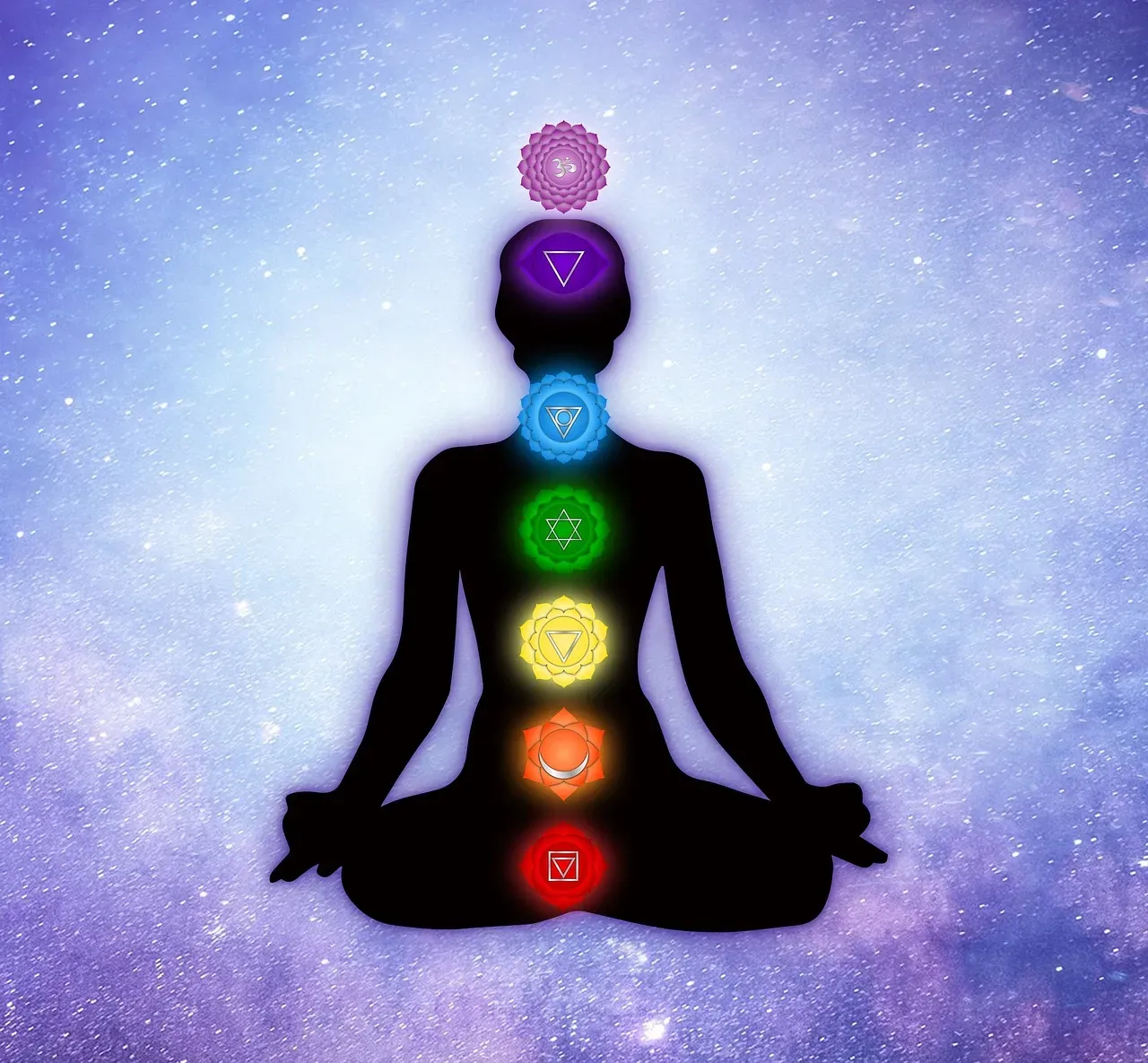
A recent theoretical model proposes that consciousness is fundamental, and only thereafter do time, space and matter arise. Materials science professor Maria Strømme at Uppsala University outlines this new model, claiming consciousness is the fundamental field of reality.
This is a radical reversal. Instead of asking how brains produce consciousness, Strømme asks how a conscious universe produces brains, matter, and spacetime. In her model, a universal, all-pervading awareness already exists, with physical objects appearing as organized patterns within that deeper field of awareness, treating consciousness itself as a fundamental field.
Her framework proposes that consciousness is not an emergent property of neural processes but a foundational aspect of reality, building upon insights from quantum field theory and non-dual philosophy. Honestly, it sounds like something out of science fiction, yet the paper was selected as the best in its issue and published in a peer-reviewed physics journal.
The Brain as Receiver, Not Producer
If consciousness is fundamental, what’s the brain actually doing? One elegant solution is that the brain doesn’t produce consciousness, but acts as a kind of receiver which picks up the fundamental consciousness that is all around us, and transmits it into our being.
Think of it like a radio. The radio doesn’t create the music. It just tunes into frequencies that already exist in the electromagnetic field around you. Damage the radio and the music becomes distorted, but the radio waves themselves remain unchanged. Similarly, brain damage affects how consciousness manifests, but might not eliminate the underlying awareness itself.
One philosopher discussed a subtly different idea known as psychological ether theory, essentially that brains do not produce consciousness but rather make use of consciousness. Some researchers suspect intelligence originates from what might be called an informational substrate of the universe, a pre-physical foundation where structure and logic exist prior to space and time. This would explain some puzzling phenomena that are difficult to account for in standard materialist frameworks.
Integrated Information Theory: Measuring Consciousness
Integrated Information Theory, initially proposed by Giulio Tononi, claims that consciousness is identical to a certain kind of information, the realization of which requires physical integration, and which can be measured mathematically. The theory offers something materialist approaches often lack: a way to quantify consciousness.
The theory starts from phenomenology and claims that consciousness is integrated information, specifically that the quantity of consciousness corresponds to the amount of integrated information generated by a complex of elements. Every system that integrates information would possess some degree of consciousness according to this framework.
Here’s where it gets really interesting. According to the theory, it probably does go all the way down, with even particles potentially having some vanishingly small degree of subjective experience as long as their integrated information is above zero. I know it sounds crazy, but Tononi openly embraces this panpsychist implication.
What This Means for You and the Universe

The theory suggests that our individual consciousness does not cease at death, but returns to the universal field of consciousness from which it once emerged, formulated in quantum-mechanical terms. If an individual mind is a structured pattern in the field of consciousness, then when the body and brain stop, that pattern loses its organization while the underlying field stays in place.
Recent evidence indicates that conscious states may arise from the brain’s capacity to resonate with the quantum vacuum, the zero-point field that permeates all of space, with macroscopic quantum effects at play inside our heads. The research suggests your conscious experience might literally be connected to the hum of the universe itself.
What does this all mean? If consciousness is fundamental rather than emergent, then you’re not just a biological machine that happens to be aware. You’re a localized expression of something far more universal. The universe isn’t just something you observe from the outside. You’re intimately woven into its very structure.
These theories remain controversial and face legitimate scientific criticism. Yet they’re forcing a long-overdue conversation about the nature of consciousness and reality. Whether consciousness turns out to be fundamental or emergent, the fact that we’re even here to ask these questions remains the universe’s most profound mystery. What do you think about it? Could your consciousness truly be tapping into something fundamental, or is it all just neurons doing their thing?