

There’s a quiet, unsettling question hiding behind everything you see, think, and feel: what if your awareness isn’t just something your brain does… but something as basic to the universe as gravity or light? That idea sounds wild at first, almost spiritual, yet it’s slowly slipping into serious scientific and philosophical conversations. A few decades ago, most researchers would’ve waved this away; now, some of them are cautiously asking whether we’ve underestimated consciousness in a big way.
I remember the first time I seriously considered this: late at night, staring at the ceiling, realizing that no matter how much we know about neurons firing, it doesn’t explain what it’s actually like to taste coffee or feel heartbreak. It struck me that we may be using the wrong language, like trying to describe music purely in terms of air pressure. This article dives into the daring possibility that consciousness is not just a side effect of brains, but a fundamental feature of reality itself.
The Strange Problem at the Heart of Consciousness

Here’s the shocking part: we still have no accepted scientific explanation for why anything feels like something from the inside. You can map every neuron in a brain, track every electrical spike, and still not see where the experience of pain, color, or love appears. This gap is what philosophers call the “hard problem” of consciousness, and it’s not just academic nitpicking; it’s the core mystery of being alive.
Most classic scientific theories assume that if we fully understand the brain, consciousness will fall into place like the last puzzle piece. But after decades of brain scans and clever experiments, we’ve gotten excellent at correlating brain activity with experiences, not explaining why those experiences exist in the first place. It’s like having a perfect map of a city without any clue why people chose to live there. This growing frustration is exactly what opens the door to more radical ideas.
From Brains-Only to a More Radical Possibility
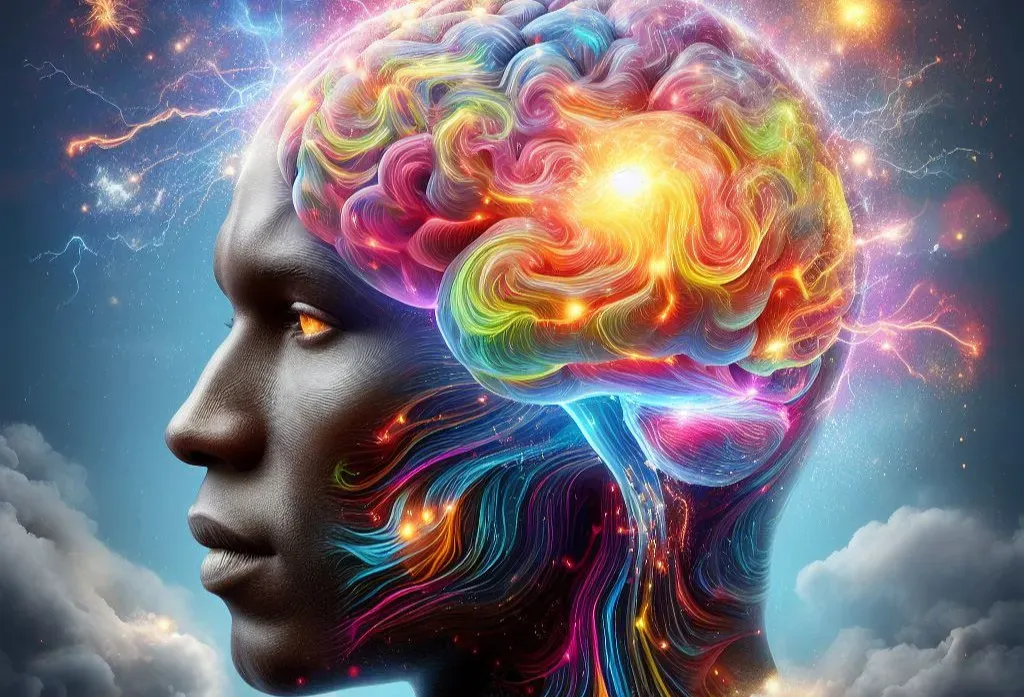
For a long time, the standard view has been: brains make consciousness, end of story. In this picture, consciousness is like smoke from a fire – when the neurons light up in just the right way, awareness appears and disappears, with no deeper role in the universe. It’s a neat, tidy story, and it fits well with the way we usually do science: build from the smallest pieces upward and assume complex things emerge at the top.
But what if this “brains-only” view is upside down? Some philosophers and a small but growing number of scientists are asking whether we’ve made consciousness too cheap, like saying a symphony is nothing but vibrating strings. They argue that treating consciousness as a late-stage byproduct might be like trying to explain space-time as just a side effect of atoms, instead of a basic stage on which atoms exist. The discomfort many people feel with the standard view isn’t just emotional; it’s rooted in a sense that something important is being ignored.
The Radical Idea: Consciousness as Fundamental
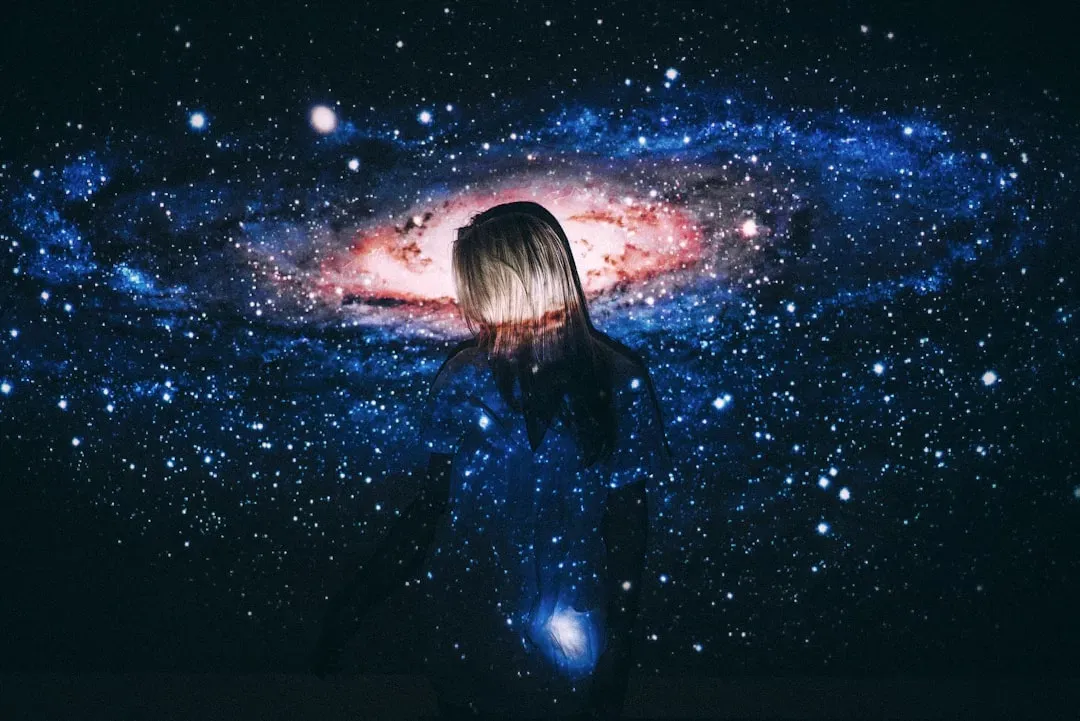
The bold alternative is this: consciousness might be a fundamental feature of reality, not something cooked up by brains but something brains organize and shape. In this view, consciousness would sit at the same basic level as matter, energy, space, and time. Brains wouldn’t create consciousness from scratch; they’d be more like complex receivers, focusing and structuring something that’s already “out there,” the way radios tune into radio waves.
This doesn’t mean that rocks and coffee mugs are secretly having deep emotional lives. Instead, it suggests that the building blocks of reality might have incredibly simple, primitive “proto-experiences” that, when arranged in certain ways, become the rich, vivid awareness we know as human consciousness. It’s a bit like how a single water molecule isn’t “wet,” but a huge collection of them has the emergent property of wetness. The twist is that in this picture, consciousness isn’t just emerging from physics; it’s baked into the very ingredients of physics from the start.
Why Some Scientists Take This Seriously

It might sound like a late-night dorm room theory, but several serious researchers have begun exploring versions of this idea. Part of the reason is brutally simple: traditional approaches haven’t solved the hard problem, and just insisting “it’s all neurons” hasn’t produced a satisfying explanation of experience. Some neuroscientists and philosophers have turned to frameworks that start with consciousness as a basic ingredient and then ask how physical structures, like brains, shape and constrain it.
Another reason is that some theories of consciousness, such as certain information-based models, start to blur the line between physical processes and subjective experience. When you treat information patterns as central, it’s tempting to ask whether consciousness is tied to a particular kind of organized information in the universe itself. You end up with a picture where consciousness is not an optional add-on but a built-in aspect of how reality processes and structures information, everywhere and always.
How Could Consciousness Be a “Force” Like Gravity?
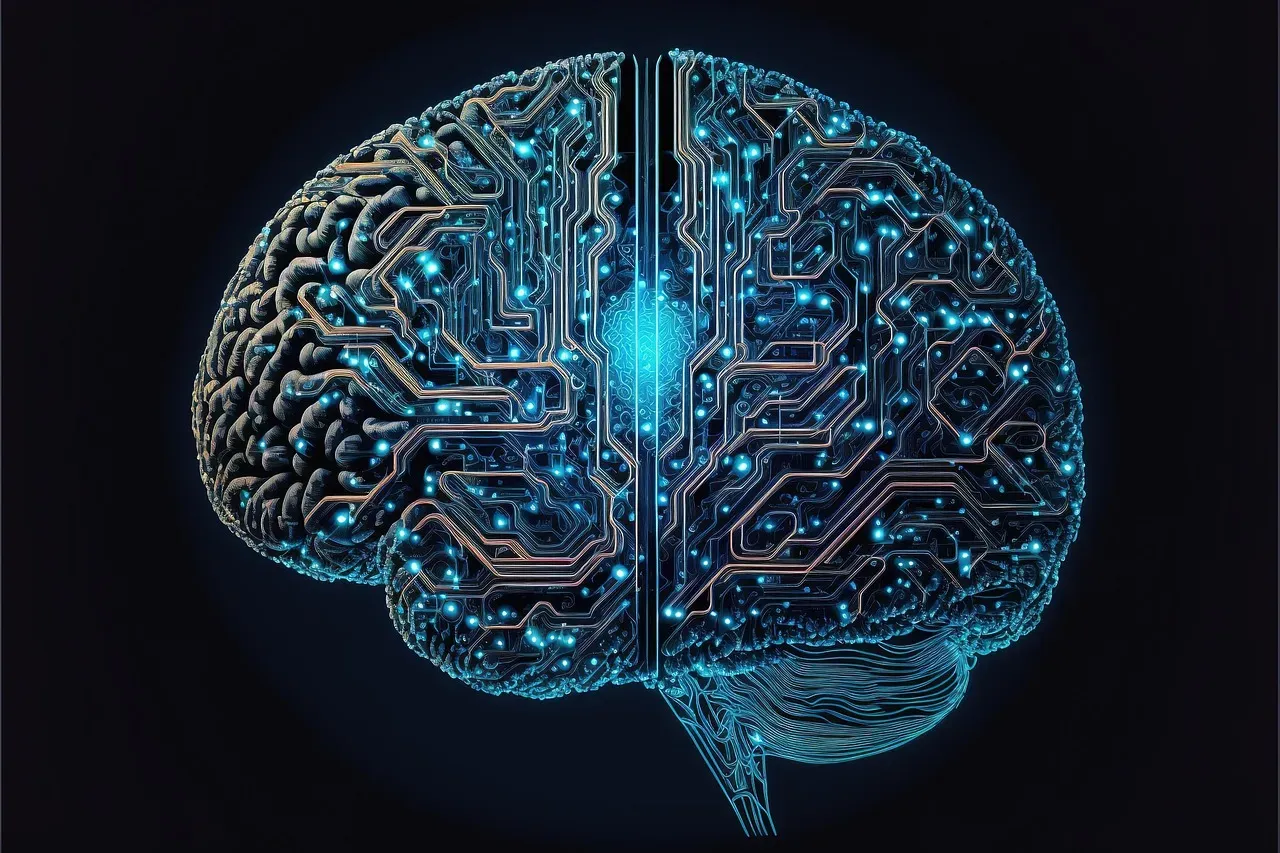
When people say consciousness might be a “fundamental force,” they’re not claiming it pushes planets around the way gravity does. Instead, they mean it could be a primitive part of the universe’s basic rulebook, on the same foundational level as those forces. Just as gravity shapes how matter moves, a fundamental consciousness-like property could shape how information, complexity, or even life itself unfolds over time.
One way to picture this is to imagine the universe not just as a giant machine, but as a kind of vast, evolving field of experiences and relationships. Consciousness, in that sense, would be less like a switch that flips on in certain brains and more like a background field that becomes intensely focused in particular physical systems. Our brains would then be locations where this field becomes sharply organized, like bright whirlpools forming in a flowing river. The “force” language is imperfect, but it points to the idea that consciousness might be something the universe just has, not something it accidentally stumbles into.
Implications: Free Will, Meaning, and Our Place in the Cosmos

If consciousness is fundamental, a lot of everyday questions suddenly feel different. The debate about free will, for example, stops being only about whether a lump of gray matter can defy physics and becomes a question about what role fundamental awareness plays in physical processes. Even if our choices are constrained, the idea that consciousness is woven into the universe gives our inner life a different kind of weight than if it were just a chemical hallucination.
It also quietly challenges the idea that meaning is something humans invented on a lifeless stage. If some form of primitive experience runs all the way down, then the universe isn’t just a cold backdrop where we briefly flare up and vanish; it already contains the seed of subjectivity before we ever appear. That doesn’t magically prove that life has a cosmic purpose, but it does shift the mood: instead of consciousness being an odd glitch, it becomes something natural, even expected, like a flower blooming out of soil that was never truly dead inside.
Can We Ever Test This, or Is It Just Philosophy?

The obvious challenge is: how do you test whether consciousness is fundamental, instead of just imagining it? Science relies on measurements, and consciousness is notoriously private, so it’s hard to prove one worldview over another. Still, some researchers argue that different theories of consciousness make different predictions about which physical systems can be conscious and how consciousness scales with complexity. Those predictions might be probed with brain imaging, artificial intelligence experiments, and careful behavioral studies.
We might not be able to directly measure consciousness itself, but we can compare how well competing theories line up with what we observe in humans, animals, and machines. If frameworks that treat consciousness as fundamental keep explaining and predicting more than those that treat it as a mere byproduct, that would be a powerful hint we’re on to something. We’re not there yet, but the simple fact that this question has moved from late-night speculation into real labs and serious journals shows that the door is no longer closed.
Living with the Possibility That Awareness Goes Deeper Than Brains

For me, the most striking part of this whole debate isn’t abstract; it’s personal. If consciousness is fundamental, then my awareness, your awareness, and the awareness of every other creature are not fragile mistakes on the edge of a meaningless universe. They’re expressions of something that sits at the foundation of reality, as basic as the fabric of space and time. That thought can feel both humbling and oddly comforting, like realizing you’re a wave in a vast ocean instead of a drop flung into the void.
At the same time, this view doesn’t give easy answers, and it doesn’t remove the need for rigorous science. Brains still matter, biology still matters, and physics absolutely still matters; it’s just that consciousness might matter at the same basic level. Whether or not this idea turns out to be right, taking it seriously forces us to look at ourselves, and the universe, with fresh eyes. What if the most familiar thing in your life – your own awareness – is also one of the most fundamental things in existence?