
What if everything we thought we knew about the origins of existence was backwards? For decades, science has taught us that life emerged first, slowly evolving complexity until consciousness finally flickered into being. Simple organisms became complex ones, brains developed, and only then did awareness dawn. It’s a tidy story. It makes sense. There’s just one problem: a growing number of scientists think we’ve been looking at it upside down.
New evidence from space rocks older than Earth itself is forcing researchers to reconsider a radical possibility. What if consciousness didn’t emerge from life, but came before it? What if awareness, in some primitive form, existed in the universe long before the first cell divided, waiting like a seed for the right conditions to bloom? It sounds like science fiction, honestly. Yet the theory is gaining traction among serious researchers, and the clues they’re following lead to some truly surprising places.
Ancient Space Rocks Hold Mysterious Clues
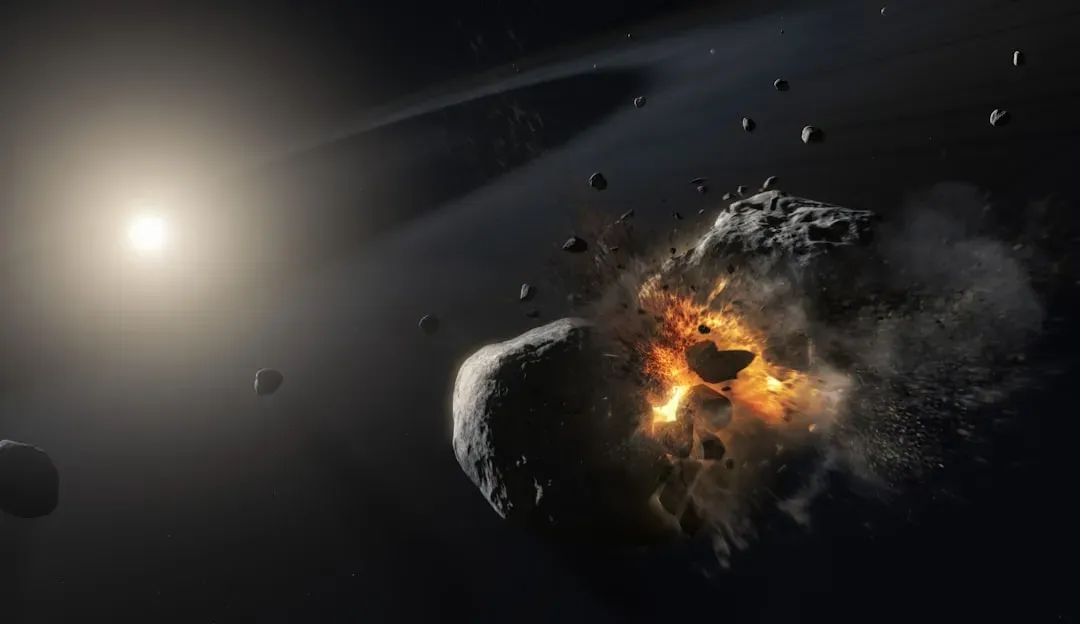
Asteroid Bennu, a small space rock that formed nearly 4.6 billion years ago, recently gave up over 121 grams of pristine material collected by NASA’s spacecraft. The samples contain something extraordinary. Scientists found organic compounds in the asteroid Bennu samples that are essential for life on Earth, but it could also contain molecules that may be necessary for forming consciousness.
These aren’t just random molecules floating in ancient rock. Researchers found that the samples include 14 of the 20 amino acids that life on Earth uses to make proteins, along with all five nucleobases used to store and transmit genetic instructions in DNA and RNA. The implications are staggering when you consider what else might be hiding in those samples.
The Quantum Connection to Awareness
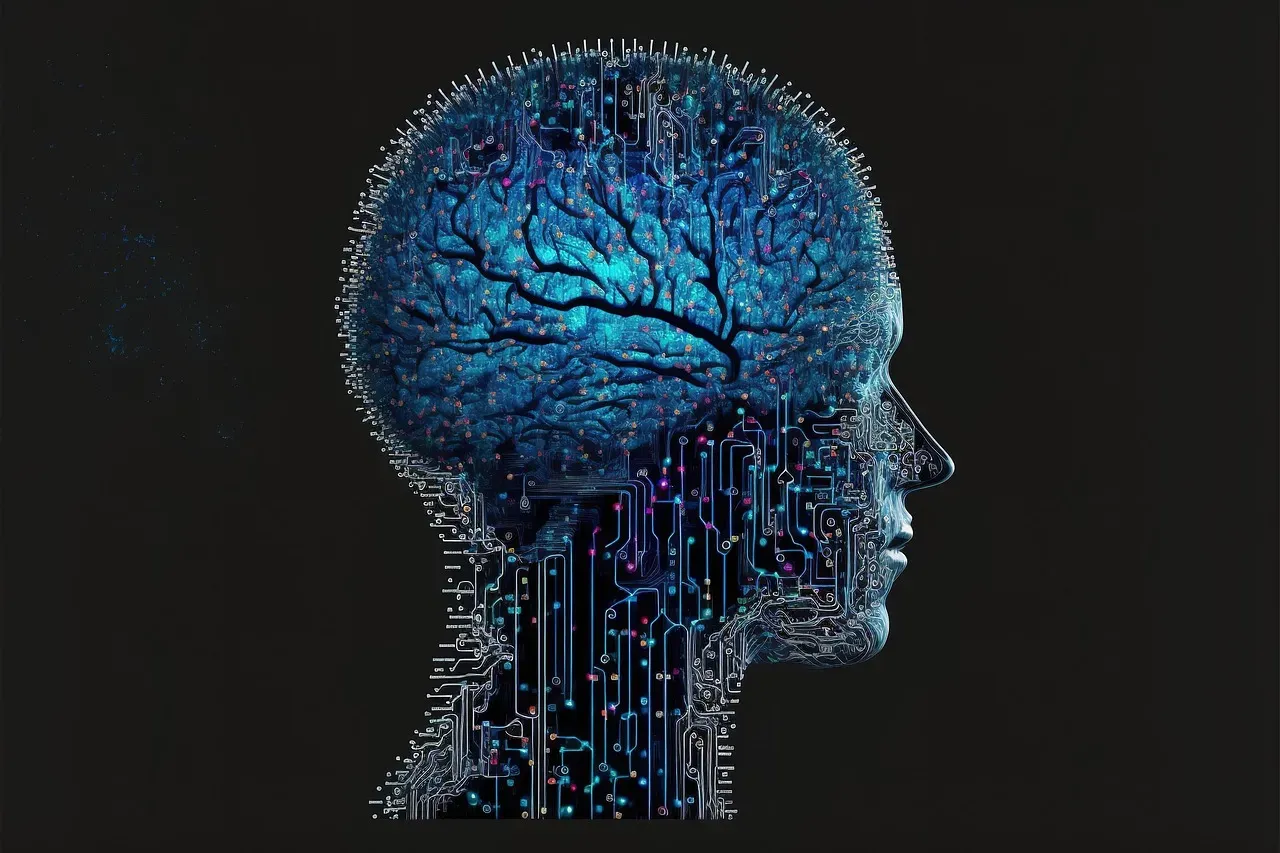
A theory exists that the brain taps into an external form of consciousness and processes it on a quantum level. This isn’t mysticism dressed up as science. It’s based on decades of work by physicist Roger Penrose and anesthesiologist Stuart Hameroff, who’ve proposed something called orchestrated objective reduction, or Orch OR.
Here’s where it gets fascinating. Bennu could contain organic ring molecules whose extra electrons form electron clouds that exchange photons, and if these molecules form a specific, periodic crystalline formation like an array or lattice, they become quantum oscillators that are able to support consciousness. Think of it like a radio receiver that existed before anyone invented the radio station.
Each neuronal cell in the human brain comprises billions of microtubules that are oscillating at the astonishing speed of 1015 times per second, yet conventional brain studies have only looked at brain activity in a narrow range around 40 hertz. We’ve been listening to a symphony while only hearing the bass notes.
Why Life Forms Have Goals

One key way life differs from non-life is that life forms have goals; for example, the amoeba seeks to protect itself while the boulder does nothing to prevent itself from becoming sand. This difference is profound, and it’s stumped scientists for generations. Where does purpose come from?
Some elements of the primordial soup could have reached the threshold of collapse, resulting in sequences of random, disconnected proto-conscious moments that would exhibit positive reinforcement, a primitive form of pleasure, thus the origin of life may have been prompted and driven by conscious feelings right from the start. Let’s be real, that’s a mind-bending idea. It suggests that the first stirrings of life weren’t random chemical reactions but responses to something like proto-pleasure.
The Microtubule Mystery
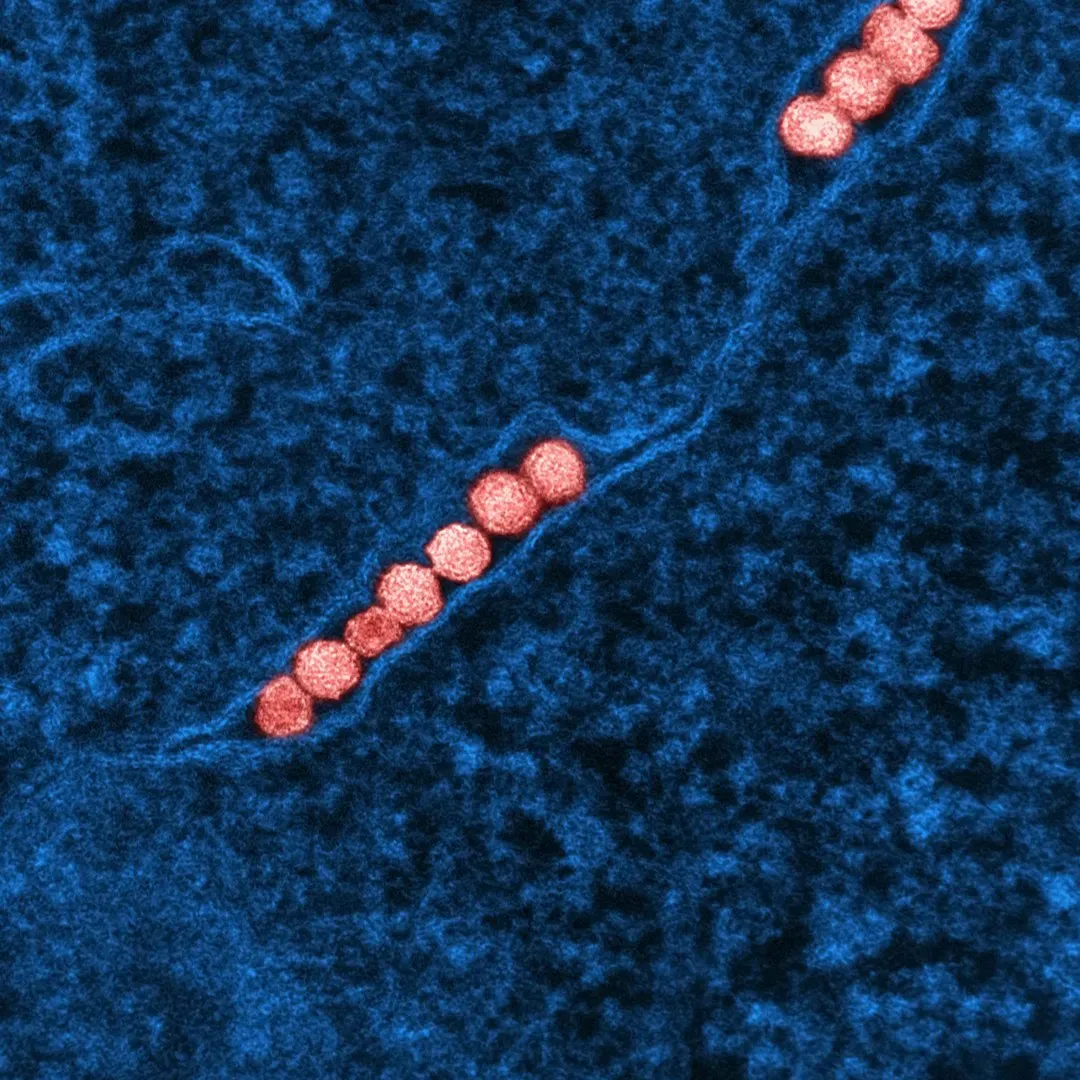
Anirban Bandyopadhyay’s group proved that biological microtubules are self-assembling cylindrical lattice polymers of the protein tubulin that dynamically organize the interiors of all animal and plant cells and appear to serve as their nervous system and memory bank. These tiny structures inside every cell might be doing far more than we realized.
The idea connects to something researchers call Fröhlich coherence. Herbert Fröhlich proposed that quantum coherent vibrational modes, similar to those in a laser, could play a central role in various biological processes, with crystal-like structures supporting laser-like coherent vibrations. Your cells might be humming with quantum frequencies we’re only beginning to detect.
Evolution as Consciousness’ Vehicle

Evolution may have worked to optimize, organize, and prioritize more advanced conscious experience involving memory, belief, forecasting, intention and iteration, driven by primitive and then more advanced forms of pleasure-seeking, making life the vehicle for consciousness. This flips Darwin on his head in the most interesting way possible.
In their view, then, evolution is not the source of consciousness but the product of consciousness, though they admit their theory is controversial. The researchers aren’t claiming victory yet. They know this is extraordinary science that requires extraordinary evidence. That’s precisely why they’re looking at ancient asteroid samples that preserve conditions from billions of years ago.
These molecular formations may have been present among organic molecules for a hundred million years before genes existed, enabling the earliest forms of decision-making and self-organization into life. Imagine that: decision-making before DNA, purpose before proteins.
What This Means for Reality Itself
A new theoretical model proposes that consciousness is fundamental, and only thereafter do time, space and matter arise, presenting a framework in which consciousness is not viewed as a byproduct of brain activity but as a fundamental field underlying everything we experience. Maria Strømme, a materials scientist at Uppsala University, took a major leap from studying nanotechnology to proposing this ambitious theory in 2025.
It’s hard to say for sure, but this could represent a paradigm shift as significant as when humanity realized the Earth orbits the Sun rather than the other way around. Physicists like Einstein, Schrödinger, Heisenberg and Planck explored similar ideas, so perhaps we’re finally catching up to insights they glimpsed decades ago.
The beauty of this theory is that it makes testable predictions. Researchers are looking for signs like coherent oscillations, quantum optical superposition effects and triplets-of-triplets, and plan to expose these processes to anesthetic gas to see if they are inhibited proportional to anesthetic potency in blocking consciousness in animals and humans. If molecules from Bennu respond to anesthetics the way living brains do, we’ll know we’re onto something remarkable.
What started as a question about ancient space rocks has become an investigation into the deepest mystery of existence. If consciousness already existed before life formed on Earth, some scientists think, it could mean that Bennu contains the structures that allow the kind of quantum resonance the brain needs to access. We might be discovering that consciousness isn’t something brains create, but something they tune into, like instruments picking up a signal that’s been broadcasting since the dawn of time. Did you expect that asteroids would challenge everything we thought we knew about awareness itself? What do you think about the possibility that you’re not creating your consciousness, but receiving it?