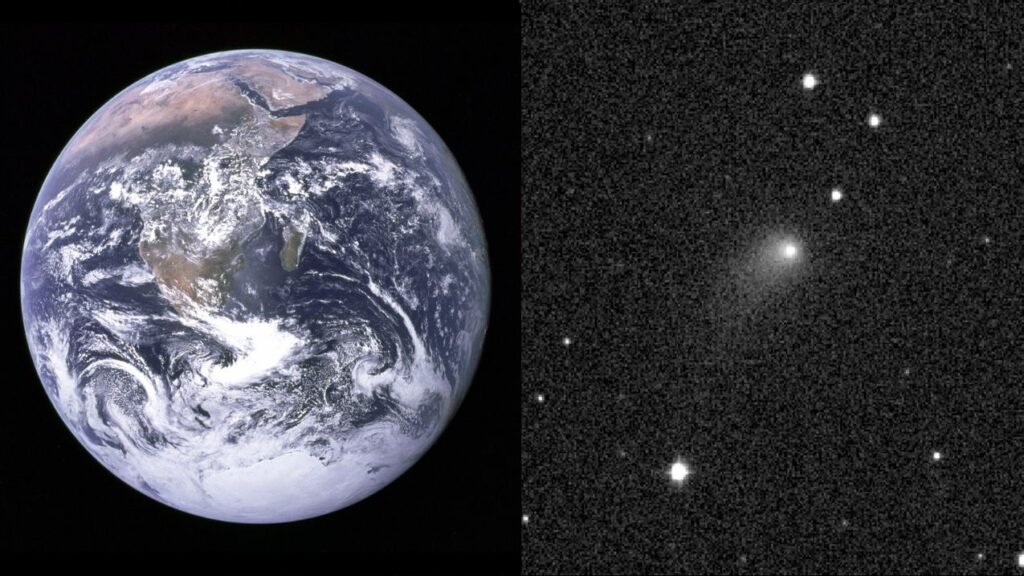

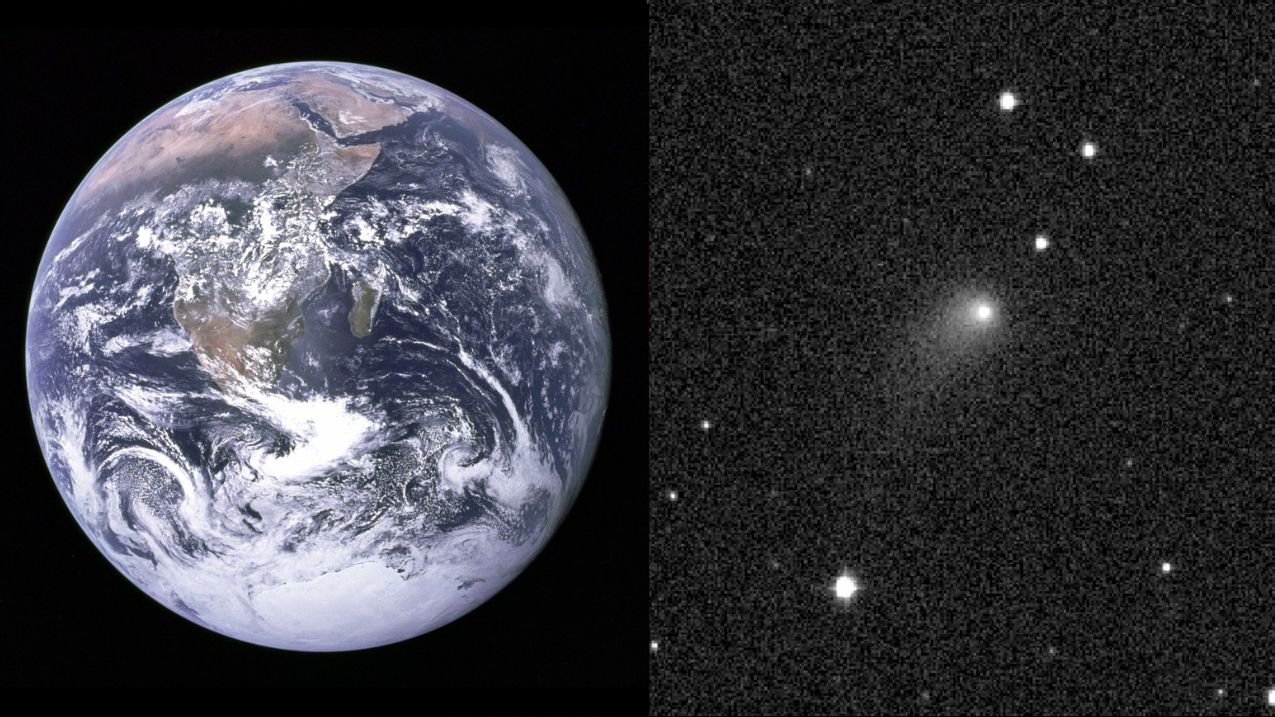
A Surprise Find from the Oort Cloud (Image Credits: Cdn.mos.cms.futurecdn.net)
On February 17, 2026, Comet C/2024 E1 (Wierzchos) reaches its minimum distance from our planet, offering a rare glimpse of this interstellar wanderer.[1])[2]
A Surprise Find from the Oort Cloud
Polish astronomer Kacper Wierzchoś spotted the comet on March 3, 2024, using the Mount Lemmon Observatory in Arizona. At the time, it appeared as a faint 20th-magnitude object in the constellation Draco, complete with a small coma and short tail.[1])
Precovery images from the Zwicky Transient Facility later extended observations back to late February 2024. This Oort Cloud visitor follows a hyperbolic trajectory, meaning it entered our solar system from interstellar space and will exit permanently after this pass.[3]
Early predictions suggested it might brighten to naked-eye visibility, but actual performance peaked fainter, around magnitude 6.5 to 8.5.[1])
Perihelion Triumph Last Month
The comet swung closest to the Sun on January 20, 2026, at 0.566 AU – roughly 85 million kilometers away. This milestone, known as perihelion, unleashed its coma and tail as solar heat vaporized ices.[2]
Post-perihelion images captured a three-arcminute coma and a one-degree tail by late January. The James Webb Space Telescope had examined it earlier at 7 AU, revealing carbon dioxide-driven activity but no carbon monoxide emissions.[1])
Traveling at speeds up to 56 km/s, it also passed Venus closely on January 1, at 0.191 AU.[1])
Today’s Earth Flyby at 1.01 AU
Precisely today, the comet sits 1.01 AU from Earth – about 151 million kilometers, or a light-travel time of eight minutes.[2][4] Positioned in Sculptor at right ascension 01h 19m and declination -30° 55′, it moves against a backdrop of faint galaxies.
Northern Hemisphere viewers face challenges with low altitudes, often below 10 degrees near the southwestern horizon after sunset. Southern observers enjoy better prospects, with the object clearing higher in the evening sky.[3]
Tips for Spotting the Green Comet
Current magnitude hovers near 7 to 8.2, requiring binoculars or a small telescope. Look southwest after dusk, ideally from dark sites.
- Target Sculptor between stars HIP 6502 and 6771.
- Allow eyes 20-30 minutes to dark-adapt.
- Use apps like Stellarium or SkySafari for precise charts.
- Southern Hemisphere: Observe over west-southwest horizon; peak altitude around 8 degrees for mid-northern sites.
- Northern limits: May skim 6 degrees max from places like the UK.
- Check live ephemeris for updates, as predictions vary slightly.[2]
A city-sized nucleus, roughly 2-10 km across, glows green from diatomic carbon in its atmosphere.
Legacy of a One-Time Visitor
This flyby caps a journey from 42,000 AU inbound. Post-encounter, it heads outbound to 7,400 AU, never to return.[1]) Scientists value its data on primordial ices and hyperbolic dynamics.
Key Takeaways:
- Closest today at 1.01 AU; magnitude 7-8 requires optics.
- Perihelion Jan 20 at 0.566 AU; green from CO2 activity.
- Best in Southern Hemisphere; low southern sky for north.
As Comet Wierzchos fades into the cosmic distance, it reminds us of the solar system’s dynamic edges. What do you think about this celestial guest? Tell us in the comments.