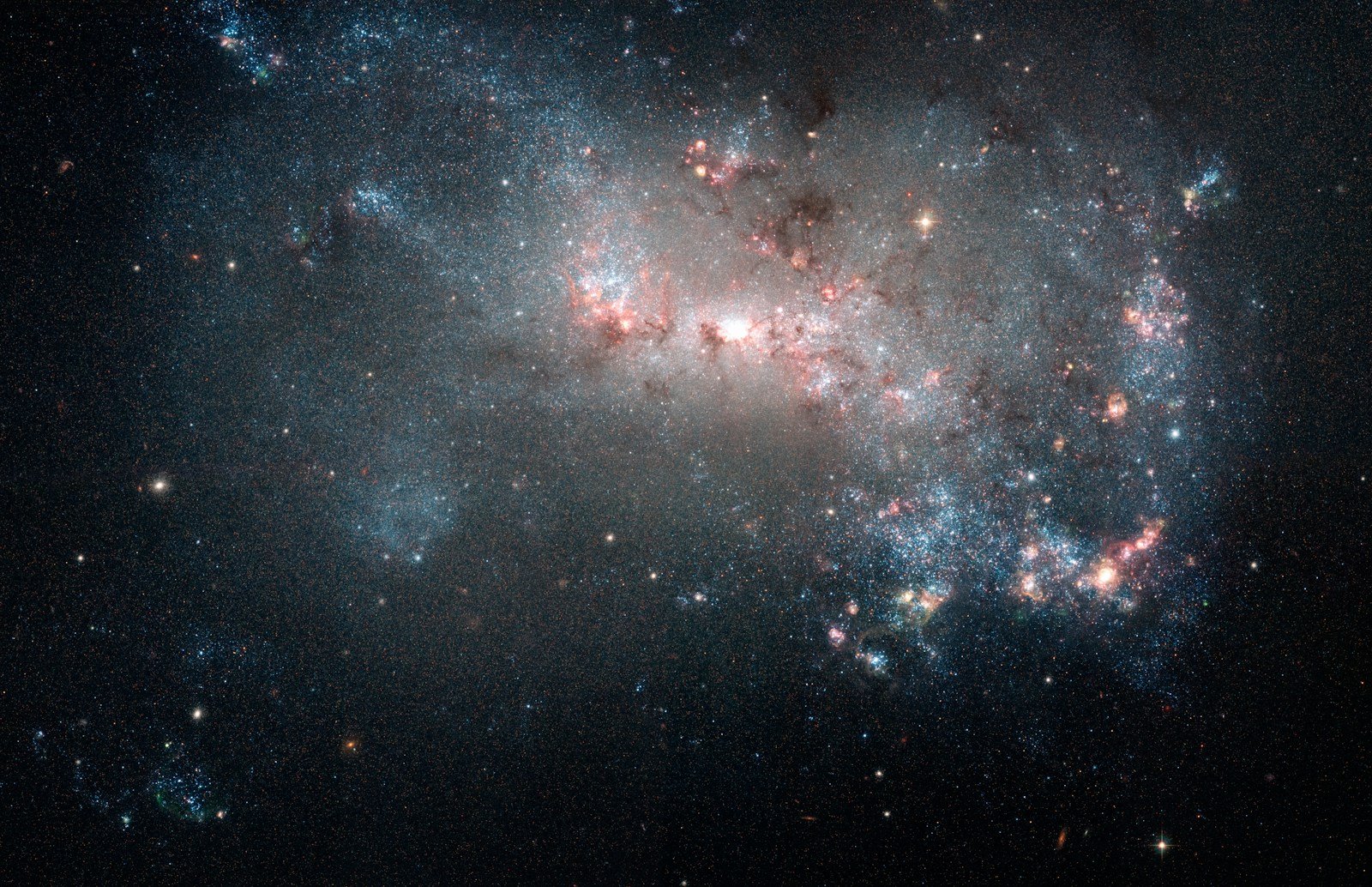
A Vast Protoplanetary Disk (Image Credits: Unsplash)
Astronomers have uncovered a monumental structure in space, where the birth of planets unfolds amid unexpected turmoil.
A Record-Breaking Discovery
The Hubble Space Telescope recently captured images of a vast protoplanetary disk encircling a young star, marking it as the largest such formation observed to date. This immense disk, known as IRAS 23077+6707 and affectionately dubbed “Dracula’s Chivito,” stretches across nearly 400 billion miles – about 40 times the diameter of our own solar system, reaching out to what would be the equivalent of the Kuiper Belt’s edge. Located approximately 1,000 light-years from Earth, the structure offers a rare glimpse into the early stages of planetary development.
Researchers announced the findings in The Astrophysical Journal, highlighting how Hubble’s advanced imaging in visible light brought this distant scene into sharp focus for the first time. The observation builds on decades of Hubble’s contributions to understanding planet-forming environments, revealing patterns that challenge previous assumptions about these cosmic nurseries.
Turbulence Like Never Before
What sets this disk apart is its remarkable instability, with turbulent wisps of gas and dust extending far beyond the main plane – much farther than in any comparable system studied previously. These filaments rise and fall dramatically, suggesting powerful forces at work that stir the material into a frenzy. On one side of the disk, the extensions appear more pronounced, creating an asymmetrical profile that puzzled the observing team.
Such chaos indicates dynamic interactions, possibly from magnetic fields or stellar winds, that could influence how solid particles clump together to form planets. Unlike the relatively flat and orderly disks seen around other young stars, this one’s disorderly nature provides a fresh perspective on the variability of these environments. The visible light observations from Hubble pierced through the dust, exposing details that infrared telescopes might overlook.
Insights into Extreme Planet Birth
This discovery sheds light on planet formation in harsh conditions, where turbulence might accelerate or complicate the process of building worlds. In typical protoplanetary disks, gravity and gentle accretion allow dust grains to aggregate over millions of years, but here, the agitation could scatter materials or concentrate them unevenly. Scientists now wonder if such environments favor the creation of massive gas giants or rogue planets ejected from their orbits.
The one-sided filaments hint at external influences, like a companion star or asymmetric outflows from the central young star itself. These features could drive the disk’s evolution, potentially leading to a diverse planetary system unlike our own stable solar setup. As Hubble continues to probe these regions, it connects the dots between stellar infancy and mature solar systems scattered across the galaxy.
Why This Matters for Astronomy
Hubble’s imaging not only expands the catalog of known protoplanetary disks but also refines models of how our own solar system might have emerged from similar origins nearly 300 years after Immanuel Kant first theorized such flattened structures. The telescope’s resolution captured the disk’s scale and complexity, offering data that future missions can build upon. For instance, upcoming observations with the James Webb Space Telescope could delve deeper into the disk’s composition.
Understanding these turbulent nurseries is crucial for gauging the prevalence of habitable worlds in the universe. While this disk’s chaos might seem daunting, it underscores the resilience of planet formation processes amid cosmic disorder.
- The disk’s size dwarfs our solar system, spanning 400 billion miles.
- Turbulent wisps extend asymmetrically, visible primarily on one side.
- Hubble’s visible light view marks a milestone in studying young stellar systems.
- Findings suggest extreme conditions could shape unique planetary architectures.
- Located 1,000 light-years away, it invites further multi-wavelength scrutiny.
Key Takeaways
- This protoplanetary disk represents the largest observed, challenging ideas about planetary nurseries.
- Its turbulence reveals dynamic forces at play, potentially affecting planet formation rates.
- Hubble’s observations open doors to exploring asymmetric structures in distant systems.
In a universe full of orderly wonders, the chaotic swirl of “Dracula’s Chivito” reminds us that creation often thrives in disorder, paving the way for the diverse planets we seek. What do you think this means for the search for extraterrestrial life? Tell us in the comments.