
Blasting Rocks with Protons: The HiRadMat Breakthrough (Image Credits: Unsplash)
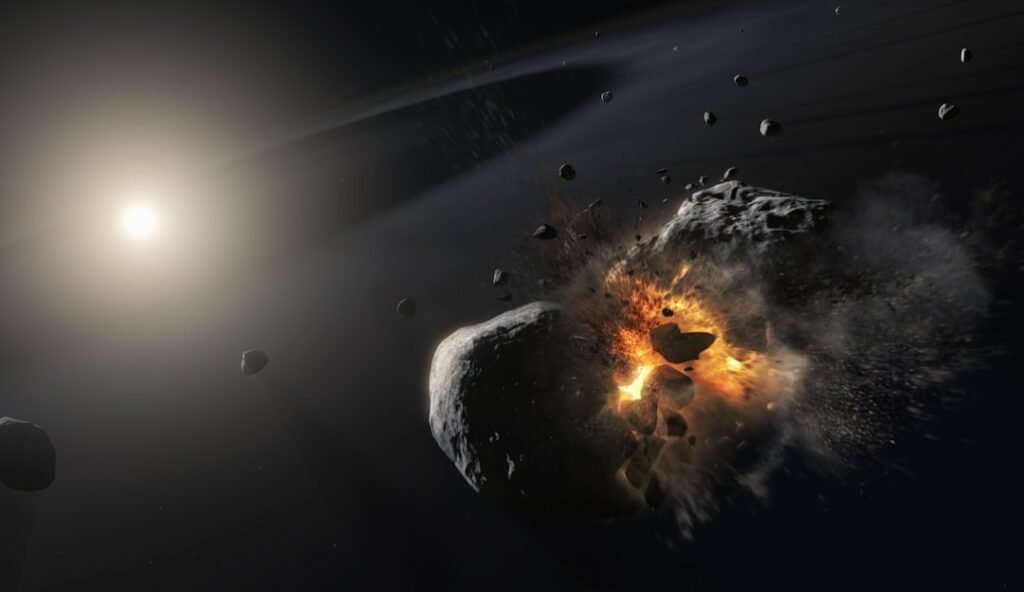
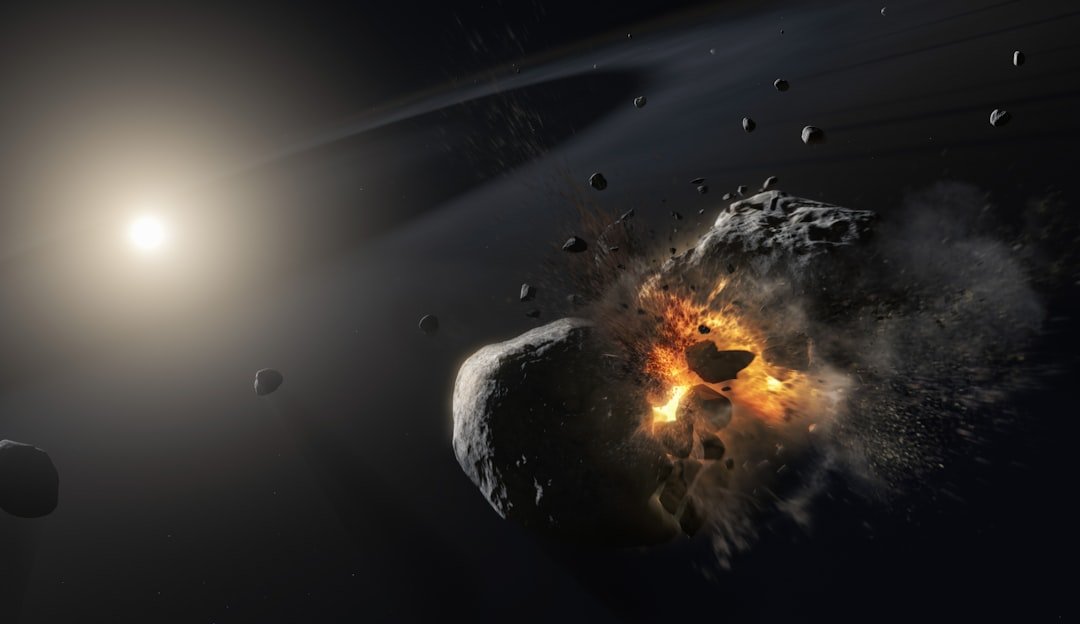
Planetary defense efforts received a significant boost from recent laboratory tests at CERN, where scientists probed the resilience of metal-rich asteroid materials under extreme conditions. Researchers irradiated a sample from the Campo del Cielo iron meteorite with powerful proton beams, mimicking the shock waves from a standoff nuclear explosion. The findings revealed that such materials not only endure high-energy impacts without shattering but also strengthen dynamically, offering new hope for emergency deflection strategies against large, fast-approaching threats.[1][2]
Blasting Rocks with Protons: The HiRadMat Breakthrough
A team of physicists exposed the meteorite cylinder to 27 pulses from CERN’s Super Proton Synchrotron, delivering 440 GeV protons at intensities up to 3 × 10^11 per bunch. Each pulse lasted about 250 picoseconds, creating rapid thermal stresses akin to those from nuclear radiation. Laser Doppler vibrometry captured real-time vibrations on the sample’s surface, while simulations modeled energy deposition and stress evolution.
The experiment targeted iron-nickel alloys typical of metal-rich asteroids, chosen for their relative homogeneity that simplifies modeling. Temperatures rose modestly by 5-6 Kelvin per high-intensity shot, yet generated peak thermal stresses reaching 120 megapascals. Secondary particles from the beam triggered cascades that penetrated deeply, depositing energy volumetrically without surface ablation.[1]
Low-intensity pulses induced elastic oscillations at 375-450 kilohertz, matching the sample’s acoustic properties. Higher doses pushed the material into plastic deformation, dissipating 360 microjoules as dislocations formed. No catastrophic failure occurred, even after repeated exposures totaling hours of recovery time between shots.
Material That Fights Back: Dynamic Hardening Revealed
Contrary to expectations, the meteorite sample hardened under assault. Its local yield strength surged from 350 megapascals to 875 megapascals – a factor of 2.5 – while bulk strength rose from 50 to 125 megapascals. Dislocation density climbed sixfold to 6.1 × 10^10 per square meter, storing energy that reinforced the structure.
Strain-dependent damping emerged, suppressing resonant vibrations and stabilizing the material like a composite. Local pressures hit 2-3 gigapascals, far below phase-change thresholds above 12 gigapascals, channeling energy into deformation rather than fracture. Post-irradiation analysis confirmed these shifts, with oscillatory signals returning stronger after initial softening.[3]
| Property | Pre-Irradiation | Post-High-Intensity Irradiation |
|---|---|---|
| Local Yield Strength | 350 MPa | 875 MPa (×2.5) |
| Bulk Yield Strength | 50 MPa | 125 MPa (×2.5) |
| Dislocation Density | ~10^10 m⁻² | ~6.1 × 10^10 m⁻² (×6) |
Resolving Long-Standing Mysteries in Asteroid Strength
Prior measurements showed a puzzling gap: nanoindentation yielded strengths seven times higher than those inferred from meteor airbursts. The CERN tests reproduced this scaling factor precisely, attributing it to internal inertial dynamics in the heterogeneous structure. Stress waves amplified effectively, explaining why bulk behavior lagged local properties.
These insights align with NASA’s DART mission, which demonstrated kinetic impactors but highlighted needs for diverse tools. Metal-rich asteroids, remnants of differentiated planetesimals, now appear more robust than rubble piles, influencing deflection predictions.[1]
- Elastic regime at low energy: Pure oscillations, no permanent change.
- Plastic onset at high energy: Damping and hardening kick in.
- Self-stabilization: Prevents fragmentation under repeated loads.
- Energy absorption exceeds static models by factors of 6-7.
- Deep penetration suits volumetric deflection techniques.
Nuclear Deflection: An Emergency Lifeline Reopened
The results challenge models assuming easy fragmentation from nuclear blasts. “The material became stronger, exhibiting an increase in yield strength, and displayed a self-stabilising damping behaviour,” said study co-author Melanie Bochmann. Larger devices could now deposit more energy without creating hazardous debris clouds, vital for objects over hundreds of meters with weeks of warning.[2]
“This keeps open an emergency option for situations involving very large objects or very short warning times,” Bochmann added. Standoff explosions would vaporize surface layers or couple energy via X-rays and neutrons, nudging orbits via thrust from ablation or stress. The study, detailed in a Nature Communications paper, urges dynamic parameters in simulations.[1]
Future tests will target rockier meteorites like pallasites, probing planetary formation alongside defense. Complementary observations of Apophis’s 2029 flyby will test tidal responses in space.
Key Takeaways
- Metal-rich asteroids harden under high-energy shocks, absorbing more without breaking.
- Yield strength doubles post-irradiation, resolving lab-airburst discrepancies.
- Nuclear options viable for large threats with minimal warning, reducing fragmentation risks.
This CERN breakthrough underscores the need for advanced material testing in planetary defense arsenals. As threats remain low-probability but high-impact, such data equips humanity better for cosmic contingencies. What do you think about deploying nukes in space – viable safeguard or risky gamble? Tell us in the comments.