You’ve probably walked past countless caves in your life, maybe even taken a few tours. They’re interesting enough, sure. A bit of rock here, some darkness there. You might have even seen a stalactite or two and thought, “That’s neat.” Then you step into Cathedral Caverns in and realize you’ve been completely underselling what nature can do underground. This isn’t just another cave on the tourist trail. This is something that makes you stop and reconsider everything you thought you knew about geological formations.
The entrance alone measures 126 feet wide and 25 feet high, believed to be a world record for commercial caves. Think about that for a moment. That’s wider than most buildings you’ll walk into today. The sheer scale of this opening invites you in like the universe itself decided to crack open the earth and show you something extraordinary.
The Giant That Defies Belief
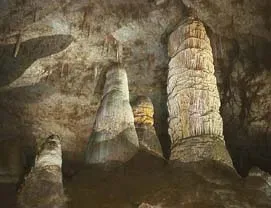
Inside the cavern stands “Goliath,” one of the largest stalagmites in the world, measuring 45 feet tall and 243 feet in circumference. You read those numbers and they sound impressive on paper. Then you stand next to it and the numbers suddenly feel completely inadequate. Imagine a mineral formation so massive it required thousands upon thousands of years to build, drip by patient drip.
Goliath reaches 45 feet in height and 243 feet in circumference, and its true size doesn’t become apparent until you walk around to the back and see it from a distance. It’s one thing to glimpse greatness. It’s another thing entirely to circle around it and feel the weight of geological time pressing down on your perception. This formation alone justifies the journey.
A Forest Made Of Stone
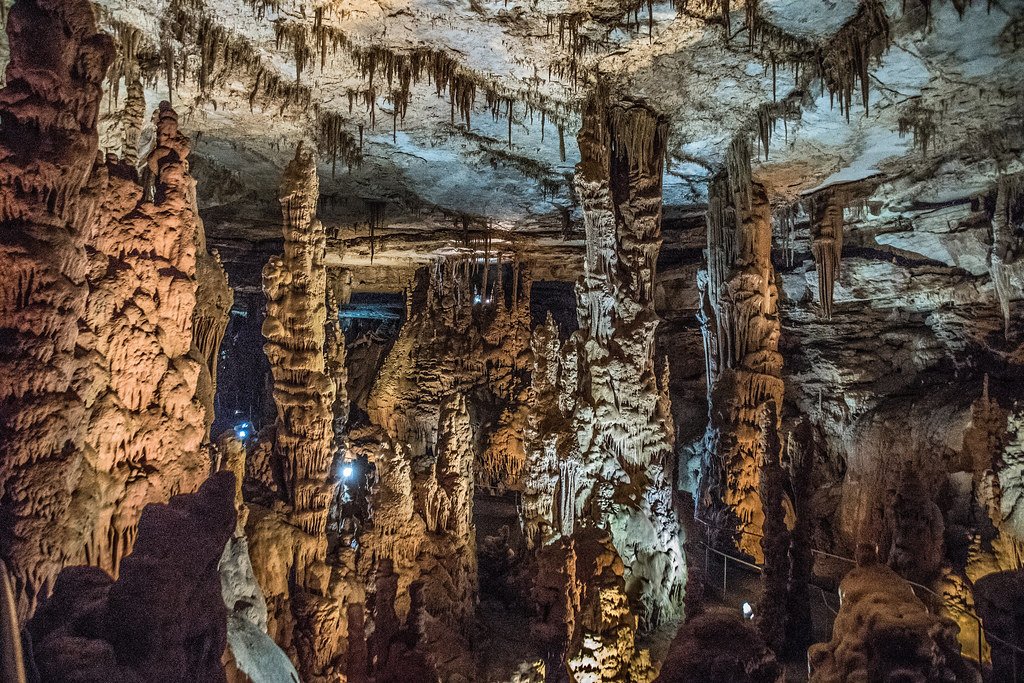
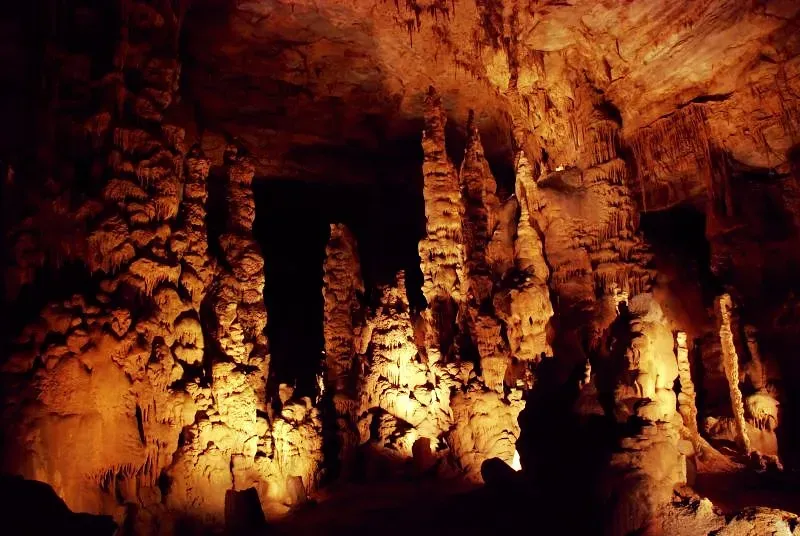
Cathedral Caverns is a karst cave with a large stalagmite forest covering approximately 3 acres. Let that sink in. Three acres of stone pillars rising from the cave floor like some ancient woodland that forgot how to be organic. The cave derives its name from the overabundance of stalagmite columns and totems adorning the pathways, which resembled an old cathedral to Mrs. Gurley.
Walking through this forest feels surreal. Each column tells its own story of mineral deposits, water flow, and unfathomable patience. Some formations stand tall and proud, others twist at improbable angles. You find yourself wondering how long each one took to form, what the world above looked like when they first began their slow climb toward the ceiling. The answer, honestly, is almost too vast to comprehend.
The Impossible Stalagmite
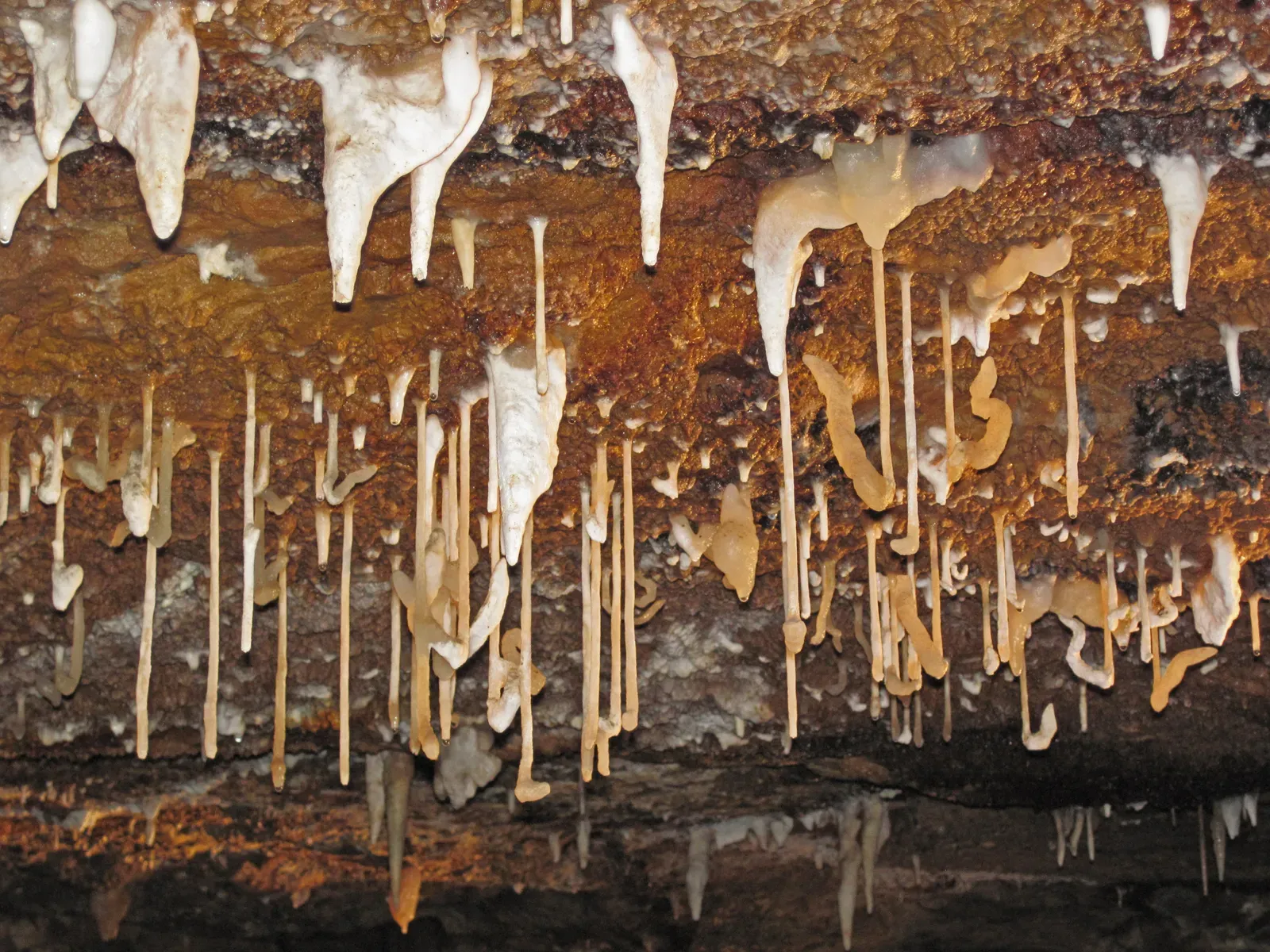
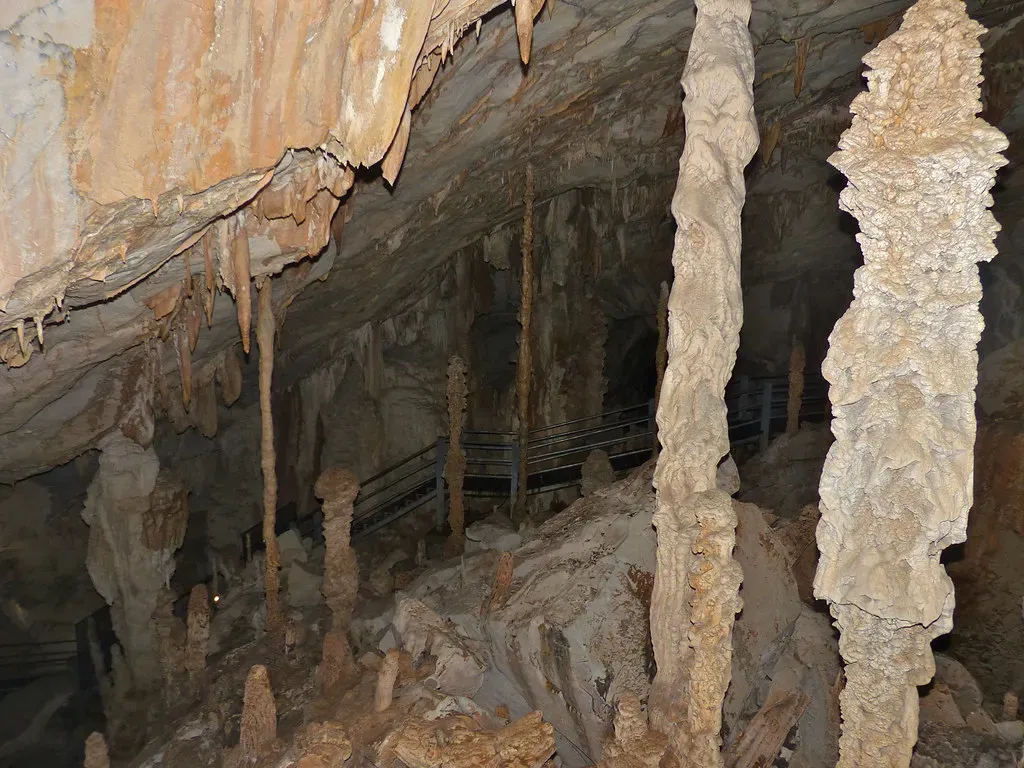
Among the formations is a most improbable stone structure: a stalagmite that is 27 feet tall and only 3 inches wide. This one defies every expectation you have about how physics should work. You look at it and think, “That should have collapsed centuries ago.” Yet there it stands, impossibly slender, reaching upward like a stone finger pointing at secrets only geology understands.
This improbable stalagmite has only a 3-inch diameter base and rises at a 45-degree angle, stretching about 25 feet in total length, making it unique that it’s still standing when it shouldn’t be. Some formations survive earthquakes, shifting ground, and the passage of time through sheer geological luck. This one seems to laugh at gravity itself.
Frozen In Stone And Time
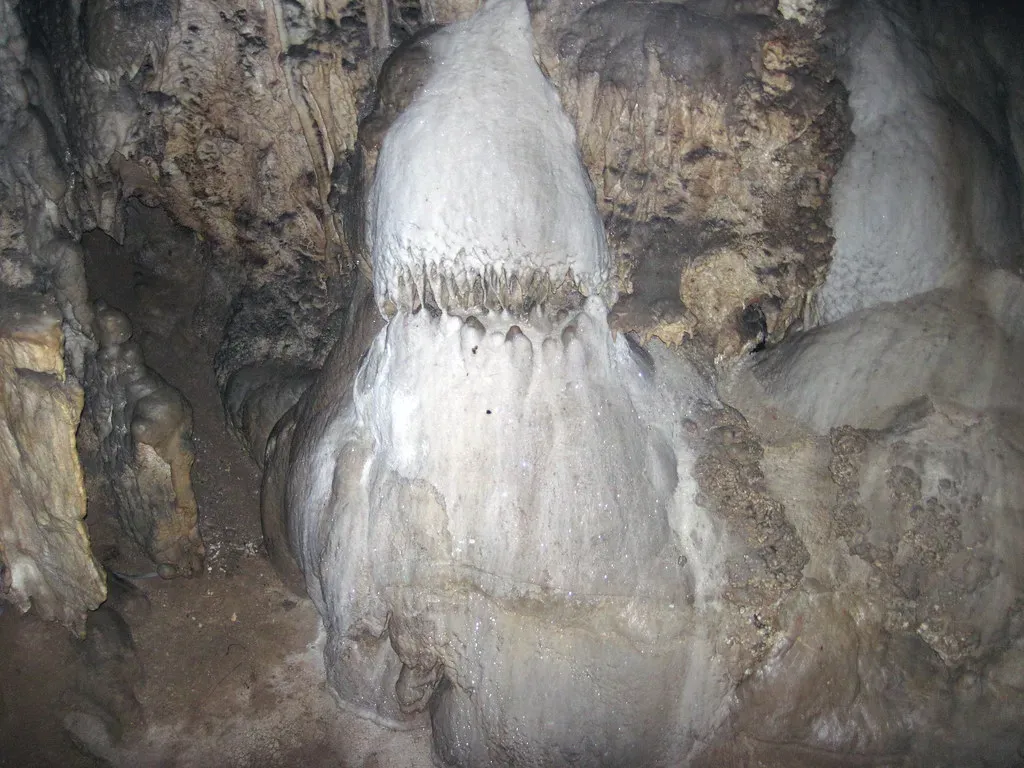
The cave features a large flowstone “waterfall” measuring 32 feet tall and 135 feet long. Imagine water deciding mid-cascade to simply stop. Not freeze in ice, but solidify into calcite sheets that mimic the flow patterns of actual water. This flowstone waterfall measures over 32 feet tall and about 130 feet long and has been referred to as a “frozen waterfall” over the years.
The formation looks like someone hit pause on a waterfall and then replaced every molecule with stone. You can still see the ripples, the cascading lines, the sense of movement captured forever in mineral form. It’s hauntingly beautiful in a way that makes you question whether you’re looking at geology or art. Probably both.
Ancient Mysteries Beneath The Surface
Archaeological excavations at the mouth of Cathedral Caverns have indicated occupation by Native Americans as recently as 200 years ago and perhaps as early as 7000 BCE. That’s nearly 9,000 years of human history connected to this single cave entrance. Think about all the people who sought shelter here, who used this massive opening as protection from storms, enemies, or the unforgiving Alabama heat.
The inside of Cathedral Caverns stays cool in the summer, and humans used the cave as shelter approximately 6,000 to 8,000 years ago, with Cherokee and Creek tribes utilizing it for trading about 200 years ago. Honestly, it’s hard to fathom. You’re walking the same paths, breathing the same cool cave air, standing in the same chambers where indigenous peoples conducted trade and built temporary homes. The cave has witnessed more history than most monuments.
From Bat Cave To State Treasure
Originally called Bat Cave, Cathedral Caverns was opened to the public by Jacob Gurley in the 1950s, renamed because of its cathedral-like appearance, and purchased by the state in 1987 before opening as a State Park in the summer of 2000. Jacob Gurley saw something special here, something worth sharing with the world. He spent years developing the cave, installing lighting, carving paths, making it accessible.
Gurley worked ten years to make it a show cave after selling all his possessions to buy it, using 65 kilometers of cable to install electric lighting with 80,000 watts. That’s the kind of obsession that creates something remarkable. You don’t pour that much effort into something unless you believe in it completely. The cathedral comparison wasn’t marketing hype. It was the honest truth.
Geological Time Measured In Millions
The caverns are located in the Cumberland Plateau physiographic section and formed within Mississippian geologic period limestone deposited between 350 and 320 million years ago. Wrap your head around that timeline. These caves began forming when the continents looked completely different, when life on Earth was still figuring itself out.
Geologists speculate the cave is between 8 million and 200 million years old, and approximately 340 million years ago Alabama was underneath an ancient ocean, with the African and North American continents colliding to push rocks upward and form the Appalachian Mountains. The limestone that makes up these caves once sat at the bottom of an ancient sea. Water, time, and chemistry did the rest, carving out chambers and passages in a process so gradual you’d never notice it happening in a human lifetime.
Experiencing The Underground Cathedral Today
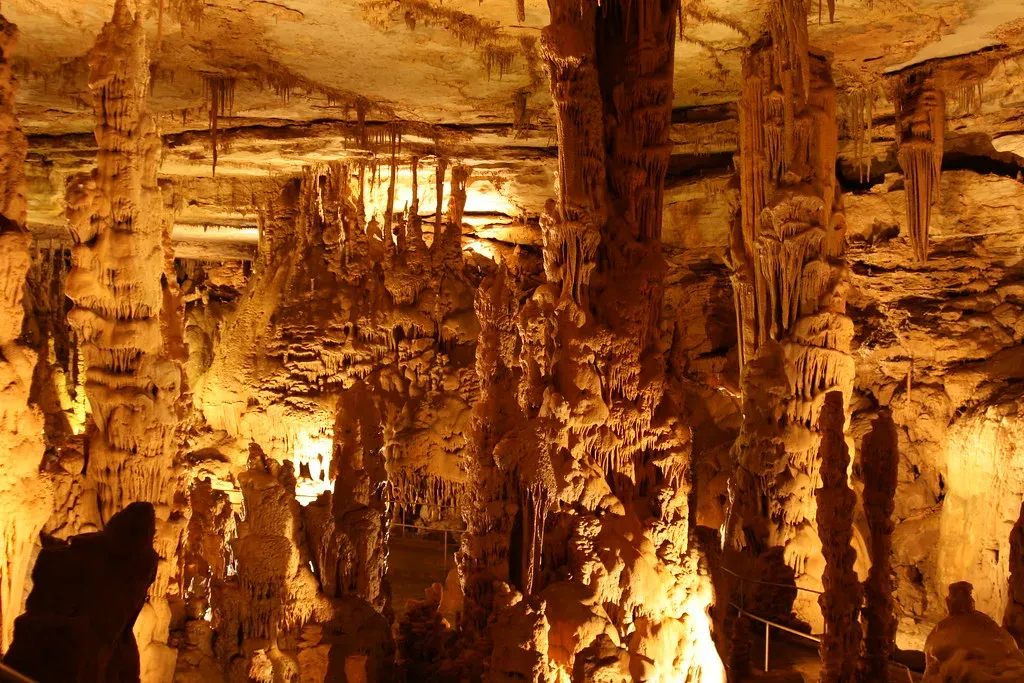
Tours last approximately 90 minutes and cover about 1.5 miles round trip. The cavern maintains a constant temperature of around 60 degrees and features beautiful active formations with pools and a river. You’ll want to bring a jacket regardless of the season outside. The cave doesn’t care what month it is.
The public portion extends along 8-foot-wide wheelchair-accessible concrete walkways for approximately 3,500 feet with some 2 miles of paths, while another 2,700 feet extend beyond where only experienced cavers are allowed. The accessibility here matters. This isn’t some treacherous crawl through tight passages. Families can experience this. People with mobility challenges can witness these formations. That democratization of wonder makes Cathedral Caverns genuinely special.
Did you ever imagine standing inside a mountain and feeling small in the best possible way? That’s what Cathedral Caverns offers. It’s not just about seeing spectacular formations or understanding geological processes. It’s about feeling connected to something vastly older and more patient than human civilization. What part of this underground world would you most want to explore?