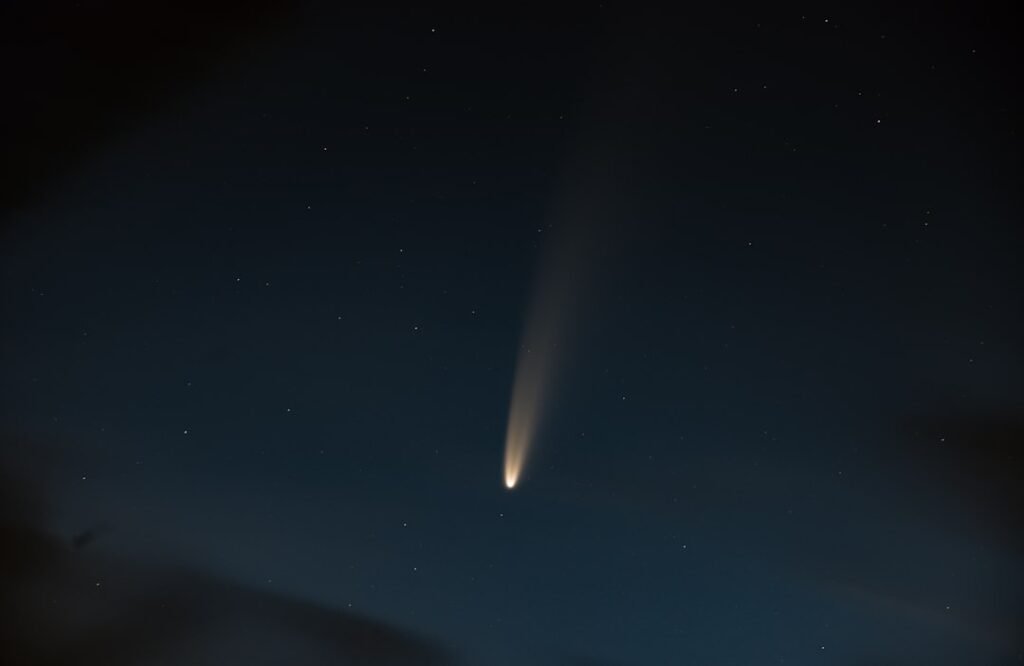

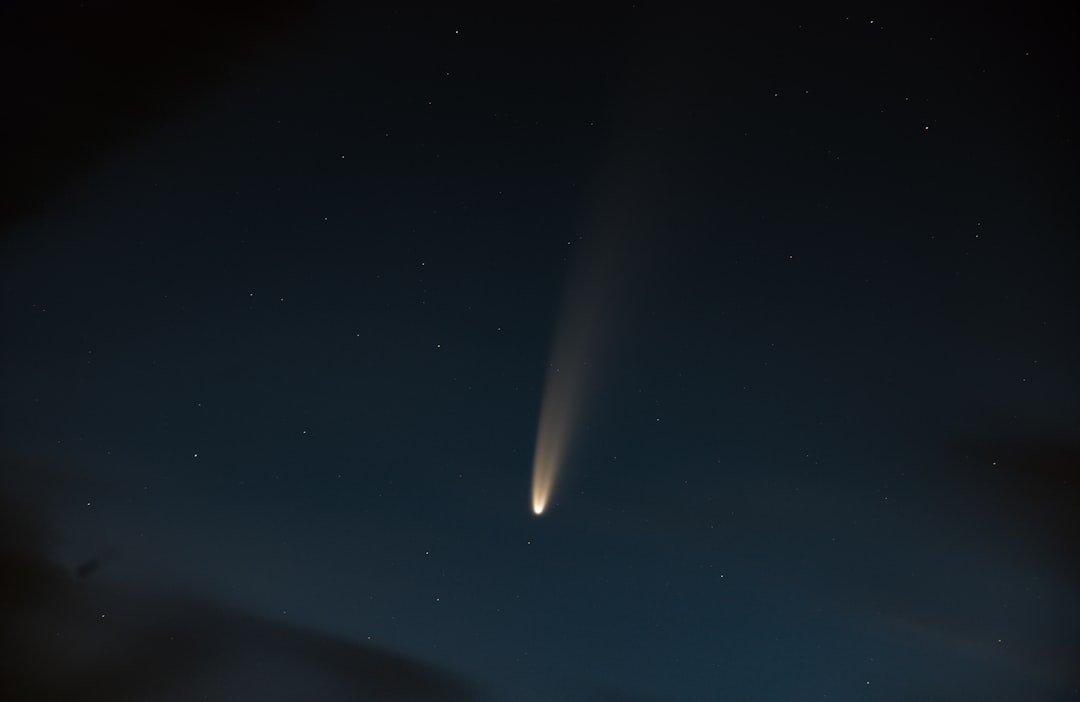
Swift Detection Highlights Vigilant Monitoring (Image Credits: Unsplash)
A small asteroid named 2026 FM3 races toward our planet for a close encounter in the early hours of March 25, 2026. Discovered just three days earlier, this car-sized space rock has captured the attention of astronomers worldwide. NASA scientists emphasize that the flyby poses no threat, serving instead as a routine reminder of the dynamic nature of near-Earth objects.[1][2]
Swift Detection Highlights Vigilant Monitoring
Astronomers spotted 2026 FM3 on March 22, allowing experts to calculate its trajectory in record time. Such rapid identification underscores the effectiveness of global telescope networks dedicated to tracking potential near-Earth objects. Within hours of discovery, observations confirmed the asteroid’s path would bring it safely past Earth.[3]
The object’s faint brightness, indicated by an absolute magnitude of 29.3, made initial detection challenging. Yet, automated surveys succeeded, feeding data into NASA’s Center for Near-Earth Object Studies. This event exemplifies how modern technology keeps tabs on even the tiniest cosmic visitors.
Trajectory Details: Speed, Size, and Distance
At its closest, 2026 FM3 will pass about 148,000 miles from Earth’s surface, roughly 60% of the distance to the Moon. Traveling at 5.44 kilometers per second – or around 12,168 miles per hour – the asteroid will zip by in moments.[1][4][2]
Estimated at 12 to 26 feet across, the space rock qualifies as car-sized, with a diameter between 3.6 and 8.1 meters. Observers will not see it with the naked eye, as it remains too dim and distant. The flyby peaks at 02:07 UTC on March 25, equivalent to 10:07 p.m. EDT on March 24.
- Size: Approximately 15 feet in diameter
- Closest approach: 148,000 miles (0.00159 AU)
- Speed: 12,168 mph (5.44 km/s)
- Time: 02:07 UTC, March 25, 2026
- Rarity: Average occurrence, about 100 similar events yearly
The Bigger Picture of Near-Earth Objects
Events like this one occur frequently, with NASA cataloging dozens of close approaches each month. Small asteroids such as 2026 FM3 enter Earth’s vicinity roughly 100 times per year without impact risk. Larger objects draw more concern, but these tiny ones burn up harmlessly if they enter the atmosphere.[1]
Recent flybys include bus-sized 2026 FG4 on the same day, at over a million miles out. Tracking improves yearly, reducing surprises. Scientists use these passes to refine orbital models and predict future paths.
NASA’s Role in Planetary Defense
The Jet Propulsion Laboratory’s Asteroid Watch program lists 2026 FM3 as the nearest upcoming approach. Teams continuously update data from ground-based telescopes and space assets. No impact risks appear for this asteroid over the next century.[2]
Planetary defense efforts extend beyond monitoring to missions like DART, which tested deflection techniques. Public awareness grows through these announcements, fostering interest in space science. Enthusiasts can follow live updates via official channels.
| Asteroid | Size | Distance (miles) | Date |
|---|---|---|---|
| 2026 FM3 | Car-sized | 148,000 | Mar 25 |
| 2026 FG4 | Bus-sized | 1,110,000 | Mar 25 |
| 2026 EP3 | Airplane-sized | 1,960,000 | Mar 25 |
Key Takeaways for Skywatchers
- 2026 FM3 presents no danger and will pass safely closer than the Moon.
- Rapid discovery three days ago shows monitoring prowess.
- Small flybys like this build data for future threats.
This flyby reinforces humanity’s growing capability to track our cosmic neighborhood. While 2026 FM3 fades into the distance, it leaves a legacy of enhanced vigilance. What do you think about these routine reminders from space? Tell us in the comments.