
What if the most powerful force shaping your life isn’t out there in the world, but sitting quietly inside your skull? It sounds almost too convenient to be true. But science, over the past few decades, has been slowly, methodically building a case that what you think, believe, and mentally rehearse can alter your brain, your body, your behavior, and quite possibly the reality you experience every single day.
This isn’t about mysticism or wishful thinking. The conversation has moved into neuroscience labs, psychology classrooms, and quantum physics departments. Researchers are asking genuinely radical questions, and some of the answers are surprising even to the most hardened skeptics. So let’s dive in.
Your Brain Does Not Know the Difference Between Real and Imagined
Here’s the thing that honestly blew my mind when I first came across it. Neurons fire and chemicals are released in your brain whether something is real or imagined. On brain scans, imaginative thoughts activate many identical brain areas, which directly influence you, physically and emotionally. From a neuroscientific perspective, imagining an act and doing it are not that different.
Think about what that means for a moment. When you vividly replay a stressful confrontation in your head, your brain is treating it almost like a real event. Every minute of every day, your body is physically reacting, literally changing, in response to the thoughts that run through your mind. Every single thing of which you are aware, including sounds, sights, thoughts, and feelings, can be directly mapped to what is happening in your brain. Your thoughts aren’t just passive whispers. They are active architects.
Neuroplasticity: How Thought Patterns Rebuild the Brain
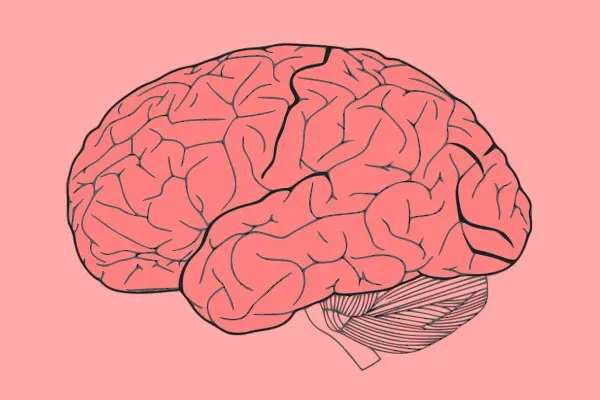
You might have heard the phrase “neurons that fire together, wire together.” It’s more than a catchy slogan. The idea that thoughts can shape reality has captured human imagination for centuries, and in contemporary science, the relationship between cognition and reality is being explored through neuroplasticity, the placebo effect, and even quantum theories of consciousness.
What’s truly exciting is that you don’t need years of effort to see results. Research about the positive impact of mindfulness on the brain and mental health points to neuroplasticity as the cause. In mindfulness, by intentionally directing attention inward and cultivating awareness of breath, thoughts, and feelings, you are becoming aware of your brain’s Default Mode Network and exerting control over it. When you guide that network, you are interrupting habitual thought patterns and orienting your brain in the present moment. One remarkable study even found measurable brain changes after just eight weeks of regular meditation practice.
The Placebo Effect: When Belief Becomes Biology

Let’s be real, nothing makes the power of thought more undeniable than the placebo effect. The placebo effect is the phenomenon of our expectations resulting in real physical and mental changes. It has frustrated, intrigued, and perplexed researchers at least as far back as the 1700s. More recently, placebos have been found to impact a wide breadth of areas such as pain, nausea, asthma, blood pressure, speed, strength, endurance, depression, and focus.
The mechanism is even more remarkable than the results. Researchers gave patients in pain either morphine, a placebo, or naloxone, a drug that blocks the endorphins morphine triggers. They found that naloxone blocked the painkilling effect of placebos too, demonstrating that placebos release actual endorphins in the same way that a drug like morphine can. In other words, the thought of relief triggered a genuine, measurable chemical response in your body. That is not imagination. That is biology being directed by belief.
The Power of Visualization in Real-World Performance
Here’s where it gets almost uncomfortably exciting for anyone who has ever dismissed mental rehearsal as fluff. Mental imagery, often referred to as visualization, has been shown to activate the same neural pathways in the brain that are involved in the actual physical execution of sports movements. This phenomenon suggests that mental rehearsal can improve neuromuscular coordination.
The science backs this up with hard data across many disciplines. Studies on basketball free throw shooting, dart throwing, golf putting, gymnastic routines, ski racing, and swimming have all found that groups combining physical practice with structured mental rehearsal outperform groups doing equivalent amounts of physical practice alone. The combination is reliably superior to either approach in isolation, because the two methods are training different but complementary aspects of the same underlying motor system. Think of visualization as a second workout your body doesn’t even know it missed.
The Mindset Effect: How Your Beliefs Reshape Your Outcomes

Stanford psychologist Carol Dweck spent decades studying something deceptively simple: what happens when people believe their abilities can grow versus believing they are fixed forever. A growth mindset is the belief that human capacities are not fixed but can be developed over time, and mindset research examines the power of such beliefs to influence human behavior.
The results of acting on that belief are measurable and striking. A short, online growth mindset intervention that teaches that intellectual abilities can be developed improved grades among lower-achieving students and increased overall enrollment in advanced mathematics courses in a nationally representative sample of students in secondary education in the United States. Less than an hour of reshaping how students thought about their own minds shifted real-world academic outcomes. Students’ mindsets, specifically how they perceive their abilities, played a key role in their motivation and achievement. Students who believed their intelligence could be developed outperformed those who believed their intelligence was fixed.
The Nocebo Effect: When Negative Thoughts Turn Harmful

It would be dishonest to only celebrate the uplifting side of this story. The same mechanism that heals can also harm. The brain can also influence health in a harmful way. This is the nocebo effect, from the Latin meaning to harm. Well-documented examples of the nocebo effect include the adverse effects some life stresses have on the heart.
Chronic stress is a pivotal factor in the mind-body connection. Modern life often subjects individuals to relentless stress, which can have devastating effects when left unaddressed. When faced with stress, our bodies undergo a series of changes, including increased heart rate, elevated blood pressure, and a weakened immune response. Over time, chronic stress can lead to various health issues, from cardiovascular disease to autoimmune disorders. Your thoughts, in other words, are not neutral passengers. They are actively steering your health in one direction or another, every single day.
Quantum Consciousness: Is the Observer Actually Part of Reality?

This is where things get genuinely mind-bending, and I’ll admit, it’s hard to say for sure exactly where established science ends and bold theory begins. For over a century, quantum mechanics has challenged our deepest intuitions about the nature of reality. Particles exist in multiple states at once. Observations appear to collapse this uncertainty into a single outcome. Yet the role of the observer, you, me, anyone conscious, has remained strangely ambiguous.
A newer model called N-Frame attempts to formalize this relationship. It offers a striking proposal: your conscious mind doesn’t just observe reality, it shapes it. The N-Frame model draws from physics, neuroscience, and psychology to present the bold idea that our conscious experience arises from, and simultaneously feeds back into, the quantum fabric of reality. The quantum observer effect suggests that reality may not be as separate from the observer as people may assume. One proposal to help explain this is the von Neumann-Wigner consciousness-collapse interpretation, which says that a measurement isn’t complete until a conscious observer becomes aware of it. If observing affects how reality unfolds, that could imply that awareness, in other words human consciousness, may play an active role in the physical world.
Conclusion: You Are Not Just a Passenger in Your Own Life

Taken together, what all of this research points toward is both humbling and electrifying. Your thoughts are not just internal chatter. They reshape your brain through neuroplasticity, trigger real chemical responses through the placebo and nocebo effects, train your motor system through visualization, and determine whether you succeed or give up through mindset. That is an enormous amount of influence sitting between your ears.
None of this means you can think your way out of every difficulty or that positive affirmations will solve every problem life throws at you. Reality is complex, and so is the science. But the evidence is clear: the quality of your inner world directly influences the quality of your outer one.
You already have thoughts running constantly. The only question is whether you will take the wheel or keep letting them steer on their own. What kind of thoughts are quietly shaping your world right now?