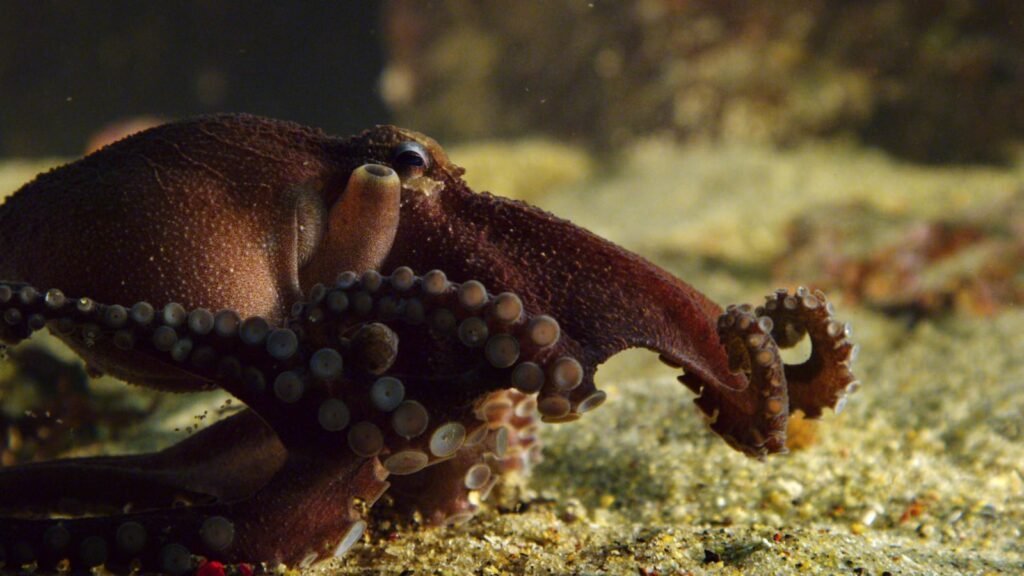

Under red night lights in a quiet lab, an octopus dozes – its skin flaring from marble white to inky espresso as if a storm is crossing a tiny ocean. Cameras keep rolling, and then something uncanny happens: the animal’s colors fire in rapid bursts, pupils narrow, arms twitch, and the entire body seems to act out a secret story. For years, this was a wildlife rumor – odd, mesmerizing, but hard to prove. Now, a wave of careful experiments and long, uninterrupted footage suggests these episodes aren’t random. They look like a cephalopod version of REM sleep, the phase in humans most closely tied to dreams. If octopuses can enter that state, the implications ripple far beyond the tide pool.
The Hidden Clues
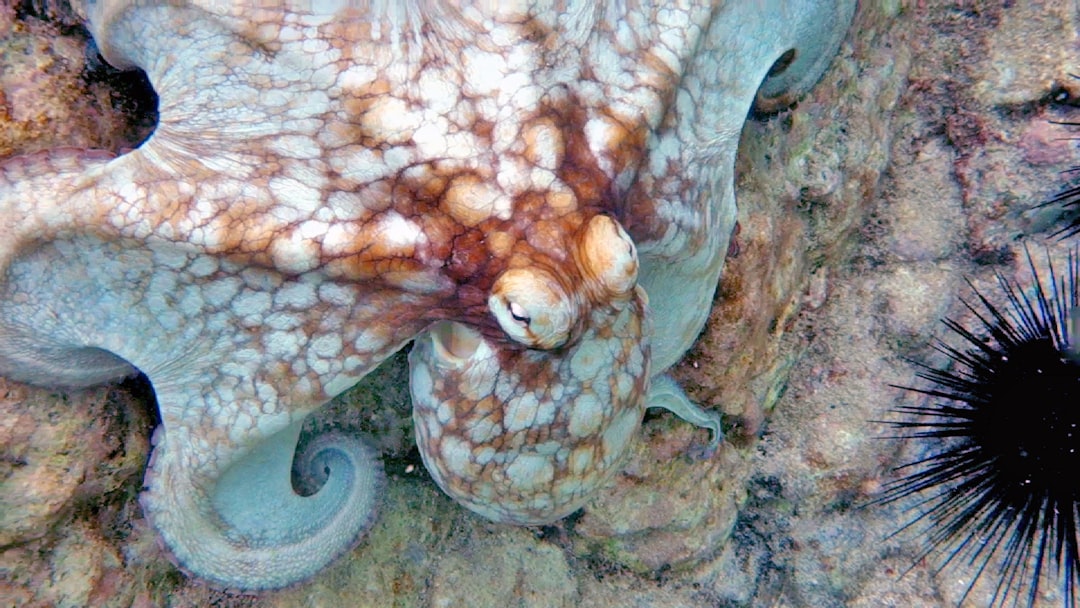
Here’s the striking clue: during restful stretches, octopuses switch between a calm, pale stillness and brief, vivid bursts of activity marked by rapid skin pattern changes. The quiet phase is slow and steady, almost like a held breath, while the active phase arrives in short flares, as if the animal is replaying scenes across its body. Those shifting mosaics – stripes, speckles, waves – aren’t just decoration; on a conscious octopus, they’re used to hunt, flirt, hide, or bluff. Seeing them flash while the animal is apparently asleep is like watching a projector flicker to life in a dark theater. It suggests internal narratives may be running even with eyes mostly shut. That’s the first breadcrumb pointing toward dream-like sleep.
Another hint is timing: these active episodes appear in repeating cycles across the rest period, rather than popping up chaotically. The alternation of quiet and active sleep echoes patterns seen in mammals and birds, even if the exact rhythms differ. It’s a behavioral rhyme across distant branches of the tree of life. Add in subtle muscle twitches and pupil contractions, and the case grows stronger. Nothing here is definitive on its own, but together these clues feel less like coincidence and more like a pattern asking to be named.
From Ancient Tools to Modern Science
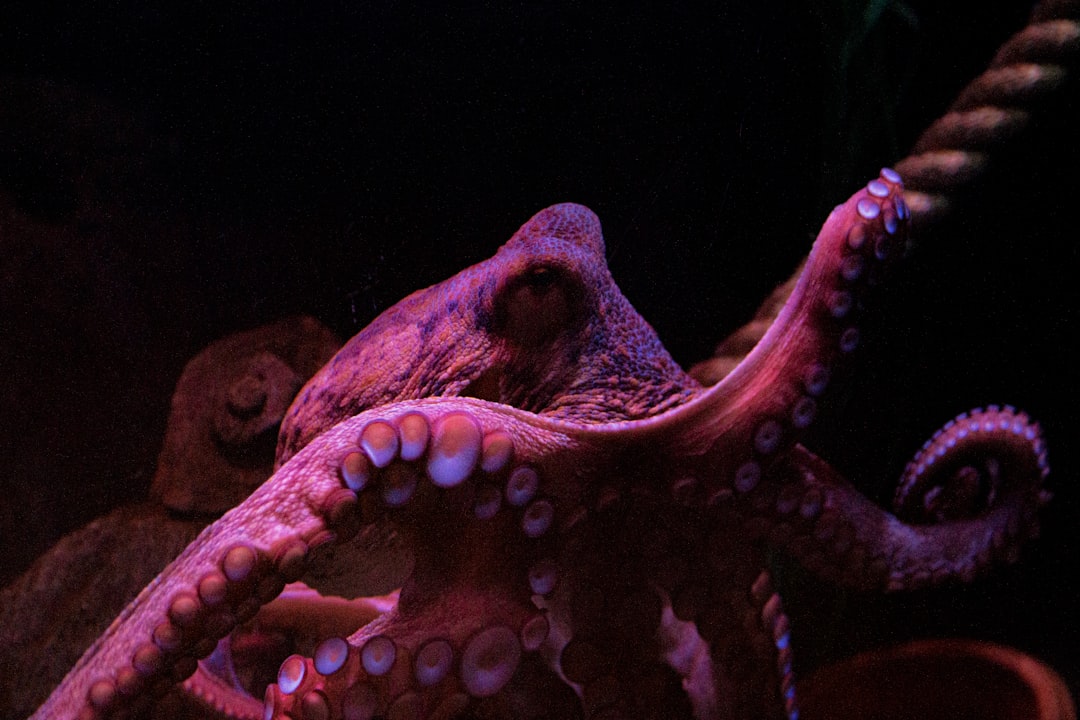
Early sleep studies relied on simple observation – light, stopwatch, notebook – because cephalopods don’t wear EEG caps easily. Today’s researchers combine high-resolution, low-light video, automated motion tracking, and machine learning that treats an octopus’s skin like a 4K billboard of the nervous system. Instead of counting blinks, algorithms parse thousands of pixel-level changes to classify sleep phases with statistical rigor. That’s turned mesmerizing footage into quantifiable data. It’s the scientific upgrade from peering through a porthole to scanning an entire sea floor. With those tools, hypotheses about REM-like sleep have moved from speculation to testable claims.
Some teams pair video with gentle physiological recordings, monitoring breathing-like mantle movements and changes in arousal thresholds. Others run memory tasks before rest – puzzles for food, patterns to recognize – and then watch whether active sleep follows more intensely afterward. If REM-like sleep scales with learning, that’s a classic sign of memory consolidation. The convergence of methods – behavioral markers, timing, responsiveness, learning links – creates a layered picture that’s far sturdier than any single measure.
Inside an Octopus Night: What Cameras See
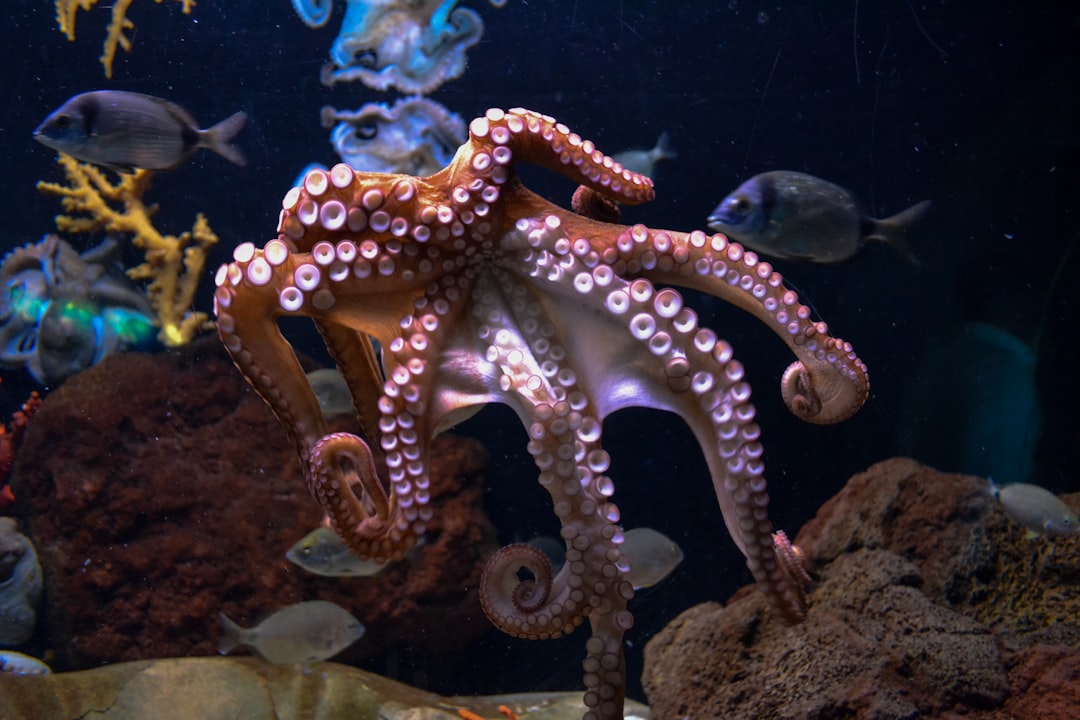
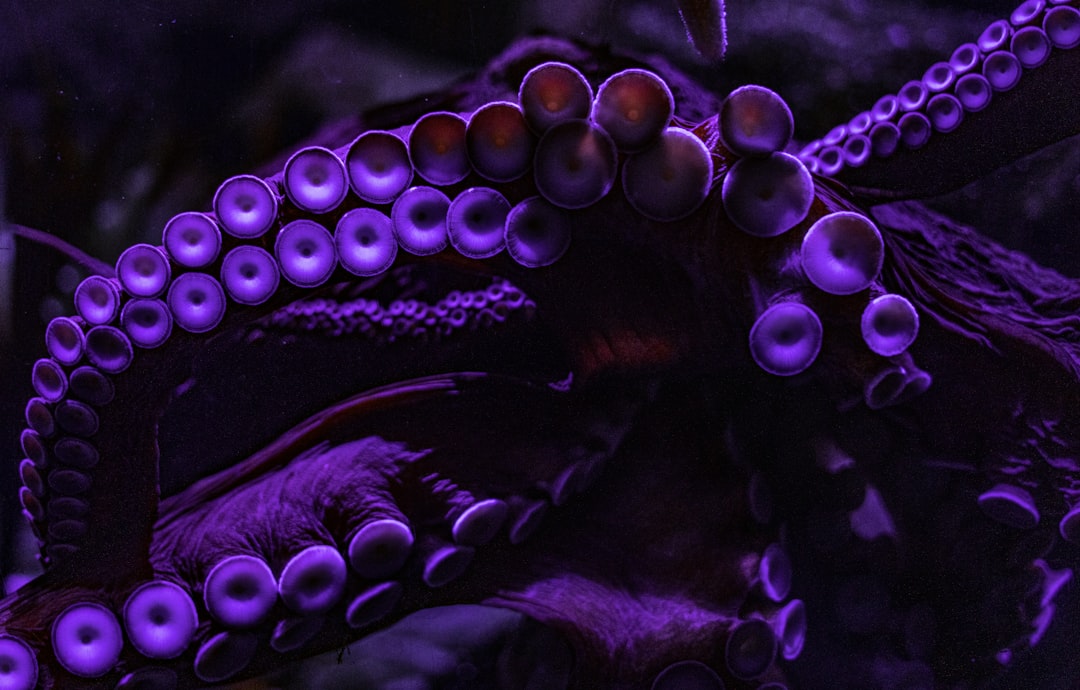
In the quiet phase, the animal settles into a den or hugs the tank glass, skin smooth, colors subdued, arms loosely coiled. Then, without warning, the body ignites with moving stripes and high-contrast patches that would normally signal stalking or startling a crab. Eye slits narrow and widen; suckers flex and release with tiny, rhythmic ripples. It plays like a highlight reel of waking life, except the room is still and no prey is in sight. The entire sequence lasts a short burst before the octopus drifts back into calm. Then, later, it happens again.
When I first watched one of these recordings, it felt like standing outside a house at night and catching a film flickering behind the curtains. You can’t hear the dialogue, but the scene is unmistakable. The octopus seems to rehearse the world on its skin: chase, camouflage, confrontation, escape. It’s a moving canvas, a nervous system painting in real time. If this is sleep, it’s a sleep that shows itself like few others in nature – written in color and motion.
What the Brain Might Be Doing
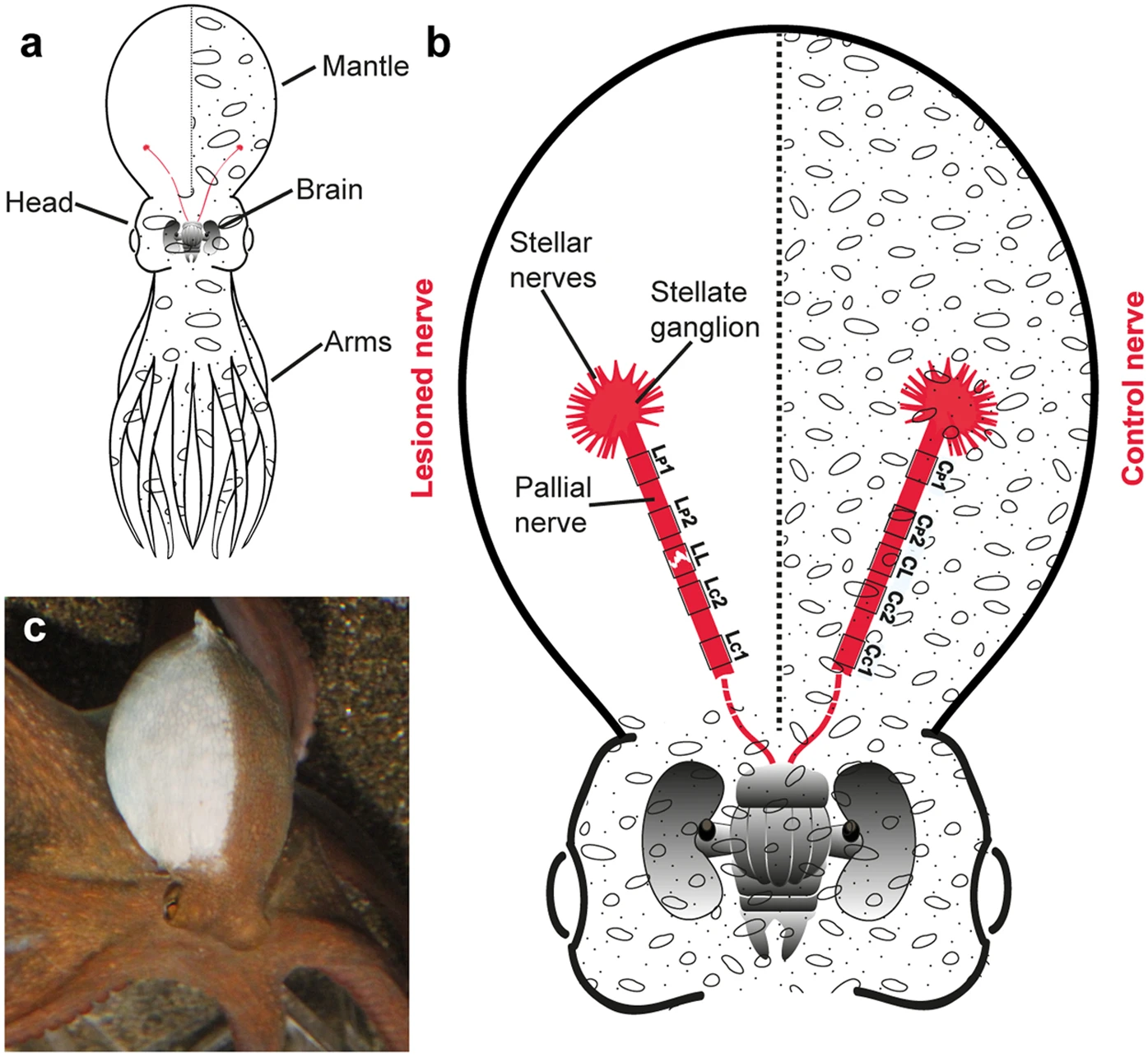
Octopus brains are both familiar and strange – a central brain with lobes for learning and vision, plus a distributed network where arms host their own mini-processors. During active sleep, the central patterns look behaviorally “awake,” even though the animal is not responding to mild disturbance. That mismatch hints at internal simulation, a nervous system running scenarios off-line. In vertebrates, REM is linked to synaptic reshaping and memory consolidation; the octopus case may point toward a similar function emerging independently. Convergent evolution could explain why distant lineages arrived at parallel solutions for complex cognition.
There’s also a sensory twist. Because octopuses communicate through skin patterns, a REM-like state might rehearse not just actions but displays – the language of their body. Practicing a camouflage or threat posture during sleep could fine-tune reflexes for split-second survival at dawn. If the arms’ local circuits join in, the system might be rehearsing coordination from core to tentacle tip. In a creature that thinks with both brain and body, dreaming – if that’s what this is – may be a full-cast rehearsal.
Why It Matters
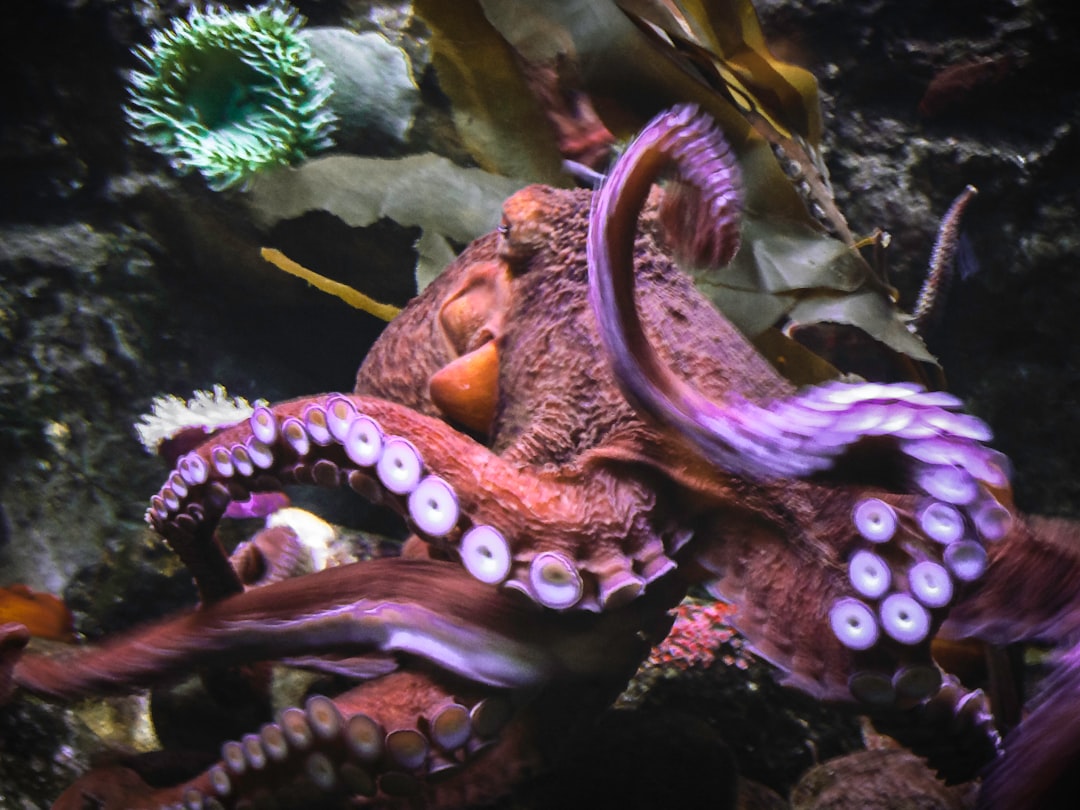
First, it recasts intelligence. We tend to reserve talk of dreams for land animals with big brains and familiar faces, but octopuses remind us that cognition blooms in alien architectures. If REM-like sleep supports memory, it underscores how learning is stitched into the biology of rest, not just in us but across life. That strengthens the argument that sleep is not a luxury but a core requirement of complex nervous systems. It also challenges the idea that you need a cortex to run internal simulations. The map of minds on Earth gets bigger when a cephalopod joins the conversation.
Second, it reshapes welfare and ethics. If octopuses rely on specific sleep stages, lab and aquarium environments should protect dark cycles, den spaces, and low disturbance. Captive practices might need to mirror wild photoperiods and shelter-rich habitats. Fieldwork, lighting, and tourism that intrude on nocturnal behavior may carry hidden costs. In policy terms, recognizing REM-like sleep could tip decisions about humane handling, transport, and research standards. What the animal does at midnight may be as important as what we see at noon.
Global Perspectives
Progress has come from a patchwork of labs and coastlines, with teams in multiple countries documenting similar patterns in different octopus species. That geographic spread matters, because it reduces the risk that a single population or setup is producing a fluke result. Some studies draw from tropical reefs where shelter is abundant; others film cold-water species with different daily rhythms. Despite those contrasts, the hallmark alternation between quiet and active sleep keeps appearing. Replication across environments is the backbone of any solid biological claim. The story is becoming less about one lab’s footage and more about a shared signal in separate seas.
Comparative angles are opening too. Cuttlefish show their own REM-like sleep displays, hinting that the capacity might be common across cephalopods. Birds and reptiles have also surprised researchers with sleep architectures richer than once assumed. The pattern that emerges is not a neat ladder with mammals on top, but a braided river of solutions to the problem of learning and stability. Octopuses take their place as one powerful current in that river. For science, that broad view is the payoff: a deeper, more plural story of how brains rest and remember.
The Future Landscape
The next steps will be technical and bold: more naturalistic recordings in the wild, gentler sensors, and long-term tracking that follows individuals across weeks, not hours. Expect smarter computer vision that can decode skin patterns as linguistic units – verbs, adjectives, punctuation – rather than just colors. Portable biologgers and improved low-light optics could capture sleep cycles on reefs without bright lights or tanks. If researchers can link pre-sleep experiences to specific active-sleep sequences, the memory case gets sharper. Cross-species work with cuttlefish and squids will test whether a shared mechanism stretches across the cephalopod family. With better data resolution, debates will shift from “is it REM-like?” to “what exactly is it doing?”
Challenges remain. Attaching sensors to delicate skin without stress is hard, and any invasive approach risks changing the behavior under study. Wild conditions are noisy – currents, predators, shifting light – making clean comparisons tricky. Funding often favors familiar animals, so cephalopod sleep research must fight for attention. Still, the momentum is real, and every new dataset helps triangulate the truth. The prize is a richer theory of sleep that’s not vertebrate-centric – and a clearer view of how minds sculpt themselves in the dark.
Conclusion

If this research excites you, support institutions that study marine cognition and fund projects focused on noninvasive, ethical methods. Choose aquariums and outreach programs that prioritize shelter-rich exhibits, natural photoperiods, and minimal nighttime disturbance. When you visit tide pools or dive at dusk, dim your lights, slow down, and treat resting animals like sleeping neighbors. Educators can weave cephalopod sleep into lessons about evolution, neurobiology, and animal welfare to spark the next generation of researchers. Readers with tech skills can volunteer data-science time to open projects that classify skin patterns from public footage. Small moves like these add up to big, steady progress.
At home, share responsible videos that show natural behaviors rather than staged stunts, and flag content that promotes handling or harassment. Sleep is fragile for any species, and it’s especially precious for animals that depend on stealth and surprise. If octopuses practice their futures at night, the least we can do is let them rehearse in peace. Support marine protected areas that safeguard the quiet hours coastal species need to rest. Back policies that reduce light pollution over reefs and kelp forests. Awareness is power, and in this case, it’s also mercy.
Suhail Ahmed is a passionate digital professional and nature enthusiast with over 8 years of experience in content strategy, SEO, web development, and digital operations. Alongside his freelance journey, Suhail actively contributes to nature and wildlife platforms like Discover Wildlife, where he channels his curiosity for the planet into engaging, educational storytelling.
With a strong background in managing digital ecosystems — from ecommerce stores and WordPress websites to social media and automation — Suhail merges technical precision with creative insight. His content reflects a rare balance: SEO-friendly yet deeply human, data-informed yet emotionally resonant.
Driven by a love for discovery and storytelling, Suhail believes in using digital platforms to amplify causes that matter — especially those protecting Earth’s biodiversity and inspiring sustainable living. Whether he’s managing online projects or crafting wildlife content, his goal remains the same: to inform, inspire, and leave a positive digital footprint.