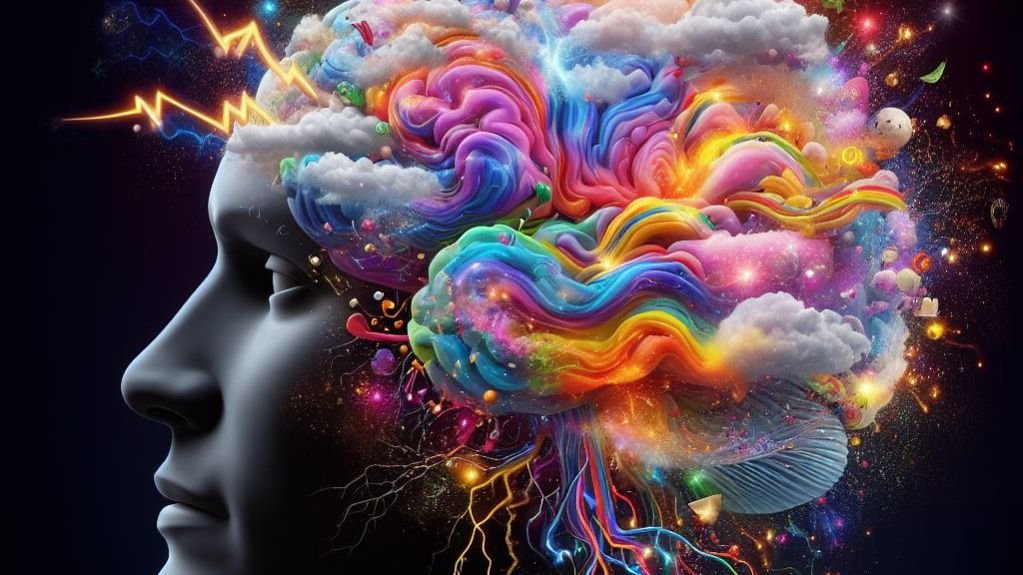

Every time you wake up in the morning and realize you’re you again, something mysterious is happening. Your thoughts, memories, and sense of self somehow bubble up from a tangled lump of biological tissue weighing about as much as a small melon. For more than a century, most scientists have insisted that this is where the story of consciousness begins and ends: inside the brain, full stop.
Yet in the last few years, a quiet but growing rebellion has started to take shape. New theories from physics, neuroscience, and philosophy are asking a daring question many once dismissed as fantasy: could consciousness in some form exist beyond the brain? Not as a ghostly soul floating in the clouds, but as something woven into reality itself in ways we’re only beginning to imagine.
The Cracks in the “Brain-Only” View of Consciousness
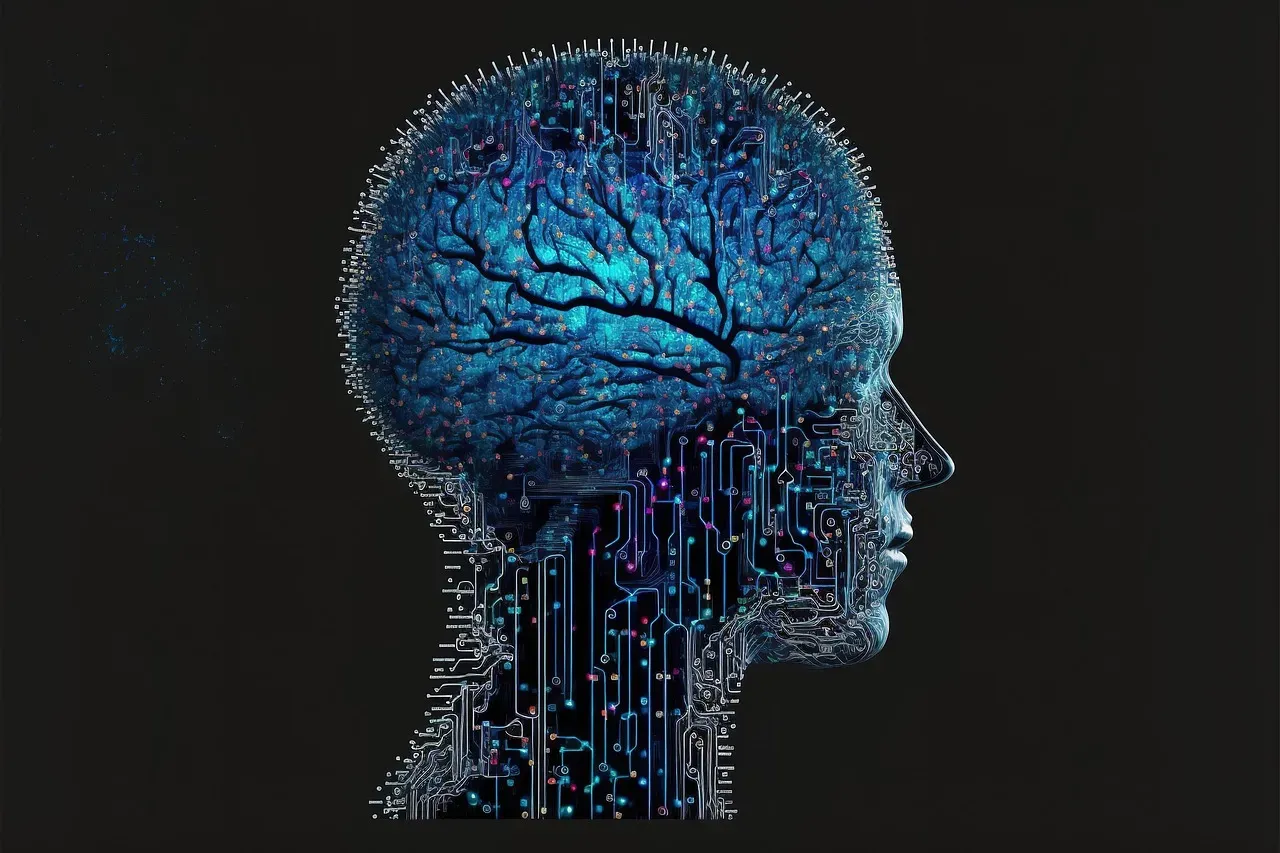
For decades, the dominant view in neuroscience has been straightforward: the brain produces consciousness the way the liver produces bile. Change the brain, change the mind; damage the brain, damage the mind; shut down the brain, and the mind disappears. This tight link is backed by mountains of evidence from brain imaging, anesthesia, and neurodegenerative diseases. On the surface, it looks like a closed case.
But when you look a bit closer, things get stranger. There’s still no widely accepted explanation for how electrical signals and chemical reactions inside neurons turn into the raw feel of being alive: the redness of red, the ache of grief, the taste of chocolate. This gap between brain activity and subjective experience is sometimes called the “hard problem” of consciousness, and it stubbornly refuses to go away. It’s that stubbornness that’s pushing some researchers to consider ideas that, a decade or two ago, would have been laughed out of the room.
Panpsychism: Is Consciousness a Basic Feature of the Universe?
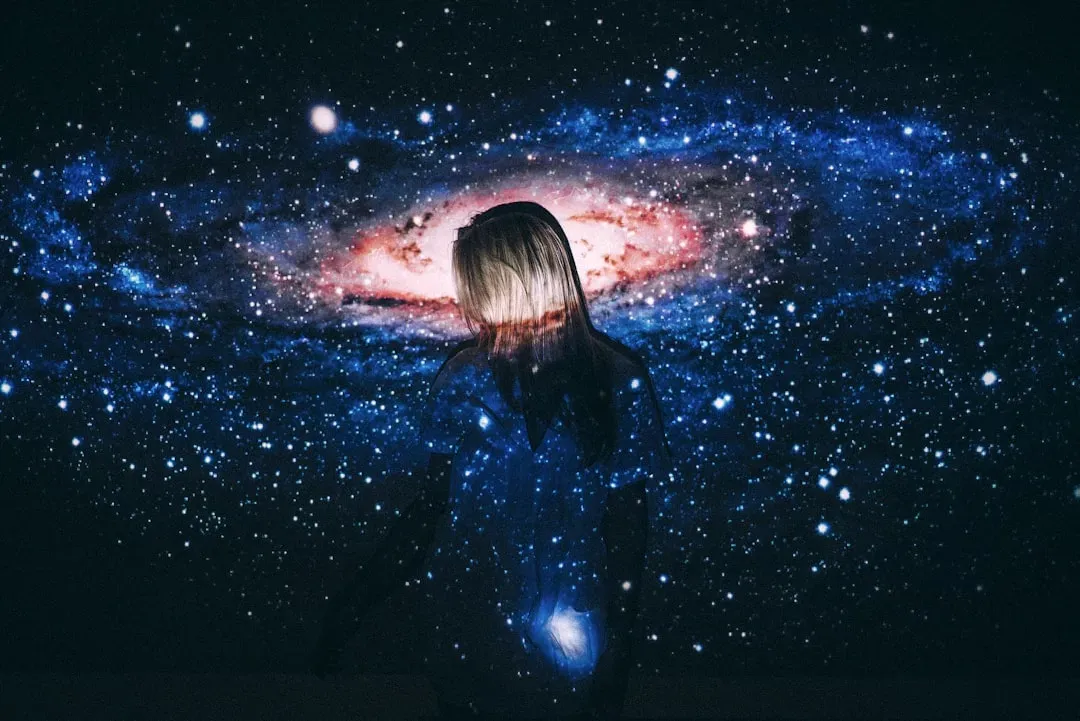
One of the boldest ideas gaining traction is panpsychism, the view that consciousness is not something that suddenly appears when brains get complicated enough, but a basic property of the universe, like mass or electric charge. In this picture, consciousness doesn’t magically pop into existence in humans; instead, it is gradually organized, combined, and intensified as systems become more complex. A rock wouldn’t think or feel, but maybe, in some unimaginably faint way, its particles carry the tiniest flicker of what will one day scale up to full-blown awareness in a brain.
This sounds wild at first, almost like something out of spiritual traditions, but some serious contemporary philosophers and a few physicists are taking it seriously. The reason is simple: if consciousness is built into the fabric of reality, we don’t have to explain how it appears out of nowhere. It’s more like rearranging ingredients that were already there. You can think of it like building a symphony from individual notes; the notes don’t become music until they’re arranged the right way, but they were always musical in potential.
Integrated Information Theory: Consciousness as a Pattern That Might Outlive the Brain
Another influential approach, called Integrated Information Theory (IIT), suggests that consciousness is what it feels like to be a system that’s both highly differentiated and deeply interconnected. In plainer language, if information within a system is richly linked, forming a single whole that can’t be broken down without losing something essential, that system is conscious to some degree. According to IIT, consciousness is about structure and relationships, not specific biological material.
This has a provocative implication: if consciousness is tied to patterns of information rather than to neurons specifically, then in principle any system with the right kind of complexity could be conscious – a brain, an artificial network, maybe even something we haven’t imagined yet. Some thinkers argue that this leaves the door slightly open to the idea that parts of “you” might, in theory, be re-instantiated elsewhere if the same pattern were recreated. That doesn’t prove consciousness exists beyond the brain today, but it shifts the discussion from “this grey matter only” to “this specific kind of information web,” which quietly moves the boundary of where consciousness might be found.
Quantum Theories: Does the Mind Tap Into a Deeper Level of Reality?
Quantum physics has long been a magnet for speculation about consciousness, and not always in a helpful way. Still, there are genuinely serious proposals exploring whether quantum processes could play a role in how the brain works and, more controversially, whether consciousness might be entangled with the deeper structure of reality. Some models argue that quantum events in tiny structures within neurons could contribute to our conscious experience, not simply as another type of brain activity, but as points where physical reality and subjective awareness meet.
Most physicists remain skeptical that we need quantum tricks to explain the mind, and plenty of these ideas may never be testable. But the reason they keep resurfacing is that quantum mechanics already shows us a world that doesn’t fit common-sense pictures: particles existing in multiple states at once, connections that seem to ignore distance. For people seeking a way to imagine consciousness beyond individual brains, that strange quantum landscape can look like an inviting, if risky, playground.
Near-Death Experiences and the Puzzle of Consciousness Without a Working Brain

One of the most emotionally loaded parts of this debate comes from accounts of near-death experiences, where people report vivid perceptions, life reviews, or a strong sense of presence while their brains appear to be severely impaired or even clinically shut down. In some rare cases, hospital records show extremely low or flat brain activity at the time people later describe as the most intense conscious moment of their lives. These stories do not by themselves prove that consciousness exists apart from the brain, but they are hard to ignore.
Many neuroscientists argue that such experiences can still be explained by brief bursts of activity, distorted memory, or the brain’s last-ditch chemistry under extreme stress. Others think that, taken together, the cases point to gaps in our understanding of what a “non-functioning” brain really is. Either way, the emotional power of these reports gives this question real weight beyond academic arguments. It’s one thing to debate information theory; it’s another to listen to someone calmly describe what they believe was consciousness surviving the edge of death.
Digital Afterlives: Could Consciousness Be Copied or Extended?
Outside of philosophy and physics, a very different idea is emerging from technology: the possibility of digitally extending parts of ourselves. Tech companies and startups are already building tools that simulate a person’s style of messaging, speaking, or writing based on large amounts of their data. These systems can feel eerily like interacting with someone’s ghost, especially when they mirror mannerisms and preferences closely enough to fool your intuition, at least for a moment.
From a strict scientific perspective, these are sophisticated imitations, not genuine consciousness. But they force us to wrestle with hard questions: if you could map every relevant detail about your brain’s structure and activity and reproduce it in another medium, would that new system be “you”? Or just a stunningly accurate puppet? The more realistic our digital doubles become, the more uncomfortable it gets to treat consciousness as something neatly boxed inside a single, biological skull.
Rethinking Self, Death, and What It Means to Be “You”

All these theories and experiments, from panpsychism to near-death studies to AI avatars, circle around a single unsettling idea: maybe our ordinary picture of the self is too small. If consciousness is partly a cosmic property, or a pattern of integrated information, or something that can be re-expressed in another form, then the line between “me in here” and “everything out there” begins to blur. That doesn’t mean you’ll upload into a computer next week or float around the universe after you die, but it does mean that the old, rigid story might be cracking.
Personally, I find that both liberating and a little terrifying. It’s comforting to imagine that consciousness could be more than a temporary flicker in a fragile brain, but it also challenges a lot of what we think gives life structure and urgency. If your awareness is not entirely trapped inside your head, then maybe the way you relate to others, to technology, and even to the universe itself needs a rewrite. How do you think about your own mind if it might be less like a private room and more like a window open onto something much wider?
Where Science Stands Now and What Comes Next
For all the excitement, it’s important to be clear about where things actually stand: mainstream neuroscience still ties consciousness tightly to brain activity, and so far, no experiment has conclusively shown that consciousness can exist independently of a functioning brain. Many of the more speculative ideas remain just that – speculative, sometimes beautiful, sometimes fragile. The most honest answer today is that we do not yet know how far consciousness extends, or where its true boundaries lie.
What has changed, though, is the mood of the conversation. Questions that were once dismissed as mystical or unscientific are now being framed in careful, testable ways, with researchers building models, gathering data, and arguing in journals rather than just in late-night debates. In that sense, the possibility of consciousness beyond the brain has quietly moved from fantasy into the edges of serious inquiry. When you look up at the night sky and wonder what it means that you’re able to wonder at all, does it feel different to know that scientists are finally daring to ask the same thing out loud?