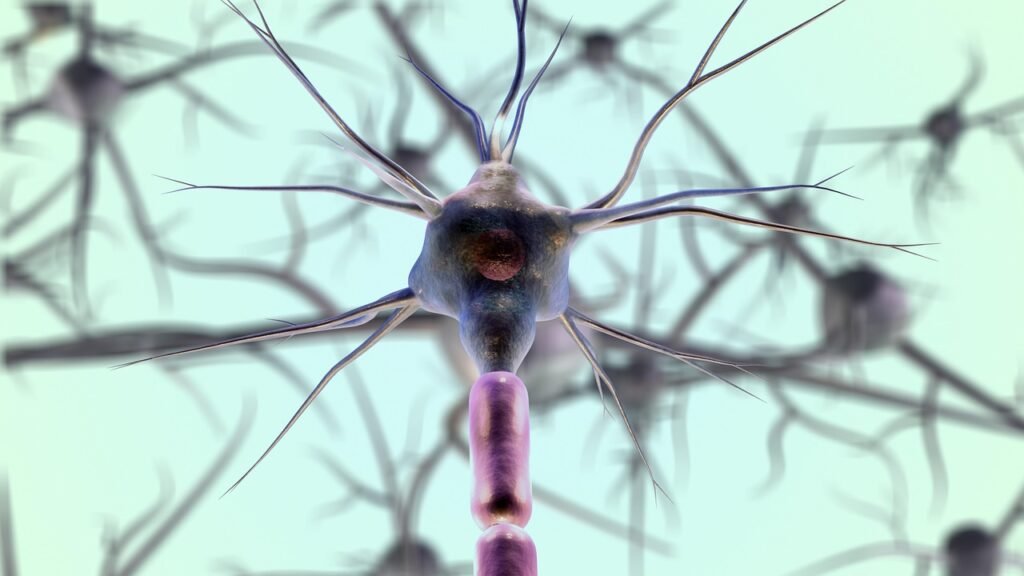


Tracing the Evolution of Organoids (Image Credits: Pixabay)
Researchers pushed the boundaries of neuroscience with innovative assembloids, tiny lab-cultured structures that fuse brain organoids and proto-spinal columns. These models faithfully recreate biological processes like the pain sensory pathway, providing unprecedented access to human neural development. As such technologies mature, they spark essential discussions on ethics and the essence of awareness, even as experts maintain these creations remain far from sentient.
Tracing the Evolution of Organoids
Brain organoids first appeared in laboratories around 2013, marking a pivotal shift in studying human neurology. Scientists grew these miniature brain-like structures from stem cells or reprogrammed skin cells, allowing them to self-organize into clusters with millions of neurons. Specific regions, such as the thalamus, emerged in these models, enabling investigations into disorders including autism spectrum disorder, schizophrenia, and Alzheimer’s disease.
Early organoids represented isolated brain parts, but limitations persisted. They lacked vascular systems for nutrient delivery and stayed developmentally immature compared to natural brains. Still, their utility grew evident in dissecting disease mechanisms inaccessible through other means.
Assembloids Unlock Complex Neural Interactions
Sergiu Pașca and his team at Stanford University elevated this work by developing assembloids, which integrate multiple organoids into functional networks. A standout example featured four organoid types: those mimicking brain regions linked to a spinal organoid, simulating the pain sensory pathway. Neurons migrated and connected across these components, firing signals in response to stimuli much like in living organisms.
These structures hold a fraction of a human brain’s complexity – about 0.002 percent of its neurons. Pioneers like Madeline Lancaster, who created the first cerebral organoids in Austria, laid the groundwork for such assemblies. Pașca’s models now offer a platform to test therapies directly on human-derived tissues, accelerating drug discovery for neurological conditions.
Defining the Boundaries of Consciousness
Questions about self-awareness inevitably surface as these models gain sophistication. Neuroscientists stress, however, that assembloids fall short of consciousness markers. “These models are not miniature versions of the brain,” Pașca noted. “They are simplified, developmentally immature, and lack many defining features of an actual brain,” such as blood vessels and sensory inputs.
Alta Charo, a professor emerita of law and bioethics, reinforced this view: “We can comfortably say there is no reasonable possibility of anything remotely like consciousness.” Lancaster added a caveat for the future: if organoids scaled up dramatically – perhaps 1,000-fold larger – with proper architecture and embodiment, reevaluation might prove necessary. Current iterations prioritize utility over such hypotheticals.
Navigating Ethical Frontiers
A 2021 report from the U.S. National Academies of Sciences, Engineering, and Medicine examined brain organoids and concluded they do not exhibit consciousness or awareness. Yet, the document urged ongoing monitoring as technology advances. A more recent 2025 paper co-authored by Pașca called for ethical guardrails to guide progress.
Public perceptions complicate matters, with many viewing organoids as quasi-human due to their cellular origins. Implanting them into animal brains raises welfare issues, given animals’ established sentience traits. Chimeric experiments blending human and animal neural elements provoke even stronger unease, prompting researchers to tread carefully.
- Key limitations of current assembloids: No blood vessels, limited sensory input, developmental immaturity.
- Primary benefits: Direct study of human brain disorders, therapeutic testing in human cells.
- Ethical priorities: Animal welfare in implants, public engagement on chimeras.
- Future watchpoints: Massive scaling, structural maturation, embodied integration.
- Research value: Reduces reliance on animal models, accelerates treatments for brain diseases.
Key Takeaways
- Assembloids model pain pathways with brain-spinal fusions, holding vast potential for disease research.
- Experts unanimously rule out current consciousness, citing profound structural gaps.
- Ethical frameworks evolve alongside tech, focusing on implants and public views.
Assembloids herald a transformative era in neuroscience, bridging lab models and human biology to combat brain disorders. Their development underscores a commitment to rigorous ethics amid rapid innovation. What ethical lines would you draw for future brain research? Share your thoughts in the comments.