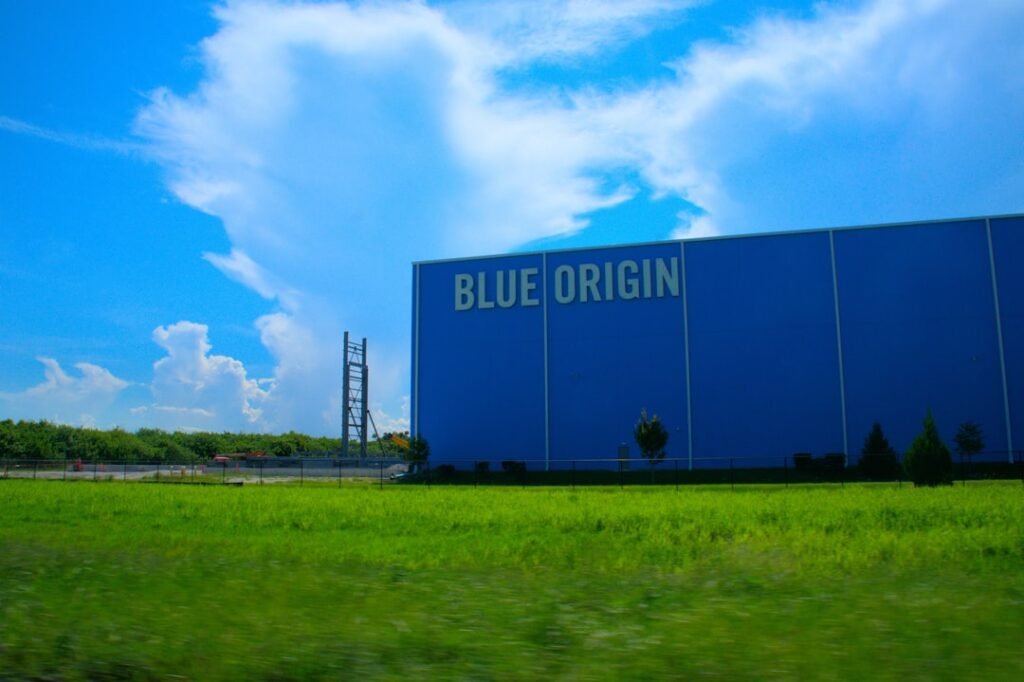

A Landmark Decision Reshapes Company Priorities (Image Credits: Unsplash)
New York – Blue Origin disclosed plans to suspend its New Shepard suborbital flights for at least two years, redirecting efforts toward advancing human lunar landing technology.[1]
A Landmark Decision Reshapes Company Priorities
Blue Origin’s announcement marked a pivotal moment in private spaceflight. The company, founded by Jeff Bezos, chose to ground its flagship tourism vehicle after 38 successful launches.[1][2] CEO Dave Limp conveyed the gravity of this step in an internal email, stating, “New Shepard has achieved great success and will forever be our first step,” while noting that “the decision to pause is not one that I take lightly.”[2]
This shift prioritizes national objectives for lunar exploration. Resources previously allocated to short tourist hops now fuel development of critical deep-space systems. The move aligns with broader U.S. ambitions under NASA’s Artemis program.
New Shepard’s Proven Track Record
The reusable New Shepard rocket transformed suborbital travel. Standing 60 feet tall, it launched from West Texas, reaching the Kármán line – about 62 miles above Earth – on brief 10-minute journeys.[2] Over its operational life, the vehicle carried 98 humans across the boundary of space and deployed more than 200 scientific payloads for students, researchers, and NASA.[1]
Passengers included high-profile figures who experienced weightlessness and Earth’s curvature:
- Jeff Bezos, on the inaugural crewed flight in 2021
- William Shatner, the “Star Trek” actor
- Katy Perry and Michael Strahan
- Gayle King
Despite a multi-year customer backlog, Blue Origin opted for this pause to avoid diluting focus on larger goals.[3]
Lunar Landers and New Glenn Enter Spotlight
Central to the redirection stands the Blue Moon lunar lander. Blue Origin holds a $3.6 billion NASA contract to develop this vehicle for transporting astronauts to the Moon’s surface later this decade, complementing SpaceX’s Starship.[2] Officials emphasized acceleration of these human lunar capabilities as the core rationale.
New Glenn, the company’s heavy-lift orbital rocket, also benefits from reallocated talent. Last year, it completed two uncrewed orbital flights, building on New Shepard’s vertical landing technology. This infrastructure positions Blue Origin for sustained lunar presence.[1]
Implications for the Space Industry
The pause echoes challenges in suborbital tourism. Competitors like Virgin Galactic similarly halted operations in 2024 to upgrade vehicles for higher flight rates. Customers on waiting lists now face extended delays across the sector.
Blue Origin’s statement underscored commitment: “The decision reflects Blue Origin’s commitment to the nation’s goal of returning to the Moon and establishing a permanent, sustained lunar presence.”[1] For details, see the official announcement.
Key Takeaways
- New Shepard completed 38 flights, sending 98 people to space.
- Pause lasts at least two years to boost Blue Moon and New Glenn.
- Supports NASA’s Artemis push for lunar returns by late 2020s.
Blue Origin’s bold reorientation signals a maturing space race where tourism yields to exploration imperatives. This strategic gamble could redefine private contributions to humanity’s lunar future. What do you think of this pivot from tourist flights to Moon missions? Tell us in the comments.