
If you look up at the night sky, you’re only seeing a tiny fraction of what’s really there. The stars, planets, and glowing gas clouds that feel so vast are, in a cosmic sense, just the tip of the iceberg, like the bright lights of a city hiding the complex wiring underground. Most of the universe operates in the dark, governed by forces we cannot see, touch, or photograph directly, and that’s both unsettling and deeply exciting.
Over the last century, astronomers and physicists have slowly realized that the familiar stuff we’re made of is almost an afterthought in the grand cosmic design. Invisible matter, ghostly particles, warped space, and even the quantum vacuum itself seem to be pulling the strings behind the scenes. Once you see how much of reality hides beyond our sight, it’s hard not to feel that our ordinary human intuition is wildly outmatched by the universe we live in.
The Hidden Scaffold: Dark Matter Holding Galaxies Together
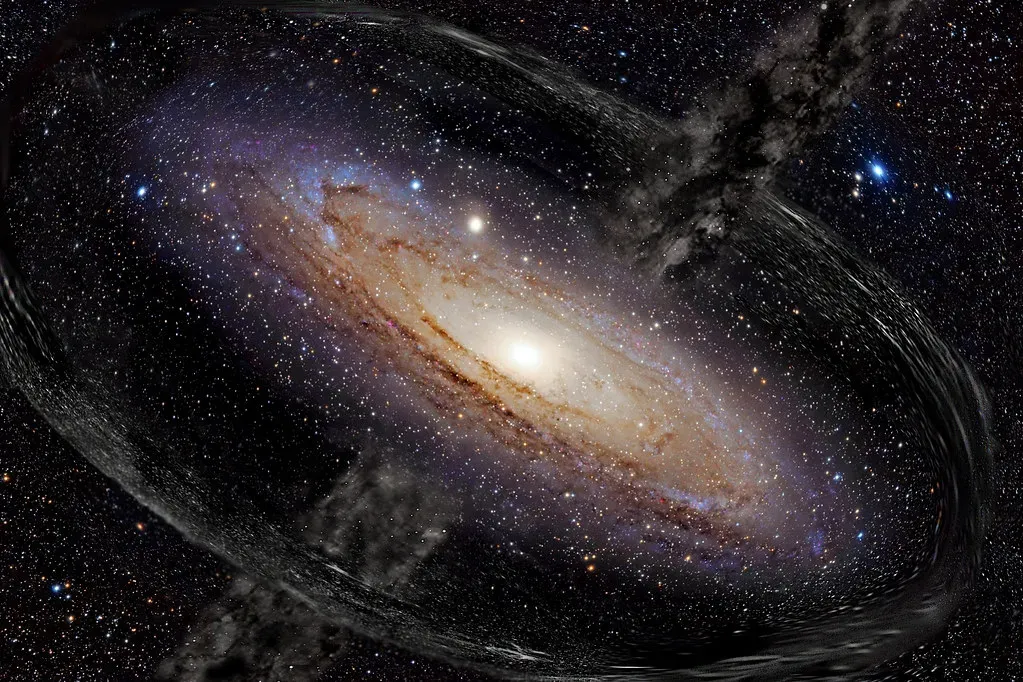
Imagine spinning a pizza dough so fast that the toppings should fly off, yet somehow they cling stubbornly to the crust. That’s essentially what galaxies are doing: they rotate so quickly that, based on visible stars and gas alone, they ought to tear themselves apart, but they don’t. When astronomers measured how fast stars orbit their galactic centers, they discovered that the outer regions were moving far too quickly to be held in place by visible mass alone.
The simplest explanation is that an enormous amount of unseen matter is providing extra gravity, forming a kind of invisible scaffold that holds galaxies together. This “dark matter” doesn’t emit light, doesn’t absorb it, and barely interacts with ordinary matter at all, except through gravity. Galaxy cluster collisions, gravitational lensing maps, and the cosmic microwave background all point to the same strange conclusion: unseen dark matter makes up the vast majority of matter in the universe. We’re still hunting for what it actually is, with massive underground detectors and particle colliders trying to catch even the faintest whisper of these elusive particles.
The Great Cosmic Push: Dark Energy and the Speeding Universe
For most of the twentieth century, scientists assumed gravity would eventually slow the expansion of the universe, like a ball thrown into the air that must one day fall back or at least stop rising. Then distant exploding stars, used as cosmic distance markers, revealed something shocking: the universe isn’t just expanding, it’s speeding up. It’s as if, instead of slowing down, that thrown ball suddenly fired a rocket and shot away faster.
To explain this runaway acceleration, cosmologists introduced dark energy, a mysterious form of energy that seems to be woven into the fabric of space itself. As space expands, there’s more of this energy, and its repulsive effect over vast distances overpowers gravity. Observations of the cosmic microwave background and large-scale galaxy surveys suggest that dark energy dominates the energy budget of the cosmos, completely dwarfing both dark matter and normal matter. We don’t know what dark energy really is, but its quiet, relentless push is steering the future of the entire universe, likely determining whether it thins into a cold darkness or evolves into something even stranger.
Curved Space and Invisible Geometry: Gravity as Warped Spacetime
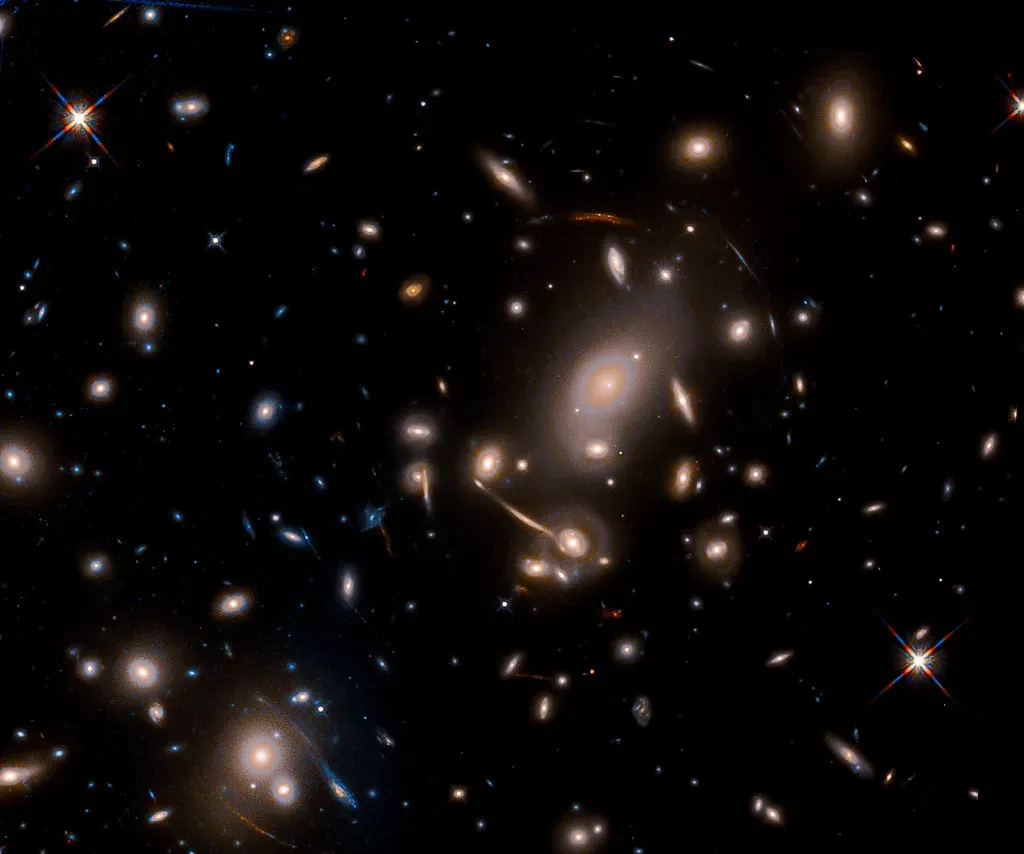
We grow up thinking of gravity as a simple pull, like a magnet dragging objects downward, but that picture is deeply misleading. In Einstein’s view, mass and energy bend the geometry of space and time, and objects follow the curves, much like a marble rolling along the contours of a stretched, distorted rubber sheet. You don’t see space itself curve with your eyes, but its invisible geometry controls the motion of planets, stars, and even light.
This warped spacetime explains why light from distant galaxies can be bent and magnified by massive clusters in between, producing arcs and multiple images known as gravitational lenses. It’s also why time runs a tiny bit slower near massive objects, a subtle effect we’ve had to account for to make GPS systems on Earth work accurately. Gravitational waves, ripples in spacetime produced by cataclysmic events like black hole mergers, were predicted for decades before detectors finally picked up their faint signals in the twenty‑first century. Those waves are a reminder that space itself isn’t rigid and empty, but a dynamic, invisible medium that flexes and rings when the universe’s heaviest actors collide.
Ghosts in the Cosmos: Neutrinos and Other Elusive Particles
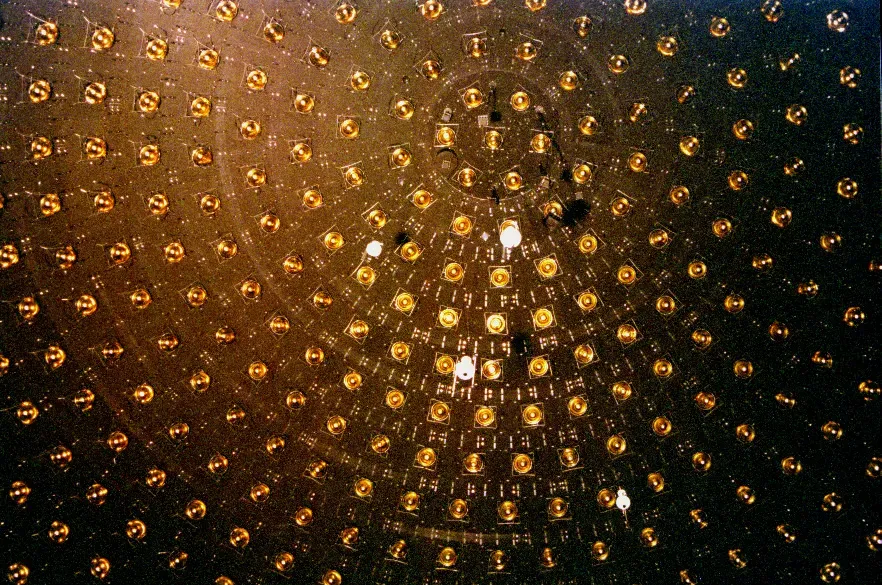
Every second, trillions of tiny particles stream straight through your body, through the Earth beneath your feet, and out the other side, leaving almost no trace. These are neutrinos, nearly massless particles produced in nuclear reactions in the sun, in exploding stars, and in powerful cosmic accelerators across the universe. For a long time, they were assumed to be completely massless and almost irrelevant, but it turned out they can subtly change their identity, a behavior that is only possible if they have a small mass.
Because neutrinos interact so rarely, they’re exceptionally hard to detect, and studying them feels like trying to learn about the wind by catching a single drifting leaf every few years. Giant detectors buried deep underground or in Antarctic ice wait patiently for a few neutrinos to smack into atoms and produce a faint flash of light. These elusive particles carry information from places we could never otherwise probe, like the hearts of exploding stars or the extreme environments around black holes. They’re a reminder that the universe is buzzing with activity at a level that mostly passes straight through us, whether we notice it or not.
Vacuum That Isn’t Empty: Quantum Fields and Zero‑Point Energy
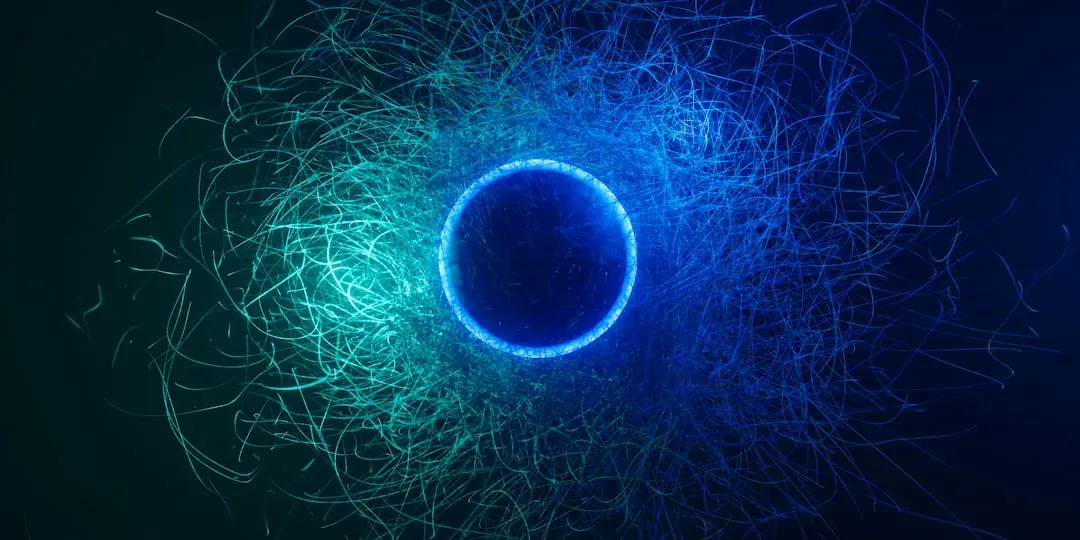
When most people imagine a vacuum, they think of a perfect emptiness, a clean, silent void with nothing in it at all. In quantum physics, that idea completely falls apart: the “vacuum” is actually a restless sea of fields, constantly fluctuating, even in what we’d normally call empty space. Particles and antiparticles can pop into existence and vanish again so quickly that they can’t be seen directly, but their effects can be measured in precise experiments.
This churning zero‑point energy has real consequences, like a tiny measurable force between metal plates placed very close together, caused by quantum fluctuations of the electromagnetic field. At the cosmic level, something like this vacuum energy is a candidate for the dark energy that’s driving the universe’s accelerated expansion, though the numbers from theory and observation stubbornly refuse to match cleanly. It’s as if nature is hinting that we’re missing a crucial part of the story about what space actually is. The idea that “nothing” is one of the most active and mysterious substances in existence is one of the strangest and most unsettling shifts in modern science.
Invisible Blueprints: Cosmic Webs, Fields, and Hidden Structure
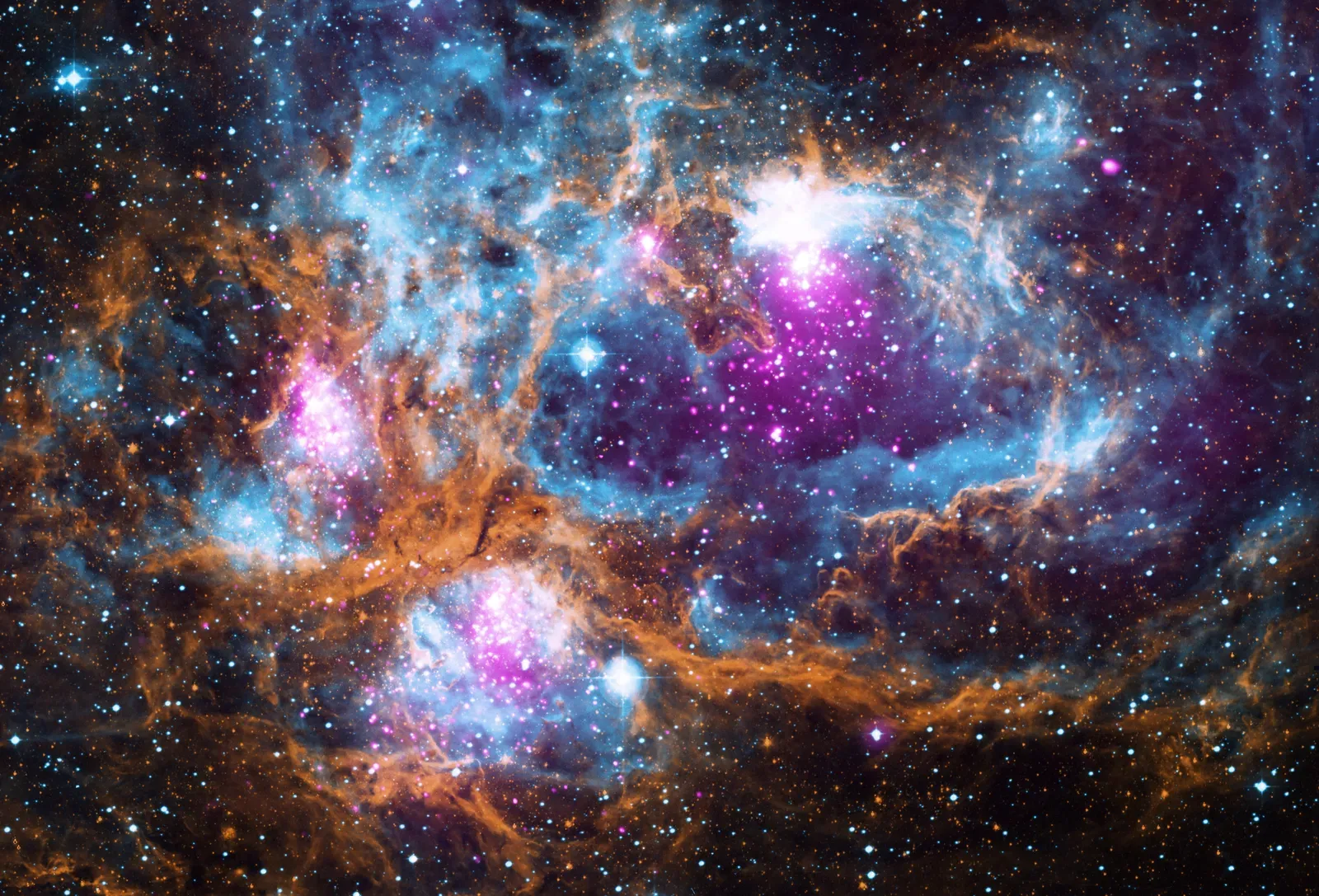
If you could step back far enough and see the universe from a bird’s‑eye view, it wouldn’t look like a random sprinkling of galaxies. Instead, computer simulations and huge surveys show a vast cosmic web: filaments, sheets, and nodes of galaxies and dark matter stretching over hundreds of millions of light‑years, separated by enormous empty voids. This structure is shaped by gravity acting on tiny fluctuations in the early universe, amplified over billions of years into the grand architecture we see today.
Underlying this cosmic web are invisible fields and interactions that guide how matter clumps and spreads, from the laws governing how gas cools in halos to the feedback from black holes and stellar explosions. Magnetic fields thread through galaxies and clusters, mostly unseen but influencing how charged particles move and how cosmic rays propagate. Even on Earth, we sit inside these larger structures, our own galaxy just one glowing bead on a filament made mostly of dark matter. When you realize our familiar sky is just a local detail on a vast, hidden blueprint, it changes how small and temporary our own corner of reality feels.
Black Holes, Horizons, and the Edges of What We Can Know
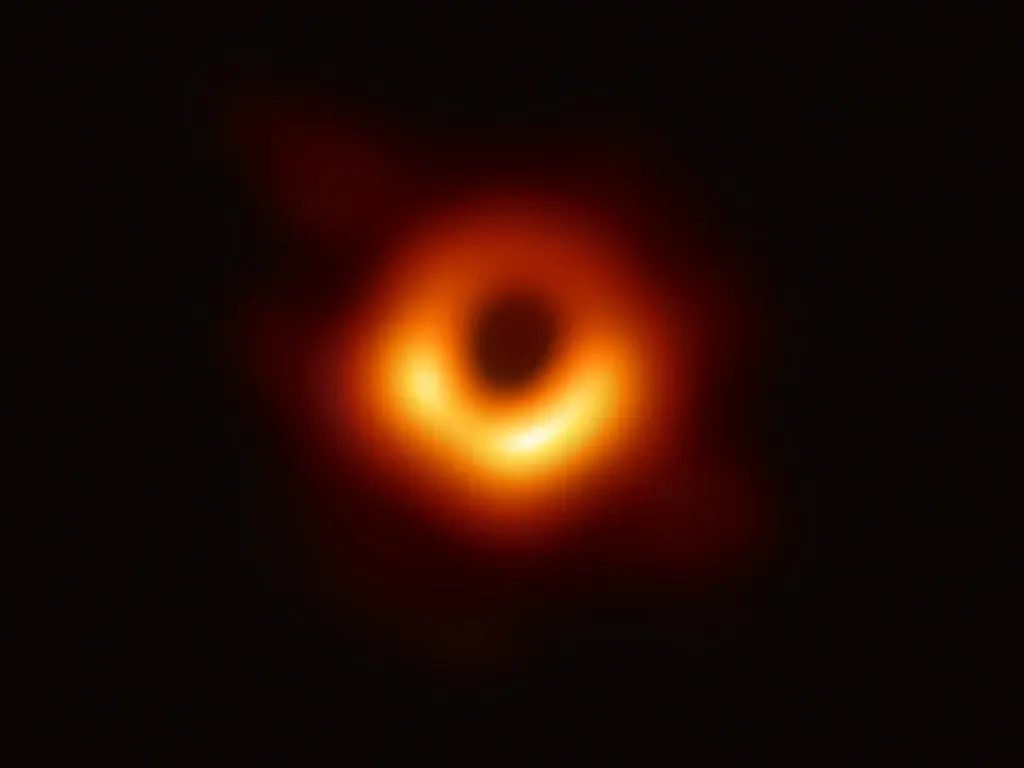
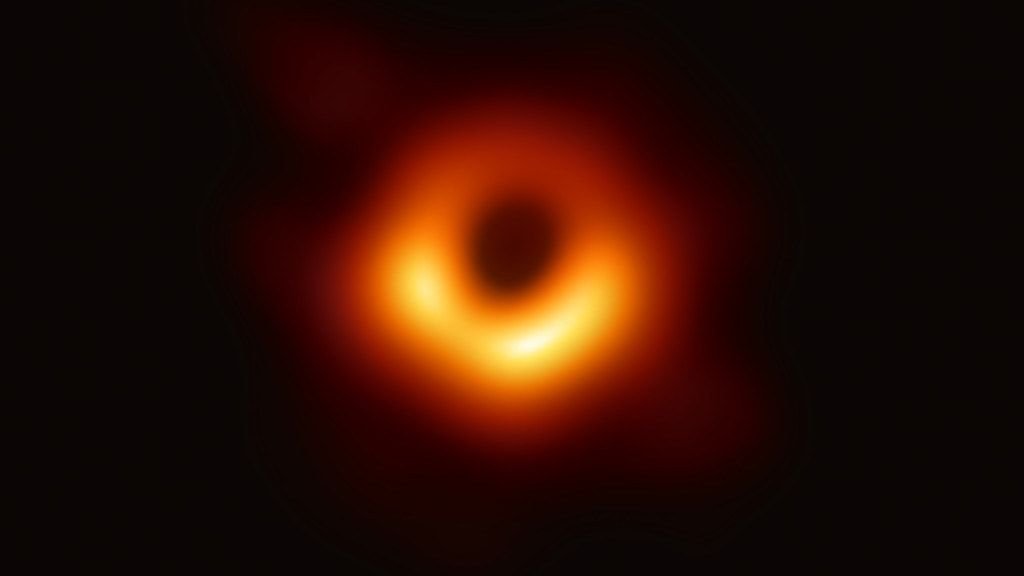
Few objects capture the idea of invisibility as dramatically as black holes, regions of spacetime where gravity is so intense that nothing, not even light, can escape once it passes the event horizon. From the outside, you never see matter cross that point; it just appears to slow down and fade, leaving behind a kind of shadow on the sky. Recent observations with networks of radio telescopes have given us our first images of black hole silhouettes against glowing gas, confirming decades of theory about how these monsters warp light and space around them.
But the deepest mystery isn’t the black holes we can image, it’s the information and physics hidden beyond their horizons. Theories suggest that quantum effects at the edge of black holes might encode information in ways that challenge our entire understanding of space, time, and reality. Some researchers think that cracking this puzzle could finally bridge the gap between general relativity and quantum mechanics, two pillars of physics that currently don’t quite fit together. In a way, black holes are more than just cosmic traps; they’re signposts pointing to the limits of our knowledge, daring us to look beyond what we can see and imagine how much more is still hidden in the dark.
For all our powerful telescopes, precise instruments, and intricate equations, most of the universe remains invisible, its key players operating behind a kind of cosmic curtain. Dark matter shapes galaxies, dark energy drives expansion, curved spacetime steers light, ghostly particles whisper secrets, and the quantum vacuum never truly rests. The cosmos turned out to be far stranger, richer, and more hidden than our ancestors could have dreamed, and every new discovery seems to enlarge the territory labeled “unknown” rather than shrink it. When you look up at the night sky again, it’s worth remembering that what you see is only the faint glow of a deep, invisible machinery that’s still waiting to be fully understood.