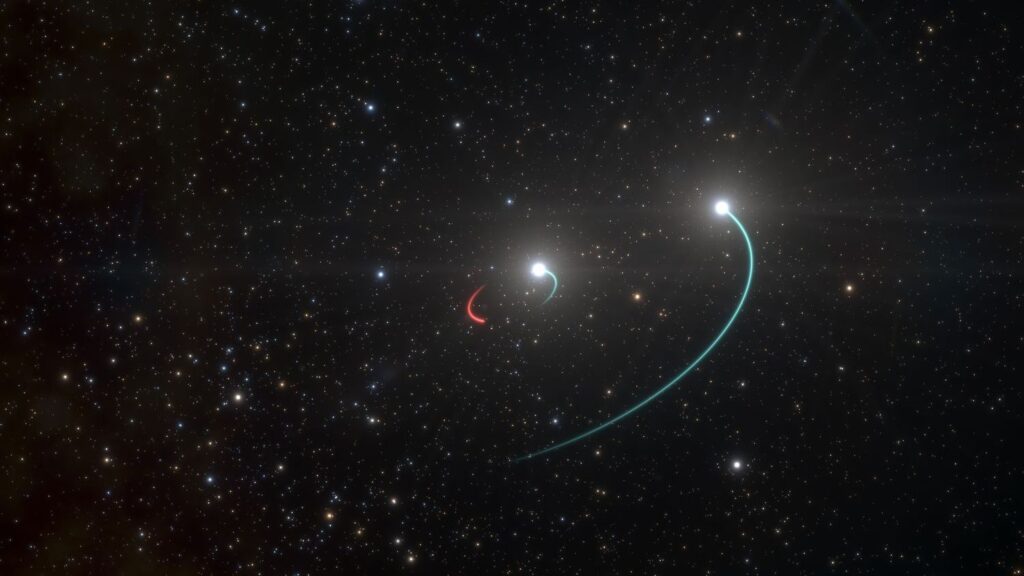

You have probably seen a black hole without knowing it. Not the dramatic, glowing doughnut you might picture from science documentaries, but a quiet, unremarkable star in some blurry image, hiding a companion that bends space itself. Modern astrophysics strongly suggests that the nearest black hole to Earth is not millions of light-years away in some far-off galaxy, but lurking in your own Milky Way backyard, close enough that ordinary sky surveys have almost certainly pointed cameras at it already.
The twist is that you would never recognize it at a glance. The closest black holes are not neon signs in the sky; they are more like cosmic con artists, masquerading as ordinary stars in binary systems or faint moving specks your brain simply files away as noise. As telescopes get sharper and algorithms more clever, you are living right in the moment when those once-boring star photos are being re-examined and reinterpreted, and some of them are suddenly turning into smoking guns for invisible monsters.
The Strange Idea That You Have Already “Seen” a Black Hole
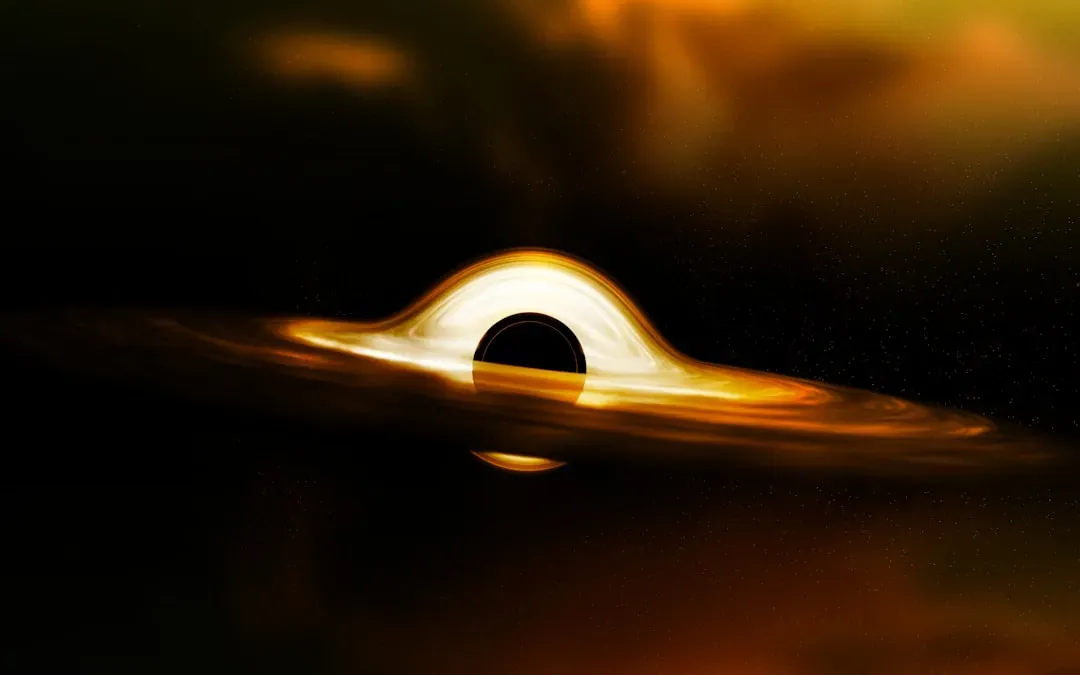
At first, the idea sounds absurd: how could you have already photographed something as exotic as a black hole without realizing it? The key is that, in most situations, a black hole is not visibly dramatic at all. Unless it is greedily feeding on nearby gas and lighting up in X-rays, the black hole itself is completely dark and only gives away its presence by how it affects surrounding stars and light. So if you were casually looking at an image from a sky survey, what you would see is just a star that seems slightly odd in its motion, or a system whose brightness changes in a way that does not quite add up.
Modern observatories and survey projects take mind-boggling numbers of images of the sky, and nearly all of them look boringly similar: dots, more dots, and the occasional smudge. Buried in those dots are star systems where one visible star is orbiting around something totally invisible but massive. That invisible partner is exactly what you are hunting when you search for a hidden black hole. So when astrophysicists say the nearest black hole might already be in your image archives, they are not being poetic; they are pointing out that the evidence is more about subtle motions and patterns than dramatic fireworks.
How Astrophysicists Actually Hunt for Nearby Black Holes
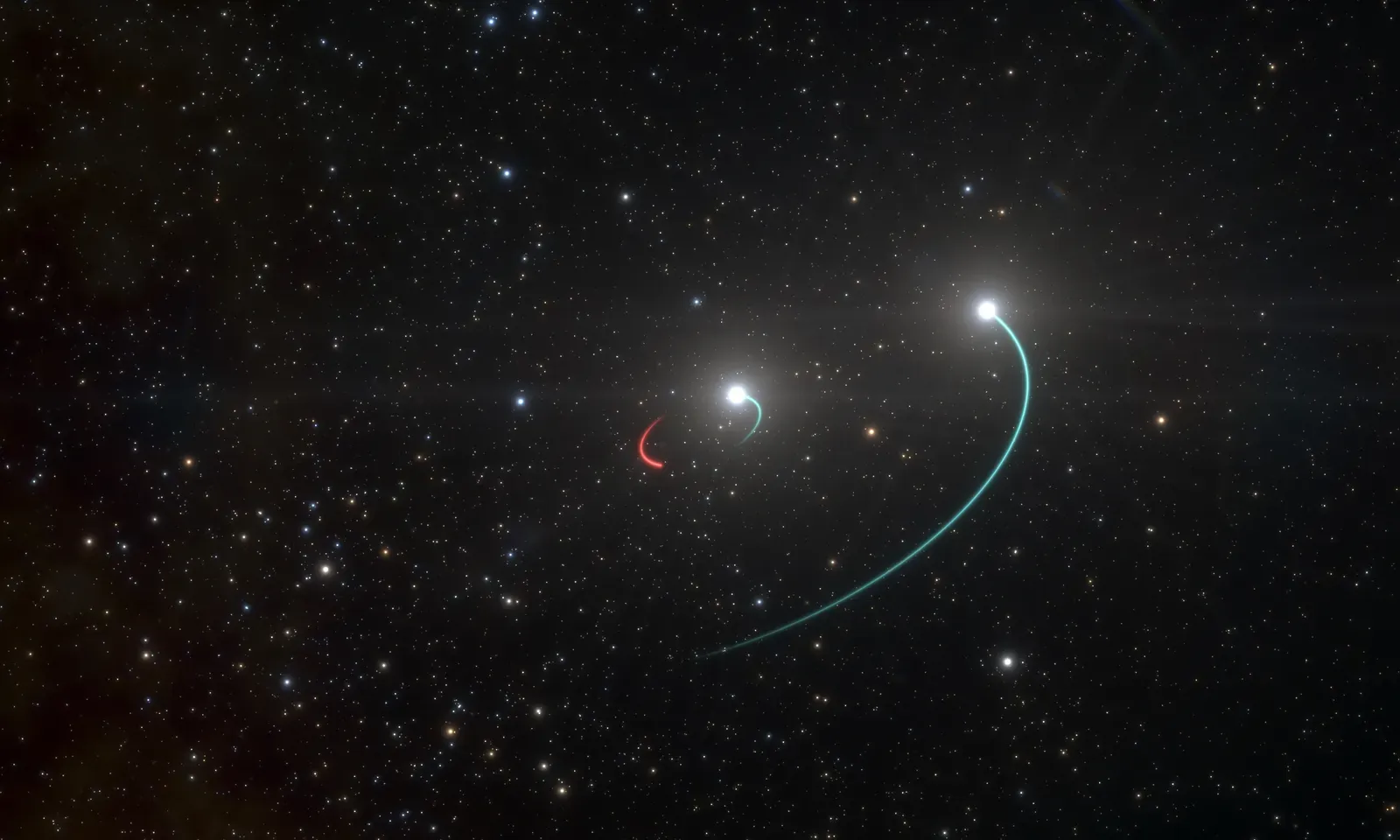
If you want to find a nearby black hole, you do not point a telescope at a dark patch of sky and hope to spot a black circle. Instead, you play detective with gravity. You look for stars whose paths wobble in a way that screams they are orbiting something heavy, even though you cannot see that companion directly. Large sky surveys map the positions and motions of millions of stars with ridiculous precision, giving you a kind of time-lapse movie of how the galaxy moves.
From there, the hunt turns into pattern recognition and statistics. You sift through catalogs, searching for stars whose motions, brightness variations, or orbital periods do not match what you would expect if they were just in normal binary systems with another star. When the numbers only make sense if the unseen object is several times the mass of the Sun yet emits no light, you are very likely staring at a black hole by proxy. The actual “photograph” you end up with might just look like a single star, but every pixel is loaded with dynamical clues.
Why the Closest Black Hole Is Probably Not in a Distant Galaxy
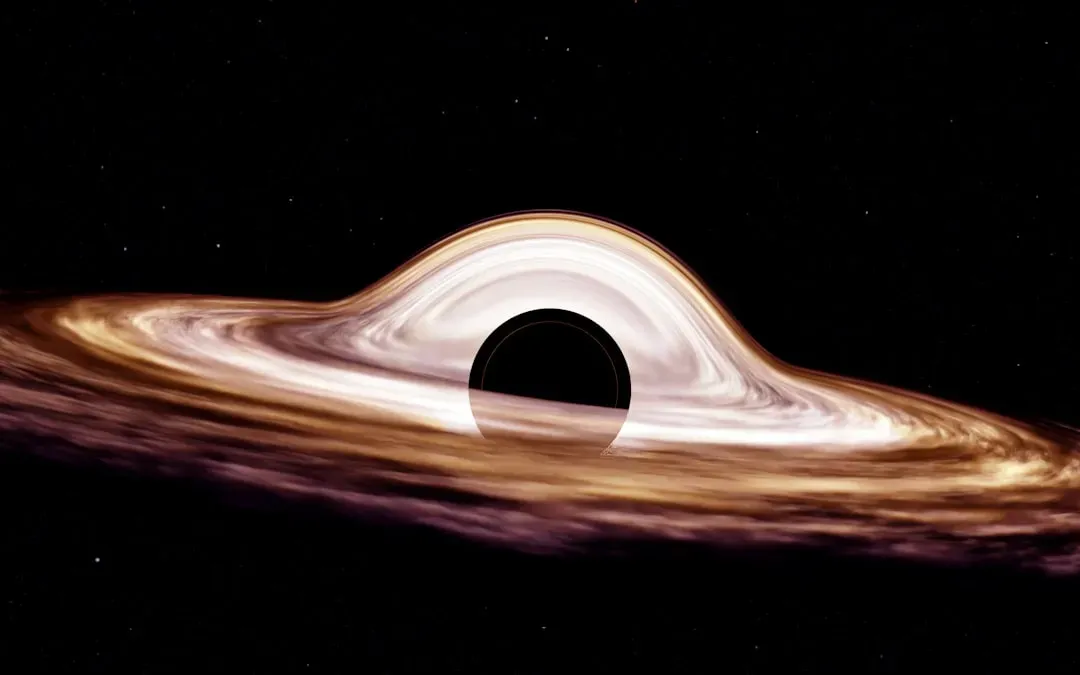
Your mental picture of black holes might be dominated by the famous giants: the supermassive beast in the center of the Milky Way or the luminous monster in a far-off galaxy captured by the Event Horizon Telescope. Those are impressive, but by sheer numbers, they are not the ones most likely to be closest to you. Scattered through the Milky Way are thought to be millions of stellar-mass black holes, the collapsed leftovers of once-massive stars. Statistically, some of these should lie relatively close to the Sun on a galactic scale.
The Milky Way spans tens of thousands of light-years, and your solar system orbits fairly quietly in one of its spiral arms. If the galaxy is generously sprinkled with stellar-mass black holes, then it is almost guaranteed that at least a few lurk within a few thousand light-years, maybe even a few hundred, of your position. That might sound huge, but in a galactic context it is practically next door. Because they do not shine on their own, these nearby black holes simply blend into the background until their gravity betrays them in the data.
Hidden in Plain Sight: Black Holes in Ordinary Star Systems
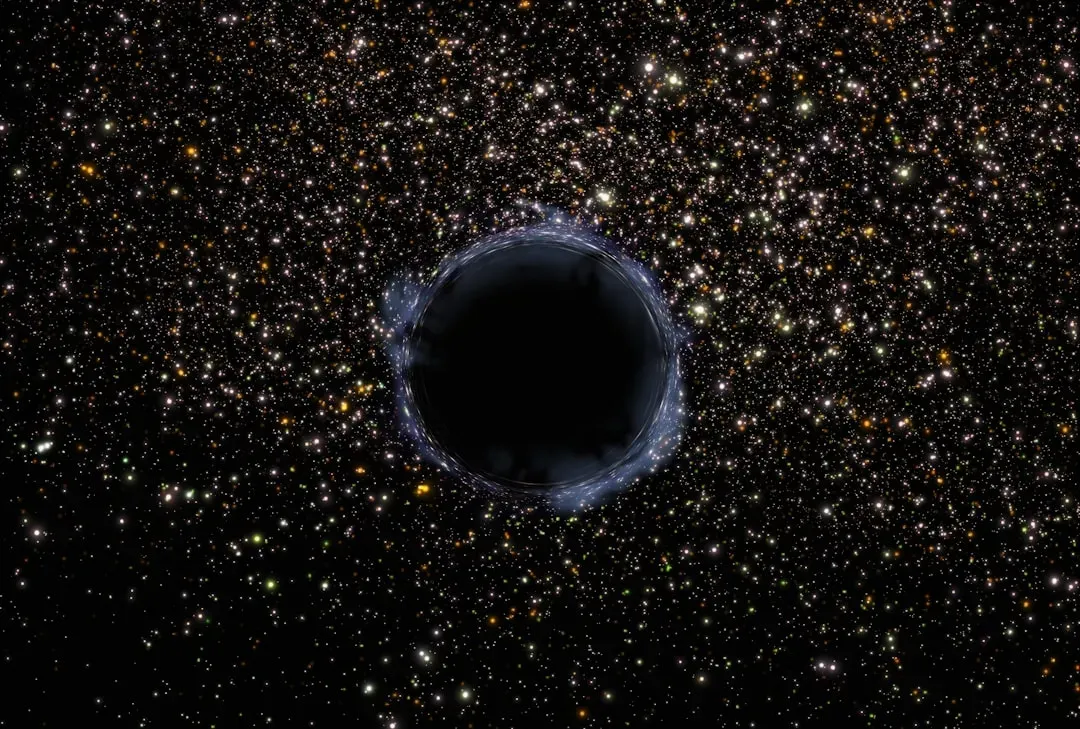
One of the most plausible places for a nearby black hole to hide is in what looks like a totally standard binary star system. In such systems, you see a regular, normal-looking star orbiting an apparently empty spot in space. If you track it carefully, you notice that its orbit, speed, and periodic motion are consistent with it circling something that has a few times the mass of the Sun but no detectable light. To an automated survey pipeline, that system may have been labeled and filed away years ago as just another interesting binary, with no red flashing icon.
The reality is that many of those systems are now being revisited with fresh eyes and better models. Where astronomers once assumed a faint companion star, they now ask whether the unseen partner might instead be a black hole. You can imagine it like going back through old family photos and suddenly realizing the background of one shot contains a now-famous person you did not recognize at the time. The data was there all along; only your interpretation is changing as your tools and expectations evolve.
Why You Cannot Just “See” a Black Hole in a Photo
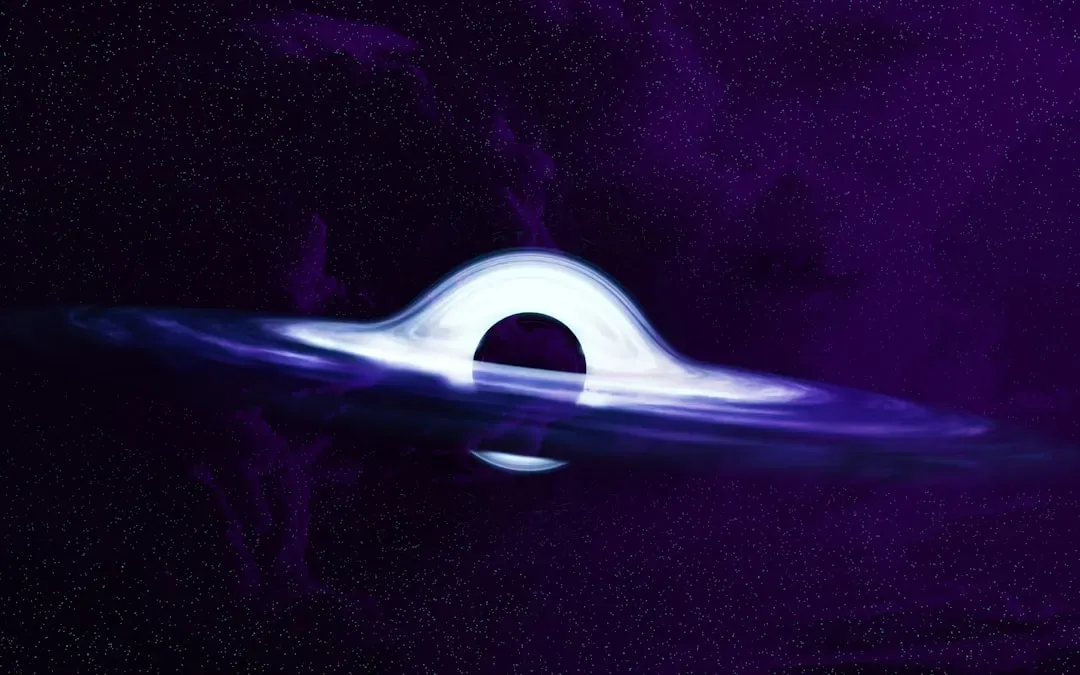
It is tempting to think that if a telescope took a good enough picture, you would just see the black hole sitting there like a dark disk cutting out the stars behind it. In reality, individual black holes are far too small on the sky for you to resolve them that way unless they are supermassive and relatively nearby, like the ones that have already been imaged in radio wavelengths. For the typical stellar-mass black hole that might be the closest to Earth, you are dealing with an object only a few tens of kilometers across, located hundreds or thousands of light-years away. That is way too tiny an angle for any current optical telescope to distinguish directly.
Instead, what shows up in a photograph is the environment around the black hole, not the black hole itself. You might catch the light of the companion star, or perhaps the glow of gas swirling around if the black hole is actively feeding. Most of the time, though, a nearby stellar-mass black hole is probably quiet, not gobbling enough material to glow dramatically. In those cases, the only real “signature” in your image is that a star appears where, by gravity alone, something heavier than that star must be hiding.
Gravitational Lensing: When Space Itself Gives the Game Away
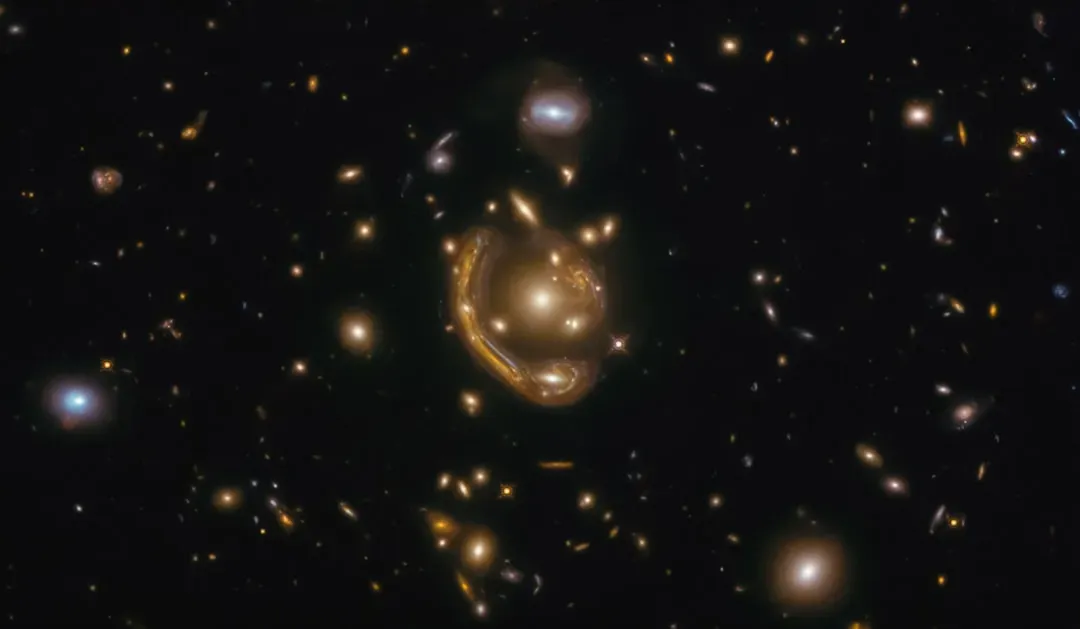
Another way you may have already photographed a nearby black hole without realizing it is through gravitational lensing. General relativity tells you that mass warps space, and that curved space bends light. When a massive compact object, like a black hole, passes in front of a more distant star, it can briefly magnify or distort that background light. If your camera happened to be pointed at that patch of sky at the right moment, you would merely see a star that brightened or shifted a little in a way that looked like a quirky blip.
On its own, that single image might not tell you much. But if you compare many images over time, and you match those brightness curves or positional shifts with the predictions of lensing models, you can infer the mass and nature of the lensing object. It is entirely plausible that some of those peculiar brightness events already in archived data are actually caused by dark, isolated black holes drifting through the Milky Way. In that sense, yes, you have photographed them – not by seeing the black hole directly, but by catching the temporary fingerprint it left on the light of something else.
How Space Telescopes and Sky Surveys Are Rewriting Old Images
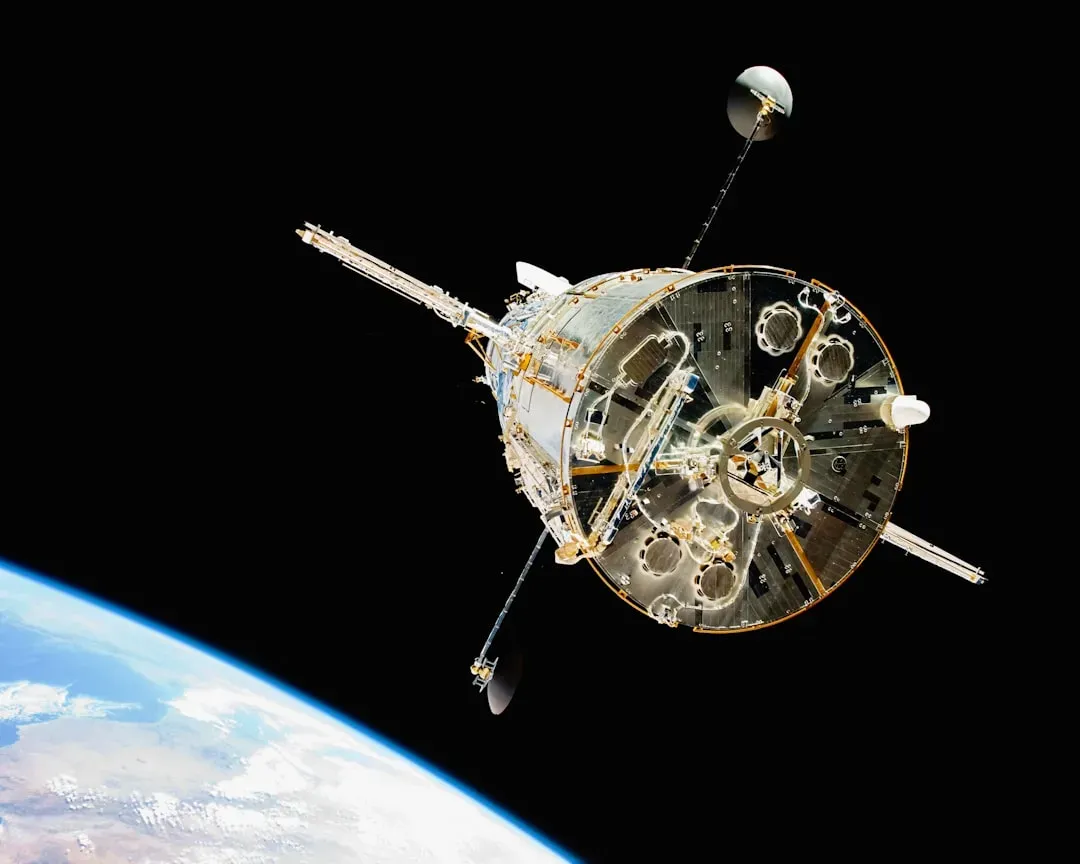
In the last decade, you have entered an era where sky surveys and space missions collect data on a scale that would have been unthinkable before. Space telescopes that precisely track stellar motions and brightness variations, combined with ground-based surveys that repeatedly scan the entire sky, are building a living, evolving map of your galaxy. What was once a static photograph is now more like a time-lapse sequence, where tiny shifts and subtle changes add up to big discoveries when you process them properly.
The powerful part for black hole hunting is that you can go back. You do not need to reshoot the entire sky from scratch; you can reanalyze old images with new algorithms and theories. Sudden oddities that were ignored years ago become prime candidates for hidden compact objects today. So when astrophysicists suggest that the closest black hole to Earth is probably already in survey data, they are leaning on this idea that the treasure is buried in existing photos, waiting for you to apply more refined tools to dig it out.
What “Near Enough” Really Means in Cosmic Terms
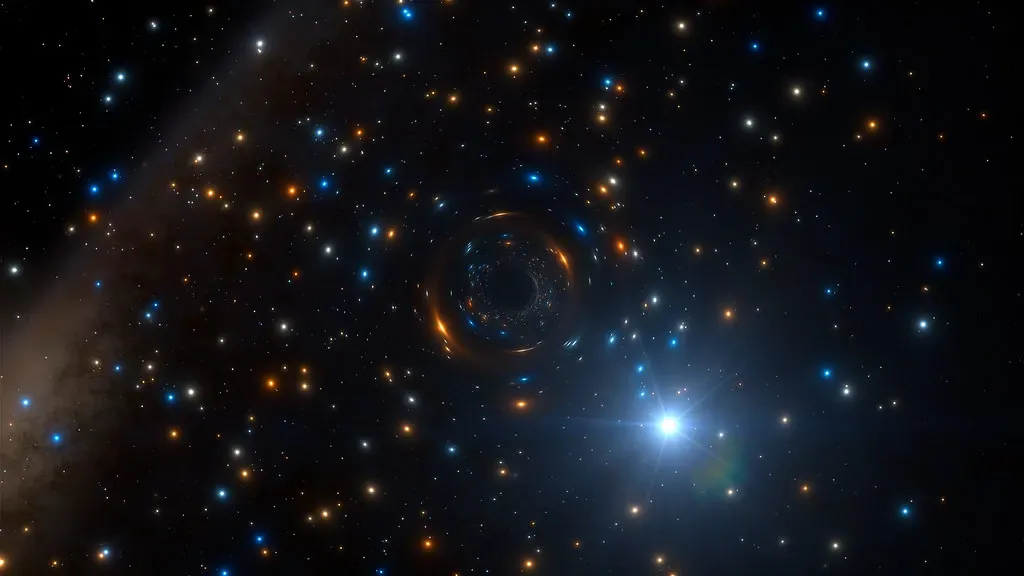
When you hear that a black hole is “near enough,” your everyday instincts might mislead you. You are not talking about something lurking just beyond Pluto or hanging out in the Oort Cloud ready to ruin your day. In astronomical language, “near” usually means within a few hundred to a few thousand light-years, comfortably distant enough that your solar system is not in any special danger. The important part is not threat, but detectability: at those distances, your current instruments can realistically notice their gravitational effects on stars.
Think of the Milky Way as a city, and your solar system as a single apartment in a huge high-rise. A nearby black hole would be like someone living a few floors away in another apartment: you will never bump into them in your living room, but you can tell somebody is there by the sounds, flickers of light, or changes in the building’s structure. In cosmic terms, a black hole a thousand light-years away is that unknown neighbor. You will never meet it, but if you watch the building carefully enough, its presence is hard to keep secret forever.
What This Means for You and the Future of Black Hole Discovery
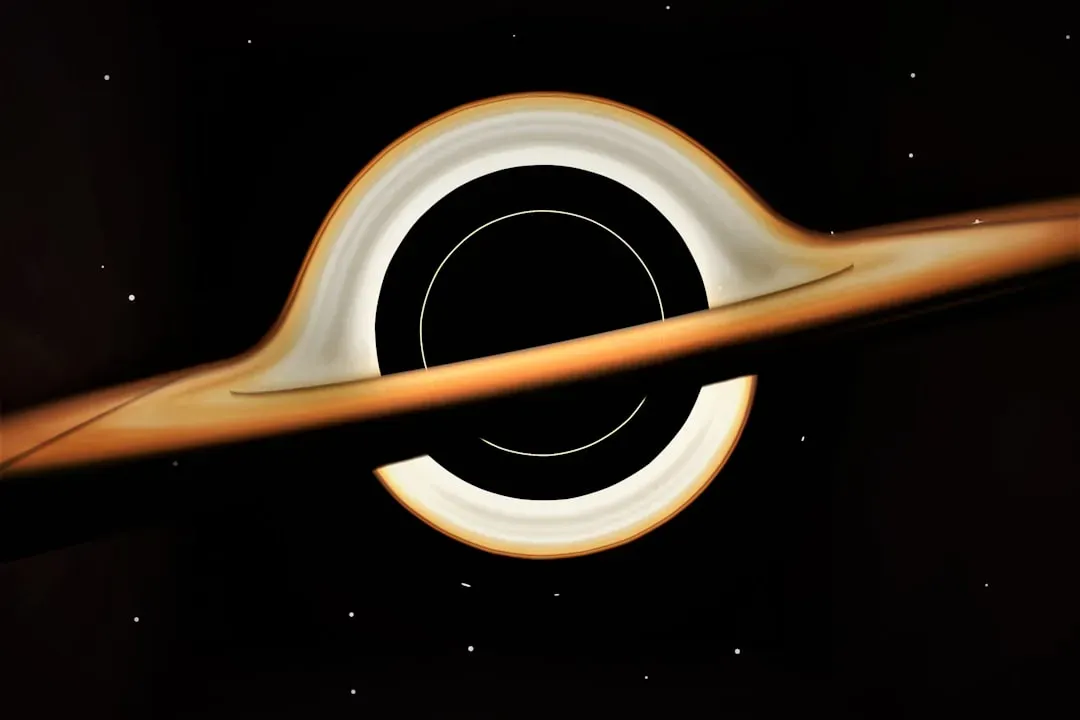
If the closest black hole to Earth has almost certainly been photographed already, then you are living in a quiet revolution. The big headlines will probably not come from a brand-new telescope pointing somewhere completely unexplored, but from clever people and clever software reinterpreting mundane images you already have. You are shifting from asking “Can we see a black hole?” to asking “Which of these ordinary-looking stars is hiding one?” That is a very different, more detective-like phase of discovery.
For you as an interested observer, this means that the ordinary night sky is far richer and stranger than it appears. The next time you see an image of a boring star field from a survey, you might be staring at a system where space is bent so sharply that not even light can escape. You just would not know it yet. The really thrilling part is that sometime in the next few years, you are likely to see an announcement that the nearest-known black hole has been identified in data that was sitting on a hard drive for a long time. When that happens, you will know that in a very real sense, you saw it before anyone knew what it was. Did you ever imagine that one of the universe’s most terrifying objects might already be hiding quietly in a photograph you have looked at?