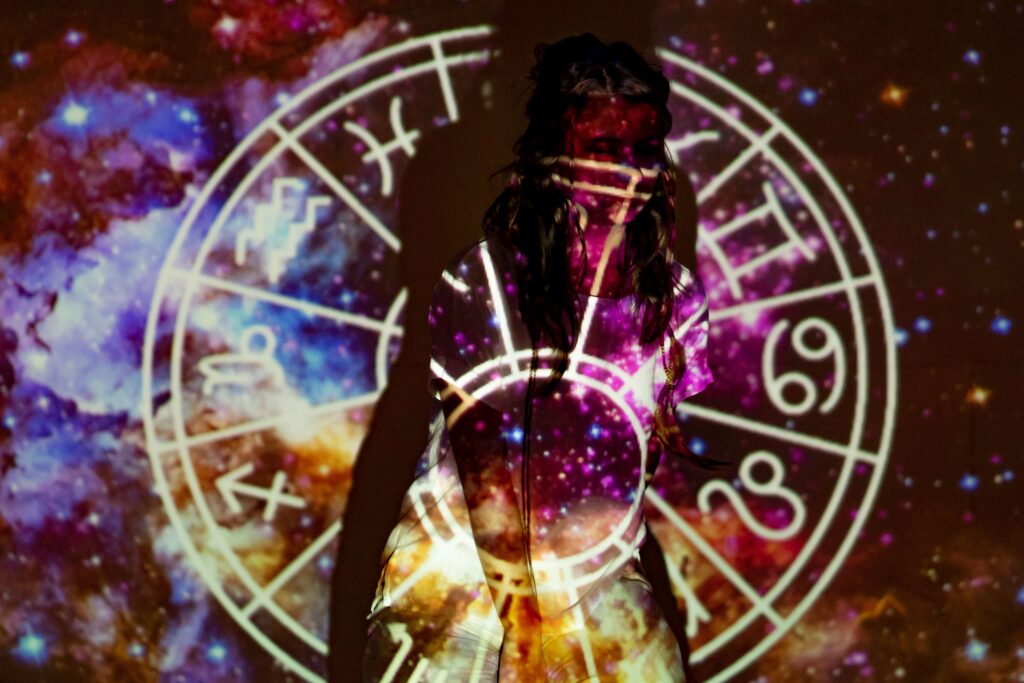

Here’s the twist nobody expected: the actual stars that give the zodiac its names are not some neat, coordinated set of identical suns shining in sync. They are newborn blue giants, middle‑aged yellow dwarfs, bloated red giants, and dying embers scattered across the galaxy, each at a very different point in its stellar life. Once you see that, it becomes strangely irresistible to wonder how these wildly different stellar ages might mirror the way each sign shows up in life, love, and chaos.
Astrology and astronomy do not play by the same rulebook, and astronomers are very clear that zodiac signs do not exert any measurable physical influence on your personality. But the symbolism is hard to ignore. Knowing that Aries is tied to a massive star burning through its fuel in a cosmic hurry, while Capricorn leans on an ancient, steadier sun, gives the zodiac a new, almost poetic layer. Think of this as a way to re‑read the signs through the lens of real stellar evolution: not to predict your fate, but to deepen the story you tell yourself about who you are.
Aries: The Hot Young Star Burning Fast and Loud
Many of the main stars linked with Aries are hotter and more massive than our Sun, the sort of stars that blaze brilliantly and live fast, then die young on cosmic timescales. In stellar terms, that is pure first‑act energy: explosive, impatient, eager to get everything done right now before the fuel runs out. Astronomers know that these big, bright stars have dramatically shorter lifespans, which makes them the rock stars of the galaxy rather than the quiet, long‑lived types.
That is exactly how Aries people often feel from the inside out. They tend to live like there is a countdown clock only they can hear, driven by impulse, passion, and a need to start things before anyone else has even found their shoes. If you are Aries, seeing your sign’s stars as young, unstable powerhouses can be oddly validating: your urge to take risks and sprint toward new experiences is not immaturity, it is your style of burning bright. The challenge is learning not to flame out, to remember that not everything has to be a supernova moment.
Taurus: The Slow‑Burning, Stable Star That Refuses to Rush
The key stars in Taurus include both fiery giants and more stable, long‑lived types, but the constellation is historically anchored by a red giant that has left the calm center of its main‑sequence life and expanded into a slower, cooler, bulked‑up form. That is a star that has already done the frantic early burning; now it occupies a phase defined by endurance, steadiness, and a kind of cosmic ripeness. Astronomers see red giants as evolved – not young, not finished, but undeniably seasoned.
In human terms, that energy shows up in Taurus as the person who is done with the drama of half‑formed plans and shaky foundations. Taurus folks usually want what is proven, solid, touchable: a good meal, a stable income, a relationship that feels like a deep, comfortable chair. Linking Taurus to an evolved, expanded star is a nice reminder that slowness is not laziness; it is the wisdom of a system that has seen what rushing does and consciously chooses the long road. If you are Taurus, you are not late – you are simply built for the long, generous middle of the story.
Gemini: Restless Systems in Constant Motion
Some of Gemini’s key stars are not simple solo suns; they are part of multiple‑star systems, with stellar companions gravitationally bound and sometimes trading material or tugging on each other’s orbits. Astronomers love those systems because they are complex, dynamic, and full of subtle changes over time. Rather than a solitary, predictable life cycle, these stars move through their evolution in conversation with a partner or group, which can complicate and enrich every stage.
Gemini energy has that same restless, social, constantly fluctuating vibe. People born under this sign often live in mental and social orbits that are never still: multiple chats going, several projects spinning, a new interest always grabbing their attention before the last has even cooled. Seeing “their” stars in multi‑star arrangements mirrors that tendency to think and evolve in dialogue rather than alone. If you are Gemini, your shifting opinions and fast‑changing moods are not a glitch; they are what happens when your inner universe is built from many moving parts that refuse to settle into one fixed story.
Cancer: The Protective Shell of an Evolved Giant
Cancer’s brightest stars include objects that have already moved beyond the fresh, compact main‑sequence phase and into more expanded, luminous stages. That means these stars are no longer the tightly wound, efficient furnaces they once were; they have grown larger, cooler at the surface, yet far more radiant overall. Astronomers see this as a natural consequence of a star exhausting its core fuel and rearranging itself into a more fragile but more expressive form.
That image resonates deeply with Cancer’s emotional landscape. People with strong Cancer placements are often seen as soft, moody, or overly sensitive, but what they really carry is the weight of inner reorganization – constantly making new space for family, feelings, and history. Like an expanded star, they can seem to take up more emotional room, sometimes pulling others into their gravitational field with memories, traditions, and caretaking. If you are Cancer, think of your sensitivity not as weakness but as the expanded atmosphere of a star that has already survived one big chapter and is now glowing from the inside out.
Leo: The Massive, Theatrical Star Near Its Peak
The main stars in Leo include massive, very luminous objects that are far brighter than the Sun and often already moving beyond the simplest, most stable part of their lives. These are stars that dominate their patch of the sky, radiating so intensely that they can be seen from vast distances. Astronomers classify many of these as evolved giants or near‑giants, objects that are in a showy, high‑output phase before things eventually get more dramatic or more unstable.
That is peak Leo energy: the sense of being born to be seen, heard, and felt. Leo people are often accused of being dramatic, but a star pouring out that much light cannot really apologize for being noticed; it is built to perform. When you realize that Leo’s stellar namesakes are literally ruling their region of space in terms of brightness, it suddenly makes sense that Leo personalities tend to crave a stage, an audience, or at least a life where their presence is unmistakable. If you are Leo, your job is not to dim yourself; it is to figure out how to shine without burning everyone else in the front row.
Virgo: Main‑Sequence Steadiness and Quiet Precision
Several of Virgo’s notable stars are closer in spirit to our Sun: relatively stable, not the biggest or brightest in the galaxy, but dependable over billions of years. Astronomers call this the main sequence phase, when a star steadily fuses hydrogen in its core and maintains a delicate balance between gravity pulling in and pressure pushing out. It is not the most glamorous stage, but it is the one that makes life possible on orbiting planets.
Virgo’s personality often reflects that underrated stability. Virgo people usually care about the details not because they are picky for fun, but because they intuitively understand that small imbalances can break delicate systems. In a way, they live like main‑sequence stars: quietly regulating their own energy, trying to keep everything in workable harmony. If you are Virgo, it might help to see your practicality and self‑criticism as the internal physics of a star that is determined not to collapse or explode. You are the one holding the line while everyone else is obsessed with spectacle.
Libra: Balanced Systems on the Edge of Change
Libra’s constellation features stars at different evolutionary stages, including some that are evolving off the main sequence, swelling and shifting their internal structure. Astronomers pay close attention to such transitions, because that is where balance is most delicate: a small change in temperature, composition, or pressure can send the star into a new phase completely. It is like watching a tightrope walker adjust their weight with each breath.
That fragile, deliberate balancing act is the core metaphor for Libra. People born under Libra are famously drawn to harmony, but the reality is often much messier: they feel every wobble in a relationship, career, or social situation and are constantly re‑tuning themselves in response. Knowing that “their” stars include ones right on the cusp of bigger change helps explain why Libra can be indecisive or conflict‑averse; they sense, sometimes too clearly, how much a single choice can shift the whole system. If you are Libra, your sensitivity to fairness and symmetry is not superficial – it is your version of stellar physics, always calculating how to keep the cosmos around you from tipping too far either way.
Scorpio: The Stars That Hint at Explosive Futures
In and around the region of the sky associated with Scorpio, astronomers study some of the most intense objects in the galaxy: massive stars, clusters, and remnants that tell stories of violent pasts and dramatic futures. While not every named star of the constellation is a ticking time bomb, the area points toward regions where supernovae and compact remnants like neutron stars are known to exist. These are the graveyards and rebirth zones of stellar evolution, where endings are never just endings.
Scorpio energy lives in those extreme edges of experience. People with strong Scorpio placements often sense that transformation is not gentle; it is the emotional equivalent of a supernova that strips everything down to the core and forces a new beginning. If you are Scorpio, it might comfort you to know that the universe itself runs on that cycle of destruction and rebirth. Your intensity, your suspicion, your deep need for honesty – these are not overreactions. They are the instincts of a soul that knows, perhaps too well, that surface appearances mean nothing once the star collapses and the real power is revealed.
Sagittarius: Giant Wanderers Lighting Up the Galactic Highways
Sagittarius points roughly toward the crowded, complex center of our galaxy, a direction rich with giant stars, dense clusters, and exotic objects. Many of the important stars in the constellation are evolved giants, larger and brighter than the Sun, shining as they move through later chapters of their stellar lives. Astronomers see these giants as beacons cutting through interstellar dust, illuminating structures we would otherwise struggle to map.
That fits Sagittarius in a way that feels almost too on the nose. Sagittarius people are often the travelers, philosophers, restless seekers who want to see what lies beyond the next ridge, the next belief system, the next comfort zone. Like evolved giant stars, they have an expansive quality that can feel both inspiring and overwhelming to others. If you are Sagittarius, your instinct to move, explore, and chase meaning across mental or physical distances is your own way of being a beacon – even if you do occasionally scorch your calendar or bank account in the process.
Capricorn: The Old Souls of the Stellar Neighborhood
Capricorn’s region of the sky is home to stars that tend more toward steadiness than flashy extremes, including some that are older and well along their long main‑sequence journeys. Astronomers regard such stars as survivors: they have avoided catastrophic interactions, kept their fusion processes stable, and simply kept going in a universe that does not exactly prioritize longevity. There is a kind of quiet toughness to that story.
Capricorn people often feel older than their years, even as kids. They are usually the ones thinking about retirement before they land their first job, or quietly mapping out ten‑year plans while everyone else is improvising next weekend. Seeing their sign’s stars as long‑lived, durable veterans of the galaxy fits that mood perfectly. If you are Capricorn, your practicality and caution are not signs that you lack imagination; they are the strategies of a star that wants to make it all the way to the end credits without unnecessary explosions.
Aquarius: Eccentric Orbits and Unconventional Evolution
Aquarius is associated with a grab‑bag of stars at different stages, some of which show properties that deviate from the simplest textbook examples of stellar evolution. Astronomers identify variable stars, odd chemical compositions, and systems that hint at complex backstories: past interactions, lost companions, or unusual formation environments. None of it is random, but it is not straightforward either; these are objects that refuse to fit neatly into the simplest diagrams.
That is Aquarius to the core. Aquarian personalities tend to resist labels, trends, and expectations, even when they are the ones starting those trends in the first place. If you are Aquarius, you might see your life as a series of left turns that did not make sense to anyone else at the time, only later revealing a strange internal logic. Knowing that your sign’s stars are, in many cases, cosmic oddballs is a reminder that your weirdness is not a phase. It is the way you evolve, sometimes skipping steps or inventing your own evolutionary branch when the standard path feels too limiting.
Pisces: Fading Light, Deep Insight

Some of the notable stars in Pisces are less showy, with lower brightness compared to the biggest, boldest giants in other constellations. Astronomers still value these stars immensely, because quieter objects often provide subtle information about stellar populations and the structure of the galaxy. They may be older, less intense, or simply positioned in ways that make them softer in our sky, but that does not diminish their importance to the overall picture.
Pisces carries that same understated, deeply perceptive quality. People with strong Pisces signatures often move through the world like they are half in a dream, tuned into moods and undercurrents that louder personalities miss. If you are Pisces, you may have been told you are too vague, too emotional, too escapist, but in truth you operate like a faint star that still maps the shape of the night. Your value is not in how blindingly you shine, but in how you help others see patterns, meaning, and gentleness in a universe that can seem brutally indifferent.
Conclusion: The Real Stars Do Not Believe in Horoscopes – But We Still Do
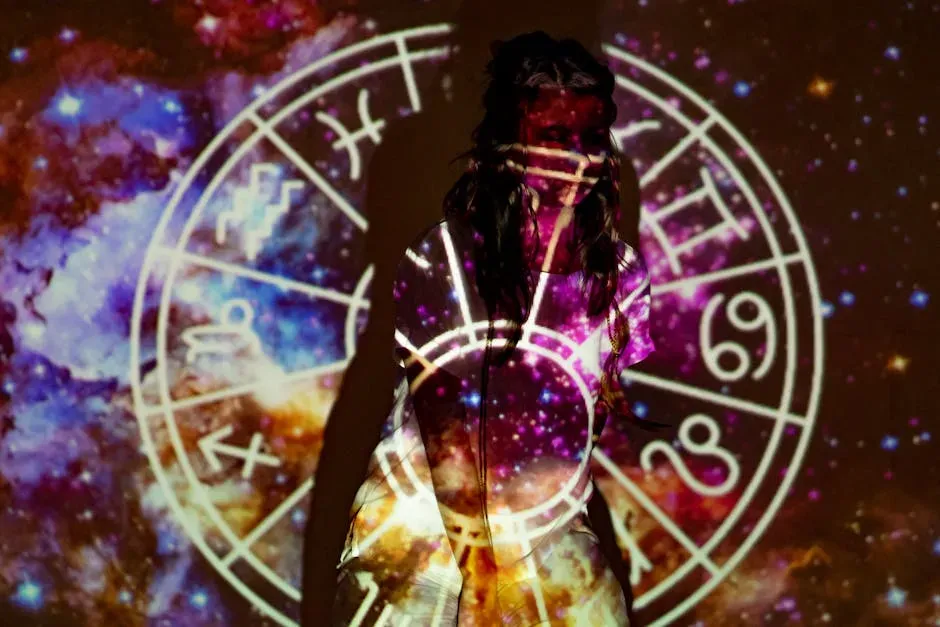
Astronomers are blunt about this: the stars tied to the zodiac do not control your love life, your career, or whether you will finally clean your closet this month. Their different life stages – from hot young giants to aging red behemoths – are the result of physics, not fate. And yet, once you know what those stars are actually doing, it becomes hard not to read them as a kind of cosmic mirror: Aries blazing through fuel, Taurus settling into slow abundance, Scorpio flirting with supernova levels of drama.
Personally, I do not think the universe is secretly writing our personalities in hydrogen and helium, but I do think we are storytelling creatures who cannot help matching our inner weather to the sky above us. Using real stellar evolution to re‑imagine the zodiac does not make astrology scientifically true; it makes it more honest, more textured, and strangely more beautiful. You are not ruled by these stars, but you can choose which of their stories you want to live closer to: the fast burn, the steady glow, the quiet hum, or the explosive rebirth. So now that you know what your sign’s stars are actually up to, which version of yourself do you feel orbiting into focus?