
Something unusual is happening out there in the cosmos, and scientists are genuinely puzzled. A radio signal has been detected pulsing with eerie regularity from a source deep in our galaxy, and nobody can fully explain what is causing it. That alone should be enough to make you stop scrolling.
What makes this discovery especially fascinating is not just the signal itself, but what it might represent. It does not fit neatly into any category astronomers currently use to classify space objects. Let’s dive in.
A Signal That Refuses to Be Ignored
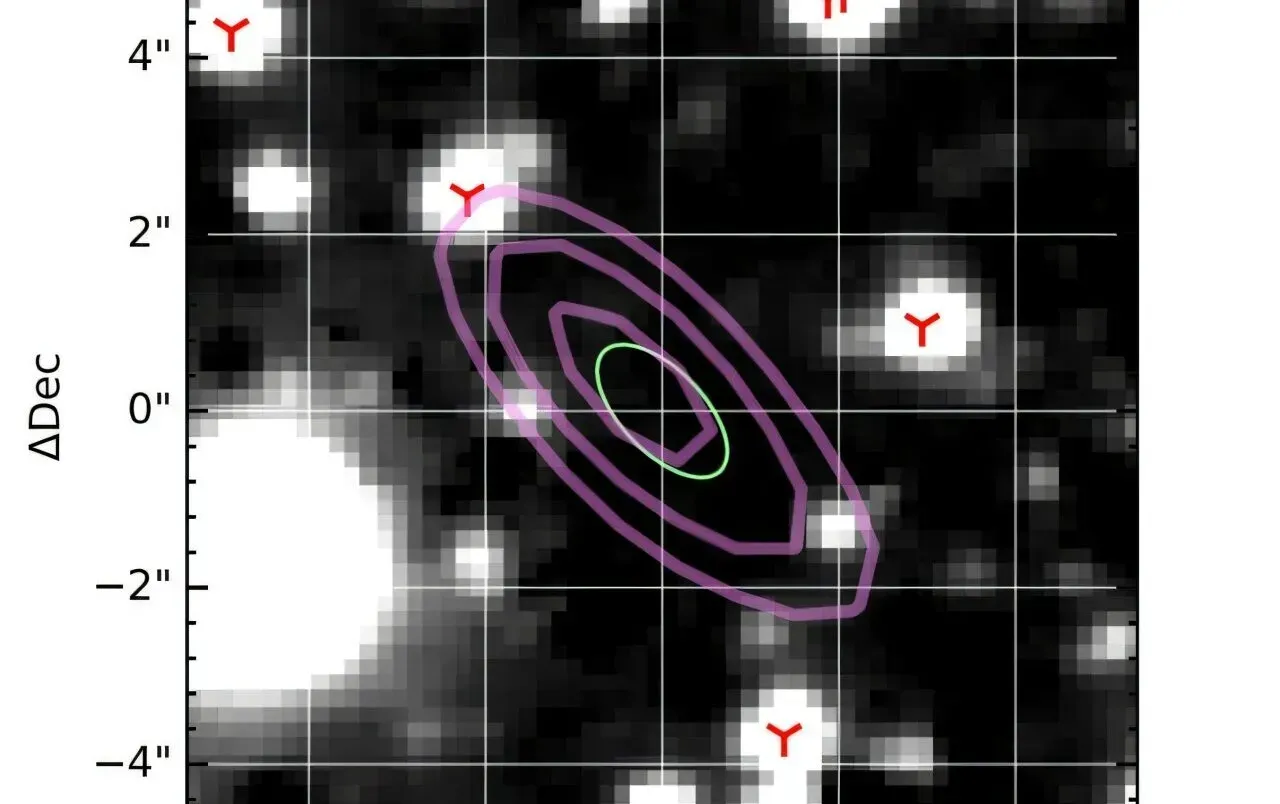
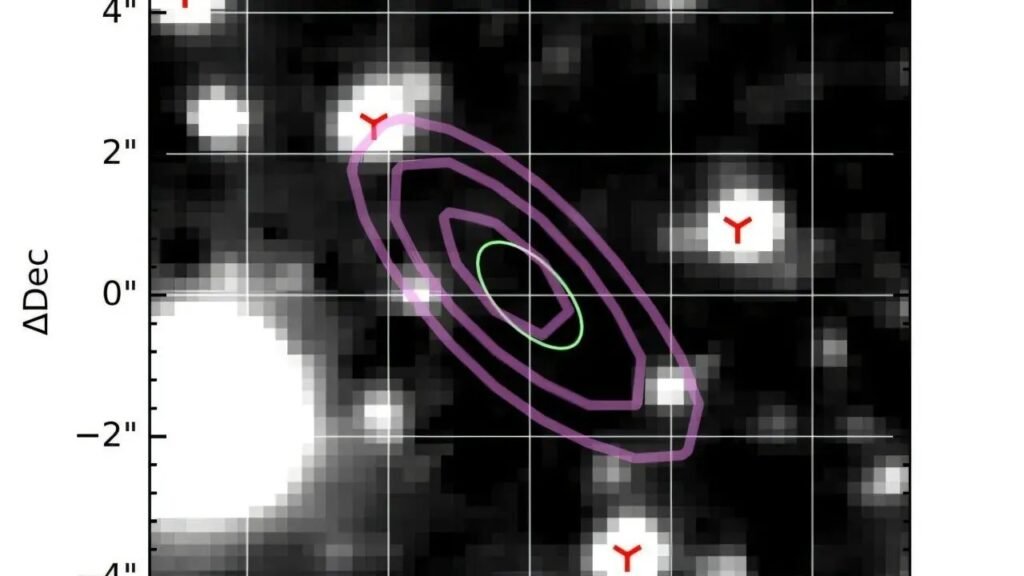
Honestly, when astronomers first noticed this periodic radio transient, it probably felt like one of those “wait, run that again” moments. The signal pulses roughly once every 44 minutes, which is extraordinarily slow for this type of radio emission. Most known pulsars spin much faster, some completing rotations in milliseconds, making this object stand out like a foghorn in a library.
The source was detected using radio telescope observations and has been catalogued as a long-period radio transient. These are a relatively new class of cosmic objects that astronomers are still trying to understand. Think of it like discovering a new species of animal that doesn’t quite match any known family tree.
What Exactly Is a Long-Period Radio Transient?
Here’s the thing about long-period radio transients: they are not like your typical pulsars or magnetars, though they share some similarities. These objects emit powerful bursts of radio waves at intervals far longer than what conventional neutron star spin-down models would predict. It’s a bit like a lighthouse that only flashes once an hour instead of every few seconds.
The first confirmed long-period radio transient was only discovered in recent years, making this entire category of objects brand new scientific territory. Each new discovery adds a piece to a puzzle that scientists are still building the frame for. The 44-minute period of this latest find pushes the boundaries of what current models say should even be physically possible.
Where Is This Signal Coming From?
The source appears to be located within the Milky Way, our own galaxy, rather than arriving from some distant extragalactic region. That proximity, in cosmic terms, actually makes it more intriguing because it means we have a better chance of studying it in detail. Distance in astronomy is often the enemy of clarity, so having something relatively close is a genuine advantage.
Pinpointing the exact location and nature of the source remains a challenge. The signal’s characteristics suggest it could be associated with a highly magnetized neutron star, but that explanation still leaves too many open questions. It’s hard to say for sure, but whatever this object is, it appears to be doing something that our current physics toolkit struggles to explain cleanly.
How Did Astronomers Actually Find It?
The detection was made through careful analysis of radio telescope data, the kind of painstaking work that rarely makes headlines but drives science forward. Researchers were essentially sifting through enormous amounts of data looking for patterns, which is both an art and a science in its own right. The regularity of the 44-minute pulse is what made it identifiable among the noise.
Modern radio astronomy has advanced to the point where automated pipelines can flag unusual periodic signals for human review. Still, it takes experienced eyes to recognize that something genuinely anomalous has been found rather than a glitch or interference. The confirmation process involves multiple observations over time to ensure the signal is real, consistent, and truly astrophysical in origin.
Could It Be a Magnetar, a White Dwarf, or Something Else Entirely?
The leading candidates for what might produce such a signal include ultra-long period magnetars, which are neutron stars with extraordinarily powerful magnetic fields, or possibly white dwarf pulsars. A white dwarf is the dense remnant of a dead star, roughly the size of Earth but with a mass comparable to the Sun. Some researchers believe white dwarfs spinning slowly could produce the kind of radio emissions seen here.
The magnetar theory is also compelling. Magnetars are known for dramatic outbursts of energy, and their extreme magnetic fields could theoretically drive emission mechanisms that last far longer between pulses than ordinary pulsars. I think the most exciting possibility, though it remains speculative, is that this could represent a previously unknown type of stellar remnant entirely. Science rarely gets more thrilling than that.
Why Does This Discovery Matter for Astronomy?
Every time astronomers find an object that breaks existing models, it forces a recalibration of how we understand stellar evolution and neutron star physics. That’s not a small thing. The universe keeps handing us objects that remind us just how incomplete our picture of it really is.
Long-period radio transients as a class could reshape our understanding of what happens to massive stars after they die. If these objects are more common than previously thought, they may have been hiding in plain sight in archival data for decades. This discovery adds urgency to the question of how many more of these strange pulsing objects are out there waiting to be found. Roughly a handful of confirmed long-period radio transients now exist, but that number could grow rapidly as detection techniques improve.
The Bigger Question This Signal Is Really Asking
Let’s be real for a second. What makes this story resonate beyond the technical details is the sheer mystery of it. A signal pulsing from deep within our galaxy on a clock that current science cannot fully account for is the kind of thing that makes you look up at the night sky differently.
The discovery raises fundamental questions about the life cycles of stars, the physics of extreme magnetic fields, and the range of objects our universe is capable of producing. Astronomers will continue monitoring this source closely, gathering more data with each 44-minute cycle that rolls around. In a field where answers sometimes take generations to arrive, finding the right question is already half the work.
Conclusion
This discovery is a genuine reminder that the universe is still full of surprises, and not everything out there fits on our existing maps. A pulsing signal with a 44-minute period, originating from an object that defies clean categorization, is exactly the kind of anomaly that rewrites textbooks over time. I find it deeply exciting that even in 2026, with all of our technology and accumulated knowledge, the cosmos can still produce something that leaves experts scratching their heads.
The search for an explanation will drive new observations, new models, and perhaps entirely new branches of astrophysics. That’s the beautiful part of science. It doesn’t just answer questions, it generates better ones. What do you think is out there producing that signal? Tell us in the comments.