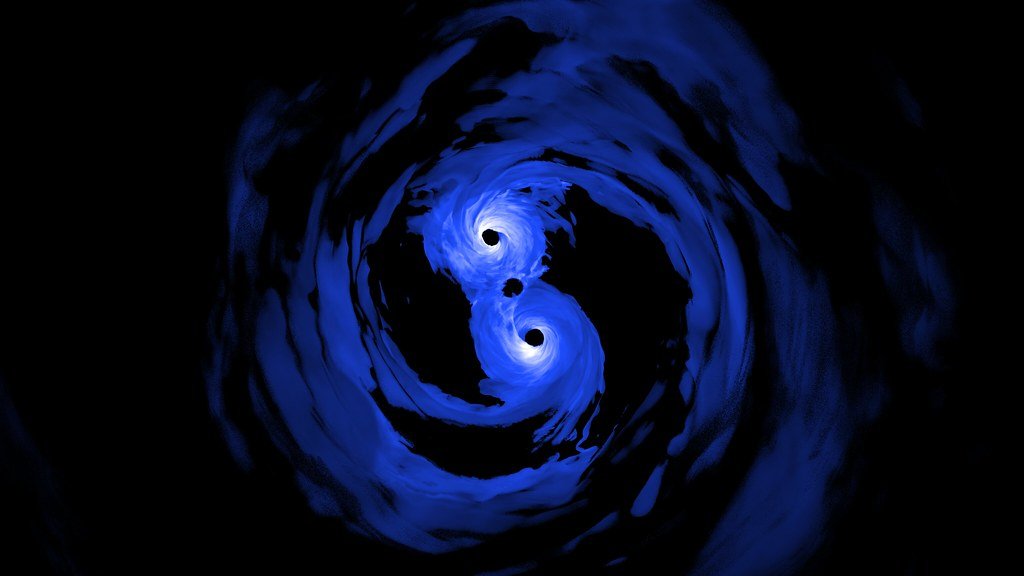

Space has a way of humbling us. Just when we think we’ve got a decent handle on how the universe works, it throws something at us that flips everything upside down. A newly detected black hole merger is doing exactly that, and the scientific community is genuinely buzzing.
This isn’t just another distant cosmic event to file away and forget. The details of this merger are strange, surprising, and carry implications that reach far beyond a single observation. Let’s dive in.
A Merger Unlike Anything We’ve Detected Before
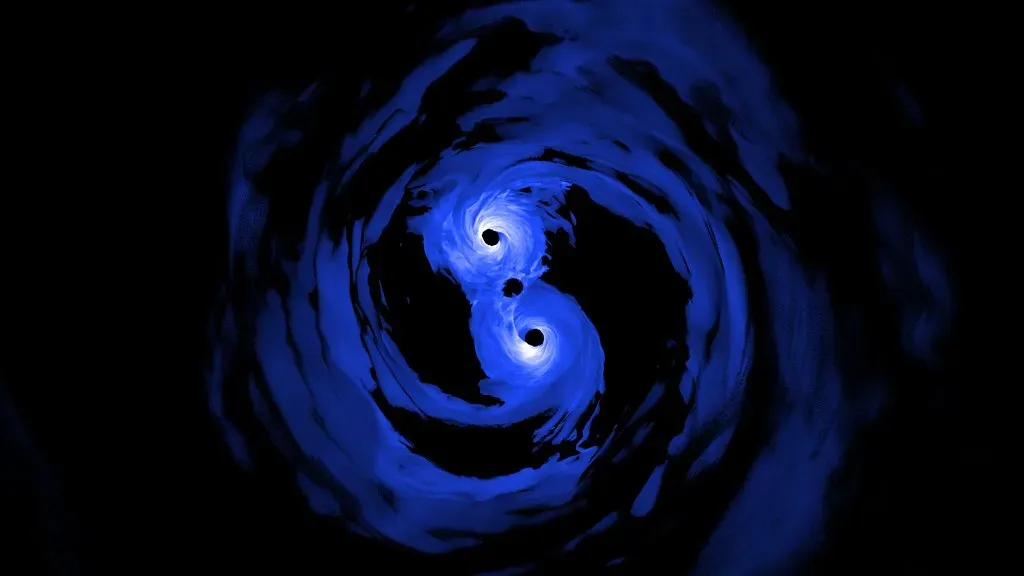
Here’s the thing about black hole mergers: scientists have been cataloguing them for years now, ever since gravitational wave detection became a real capability. Most of them fit a familiar pattern. This one doesn’t.
The event involves black holes in the solar-mass range, meaning they’re comparable in mass to our own Sun. That might not sound extreme until you realize that black holes this small sit in a deeply mysterious gap between what we thought stellar evolution could produce and what neutron stars can become.
Honestly, the mass range alone makes this detection remarkable. It challenges existing models of how stars live, die, and collapse. The universe, it seems, didn’t get the memo about what’s supposed to be possible.
What Gravitational Waves Are Actually Telling Us
Gravitational waves are ripples in spacetime itself, produced when massive objects accelerate. Think of dropping a stone into still water and watching the rings spread outward. These waves travel at the speed of light and carry a kind of fingerprint of the event that created them.
Detectors like LIGO and Virgo have become remarkably sensitive instruments, capable of measuring distortions in spacetime smaller than a fraction of a proton’s width. That’s a level of precision that still blows my mind every time I think about it.
The signals captured from this solar-mass merger gave researchers a clean, detailed readout of the inspiral phase, the moment of collision, and the aftermath. Each part of that signal carries distinct physical information. Scientists are essentially reading the biography of two black holes from the trembles they left in the fabric of space.
The Mystery of the Mass Gap
There’s a concept in astrophysics called the “mass gap,” a range of masses roughly between about three and five solar masses where objects seemed to simply not exist. Neutron stars max out below this range. Stellar black holes were thought to begin above it. The gap was almost like a forbidden zone.
This merger is dragging that assumption out into the open and questioning it hard. At least one of the objects involved appears to sit right inside that contested range, which is either thrilling or deeply unsettling depending on how attached you are to tidy astrophysical categories.
Let’s be real: the mass gap was always based on limited observational data. We hadn’t seen enough mergers to be confident it was truly empty. Now it’s looking less like a gap and more like territory we simply hadn’t explored yet. That’s a big deal.
How This Challenges Star Formation and Death Models
Stars don’t just wink out when they die. They explode, collapse, shed material, and leave behind remnants that depend on a cascade of physical processes during the final moments of their lives. The type and mass of the remnant, whether a neutron star or black hole, is supposed to be predictable given the parent star’s properties.
A solar-mass black hole sitting in the mass gap challenges that predictability at a foundational level. Either certain stars are collapsing in ways our current supernova models don’t account for, or there’s something else going on entirely, perhaps a different formation pathway we haven’t seriously considered.
Some researchers are already pointing toward exotic formation scenarios, including the possibility that these objects formed through earlier mergers of neutron stars. That would make this detection a second-generation event, a merger of things that were themselves products of mergers. The cosmic family tree gets complicated fast.
The Role of Dense Stellar Environments
Globular clusters and dense galactic cores are wild places. Objects orbit in tight proximity, interact gravitationally, and occasionally get flung into collision courses with each other. These environments are thought to be breeding grounds for unusual compact object mergers.
If the solar-mass black holes in this event formed and merged within such a dense environment, it would offer a plausible pathway for producing objects in the mass gap. Essentially, extreme environments might be bending the usual rules of stellar death and remnant formation.
This is where the astrophysics gets genuinely exciting. It suggests our universe has multiple creative strategies for making black holes, not just the straightforward “massive star collapses” route we’ve relied on as the standard explanation. The universe is more inventive than our textbooks give it credit for.
What This Means for Future Gravitational Wave Astronomy
We are still in the early chapters of gravitational wave astronomy. The detector networks around the world are being upgraded, and planned space-based observatories promise to open entirely new frequency windows. Events like this solar-mass merger are exactly the kind of discovery that shapes what future instruments are designed to find.
It’s hard to say for sure how many more mass-gap events are waiting to be detected, but this finding suggests they’re probably not as rare as previously assumed. Each new detection builds a statistical picture, and that picture is already looking far more complex and interesting than early models predicted.
There’s also a broader philosophical point worth sitting with. Every time we build a better instrument and look more carefully, the universe reveals something we didn’t expect. Gravitational wave detectors are doing for astrophysics what telescopes did for astronomy centuries ago, opening a new sense we didn’t know we were missing.
The Bigger Picture for Black Hole Science
Black holes have become almost cultural objects at this point. Everyone has a vague idea of what they are. Yet the science is still genuinely evolving, not in small tweaks but in fundamental ways. The population of black holes we now know about looks very different from the population scientists described even a decade ago.
Solar-mass mergers push the boundaries of black hole demographics outward. They force a rethink of how compact objects are distributed across the universe, how they find each other, and what happens when they merge. Each answered question opens up roughly three new ones, which is both exhausting and wonderful.
This particular detection will keep researchers busy for quite some time, pulling apart the signal, running models, and debating formation scenarios. It’s a reminder that the cosmos is not waiting for our theories to catch up. It’s out there, doing extraordinary things, whether we’re ready to understand them or not. What do you think: does the idea that the universe can still genuinely surprise scientists make space feel more mysterious to you, or more exciting? Drop your thoughts in the comments.