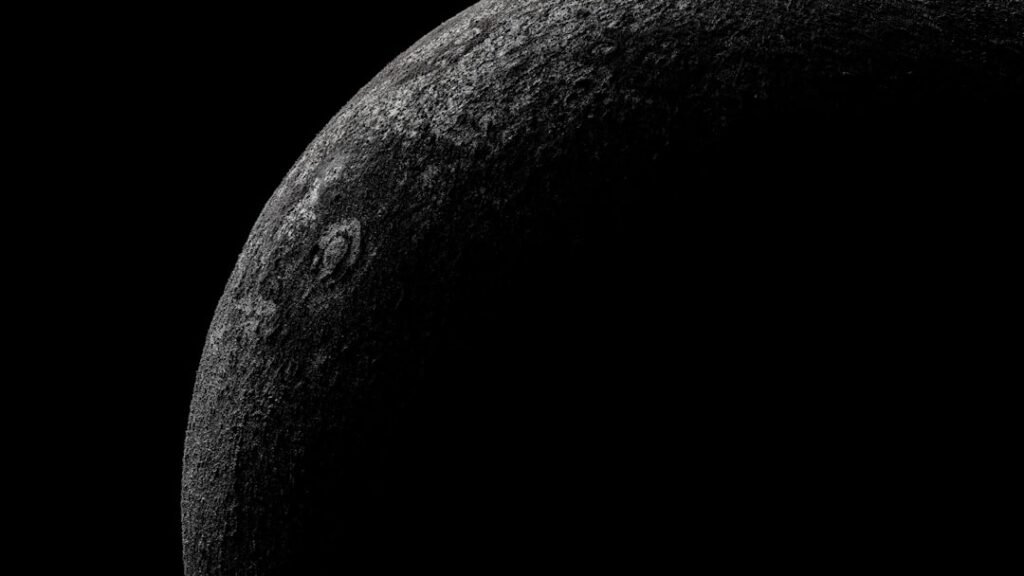

Pluto’s Fall Ignites a New Hunt (Image Credits: Unsplash)
Astronomers continue to probe the distant Kuiper Belt for signs of a massive world that could reclaim the ninth planet title lost by Pluto two decades ago.
Pluto’s Fall Ignites a New Hunt
The International Astronomical Union stripped Pluto of its planetary status in 2006, reclassifying it as a dwarf planet after discoveries revealed a crowded realm of similar icy bodies beyond Neptune. This decision prompted researchers to question whether a larger, dominant object still awaited detection. Caltech astronomers Konstantin Batygin and Mike Brown seized on this curiosity in 2016, proposing Planet Nine based on indirect gravitational clues.[1][2]
Brown, who played a key role in Pluto’s demotion, highlighted the irony. “All those people who are mad that Pluto is no longer a planet can be thrilled to know that there is a real planet out there still to be found,” he stated.[1] Their work marked the first strong evidence in over 150 years that the solar system’s planetary lineup remained incomplete, according to Batygin.[1]
Clues Hidden in Distant Orbits
Six extreme trans-Neptunian objects exhibited strangely aligned elliptical orbits, a pattern with only a 0.007 percent chance of occurring randomly. These Kuiper Belt residents, including Sedna and 2012 VP113, pointed in the same direction and tilted about 30 degrees from the ecliptic plane.[1][3]
Computer simulations by Batygin and Brown demonstrated how a distant planet could shepherd these objects through gravitational resonances, exchanging energy without collisions. The model also predicted perpendicular high-inclination orbits, matching five additional discoveries. Recent analyses of 51 such objects in 2025 reinforced the clustering signal, defying simple coincidence.[3]
- Sedna: Perihelion at 76 AU, extreme orbit.
- 2012 VP113: Similar detached path.
- Alicanto, 2010 GB174: Aligned arguments of perihelion.
- 2000 CR105, 2010 VZ98: Shared orbital traits.
Portrait of a Hypothetical World
Planet Nine emerges from models as a super-Earth, roughly five to ten times Earth’s mass and 1.5 times its diameter. Its orbit spans a highly eccentric path with a semi-major axis of 290 to 800 AU, yielding a 5,000- to 20,000-year period.[2][3]
At its closest, it approaches 200 AU; at farthest, nearly 1,000 AU. A thin hydrogen-helium atmosphere might cloak a rocky core and icy mantle, chilled to about 47 Kelvin.
| Property | Estimated Value |
|---|---|
| Mass | 5-10 Earth masses |
| Semi-major axis | 290-800 AU |
| Orbital period | 5,000-20,000 years |
| Eccentricity | 0.2-0.6 |
Skeptics and Rival Theories Emerge
Not all experts embrace the idea. Critics argue the small sample of objects reflects observational biases from uneven sky surveys, with some 2025 studies finding no clustering after corrections.[2][4] Objects like 2017 OF201 and 2023 KQ14 show misaligned orbits, challenging predictions.
Alternatives include a massive planetesimal disk or a smaller “Planet Y,” Mercury-sized and tilted, warping the Kuiper Belt. Kat Volk of the Planetary Science Institute expressed doubt: “Personally, I’m not convinced the clustering is real at all.”[4]
Telescopes Poised for Breakthrough
Surveys with Subaru and Keck telescopes have scanned portions of the predicted path without success. Citizen science via Backyard Worlds sifts NEOWISE data for faint movers.
The Vera C. Rubin Observatory, operational since 2025, promises comprehensive southern sky mapping, potentially detecting Planet Nine or ruling it out by decade’s end. NASA maintains the world remains hypothetical amid ongoing debate.[2]
Key Takeaways
- Planet Nine hypothesis stems from 2016 Caltech work explaining Kuiper Belt oddities.
- Undiscovered despite targeted searches; Rubin Observatory offers best hope.
- Debate persists between gravitational evidence and bias explanations.
The quest for Planet Nine blends rigorous science with cosmic wonder, reminding us the solar system still holds secrets. Will telescopes unveil it soon, or prove it a mirage? What do you think about it? Tell us in the comments.