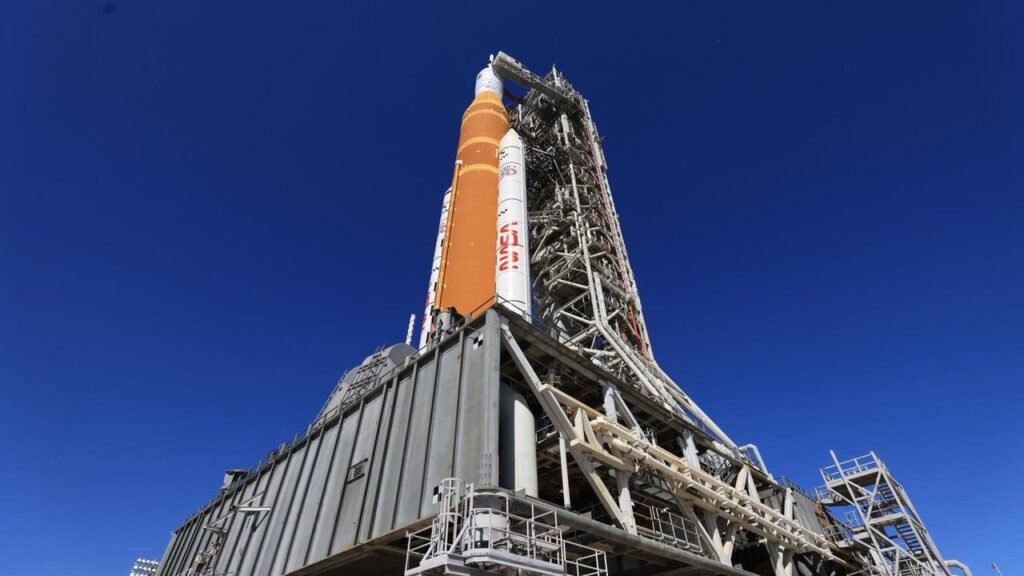

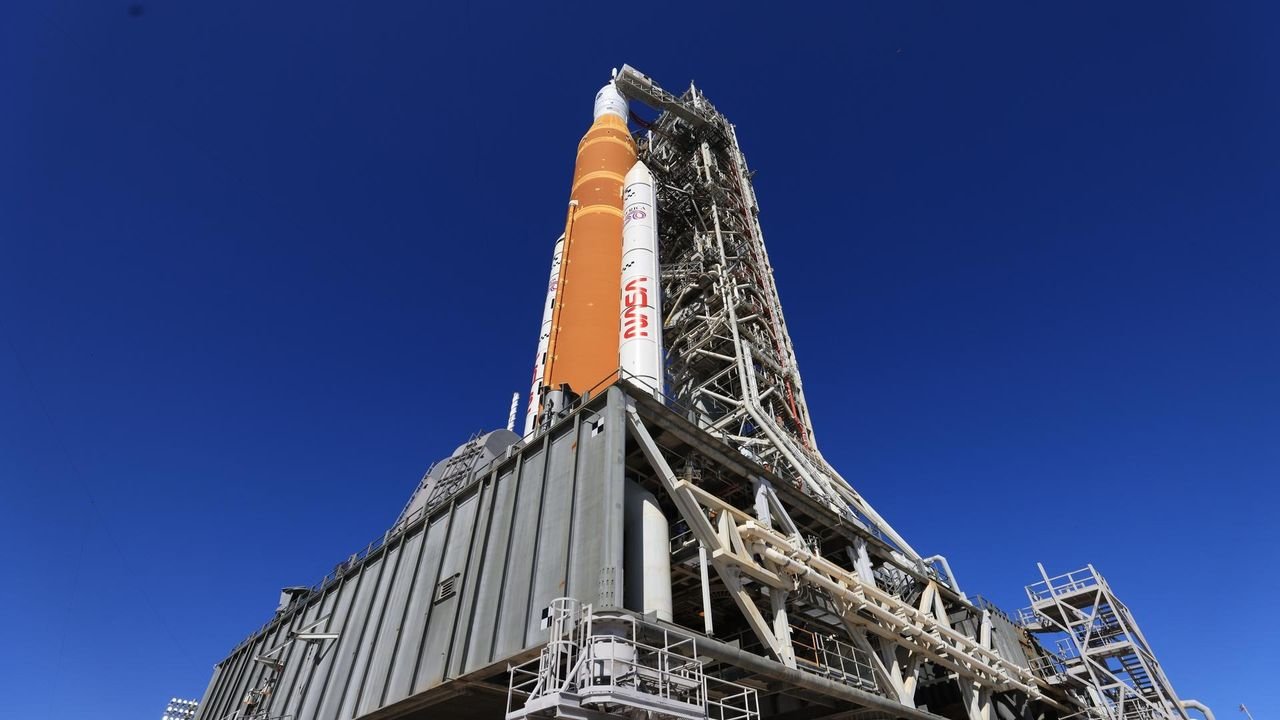
Sudden Glitch Follows Rehearsal Triumph (Image Credits: Cdn.mos.cms.futurecdn.net)
Kennedy Space Center, Florida — NASA engineers confronted a fresh technical hurdle with the Artemis II Space Launch System rocket, as an interrupted helium flow in its upper stage threatened the mission’s tight schedule.[1][2]
Sudden Glitch Follows Rehearsal Triumph
Teams celebrated the successful conclusion of the second wet dress rehearsal on February 19, 2026, after loading over 750,000 gallons of cryogenic propellants without hydrogen leaks that had plagued earlier tests.[3] Officials targeted March 6 as the earliest liftoff date just days prior, with astronauts entering quarantine and final preparations underway.
Overnight from February 20 to 21, data revealed an unexpected break in helium supply to the Interim Cryogenic Propulsion Stage, the rocket’s upper stage.[1] This development halted progress and shifted focus to troubleshooting, marking yet another delay for the long-awaited crewed lunar flyby.
The Heart of the Upper Stage Challenge
Helium serves a vital function in the SLS upper stage by pressurizing liquid hydrogen and oxygen tanks and purging engines to ensure reliable ignition and flow during ascent.[4] The interruption occurred during routine repressurization after the rehearsal, with no prior signs during the fueling simulations.
Engineers suspect a faulty filter, check valve, or quick-disconnect umbilical connection, echoing minor issues from the Artemis I mission in 2022.[4] NASA teams maintained safe conditions using ground systems while data analysis continued, confirming the rocket remained stable.
- Helium bottles onboard purge residual gases from engines.
- Pressurization prevents fuel cavitation during flight.
- Ground umbilicals supply helium pre-launch.
Rollback Preparations Accelerate Amid Weather Pressures
NASA moved swiftly to ready the rocket for rollback to the Vehicle Assembly Building, where specialized platforms allow detailed access impossible at the pad.[1] Crews removed access platforms on February 21 ahead of forecasted high winds that could complicate the process.
Administrator Jared Isaacman noted the impact: “This will almost assuredly impact the March launch window.”[2] A NASA blog post affirmed that such a move eliminates March opportunities but positions April as viable with prompt repairs.[1]
The crew — Commander Reid Wiseman, Pilot Victor Glover, Mission Specialists Christina Koch and Jeremy Hansen — exited quarantine to monitor developments.
Shifting Horizons for Lunar Return
Artemis II marks humanity’s first crewed voyage beyond low Earth orbit since Apollo 17, sending the four astronauts on a 10-day lunar orbit without landing.[2] The mission tests Orion and SLS systems critical for future lunar landings.
Available windows now center on early April: April 1, 3-6, and 30, pending repair outcomes and reviews.[3] NASA emphasized resilience, drawing parallels to Apollo-era perseverance.
Key Takeaways
- March 6-11 window ruled out; April targets preserved with swift action.
- Helium fix requires VAB access; no safety risks to vehicle.
- Builds on successful rehearsals despite prior hydrogen challenges.
Though delays test patience, each resolution strengthens the path to sustained lunar presence. What are your thoughts on this latest Artemis twist? Share in the comments.