
A Team of Trailblazers Takes Flight (Image Credits: Upload.wikimedia.org)
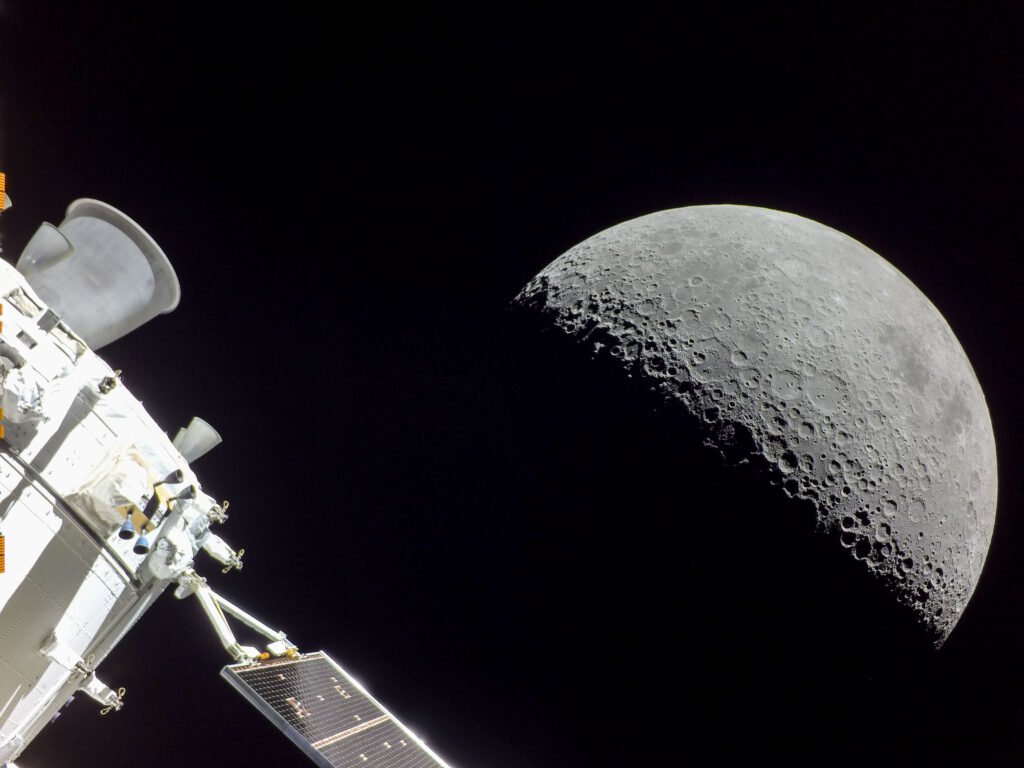
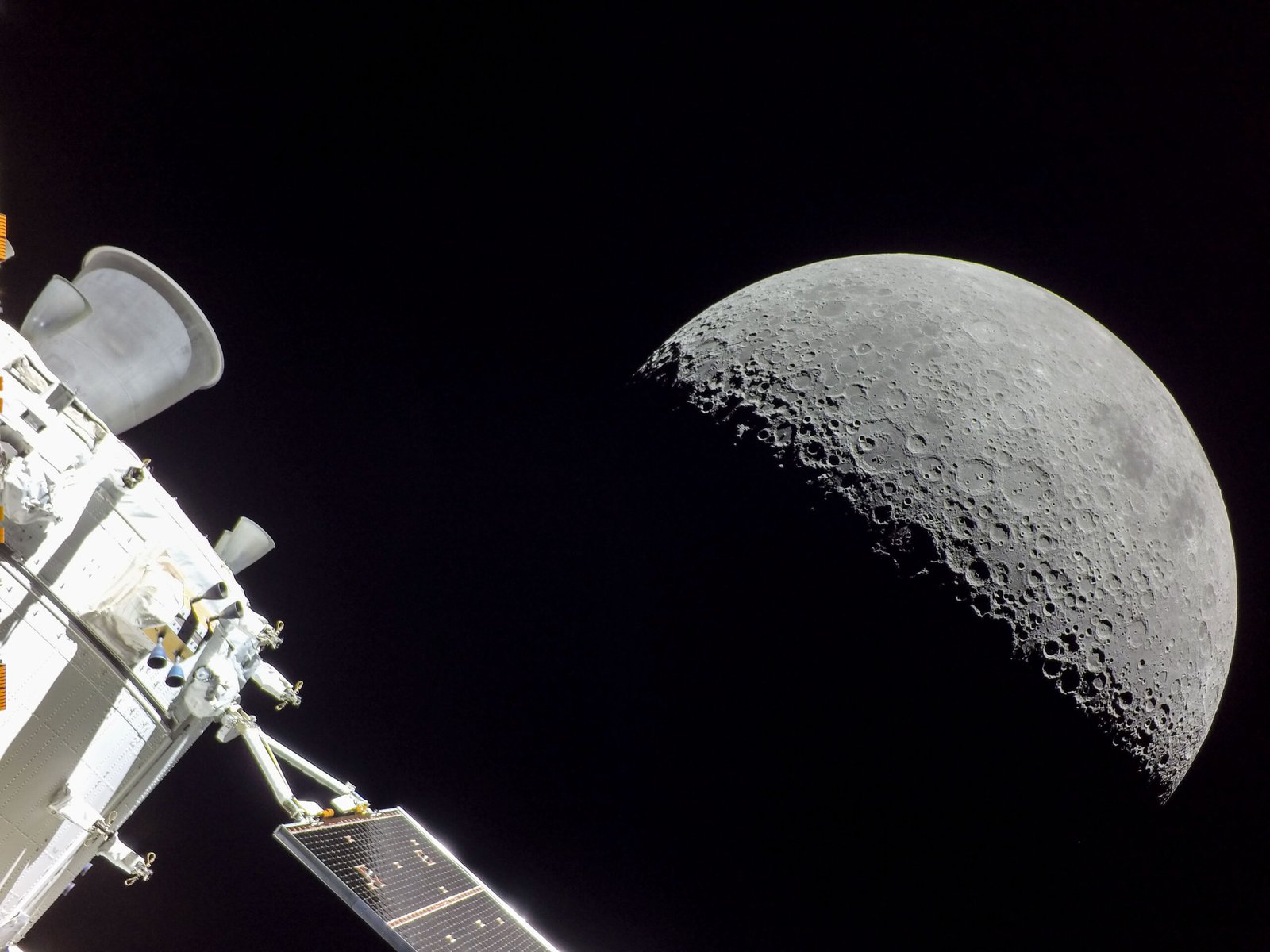
NASA’s Artemis II mission marked a pivotal moment in human space exploration on April 6, 2026, as its Orion spacecraft looped around the moon’s far side in a precise flyby. The four astronauts aboard pushed beyond the boundaries set by Apollo missions more than 50 years ago, achieving the farthest distance any humans have ventured from Earth.[1][2] Now safely departed from the moon’s gravitational pull, the crew began their journey home on a free-return trajectory, with splashdown anticipated in the Pacific Ocean near San Diego in the coming days.[3]
A Team of Trailblazers Takes Flight
The mission launched on April 1, 2026, from Kennedy Space Center’s Launch Complex 39B in Florida, the first crewed liftoff from that pad since 2006. Aboard Orion, named Integrity, rode Commander Reid Wiseman, Pilot Victor Glover, Mission Specialist Christina Koch, all from NASA, and Mission Specialist Jeremy Hansen from the Canadian Space Agency. This diverse team achieved multiple firsts: Glover as the first person of color to travel beyond low Earth orbit, Koch as the first woman, Wiseman as the oldest astronaut on such a voyage, and Hansen as the first non-American.[1][4]
Over the initial days, the crew conducted system checks, deployed four international CubeSats for radiation and space weather studies, and tested life support amid minor hurdles like a urine vent freeze, quickly resolved with heaters. By Flight Day 5 on April 5, Orion entered the moon’s sphere of influence, setting the stage for the centerpiece event.[1]
| Role | Name | Agency | Historic Note |
|---|---|---|---|
| Commander | Reid Wiseman | NASA | Oldest beyond LEO |
| Pilot | Victor Glover | NASA | First person of color |
| Mission Specialist | Christina Koch | NASA | First woman |
| Mission Specialist | Jeremy Hansen | CSA | First non-U.S. citizen |
Peak Moments: Views and Records from the Far Side
During the roughly seven-hour flyby window starting around 2:45 p.m. EDT on April 6, the crew witnessed breathtaking phenomena invisible from Earth. They observed an Earthrise for the first time with human eyes since Apollo, a 57-minute solar eclipse revealing the sun’s corona as “baby hairs” and streamers, four lunar impact flashes, two meteors, and planets like Venus, Mars, and Saturn. Earthshine cast a “sci-fi” glow on the moon, as Pilot Glover described it.[2]
At 23:00 UTC, Orion reached its closest approach of 4,067 miles over the lunar far side, peaking at 252,756 miles from Earth just two minutes later – a new record eclipsing Apollo 13’s 1970 mark. Communications blacked out for 40 minutes, one of the longest in spaceflight history, before reestablishing as the spacecraft departed the lunar zone. Commander Wiseman later reflected, “We were well prepared, and we appreciate all of you… Thank you for giving us this opportunity.”[2][1]
- Earthrise and solar eclipse observations
- Lunar impact flashes near the equator
- Record distance: 252,756 miles from Earth
- 40-minute far-side blackout
- New crater discoveries proposed for naming
Overcoming Hurdles on a Flawless Path
The 10-day mission tested Orion’s deep-space capabilities rigorously. Early challenges included cabin chill, a malfunctioning space toilet, and thruster degradations during manual piloting demos, all addressed without compromising safety. Mission Specialist Koch praised the spacecraft’s control: “It was just amazing to be in a deep space spacecraft and just be flying it around by hand.”[2]
Science experiments advanced, from monitoring crew health via saliva samples and sleep trackers to optical communications hitting 260 megabits per second. Post-flyby, a trajectory correction burn positioned Orion for home, with reentry speeds nearing 25,000 mph expected around April 11.[1]
Paving the Way for Lunar Landings
Artemis II validated systems critical for future missions, including Artemis III’s delayed low-Earth orbit tests in 2027 and Artemis IV’s first lunar landing around 2028. The free-return trajectory, akin to Apollo 13 but extended, proved Orion’s heat shield and service module reliability despite prior concerns.[4]
Hansen captured the awe: “When we were on the far side of the moon, looking back at Earth, you really felt like you weren’t in a capsule… It was an extraordinary human experience.”[2] These insights will refine preparations for sustained moon presence and Mars ambitions.
- Artemis II set the farthest human distance record at 252,756 miles, surpassing Apollo 13.
- Crew observed unique lunar phenomena, advancing science with CubeSat deployments and health studies.
- Mission clears path for Artemis landings, confirming Orion’s deep-space prowess.
This triumph reaffirms NASA’s leadership in exploration, bridging Apollo’s legacy with tomorrow’s outposts. As the crew savors their final deep-space days, the world watches their safe return. What lunar sight would you most want to witness? Tell us in the comments.