
A Historic Leap Resumes Lunar Exploration (Image Credits: Wikimedia)
Kennedy Space Center, Florida – Space weather forecasters have ramped up preparations as NASA’s Artemis II mission approaches its April 1 launch window. The flight will carry four astronauts on a 10-day lunar flyby, the first crewed deep-space journey since Apollo 17 in 1972. Experts from NASA and NOAA monitor the sun closely to mitigate radiation risks that intensify beyond Earth’s magnetosphere.[1][2]
A Historic Leap Resumes Lunar Exploration
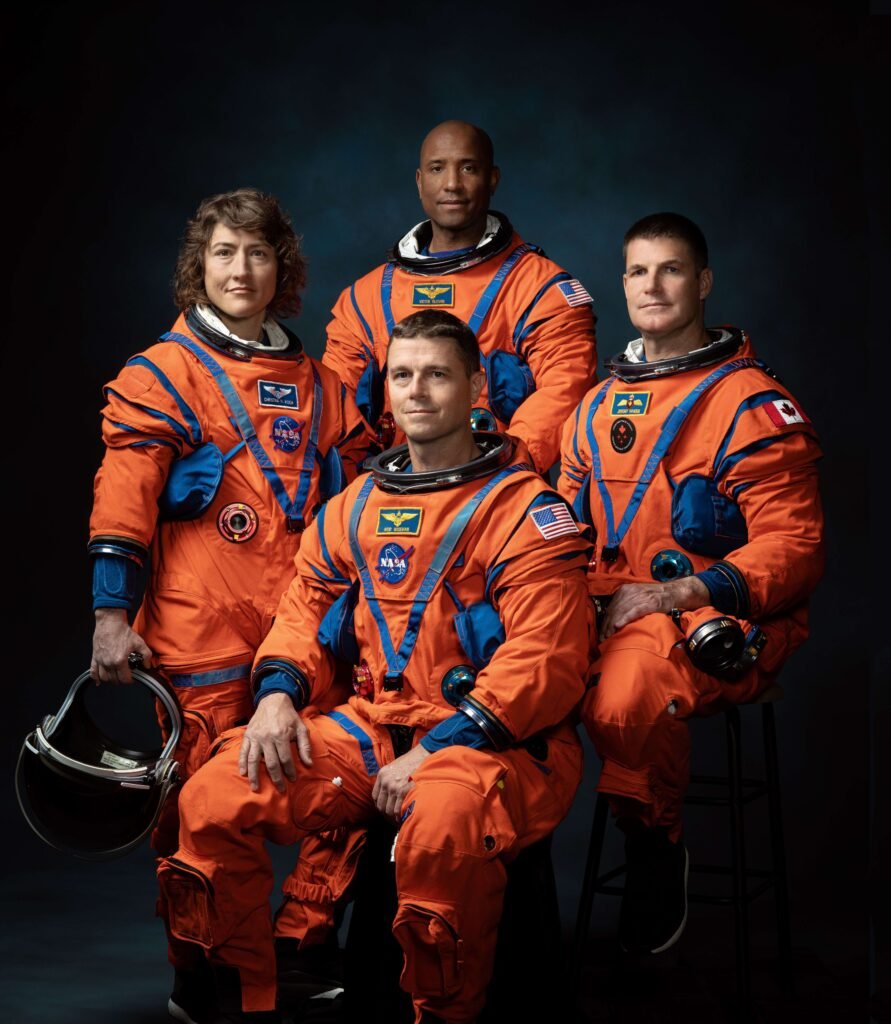
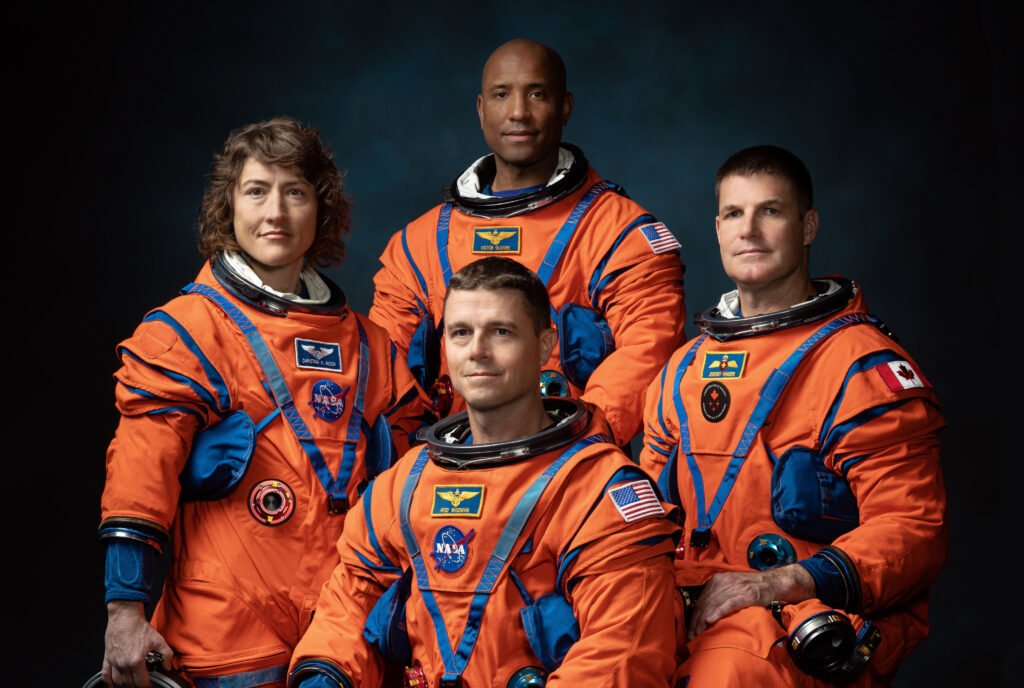
The Artemis II crew stands poised to etch new milestones in human spaceflight. Commander Reid Wiseman, pilot Victor Glover, mission specialist Christina Koch, and mission specialist Jeremy Hansen will pilot the Orion spacecraft atop the Space Launch System rocket from Launch Complex 39B. Their trajectory includes a close lunar pass at about 4,700 miles, testing systems for future landings.[2]
Objectives extend beyond navigation. The team will evaluate life support, conduct proximity operations with the propulsion stage, and experiment with high-speed optical communications. Payloads like AVATAR and ARCHAR will track crew health, from sleep patterns to immune responses, in deep space. Splashdown awaits in the Pacific Ocean around April 10.[2]
Radiation Threats Beyond Earth’s Shield
Solar activity poses the gravest peril for these astronauts. Coronal mass ejections and solar flares unleash energetic particles that penetrate spacecraft, elevating radiation doses. Such events could heighten cancer risks or temporarily degrade cognitive function, especially during the mission’s peak exposure phases.[3]
Baseline radiation from galactic cosmic rays and Van Allen belts matches roughly one month on the International Space Station – about 5% of career limits. A sudden solar particle event, however, spikes levels dramatically. Historical storms during solar maximum, like those in recent cycles, underscore the need for vigilance.[1]
- Solar energetic particles (SEPs) from flares or CMEs deliver high-energy protons.
- Galactic cosmic rays provide steady but unshieldable background radiation.
- Van Allen belts amplify exposure during outbound transit.
- Orion’s structure offers partial shielding, yet gaps remain for acute events.
Sharpened Forecasts Track the Sun’s Whims
Teams have refined prediction models through rigorous exercises. A 2025 testbed simulation engaged over 70 participants to mimic radiation storms, honing interagency coordination. NOAA’s Space Weather Prediction Center now deploys consensus tools akin to hurricane tracking, drawing from global observations.[1]
“We at SWPC are fully prepared to support the Artemis 2 mission,” stated Shawn Dahl, SWPC service coordinator. Forecasters will staff NASA’s Johnson Space Center around the clock, issuing instant alerts for proton events. Jamie Favors, NASA Heliophysics Division space weather program director, noted optimism: “From a purely space weather perspective, I think we’re feeling optimistically confident right now.”[1]
Data streams from key assets fuel these efforts. NASA’s Solar Dynamics Observatory and the Interstellar Mapping and Acceleration Probe capture eruptions in real time. Even the Perseverance rover on Mars scouts sunspots days early, relaying previews of potential threats.[3]
Real-Time Defenses and Mission Protocols
Orion carries six radiation sensors from the Hybrid Electronic Radiation Assessor, plus personal dosimeters for each astronaut. Threshold breaches prompt warnings: yellow for caution, red for sheltering behind added mass like equipment stacks. Crew training emphasizes rapid response to protect vital systems and health.[3]
Launch criteria bar liftoff amid severe solar activity, prioritizing particle flux that risks electronics or crew. SWPC provides direct liaison to NASA’s Space Radiation Analysis Group, ensuring seamless updates. Mary Aronne, operations lead at NASA’s Goddard Space Flight Center, emphasized: “Our focus will be real-time space weather analysis, prioritizing solar energetic particles.”[3]
These measures build decades of refinement. As solar maximum wanes, recent sunspot clusters keep teams alert through the April window.[4]
Key Takeaways
- Artemis II marks humanity’s return to deep space, with radiation as the top environmental hazard.
- 24/7 monitoring by NASA-NOAA teams leverages spacecraft data for precise forecasts.
- Orion’s sensors and shelter protocols enable proactive crew safety amid solar surprises.
Artemis II not only tests hardware but pioneers safeguards for sustained lunar presence. As the sun’s moods remain unpredictable, these preparations affirm humanity’s resolve to explore safely. What do you think about the space weather challenges facing the Artemis II crew? Share your views in the comments.