
Humanity has spent centuries gazing at the night sky, asking the one question that refuses to go away: is there anyone else out there? It’s not just a question for philosophers or science fiction writers anymore. Right now, in 2026, some of the most brilliant scientific minds on the planet are actively hunting for signs of life in places that would have seemed pure fantasy just a generation ago. From distant ocean worlds inside our own solar system to exoplanets hundreds of light-years away, the search has never been more thrilling, or more serious.
What makes this era so extraordinary is the sheer speed of discovery. New telescopes, new instruments, and bolder missions are rewriting what we thought we knew about the universe’s potential for life. You don’t need to be a scientist to be moved by it. The results coming in right now are enough to make even the most stubborn skeptic sit up straight. Let’s dive in.
The James Webb Space Telescope and the K2-18b Bombshell
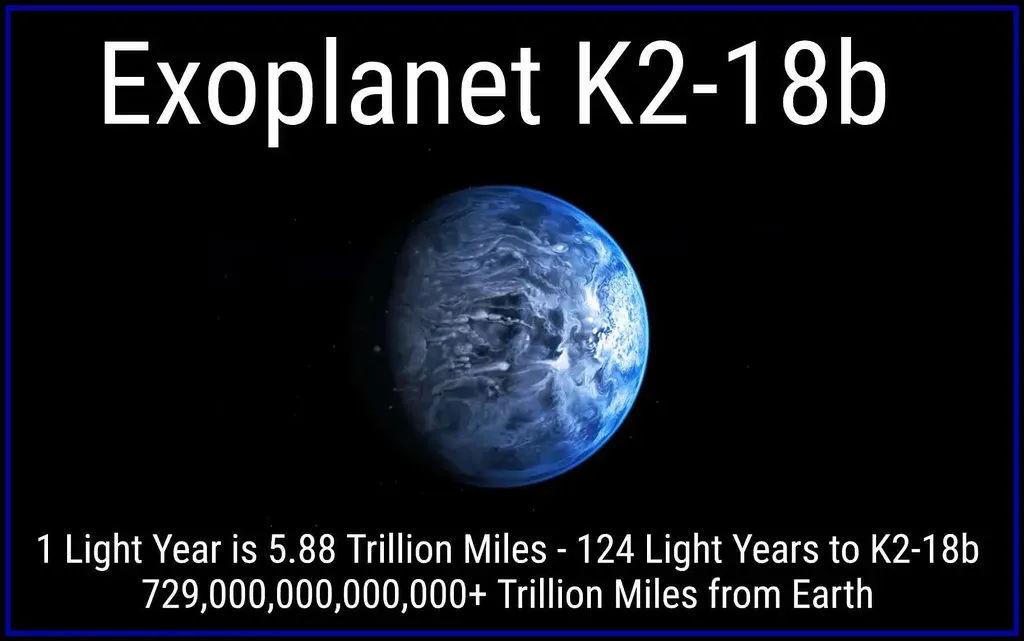
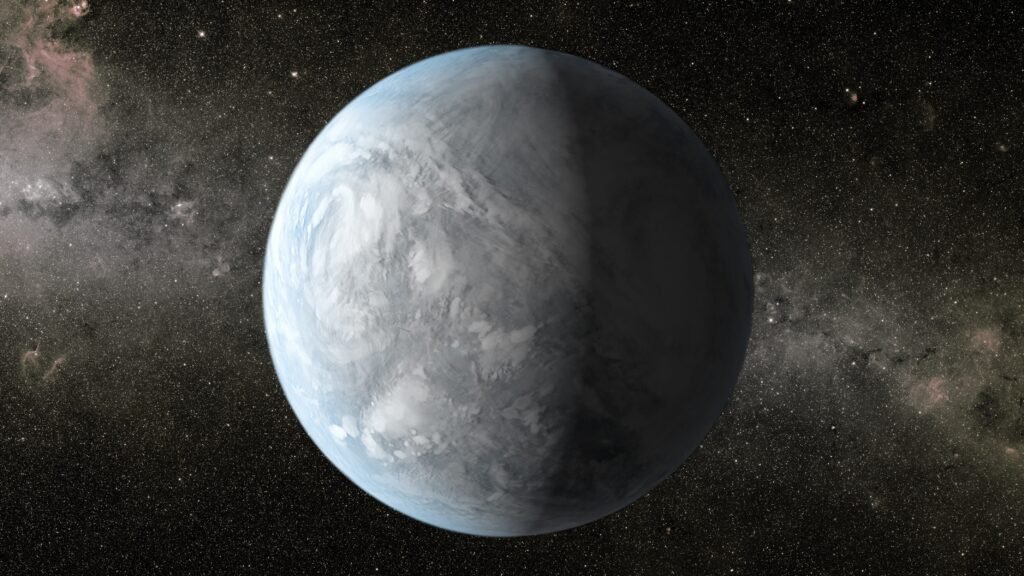
If you want to understand why scientists are more excited than ever, you need to know about K2-18b. This exoplanet lies about 120 light-years from us in the constellation Leo and orbits in the habitable zone of a cooler dwarf star. That alone would make it interesting. Then came the data that sent shockwaves through the scientific community.
Using the James Webb Space Telescope, researchers detected chemical fingerprints within the atmosphere of K2-18b that suggest the presence of dimethyl sulfide, or DMS, and potentially dimethyl disulfide, known as DMDS. Here’s the part that makes this genuinely jaw-dropping: on Earth, both DMS and DMDS are produced exclusively by living organisms, mainly microbes like marine phytoplankton. Think about that for a second. These are gases that life makes. On another planet.
The new results, announced on April 16, 2025, supported initial findings, with new data showing a stronger, though still relatively weak, signal that the team attributes to DMS or a very similar molecule. Scientists are being carefully cautious, which is the right call. The research team acknowledged that more data is still needed before claiming direct evidence of life on another world. Still, for many in the field, this is the most compelling biosignature clue yet found beyond Earth.
A Super-Earth Neighbor Just Around the Corner
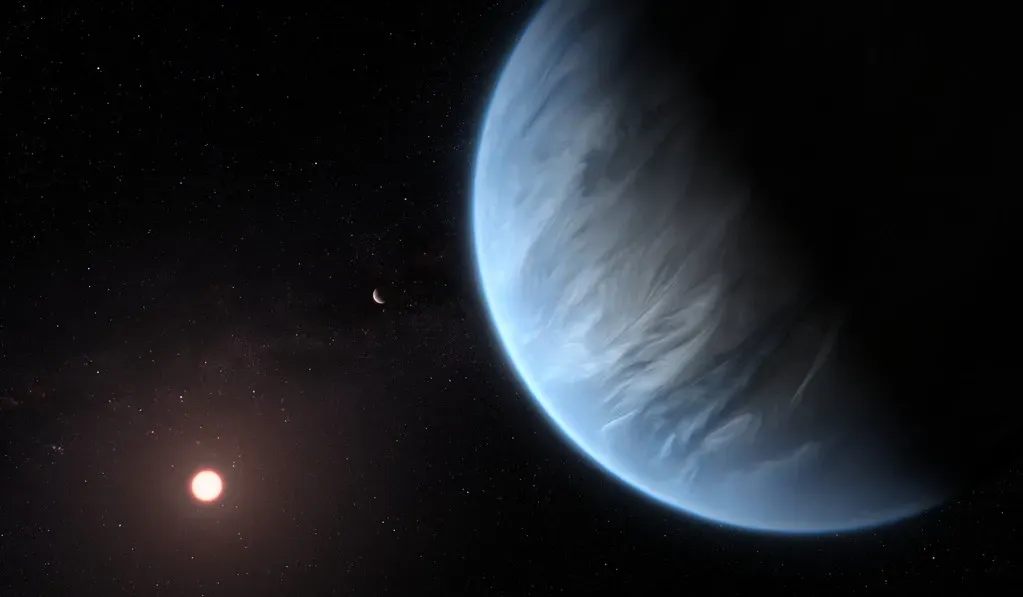
While K2-18b gets most of the headlines, another discovery quietly entered the picture that deserves just as much attention. Researchers have pinpointed a super-Earth in the habitable zone of a nearby M-dwarf star only 18 light-years away. Eighteen light-years. In cosmic terms, that’s practically in your backyard. The planet, designated GJ 251 c, is being called one of the most exciting nearby targets in the modern search for extraterrestrial life.
The discovery of this possible super-Earth less than 20 light-years from our own planet is offering scientists new hope in the hunt for other worlds that could harbor life. What makes it particularly valuable is that its proximity might one day allow for direct imaging, meaning you could, theoretically, take a photograph of it. Detecting planets like GJ 251 c depends not only on sophisticated equipment but also on complex analysis and international teamwork, with such projects requiring long-term funding and coordination because meaningful discoveries can take decades to emerge. Patience in science, it turns out, pays off spectacularly.
Ocean Worlds in Our Own Solar System: The Hidden Oceans of Europa and Enceladus
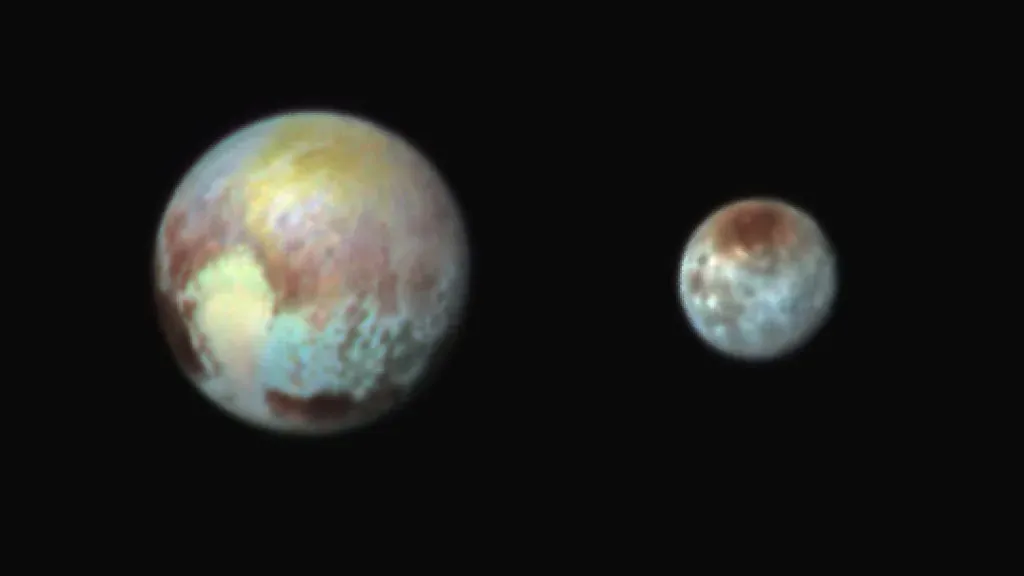
You don’t even have to leave our solar system to find extraordinarily promising places for life. Europa and Enceladus possess global oceans in direct contact with rocky interiors, providing the potential for water-rock reactions and a range of environments in which life could emerge and persist. These aren’t small, marginal puddles. They are vast underground seas, hidden beneath thick shells of ice. Honestly, the scale of it is hard to wrap your mind around.
Europa has a roughly 100 km deep salty ocean beneath approximately 10 km of ice, potentially hosting hydrothermal activity that could support chemosynthetic ecosystems, while Enceladus ejects plumes of water vapor and organics, allowing for direct sampling of its subsurface ocean chemistry. That last point is extraordinary. You don’t even need to drill through the ice to sample Enceladus’s ocean. Its plumes do the work for you. The key components for life are present: water, chemical building blocks in disequilibrium, energy, and time. It’s hard to imagine a better recipe.
Mars: The Stubborn, Ancient Target That Won’t Let Go
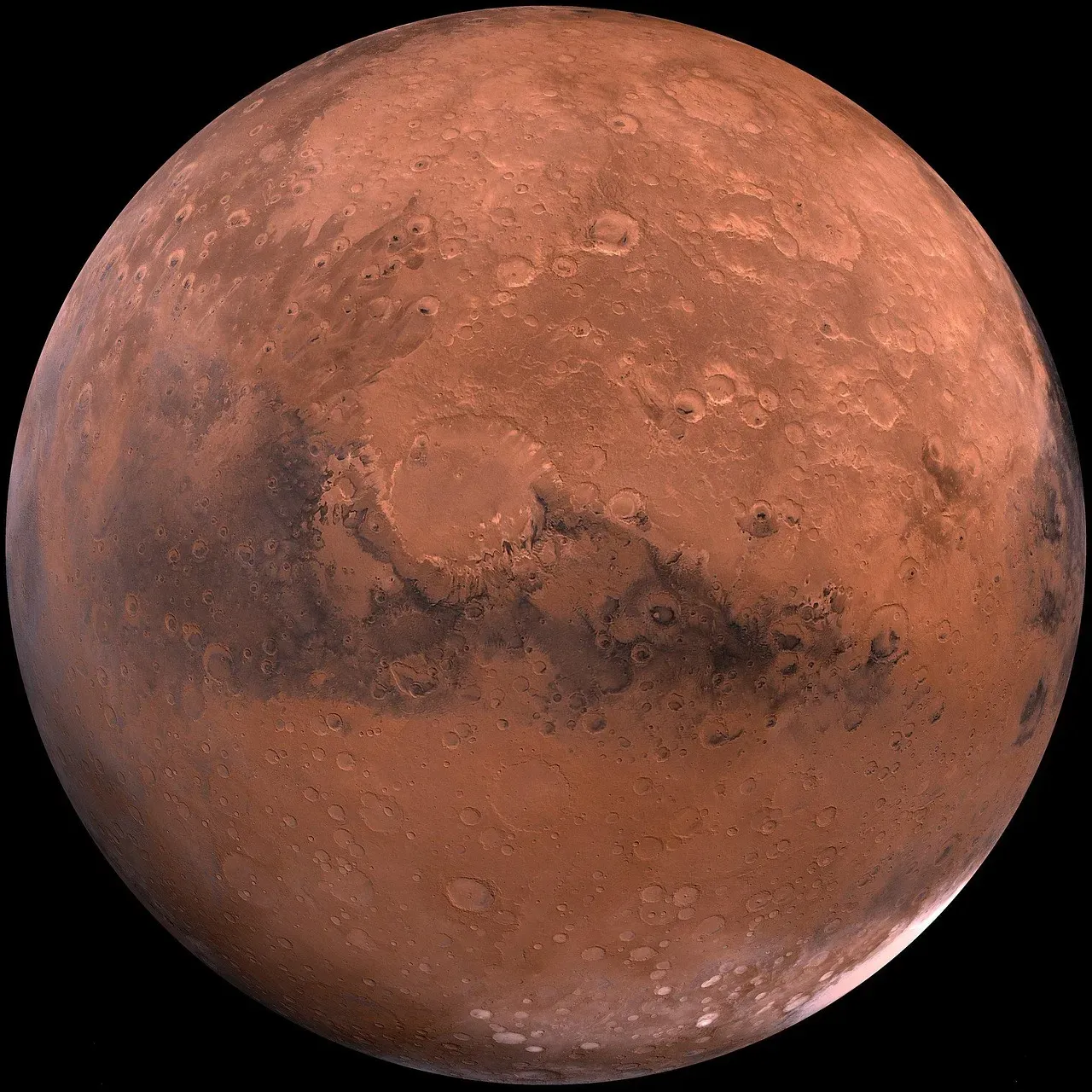
Mars has been the dream destination for alien hunters for over a century. Let’s be real, it’s had some extremely disappointing moments. Yet scientists keep returning, and with good reason. Because of its many Earth-like features, Mars remains the most intriguing of the planets and has become the preeminent target of astrobiological interest. While Mars today is a cold and dry planet, conditions in the past are thought to have been more habitable and included environments such as riverbeds, lakes, and even the presence of a former ocean on the northern hemisphere.
A genuinely surprising study published in early 2026 offered new motivation for the hunt. Researchers found that pieces of amino acids from bacteria, if trapped in Martian permafrost or ice caps, could survive more than 50 million years even under constant cosmic radiation, suggesting that missions searching for life on Mars should prioritize pure ice or ice-rich permafrost instead of focusing mainly on rocks, clay, or soil. That changes the game. It means ancient biological signatures might still be preserved, waiting. A study from NYU Abu Dhabi also found that high-energy particles from space, known as cosmic rays, could create the energy needed to support life underground on planets and moons in our solar system, with the research showing that cosmic rays may not only be harmless in certain environments but could actually help microscopic life survive.
SETI, Technosignatures, and the Ever-Evolving Hunt for Signals
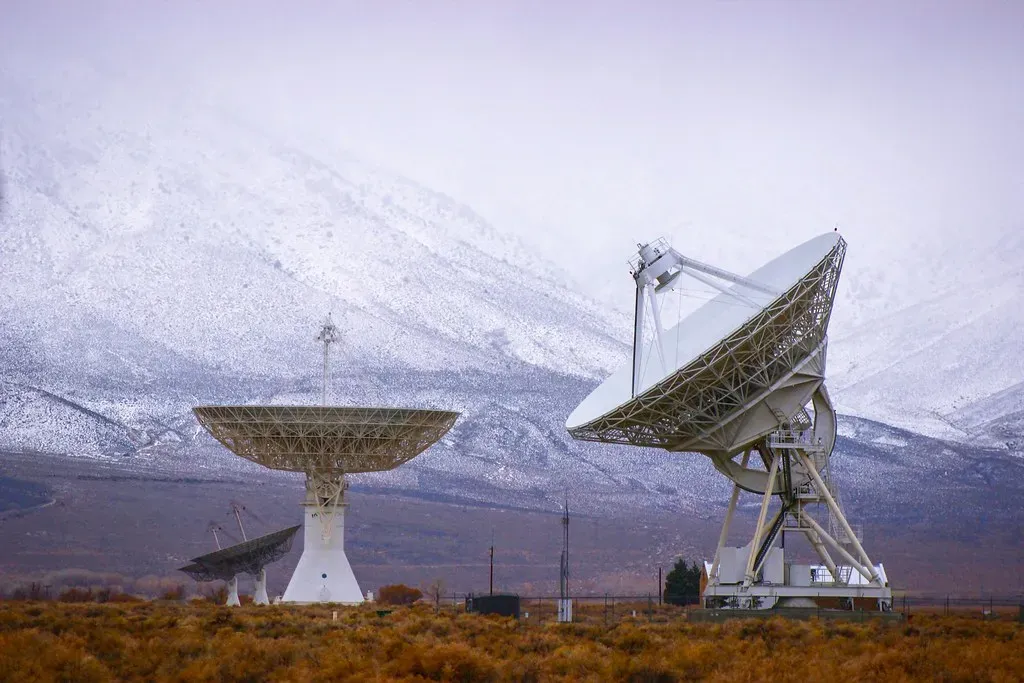
The traditional image of SETI is a giant dish pointed at the stars, listening for radio signals from far-off civilizations. That picture is real, but it’s becoming increasingly incomplete. Scientists are coming up with new and innovative ways to improve the search, considering multiple factors in their hunt, from a planet’s color to the combination of gases in its atmosphere, and even evidence of advanced technology. The field has grown dramatically more creative.
SETI researchers are expanding their search, not just listening for radio signals but looking for technosignatures, including signs of advanced technology like Dyson spheres, laser communications, and industrial pollution in alien atmospheres. In 2025, astronomers even trained their best instruments on an interstellar visitor. Comet 3I/ATLAS was one of the biggest talking points of 2025, both scientifically and speculatively. This interstellar visitor was discovered on July 1, 2025, and was quickly found to be a body that had originated from beyond our solar system. Scientists searched it thoroughly for technosignatures, finding it to be a natural comet, but the exercise itself showed how seriously the scientific community now takes the broader search.
The Drake Equation and the Fermi Paradox: The Cosmic Math That Haunts Us
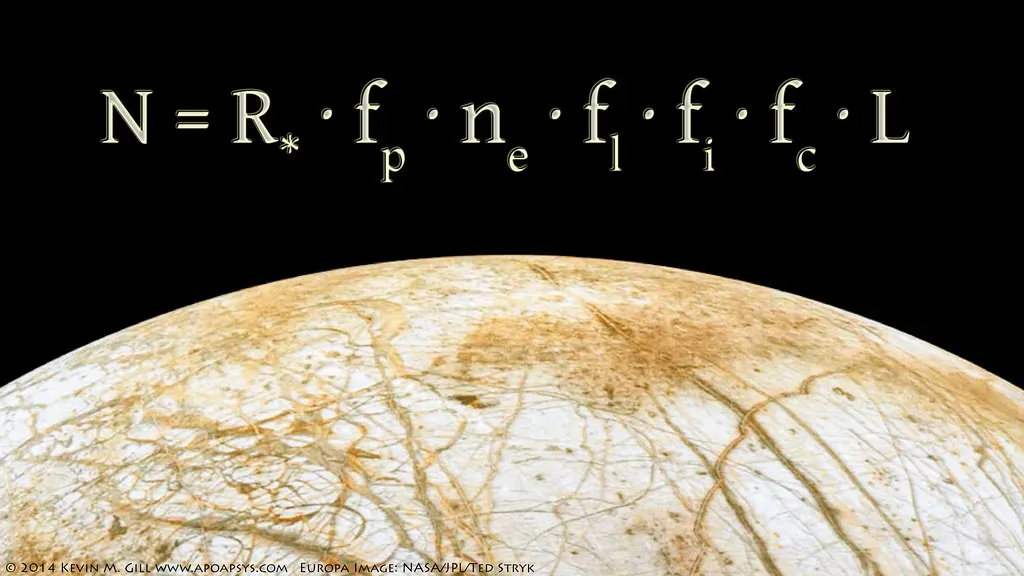
Here’s the thing that keeps scientists up at night. Theoretical work in the SETI field has been dominated by two key concepts: the Fermi paradox and the Drake equation. The Fermi paradox ponders why Earth has not been visited by aliens, while the Drake equation tries to estimate the number of intelligent civilizations in our galaxy. If the math suggests there should be millions of civilizations out there, why has not a single confirmed contact ever been made? The silence is deafening, and it is deeply strange.
According to research presented at the EPSC-DPS2025 Joint Meeting in Helsinki, the nearest technological civilization in the Milky Way could be roughly 33,000 light-years away. That’s not around the corner. For such a civilization to exist at the same time as humanity, it would need to have lasted for at least 280,000 years, and potentially millions of years. The universe may be full of life and we’d still hear nothing. Distance alone could explain the silence. It’s a humbling thought, I think, and it makes the search feel both more urgent and more poignant at the same time.
The Road Ahead: New Telescopes, Bold Missions, and What Comes Next
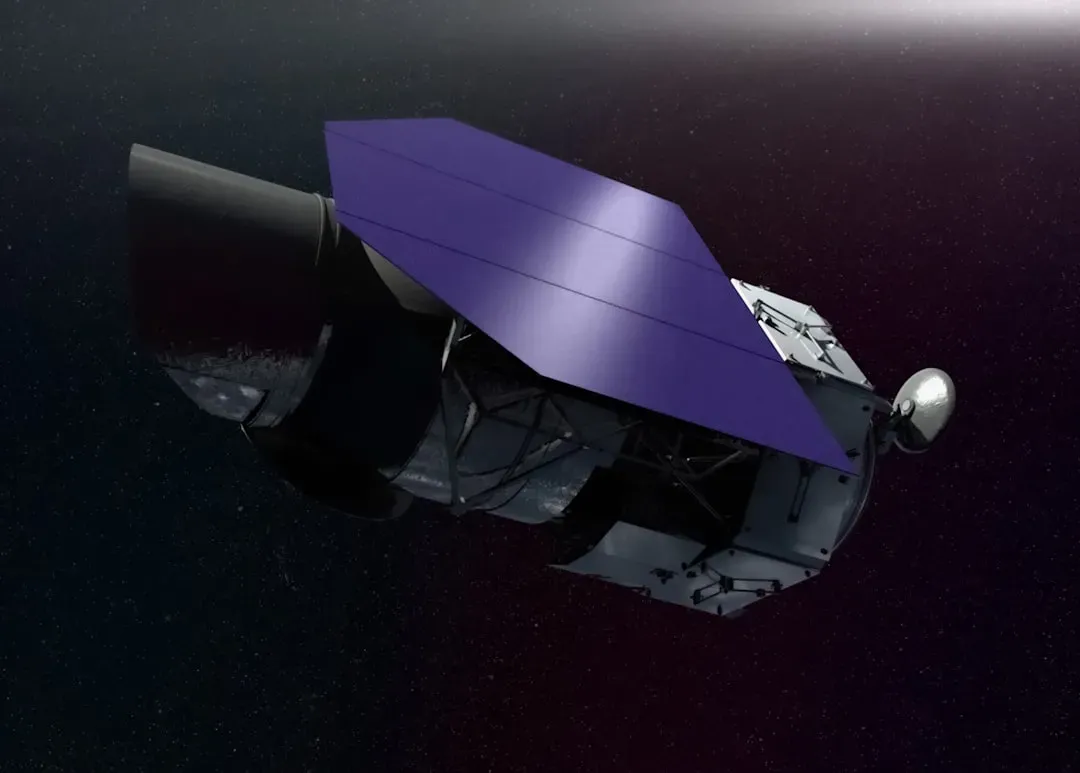
We are not standing still. As of early 2026, there are more than 6,150 confirmed exoplanets in over 4,500 planetary systems. Each one is a new opportunity. The search for signs of life in the universe has entered a new phase with the advent of the James Webb Space Telescope, and there is already planning underway for the next generation of even more powerful observatories.
Looking ahead, future telescopes and innovative observational strategies will be essential for the reliable detection of biosignature gases. Meanwhile, closer to home, beyond the Europa Clipper mission, which will conduct its primary mission between 2031 and 2034, the next critical flagship mission would be to orbit Enceladus and then land near its south pole to search for evidence of life. The ambition here is staggering. The search for life beyond Earth is entering a transformative era, combining exoplanet atmospheric analysis, solar system ocean world exploration, and interstellar technosignature monitoring. We are not just searching. We are converging on an answer.
Conclusion: The Most Important Question Ever Asked
It’s worth pausing for a moment and appreciating just how extraordinary this period in human history really is. For the first time ever, we have the tools, the knowledge, and the reach to genuinely answer the question that has followed our species since the first person looked up at the stars and wondered. We may not have the final answer yet. The science is careful, methodical, and honestly, appropriately humble.
What we do have are real candidates. Real biosignature signals. Real ocean worlds brimming with the ingredients for life. Real super-Earths close enough to dream about. Despite the odds, scientists insist that continuing the search for extraterrestrial intelligence is essential, for either outcome reshapes our understanding of life itself. Whether we find life or confirm we are truly alone, both answers would be among the most profound discoveries in the entire history of science.
The universe is vast, old, and staggeringly complex. The search is just getting started. What do you think we’ll find first: microbial life on an icy moon, or a faint signal from a civilization across the galaxy? Drop your thoughts in the comments.