
You’ve probably looked up at the night sky and felt that familiar tug of curiosity. Those countless stars flickering in the darkness seem to whisper a question that humanity has pondered for centuries. It’s bigger than ourselves, bigger than our tiny blue planet. The question isn’t just philosophical anymore, it’s scientific, urgent, and closer to being answered than ever before.
Think about it for a moment. We’ve spent billions developing telescopes that can peer into distant galaxies, sent rovers to scrape Martian soil, and trained algorithms to sift through cosmic noise hunting for patterns. All of this effort revolves around one simple yet profound mystery. And here’s the thing: we might actually be living in the generation that finds out.
No extraterrestrial life has yet been scientifically or conclusively detected. Yet the search intensifies year after year, driven by cutting-edge technology and fresh discoveries. So let’s dive in and explore what scientists are really doing out there, and what they’ve learned so far.
The Hunt for Signals From Other Worlds
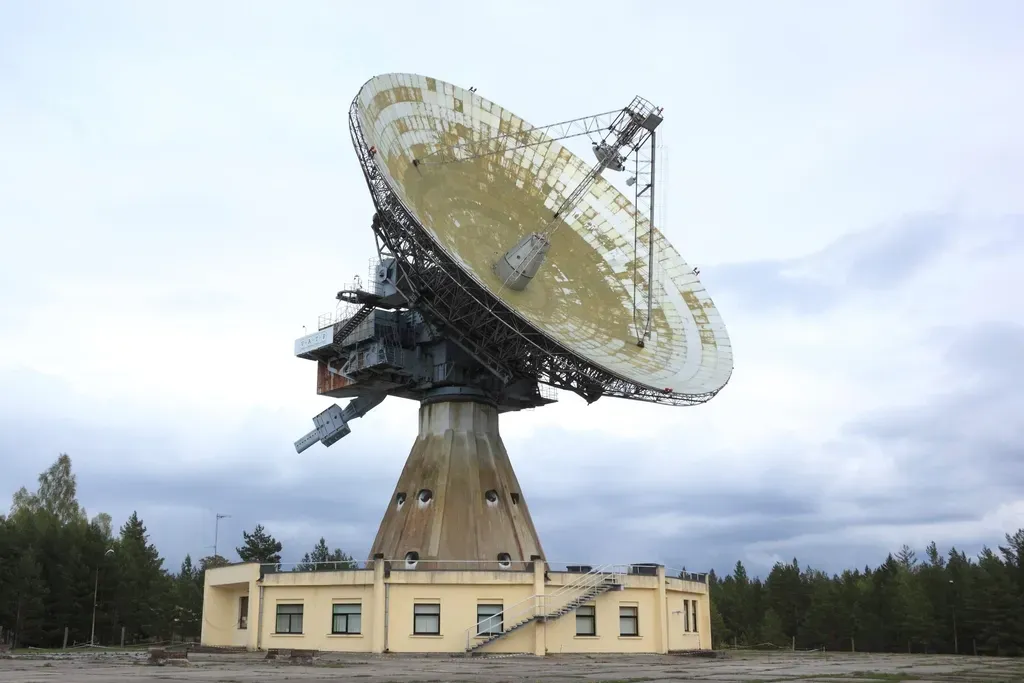
The search for extraterrestrial intelligence (SETI) refers to diverse efforts and scientific projects intended to detect extraterrestrial signals, researchers use methods such as monitoring electromagnetic radiation, searching for optical signals, and investigating potential extraterrestrial artifacts. Honestly, it sounds like something out of a science fiction novel. Massive radio dishes sweeping the cosmos, listening for whispers from civilizations light-years away.
Most SETI of the past 60 years has involved using large antennas to try and eavesdrop on any radio signals aliens might be transmitting. The logic is simple: if we’ve been broadcasting radio waves into space for over a century, maybe someone else has too. The Allen Telescope Array is the first radio telescope designed from the ground up to be used for SETI searches.
Let’s be real, the silence so far hasn’t dampened the enthusiasm. Scientists at the SETI Institute and partners from Penn State University used the Allen Telescope Array to search for signs of alien technology in the TRAPPIST-1 star system, spending 28 hours scanning the system, marking the longest single-target search for radio signals from TRAPPIST-1. Sure, they found nothing definitive. Yet each search refines the technique, teaching us where to look next.
Thousands of New Worlds Waiting to Be Explored
Here’s where things get exciting. Over six thousand exoplanets have been discovered, with planets in 4,584 planetary systems including 1,017 multiple planetary systems as of October 2025. That’s an astonishing number when you consider the first exoplanet around a Sun-like star was only confirmed in the mid-1990s. We’ve gone from zero to thousands in just three decades.
There is at least one planet on average per star, and about 1 in 5 Sun-like stars have an Earth-sized planet in the habitable zone, with the nearest expected to be within 12 light-years distance from Earth. Those odds suddenly make the universe feel less lonely.
A newly detected super-Earth just 20 light-years away is giving scientists one of the most promising chances yet to search for life beyond our solar system, the exoplanet named GJ 251 c is almost four times the mass of Earth and is likely a rocky planet. Discoveries like this fuel hope. Not all planets are gas giants or frozen wastelands. Some might just be perfect.
The Goldilocks Zone Where Life Could Thrive
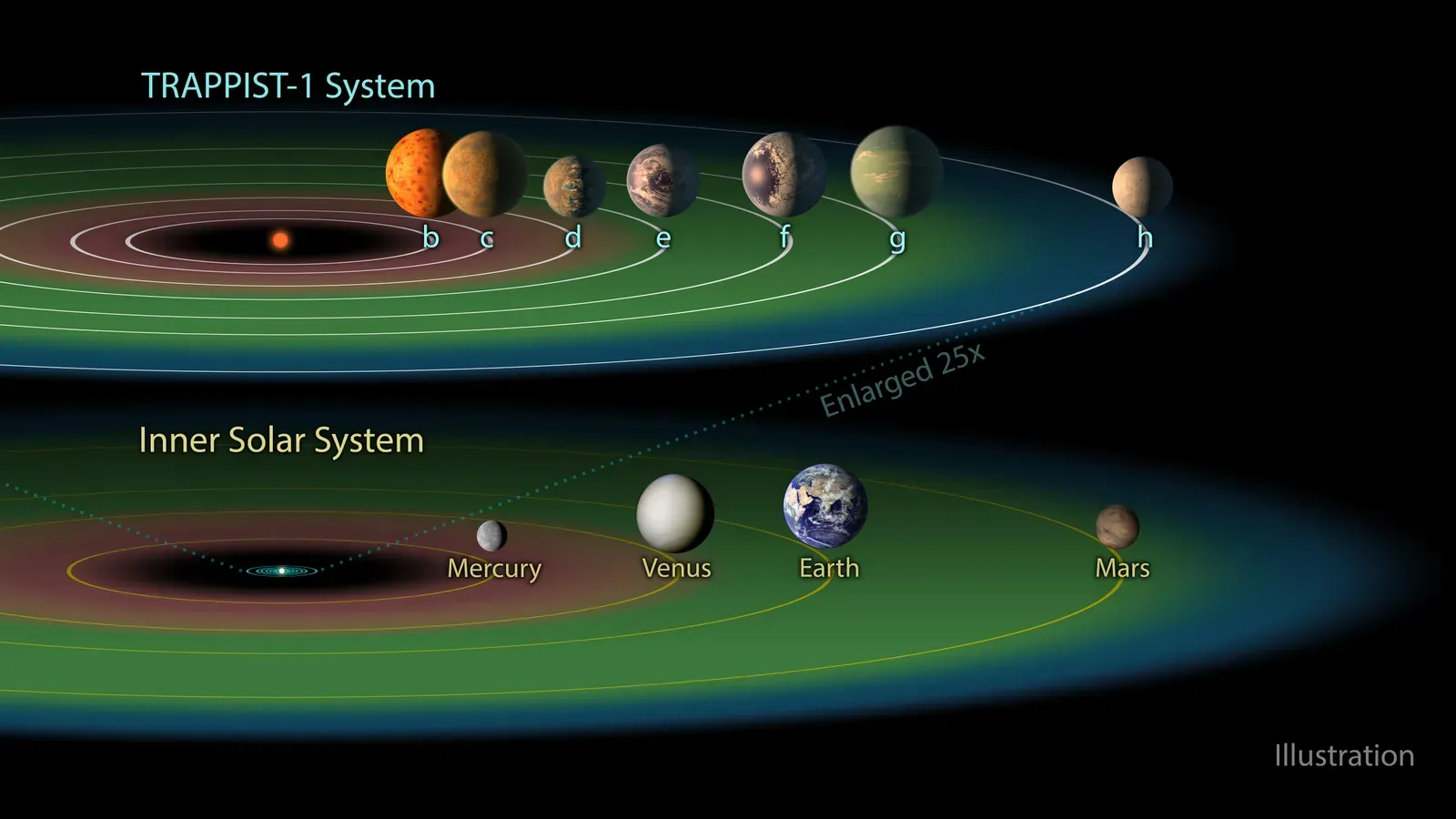
You’ve heard the term before, probably: the habitable zone. One of the best tools scientists have to begin narrowing the search for habitable worlds is a concept known as the habitable zone, the orbital distance from a star where temperatures would potentially allow liquid water to form on a planet’s surface. Not too hot, not too cold, just right for liquid water, which is essential for life as we understand it.
Smaller, dimmer red dwarfs have much tighter habitable zones, planets in a red dwarf’s comparatively narrow habitable zone are exposed to extreme levels of X-ray and ultraviolet radiation, which can be up to hundreds of thousands of times more intense than what Earth receives from the Sun. So just being in the zone doesn’t guarantee habitability. There are other hurdles, like having a stable atmosphere or protection from stellar radiation.
Still, Based on Kepler space telescope data, there could be as many as 40 billion Earth-sized planets orbiting in the habitable zones of Sun-like stars and red dwarfs in the Milky Way, about 11 billion of these may be orbiting Sun-like stars. Forty billion chances. Makes you wonder, right?
Reading the Chemical Fingerprints of Distant Atmospheres
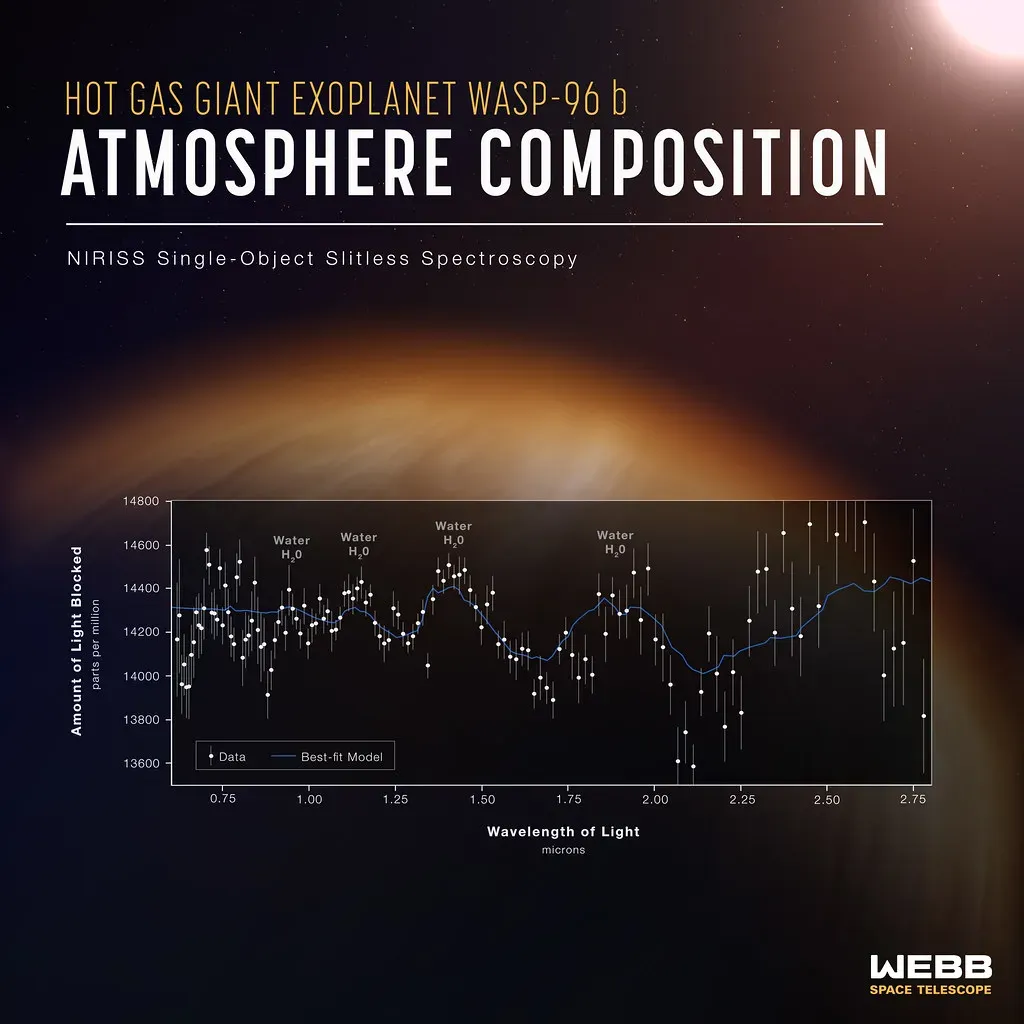
We can’t visit these distant worlds anytime soon. Interstellar travel remains firmly in the realm of fantasy for now. So how do scientists study planets hundreds of light-years away? They read the light.
Light from the atmospheres of exoplanets is split up into a rainbow spectrum that can be read like a bar code, this method called transit spectroscopy would provide a menu of gases and chemicals in the skies of these worlds. When a planet passes in front of its star, some of the star’s light filters through the planet’s atmosphere. Different molecules absorb light at different wavelengths, creating a unique signature.
Spectra of chemicals produced exclusively by living things, called biosignatures, may be the only evidence of life we can collect from planets light-years away. Oxygen, methane, carbon dioxide. These gases tell stories. Their presence, especially in unusual combinations, might hint at biological processes beneath. Webb could pick up signs of an atmosphere like our own, oxygen, carbon dioxide, methane, a strong indication of possible life.
Biosignatures: The Chemical Clues Life Leaves Behind
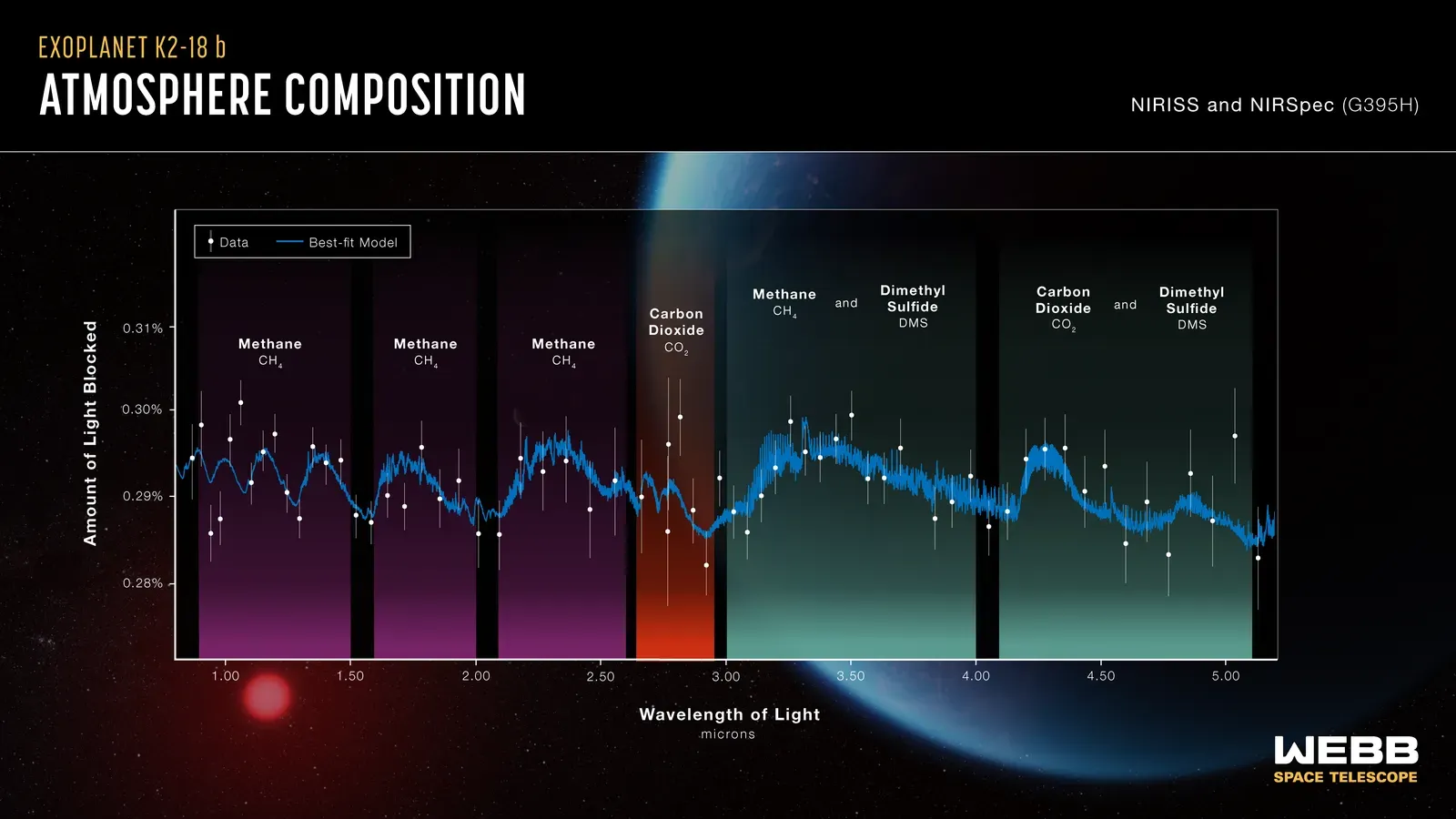
A biosignature is any characteristic, element, molecule, substance, or feature that can be used as evidence for past or present life. It could be a gas in the atmosphere, a pigment on the surface, or even a pattern in chemical distribution that screams “biology did this.”
Chemicals detected in the atmosphere of exoplanet K2-18b include dimethyl sulfide and dimethyl disulfide, molecules that on Earth are only produced by life such as marine algae and other microbes. Now that’s intriguing. It is the most promising evidence yet for alien life, scientists say. Though the findings remain debated and require further confirmation, they represent exactly the kind of discovery that keeps astrobiologists awake at night, filled with possibility.
The challenge? Every possible biosignature is associated with its own set of unique false positive mechanisms or non-biological processes that can mimic the detectable feature of a biosignature, an important example is using oxygen as a biosignature. Oxygen can form without life through certain chemical processes. That’s why scientists want to detect multiple biosignatures together, forming a more convincing case.
Artificial Intelligence Joins the Search

Searching for life generates mountains of data. Radio signals, spectroscopic readings, light curves, you name it. Humans can’t possibly sift through it all in real time. Enter artificial intelligence.
After looking at 820 initial stars, a new machine learning algorithm has already found 8 potential signals of interest. The real story here is the effectiveness of AI and the techniques used to dig out rare and interesting signals previously buried in the noise of human-generated radio frequency interference.
Researchers using cutting-edge chemical techniques paired with artificial intelligence found evidence of ancient life in 3.3-billion-year-old rocks from Earth, creating a system capable of distinguishing material left behind by life from non-biological samples with more than 90 per cent accuracy. If AI can help us identify ancient biosignatures on Earth, imagine what it could do analyzing data from exoplanets. The tools are getting sharper, the methods more sophisticated.
The Drake Equation: Calculating the Odds
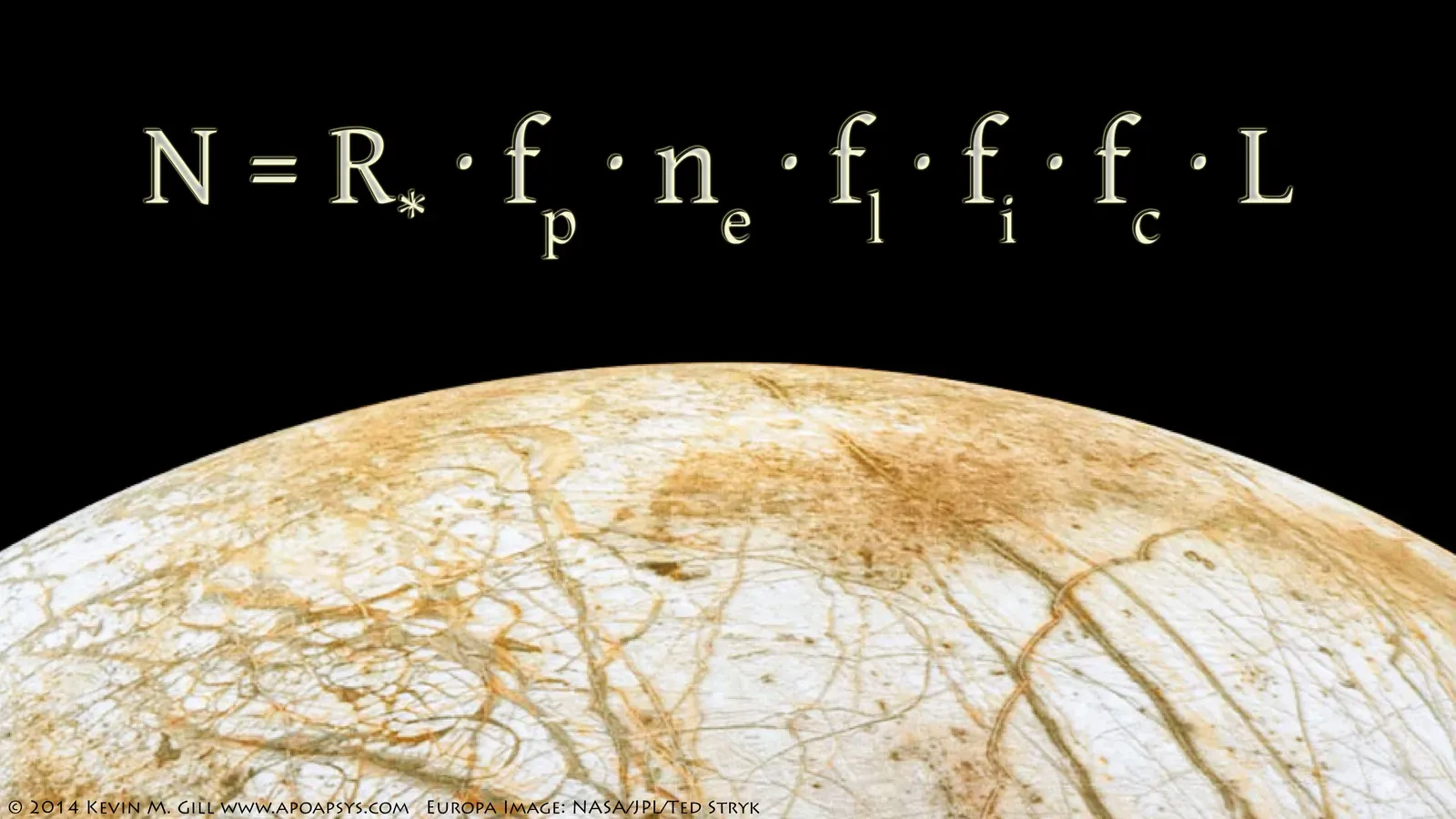
The Drake equation is a mathematical formula for the probability of finding life or advanced civilizations in the universe, in 1961 astrophysicist Frank Drake developed an equation to estimate the number of advanced civilizations likely to exist in the Milky Way galaxy. It considers star formation rates, the fraction of stars with planets, how many planets could support life, and crucially, how long civilizations survive.
Inserting minimum numbers into the equation gives a minimum N of 20, inserting the maximum numbers gives a maximum of 50,000,000, Drake states that given the uncertainties the original meeting concluded there were probably between 1000 and 100,000,000 planets with civilizations in the Milky Way Galaxy. That’s quite a range. It shows just how uncertain some of these factors still are.
Yet, Thanks to NASA’s Kepler satellite and other searches, we now know that roughly one-fifth of stars have planets in habitable zones. So we’re narrowing down some variables. The equation remains a roadmap, a way to organize our ignorance, as one scientist aptly put it. It reminds us what we need to learn.
Mars, Europa, and the Search Closer to Home

You don’t have to look light-years away to find potential life. Our own solar system harbors intriguing possibilities. Life might turn up in our neighborhood, beneath the Martian surface perhaps, or in the dark subsurface oceans of Jupiter’s moon Europa.
A new report published by the U.S. National Academies of Sciences, Engineering, and Medicine presents an ambitious science-centric vision for human missions to Mars with the search for alien life as their guiding star, asking is or has there ever been life on Mars. Sending humans to Mars isn’t just about planting flags. It’s about answering one of the most fundamental questions we can ask.
Europa, with its icy shell covering a vast ocean, represents another tantalizing target. The search for alien life often begins by studying extreme environments on Earth that resemble conditions on other planets or moons, such as deep-sea vents and ancient terrestrial landscapes. If life thrives in Earth’s harshest environments, maybe it does elsewhere too.
Why Haven’t We Found Them Yet?
According to new research presented at a joint meeting in Helsinki, the nearest technological civilization in the Milky Way could be roughly 33,000 light years away. That’s a staggering distance. Even if civilizations exist, detecting them across such cosmic voids is incredibly challenging.
Despite decades of searching, no confirmed evidence of alien intelligence has been found. Some see this as discouraging, but others view it differently. The probability of success is difficult to estimate, but if we never search the chance of success is zero.
Maybe civilizations destroy themselves before they can spread across the stars. Maybe they communicate in ways we haven’t imagined. Or perhaps Extraterrestrial intelligences in our galaxy are probably pretty rare. We simply don’t know yet, and that’s what makes the search so compelling.
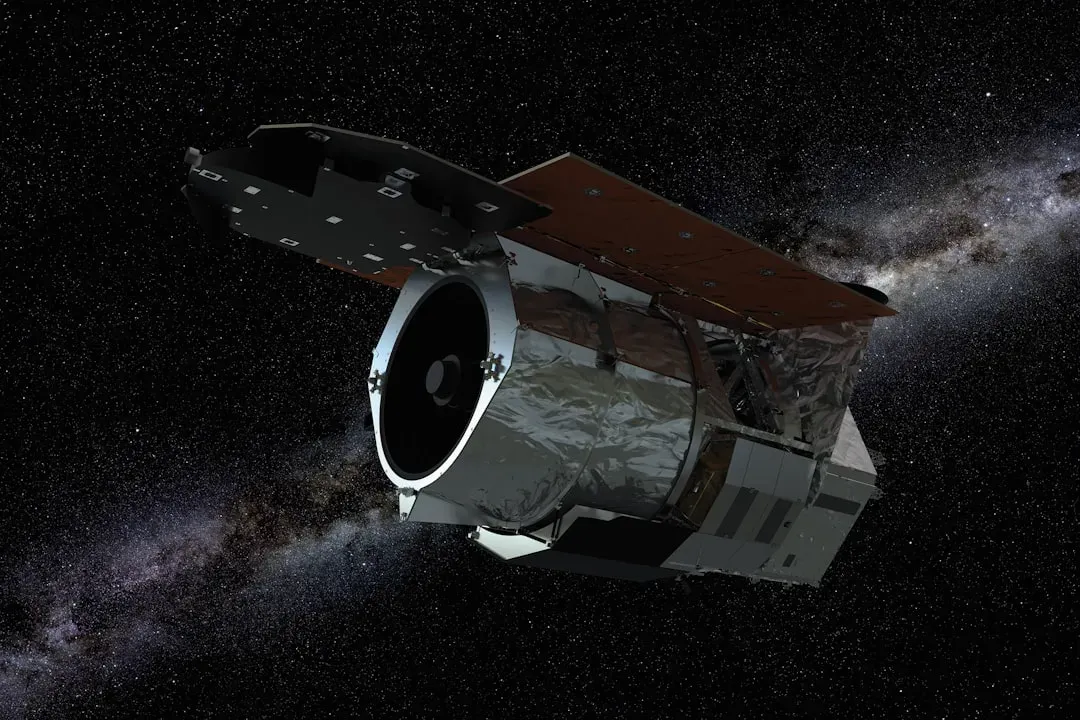
The quest to answer whether we’re alone continues to accelerate. With better telescopes, smarter algorithms, and deeper understanding of where and how life might arise, each year brings us closer. The James Webb Space Telescope peers into exoplanet atmospheres, rovers analyze Martian rocks, and radio dishes scan the heavens.
The SETI Institute actively explores one of humanity’s most profound questions: are we alone in the universe, their mission is not just to detect a signal but to understand our place in the universe and what it means if life is a common outcome of cosmic evolution. Whether we find microbes beneath Martian ice or intercept a radio transmission from across the galaxy, the discovery will reshape everything we thought we knew.
What do you think, are we truly alone, or is the universe teeming with life waiting to be found?