
It is one of the oldest questions humanity has ever dared to ask. Not just a philosophical musing over a late-night campfire, but a genuine scientific pursuit that is now, for the first time in history, backed by real telescopes, real data, and real planetary candidates. You live in a moment where this question is no longer the exclusive domain of science fiction writers and stargazers.
The universe is overwhelmingly vast. Think about it this way: if the Milky Way were shrunk to the size of a standard dinner plate, the distance to our nearest neighboring star would be less than the width of a human hair. Yet within that incomprehensible scale, evidence is accumulating, discoveries are piling up, and theories are evolving faster than ever. Buckle up, because what science has to say right now might genuinely surprise you.
A Universe Teeming With Planets: The Numbers Are Staggering
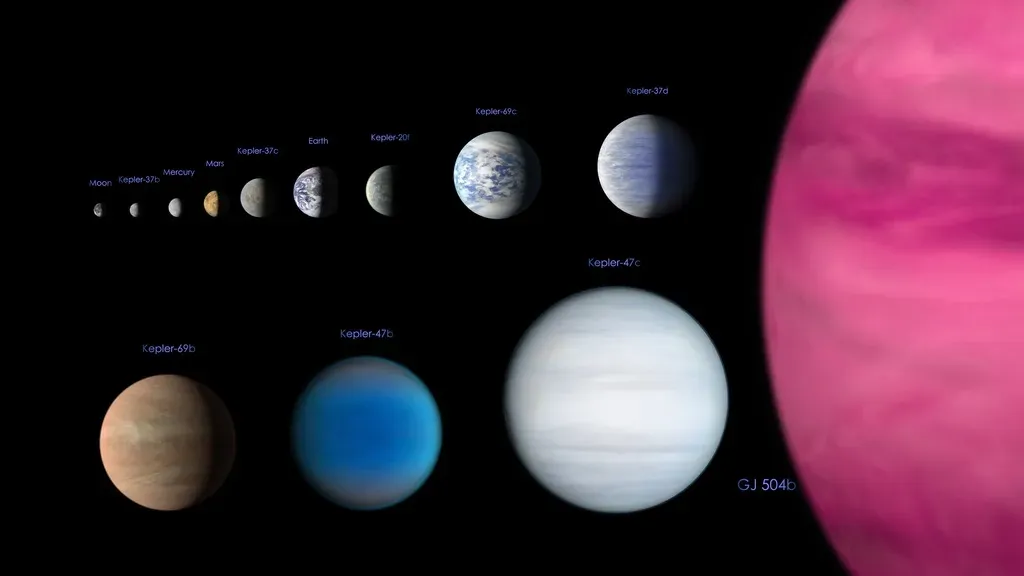
Here is something that should honestly stop you mid-scroll: as of early 2026, there are over 6,150 confirmed exoplanets in more than 4,500 planetary systems. That number was essentially zero just a few decades ago. The first exoplanet wasn’t discovered until 1992, and less than 20 years later came the discovery of the first exoplanet in a habitable zone.
Let’s be real, those numbers aren’t just statistics. They represent thousands of other worlds, many of which may have oceans, atmospheres, and conditions we haven’t even begun to imagine. The big question isn’t how many exoplanets there are, it’s how many of them can or do support life. Scientists are now working furiously to answer that very thing.
Super-Earths Next Door: GJ 251 c and the Habitability Race
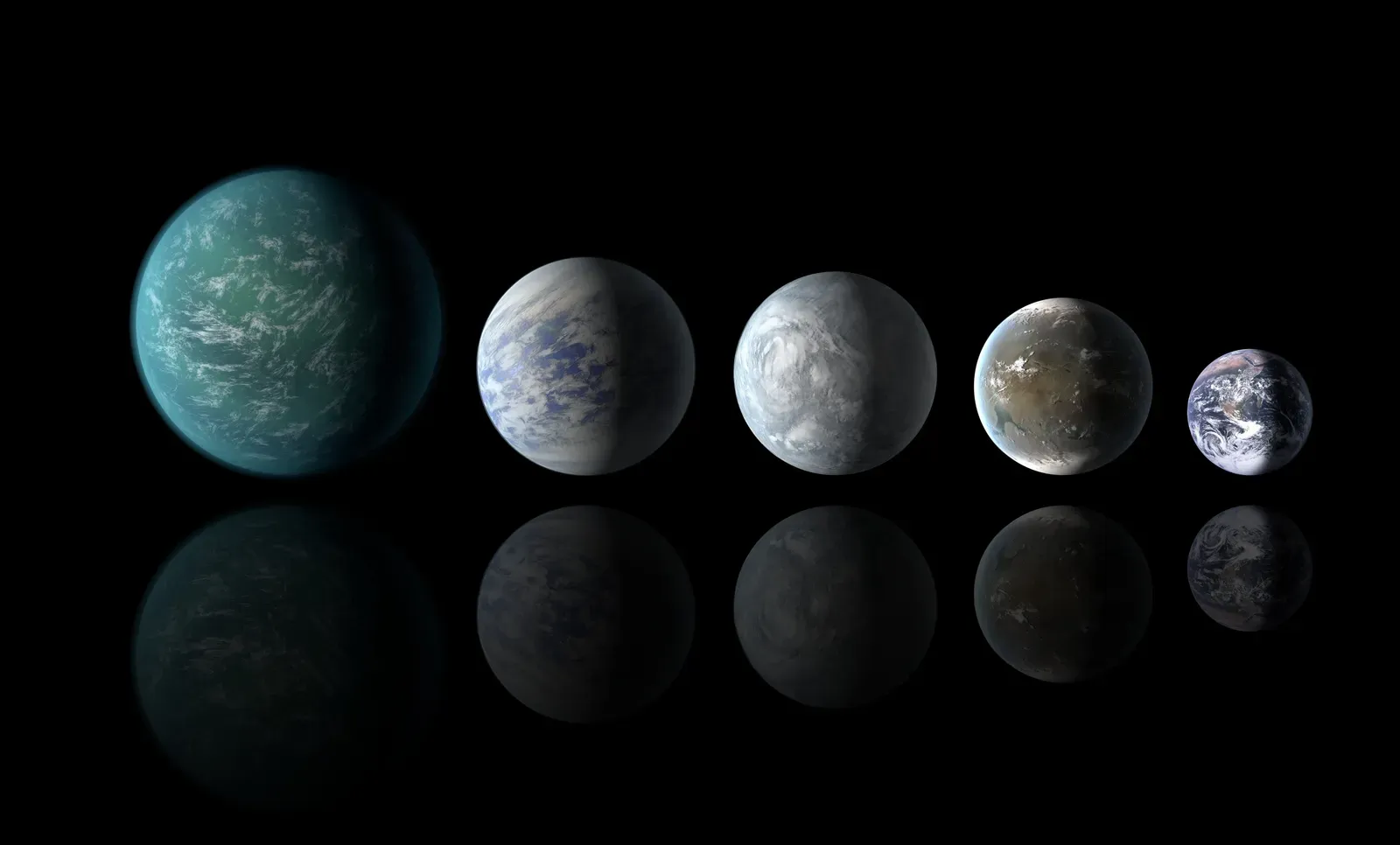
You might not have heard of GJ 251 c yet, but this newly detected world is a genuine jaw-dropper. A newly detected super-Earth just 20 light-years away is giving scientists one of the most promising chances yet to search for life beyond our solar system, with the discovery made possible by advanced spectrographs and decades of observations from telescopes around the world. The international team dubbed the exoplanet a “super-Earth” as data suggest it has a rocky composition similar to Earth and is almost four times as massive.
The team found that the surface may have liquid water, a necessary ingredient for life. That’s not a minor detail. Although current technology cannot produce direct images of GJ 251 c, upcoming telescopes will be capable of examining the planet’s atmosphere, potentially revealing chemical traces of life. Think of it like being able to smell something baking but not yet being able to see inside the kitchen. The next generation of instruments just might open that door.
The JWST Revolution: Reading the Chemistry of Alien Skies
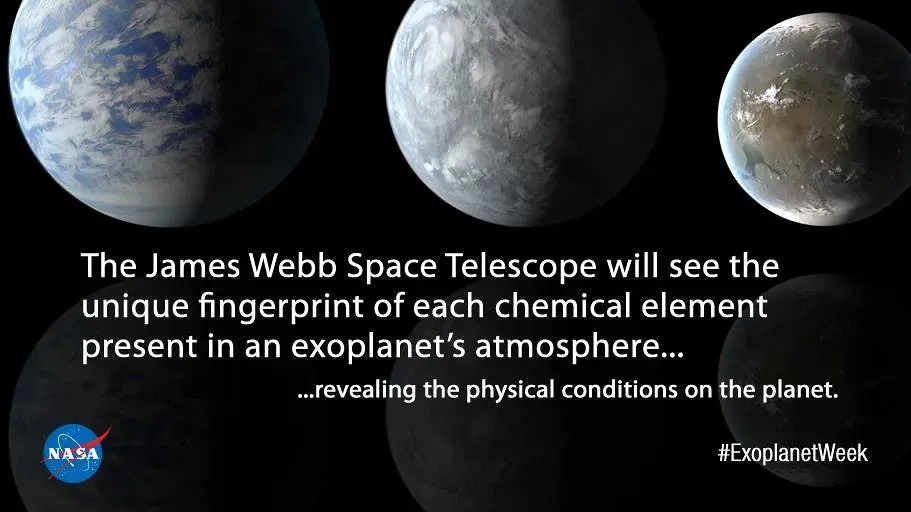
You’ve probably heard the James Webb Space Telescope described in excited, breathless terms. Honestly, the hype is justified. Powerful telescopes like the James Webb Space Telescope have given scientists new abilities to use chemical clues to study far-off worlds and broaden the search for extraterrestrial life. It’s not magic, it’s spectroscopy. When a planet crosses in front of its star, a sliver of starlight filters through the atmosphere, leaving behind a chemical fingerprint.
Using data from JWST, astronomers led by the University of Cambridge detected the chemical fingerprints of dimethyl sulfide (DMS) and dimethyl disulfide (DMDS) in the atmosphere of the exoplanet K2-18b, which orbits its star in the habitable zone. On Earth, DMS and DMDS are only produced by life, primarily microbial life such as marine phytoplankton. It’s genuinely thrilling. While an unknown chemical process may be the source of these molecules in K2-18b’s atmosphere, the results are the strongest evidence yet that life may exist on a planet outside our solar system, with observations reaching the three-sigma level of statistical significance.
Hold On. Science Says: Not So Fast
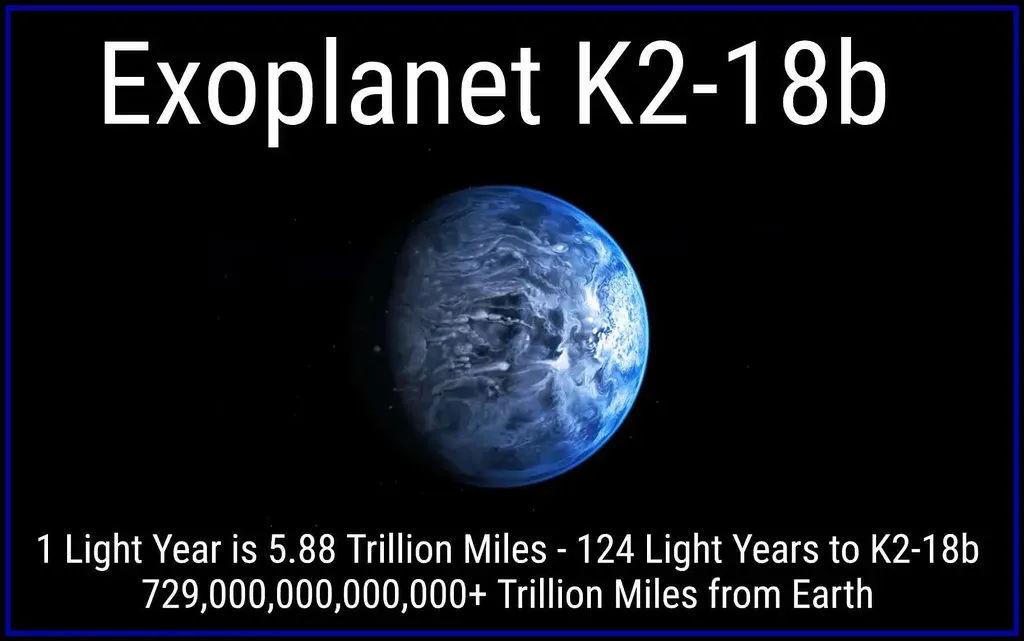
I know it sounds crazy, but the excitement around K2-18b comes with important caveats. It’s hard to say for sure whether what we’re seeing is truly a biosignature or something else entirely. Scientists are actively debating whether data from the James Webb Space Telescope is really pointing to biosignature gases in the atmosphere of K2-18b. One independent analysis using a simpler model found the data consistent with background noise. Researchers at MIT note that there is no “silver bullet” biosignature, and spectra can be interpreted in different ways, with this generation of astronomers possibly lacking the tools to confirm or deny their hypotheses.
Characterizing rocky or sub-Neptune-size exoplanets with JWST is an intricate task, moving scientists away from the notion of finding a definitive “silver bullet” biosignature gas. JWST results necessitate allowing “parallel interpretations” that will perhaps not be resolved until the next generation of observatories. That’s actually a healthy, honest admission from the scientific community. Science isn’t a dramatic courtroom reveal. It’s painstaking, methodical, and frustratingly humble.
The Habitable Zone: More Complex Than You Think
You’ve probably heard the phrase “habitable zone,” that Goldilocks region around a star where it’s not too hot and not too cold for liquid water. Researchers now select planets located near the inner and outer edges of the habitable zone to better understand where the limits of habitability lie. While the concept of the habitable zone has been studied since the 1970s, new observations could refine or even reshape current theories. It’s more nuanced than a single orbital ring. Think of it less like a precise lane on a highway and more like a fuzzy band of possibility.
Some exoplanets follow highly elliptical orbits, meaning the amount of heat they receive from their star changes significantly over time. Studying these worlds could reveal whether a planet must remain continuously within the habitable zone or if it can move in and out while still maintaining conditions suitable for life. Meanwhile, a new metric for exoplanet habitability, based on surface temperature, precipitation, and evaporation, closely matches observed patterns of life on Earth. Scientists are literally building better yardsticks by the year.
The Drake Equation, the Fermi Paradox, and the Great Silence
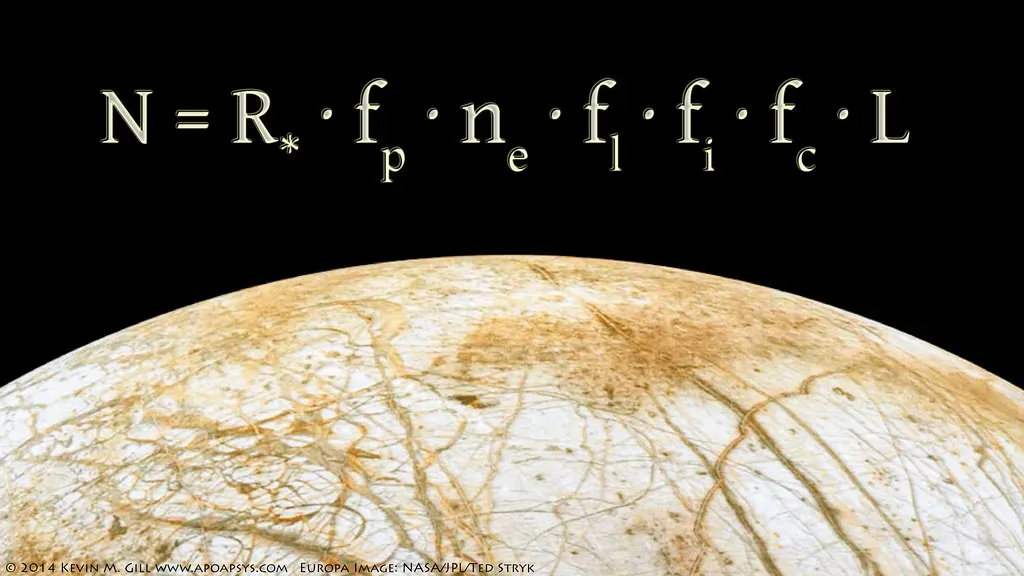
Here’s a concept that has haunted astronomers and philosophers alike for decades. While SETI includes everything from listening for radio signals to examining odd fluctuations in starlight, theoretical work in the field has been dominated by two key concepts: the Fermi paradox and the Drake equation. The Fermi paradox ponders why Earth has not been visited by aliens, while the Drake equation tries to estimate the number of intelligent civilizations in our galaxy. If the galaxy should theoretically be teeming with life, why does it sound so quiet out there?
Researchers have proposed that plate tectonics, continents, and oceans are critical for fostering intelligent life on a rocky planet, and suggested that the lack of evidence of complex extraterrestrial life may be due to the scarcity of planets hosting long-lived plate tectonics and an amalgam of watery and dry environments. Still, the Milky Way is incredibly ancient and has likely been capable of fostering life for up to 10 billion years. Even with slim odds, intelligent life has surely emerged at some earlier points in the galaxy’s history, giving it ample time to spread throughout the galaxy. Yet here we are, still waiting for a call.
The Future of the Search: Next-Generation Tools and a New Era

The search for alien life is genuinely entering its most exciting era yet, and you’re living right in the middle of it. Starting around 2030, the European Southern Observatory’s Extremely Large Telescope (ELT), currently under construction in Chile, will join the hunt. With a 39-meter primary mirror compared to JWST’s 6.5-meter mirror, the ELT will surpass JWST’s ability to resolve exoplanets directly, and may even be capable of detecting the most suggestive ensemble of biosignatures, the pairing of oxygen and methane, in the atmospheres of rocky planets around M-dwarfs.
Upcoming space projects designed to detect signs of life outside our solar system include the Extremely Large Telescope, the Habitable Worlds Observatory, and the Large Interferometer for Exoplanets (LIFE). These instruments will observe the atmosphere of nearby Earth-like planets in the habitable zone for “biosignatures” indicative of life. Pair that with researchers who trawl through huge datasets from any available telescopes and get help from machine learning to look for technosignatures like radio signals, and you begin to understand why many scientists feel a genuine discovery could come within a generation. Maybe even sooner.
Conclusion: The Most Important Question of Our Time
Honestly, we may be standing at the edge of the most transformative scientific revelation in human history. The tools are getting sharper. The candidates are getting closer. The data is getting richer. You are alive during the moment when humanity shifts from asking “Are we alone?” to seriously, methodically building the means to find out.
It won’t be a single dramatic headline. It will likely be a slow accumulation of chemical hints, atmospheric signals, and statistical patterns that eventually tip the scales beyond any reasonable doubt. The universe is ancient, enormous, and seemingly filled with the building blocks of life. Whether those blocks have assembled somewhere else into something that breathes, thinks, or even just metabolizes is the single most profound open question in all of science.
The silence out there isn’t necessarily an answer. It might simply be that we haven’t been listening carefully enough, or with the right instruments. What do you think: are we truly the only ones, or is something out there waiting to be found?