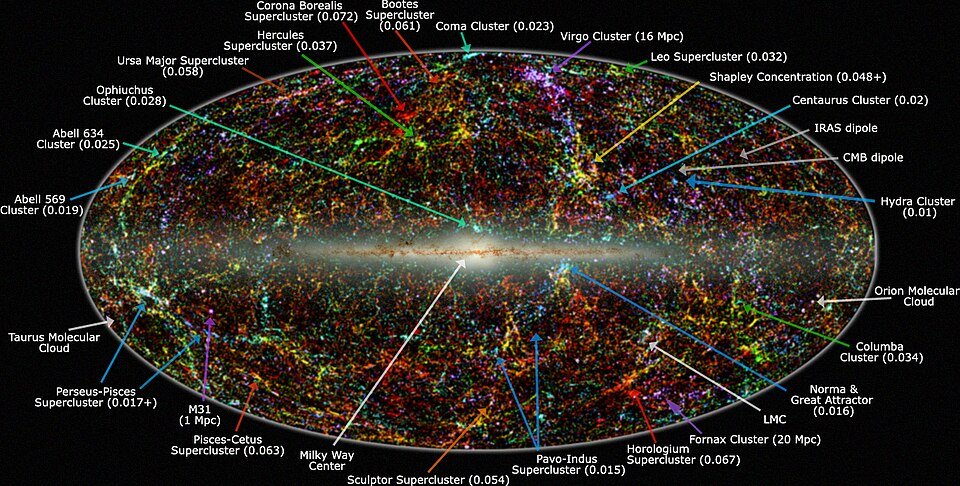

You’ve probably asked yourself, while staring up at a night sky full of stars, whether all of this is really all there is. Trillions of galaxies, billions of light-years of observable space, and yet some of the world’s sharpest minds in physics are convinced that our universe, spectacular as it is, might be nothing more than one tiny corner of a vastly larger reality.
The idea of parallel universes, or the multiverse, has long been a staple of science fiction, but in 2026, it’s also a serious area of inquiry for theoretical physicists, fueled by groundbreaking concepts in quantum mechanics and cosmology. What’s wild is that we’re not talking about metaphors or philosophical musings here. We’re talking about real, peer-reviewed mathematical frameworks that point to the unsettling possibility that you, reading this right now, might have a counterpart in another dimension doing something entirely different. Let’s dive in.
What Exactly Is the Multiverse – and Why Should You Care?
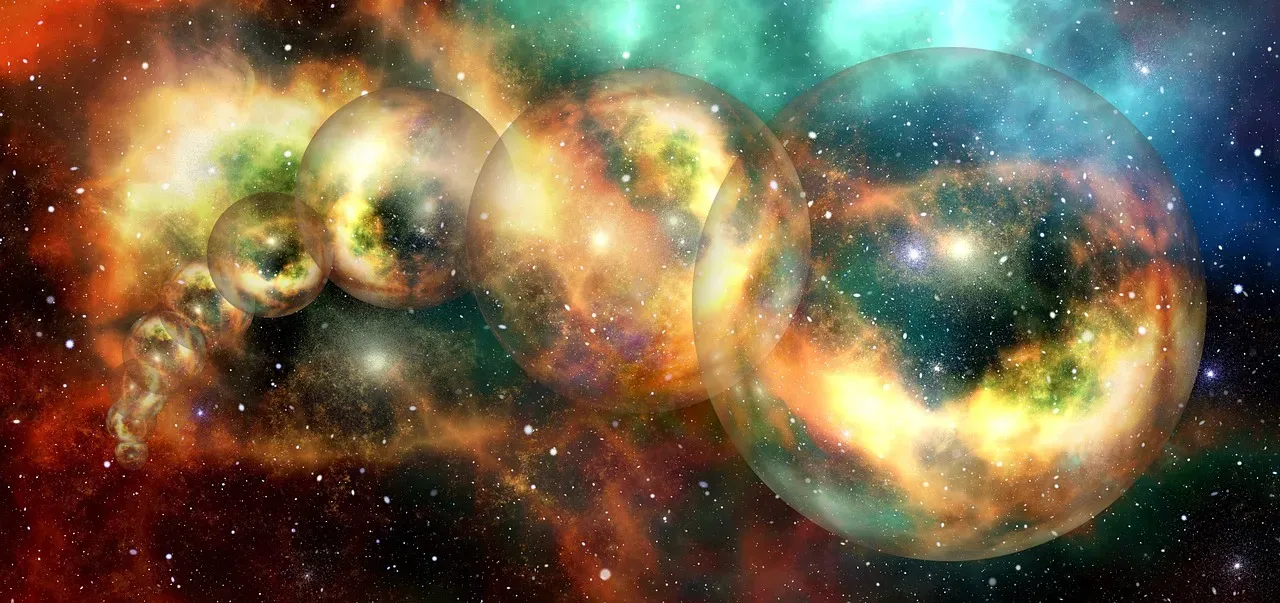
Let’s be real: the word “multiverse” gets thrown around constantly in movies and TV shows, but the actual scientific concept is far more nuanced. The multiverse is the hypothetical set of all universes. Together, these universes are presumed to comprise everything that exists: the entirety of space, time, matter, energy, information, and the physical laws and constants that describe them. Think of it less like a comic book fantasy and more like the next logical step in a centuries-long expansion of human understanding.
Instead of asking whether life exists beyond Earth, physicists are now asking whether entire realities beyond our universe could exist. This idea, known as the Multiverse Hypothesis, suggests that our universe may be just one of countless others, each with its own laws of physics, histories, and even versions of ourselves. That’s not science fiction. That’s the frontier of real physics. And the further you look into it, the harder it becomes to dismiss.
The Many-Worlds Interpretation: Every Choice, a New Reality
The many-worlds interpretation (MWI) is an interpretation of quantum mechanics that asserts that the universal wavefunction is objectively real, and that there is no wave function collapse. This implies that all possible outcomes of quantum measurements are physically realized in different “worlds”. Proposed by physicist Hugh Everett III in 1957, it remains one of the most radical and thought-provoking ideas in all of science.
The fundamental idea of the MWI, going back to Everett 1957, is that there are myriads of worlds in the Universe in addition to the world we are aware of. In particular, every time a quantum experiment with different possible outcomes is performed, all outcomes are obtained, each in a different newly created world, even if we are only aware of the world with the outcome we have seen. Honestly, that is one of the most mind-bending ideas you can sit with. Every quantum event, every tiny interaction between particles, could be generating a silent fork in reality that you will never perceive.
String Theory and the Hidden Dimensions of Space
String theories require extra dimensions of spacetime for their mathematical consistency. In bosonic string theory, spacetime is 26-dimensional, while in superstring theory it is 10-dimensional, and in M-theory it is 11-dimensional. That’s right. Not the three dimensions of height, width, and depth you live in every single day, but potentially ten or eleven. The extra ones are likely hiding in plain sight.
According to string theory, the three dimensions of common experience are large and manifest, while the other six dimensions are crumpled so small that they have so far evaded detection. Imagine a garden hose viewed from far away. It looks like a one-dimensional line. Get close enough, though, and you discover it has a circular girth, a second hidden dimension. String theory also argues that the universe has more than three dimensions. Different string theories predict different numbers of extra dimensions. This means physical constants such as the speed of light and the charge of electrons could have different values. Each slightly different configuration would, in theory, produce a different kind of universe.
Bubble Universes and the Theory of Eternal Inflation
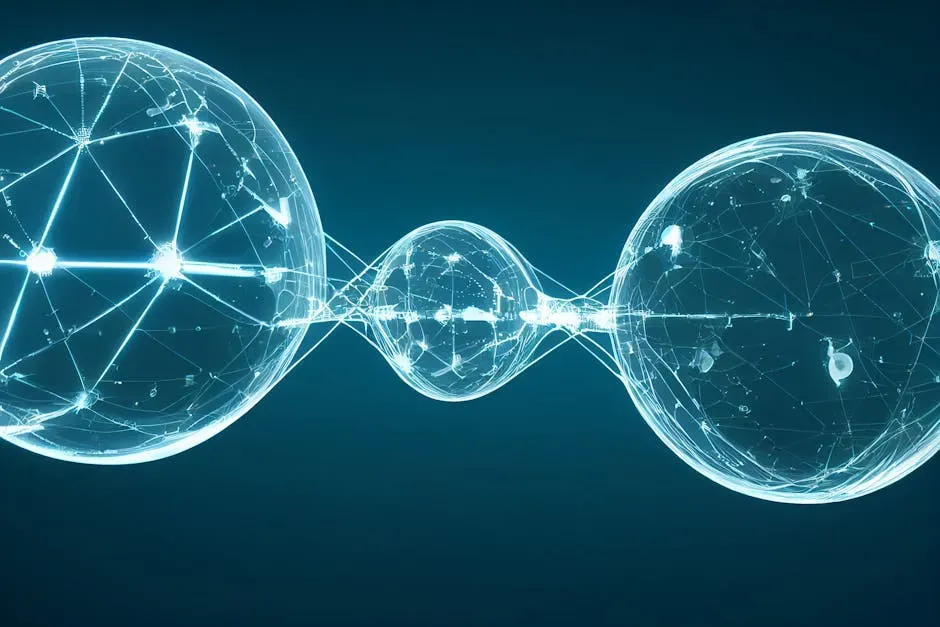
The concept of bubble universes arises from the theory of eternal inflation, a variant of the cosmological inflation theory. Inflation theory, proposed by physicist Alan Guth in the 1980s, suggests that there was a period of rapid expansion in the early universe. Eternal inflation takes this concept further by proposing that some regions of space-time continue to inflate, leading to an endless creation of new “bubble” universes. Picture soap bubbles forming endlessly on the surface of something impossibly vast. Each bubble is a universe unto itself.
Within the inflationary multiverse, different bubble universes could exhibit a wide range of physical laws and constants, potentially leading to vastly different realities. For example, some universes might have stronger gravitational forces, preventing stars from forming, while others might lack the precise balance of nuclear forces needed to support complex chemistry. In contrast, our universe happens to have the right conditions for structure and life to emerge, making it one of the rare cases where galaxies, stars, and biological evolution are possible. It’s a humbling thought. Our entire existence might be the result of a cosmic accident, one lucky bubble in an infinite sea.
The Brane Multiverse: Universes on Invisible Membranes
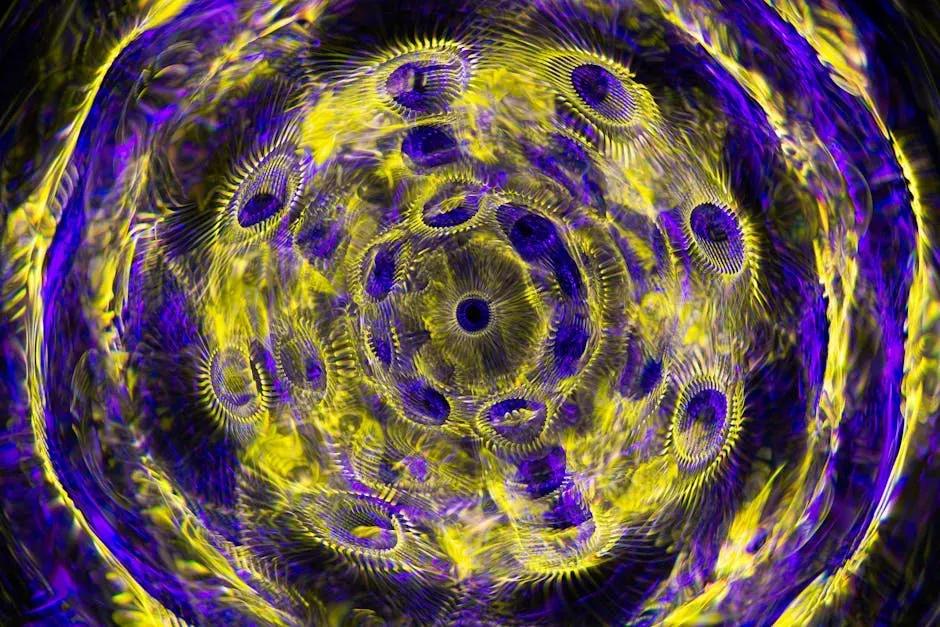
A more exotic idea comes from string theory, leading to the concept of the Brane Multiverse. Higher dimensions: imagine our three-dimensional universe as a “brane” (a membrane) floating within a higher-dimensional space (a “bulk”). Other universes could be other branes, also floating in this bulk, potentially existing just a tiny distance from us in a dimension we can’t perceive. It sounds almost absurdly simple for something so staggering. Another entire universe, separated from yours not by light-years, but by an imperceptible step sideways in a dimension your senses simply cannot register.
Our universe, with its three spatial dimensions and one time (four-dimensional space-time), is not the whole reality. It is a subspace called a “brane” (from the word “membrane”), which is embedded in an enveloping space with a higher number of dimensions, the “Bulk” or hyperspace. Some theories even suggest that collisions between these branes might have triggered the Big Bang itself. I think that’s where it gets truly extraordinary. The explosive birth of everything you’ve ever known, possibly caused by one cosmic membrane bumping into another.
Can We Actually Test for Other Dimensions? The Scientific Challenge

The Large Hadron Collider (LHC) at CERN has been at the forefront of this search, looking for signatures that would indicate the presence of extra dimensions. One potential signature would be the production of microscopic black holes during high-energy collisions. In higher-dimensional theories, gravity becomes stronger at small distances, potentially allowing black holes to form at energies achievable in particle accelerators. It’s hard to say for sure whether the LHC will ever deliver that confirmation, but the search is very much active and serious.
So far, there isn’t definite evidence of a multiverse based on string theory. These universes probably wouldn’t connect to each other, otherwise they wouldn’t count as separate universes. So even if they do exist, we may never get direct evidence for their existence. However, there could be indirect evidence of the existence of multiple universes. Scientists at the Perimeter Institute noted that collisions of one bubble universe with another would leave what could be described as a circular bruise in the cosmic microwave background. The search for that cosmic bruise continues.
Conclusion: The Universe Keeps Getting Bigger Than You Think
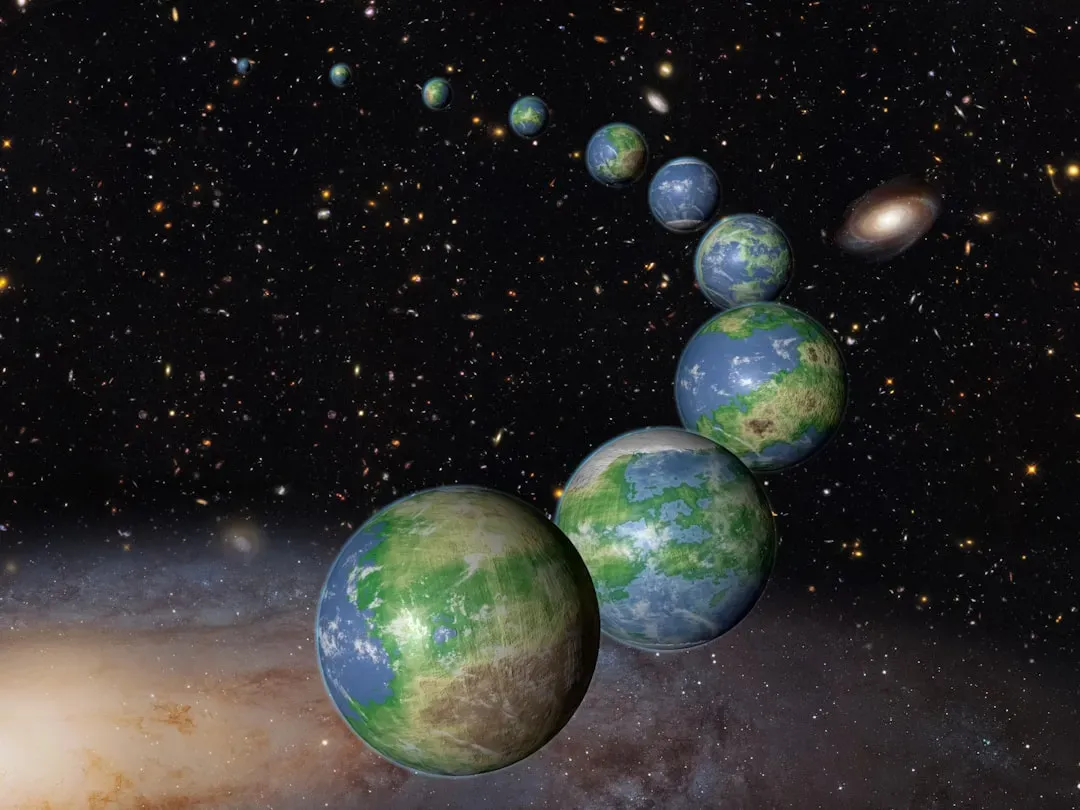
Here’s the thing about multiverse theories. They’re not just exotic mental gymnastics for bored physicists. They might be the most honest attempt science has ever made to answer the deepest question of all: why does anything exist, and why does it exist in the form that allows us to be here and ask about it? The hypothesis also touches on the age-old question of why our universe seems so perfectly suited for life. This is known as the fine-tuning problem. The multiverse offers one possible answer: if there are infinite universes, it is not surprising that at least one, ours, has the right conditions for life.
While still speculative, the multiverse theory opens a window into a realm far beyond our immediate understanding of reality. As scientists continue to probe the edges of the cosmos and delve into the fundamental fabric of existence, the idea of multiple universes invites us to imagine possibilities that stretch the limits of human comprehension. Whether or not we will ever find concrete evidence of these parallel realities, the journey to understand them enriches our quest for knowledge and deepens our appreciation for the wonders of the universe we inhabit. The history of science is, at its core, a history of discovering that the world is far stranger and far bigger than we assumed. Every time we’ve thought we had the full picture, reality has revealed another layer. There’s no reason to think this time will be any different.
So here’s what to take with you: you may be living in one of an infinite number of realities, each one quietly unfolding without any awareness of the others. Does that make your universe feel smaller, or does it make the fact that you’re in this particular one feel all the more extraordinary? What do you think? Drop your thoughts in the comments below.