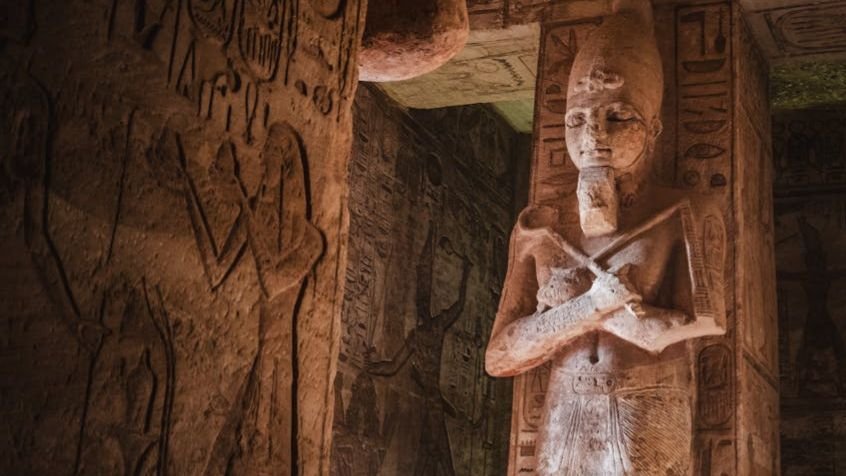

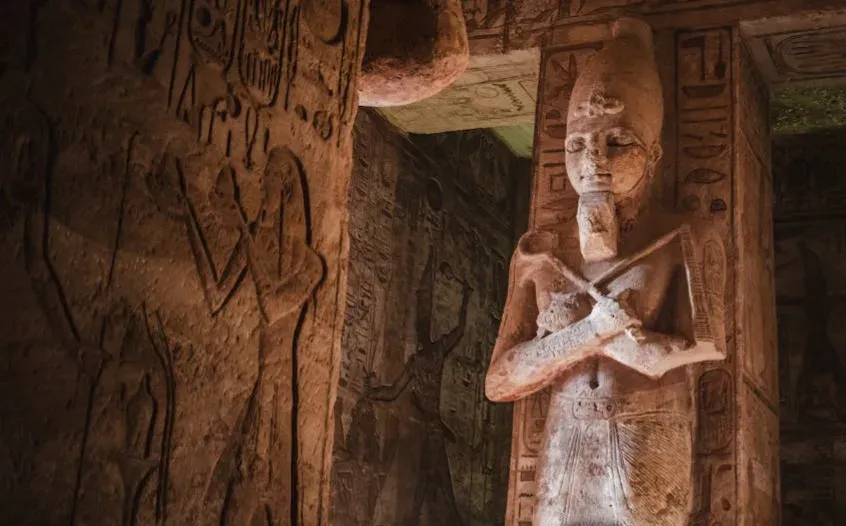
Imagine standing inside a dim, incense-thick temple on the banks of the Nile, surrounded by chanting priests dressed in white linen. Now imagine those same priests were quietly tripping on a carefully brewed psychedelic concoction. Sounds more like a modern festival than an ancient religious ceremony, right? Well, the archaeological evidence is starting to tell a very different story about what was really going on inside Egypt’s most sacred spaces.
For decades, scholars have debated the role of altered states in ancient religious practice. The idea that Egyptian priests used mind-altering substances during rituals was long considered fringe speculation. But recent discoveries are rewriting that narrative in a pretty dramatic way. Let’s dive in.
A Discovery That Changed Everything
Here’s the thing about archaeology: sometimes the most stunning revelations come from the smallest objects. A ceramic vessel discovered at Bes Temple in Luxor, Egypt, dated to roughly the fourth century BCE, turned out to be far more than decorative. Researchers analyzed residue found inside the cup and identified a genuinely startling mix of substances.
The residue contained human bodily fluids, including blood and seminal fluid, combined with plant-based compounds associated with psychedelic and sedative effects. Among them: traces of plants linked to hallucinogenic properties. This wasn’t some accidental contamination. The combination appeared deliberate, ritualistic, and intentional.
What Was Actually in the Ritual Brew
The chemical analysis revealed a recipe that honestly sounds like something out of a fever dream. Researchers identified traces of bufotenin, a psychoactive compound derived from plants in the Anadenanthera family, alongside elements suggesting the use of Egyptian blue lotus, which is known for its mild euphoric and sedative properties.
There were also signs of fermented plant material consistent with ancient beer or wine preparations. Think of it less like a party drink and more like a pharmaceutical formula with a very specific intended effect. The priests weren’t just relaxing. They were engineering a particular state of consciousness.
The Role of the Bes Temple in Luxor
The temple dedicated to Bes, the dwarf deity associated with protection, fertility, and childbirth, was not your typical Egyptian religious site. Unlike grand state temples built for pharaonic worship, Bes Temple in Luxor served a more intimate, personal spiritual function. People came here seeking healing, divine communication, and personal transformation.
This context matters enormously. The discovery of ritual vessels containing psychoactive residue at this specific site suggests that altered states of consciousness were not fringe behavior but rather a structured part of the healing and oracular practices taking place there. In other words, getting high was practically part of the job description.
Ancient Incubation Rituals and Dream States
The practice of “incubation,” where a person sleeps inside a sacred temple in hopes of receiving divine visions or prophetic dreams, was widespread in the ancient Mediterranean world. Egypt was no exception. Priests and worshippers at temples like the one at Luxor may have used these psychoactive brews specifically to induce the kind of dream state considered necessary for communication with the gods.
It’s hard to say for sure exactly how the rituals unfolded, but the physical evidence points to a sophisticated understanding of pharmacology. These weren’t naive people stumbling upon mind-altering plants accidentally. They understood what these substances did to the human mind, and they used that knowledge deliberately and purposefully within a religious framework.
How Modern Science Is Reading Ancient Residues
The technique that made this discovery possible is called residue analysis, specifically liquid chromatography combined with mass spectrometry. It allows scientists to identify organic compounds preserved inside ancient vessels at a molecular level, even thousands of years after the fact. The research team, which published findings drawing on interdisciplinary work across chemistry and Egyptology, applied this method to material recovered from Bes Temple.
What makes this approach so powerful is its precision. We’re not guessing based on hieroglyphic descriptions or symbolic iconography anymore. We’re reading the actual chemical fingerprint left behind by the substances themselves. That’s a genuinely remarkable shift in how we can understand ancient religious life.
Other Ancient Cultures and the Psychedelic Connection
Let’s be real: Egypt wasn’t alone in this. The use of psychoactive substances in religious ritual is one of the most well-documented themes across ancient cultures worldwide. The ancient Greeks had the Eleusinian Mysteries, which many scholars believe involved a grain-based psychedelic drink called kykeon. Mesoamerican civilizations used peyote and psilocybin mushrooms in ceremonial contexts for centuries.
What makes the Egyptian discovery particularly interesting is the complexity of the brew. This wasn’t just a single plant thrown into water. The combination of multiple substances, including human biological material, suggests a level of ritual sophistication and intentionality that places Egyptian ceremonial pharmacology alongside the most advanced examples we know from the ancient world. That’s not a minor footnote in history. That’s a headline.
What This Means for How We Understand Ancient Egypt
Honestly, discoveries like this force us to fundamentally rethink the image we’ve built of ancient Egyptian religion. For so long, popular culture and even academic tradition painted Egyptian priests as solemn, austere figures conducting rigid ceremonies. The reality appears to have been far more experiential, far more sensory, and far more human.
The idea that spirituality in ancient Egypt included deliberately altered states of consciousness doesn’t diminish the sophistication of their beliefs. If anything, it deepens it. These were people trying to reach something beyond ordinary experience, and they used every tool available to them, including chemistry, to get there. What we’re really discovering is not a scandal but a window into a profoundly human impulse that stretches across every culture and every era of recorded history.
Conclusion: The Past Is Stranger and Richer Than We Imagined
The discovery of psychoactive residue in a 2,000-year-old ritual vessel at Bes Temple in Luxor is one of those findings that quietly reorganizes the mental furniture. It’s not just a curious chemical footnote. It speaks to the lengths human beings have always gone to in search of transcendence, healing, and divine connection.
Ancient Egyptian priests weren’t so different from the spiritual seekers of every era who have looked for ways to step outside the limits of ordinary perception. The tools change. The impulse doesn’t. Perhaps the most surprising thing here isn’t that they used psychedelics during sacred rituals. It’s that it took us this long to find the evidence. What else might still be hiding inside those ancient cups?