
You’ve probably seen fireflies twinkling in your backyard, but imagine an entire world where nearly everything glows in the dark. That’s the reality deep beneath the ocean’s surface, where about 76% of observed deep-sea creatures have mastered the art of making their own light. It’s one of nature’s most extraordinary survival tricks.
The deep sea is a dark place, with the only light coming from animals that glow, turning this mysterious realm into something like an underwater galaxy. These glowing creatures don’t just light up for fun. They’re hunting, hiding, communicating, and trying desperately not to become someone else’s dinner. Let’s dive into the fascinating world of nine bioluminescent creatures that call the deep ocean home.
The Deep Sea Anglerfish
Picture this: You’re swimming in complete darkness more than a thousand meters below the ocean surface when suddenly you spot a tiny glowing light bobbing in the blackness. You swim closer, thinking it might be food. Big mistake.
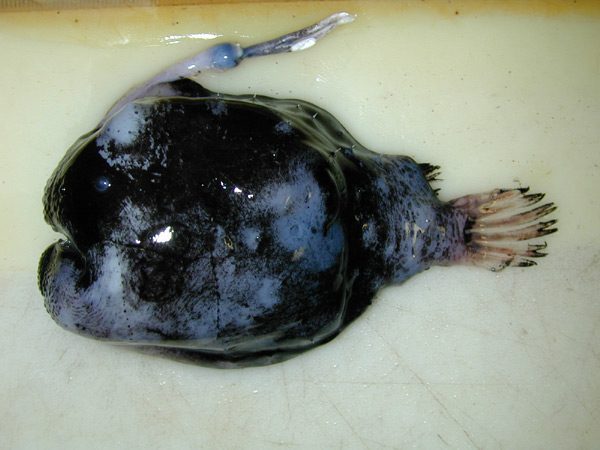
The deep-sea anglerfish has a large head, incredibly sharp teeth and a long, fishing-rod-like structure that extends out from the top of its head, with a ball at the end which contains glowing bacteria called Photobacterium. This terrifying predator doesn’t chase its meals. Instead, it dangles a living lantern just above its gaping mouth, waiting for curious prey to investigate. The bacteria living inside that glowing lure get a safe home and steady food supply, while the fish gets an irresistible trap. It’s honestly one of the most ingenious hunting strategies in the entire ocean.
Many anglerfish have ultra-black skin that absorbs nearly 100% of the light that hits it, blending completely into the blackness surrounding them, rendering everything invisible but their luminous escas. Think about that for a moment. They’re essentially wearing an invisibility cloak while waving a glowing wand.
Lanternfish
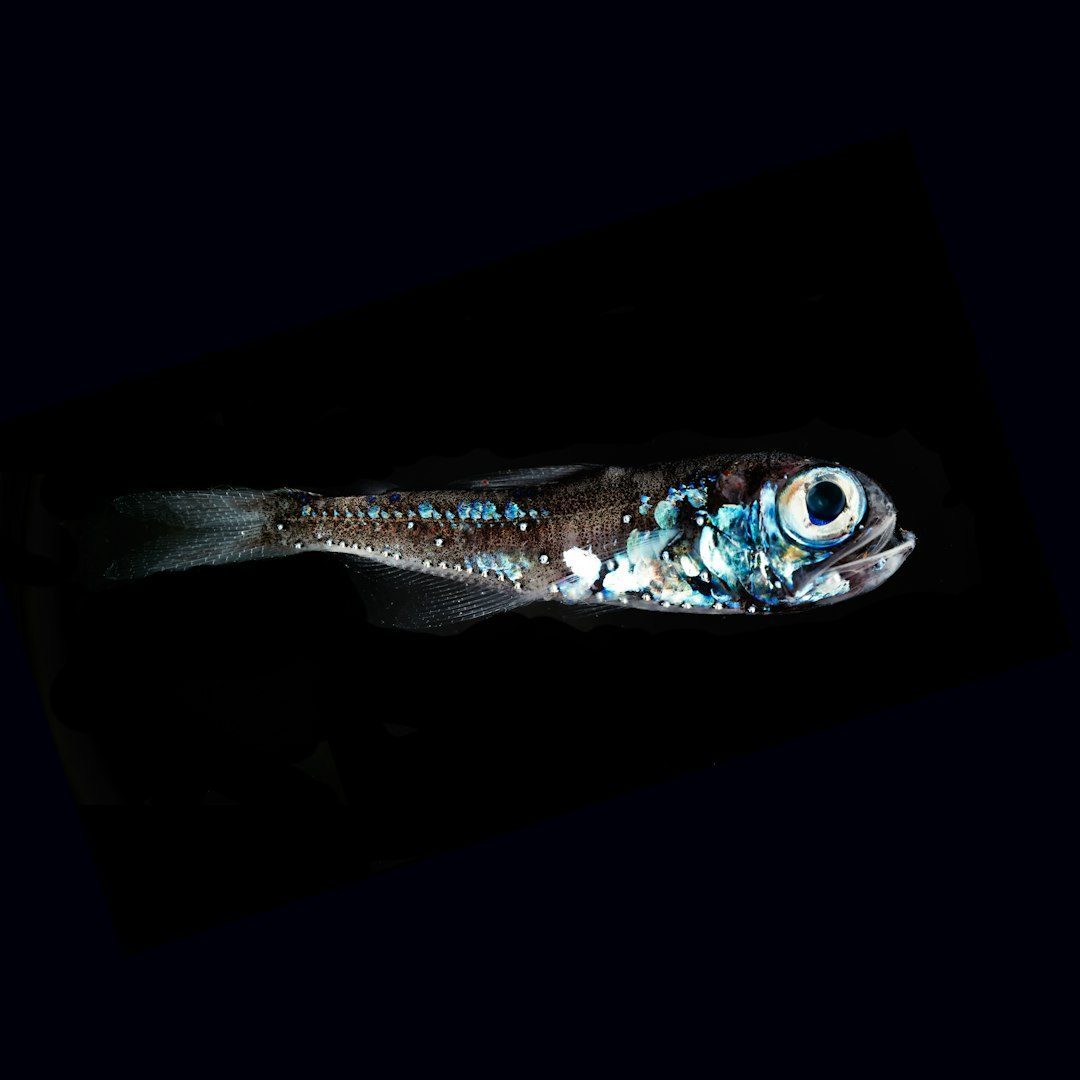
The lanternfish is one of the most abundant bioluminescent species in the ocean, possessing photophores, specialized light-producing organs, that allow it to emit light along its body. These tiny fish might not look impressive, but they’re actually some of the most numerous vertebrates on Earth. Each species has its own unique pattern of light organs dotting their bodies like Christmas decorations.
Here’s where it gets really clever. Lanternfish have rows of photophores on their underside that emit a faint glow which allows them to blend in with any remaining light that filters down from the surface in a process known as counter-illumination. When predators look up from below, they don’t see a dark fish-shaped shadow. They see nothing at all. The lanternfish simply disappears against the dim surface light.
These masters of disguise migrate vertically through the water column every single night, creating what scientists call the ocean’s largest biomass movement. Imagine billions of fish rising toward the surface at dusk and sinking back down at dawn. All while glowing.
Vampire Squid
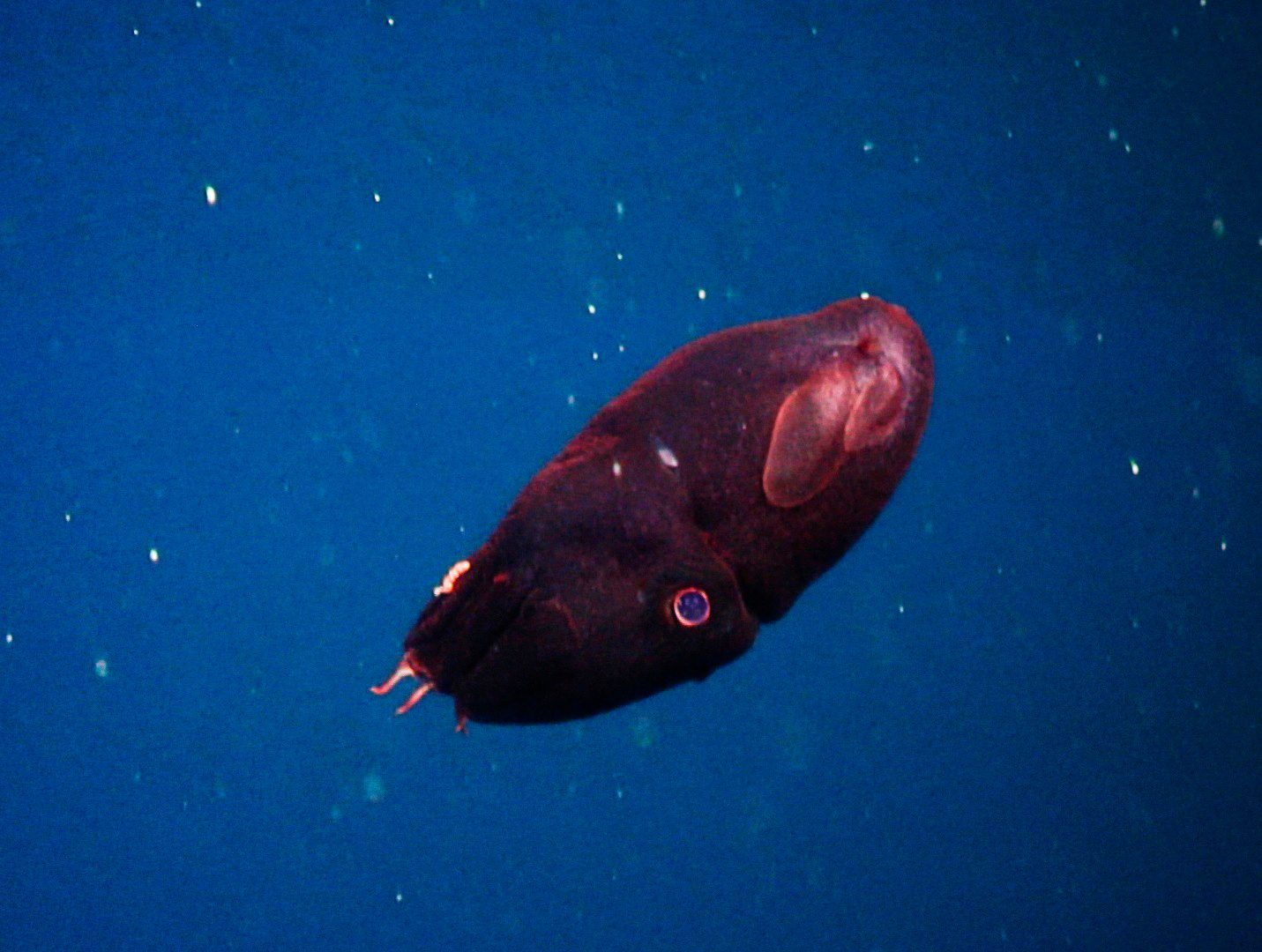
Despite its creepy name, the vampire squid isn’t really a squid, and it definitely doesn’t suck blood. It’s actually more closely related to octopuses. What it does have, though, is one of the most dramatic defense mechanisms in the deep sea.
The vampire squid inverts its body, raising its arms over its head to expose rows of spikes to deter attackers, and if that’s not deterrent enough, they also eject a sticky, bioluminescent mucus which can startle, disorient, and confuse predators. Instead of ink like their shallow-water cousins, vampire squid shoot out glowing slime. The cloud of shimmering particles hangs in the water, distracting whatever was trying to eat them long enough for the squid to make its escape.
It’s hard to say for sure, but this glowing mucus defense might be one of the most creative uses of bioluminescence in the entire ocean. The predator is left snapping at a cloud of sparkles while the real meal slips away into the darkness.
Stoplight Loosejaw
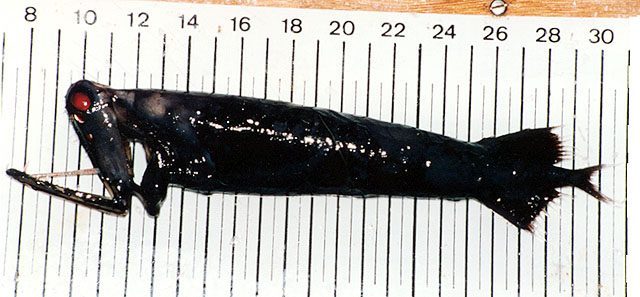
Most bioluminescent creatures in the ocean produce blue or green light because those colors travel best through water. The stoplight loosejaw, though, breaks all the rules. This fish has eyes adapted to see red wavelengths of light, using these red beams as a flashlight to search for prey.
Since most deep-sea fish can only see blue light, these predators have a huge advantage: they can see their prey, but their prey can’t see them. It’s like hunting with night vision goggles while everyone else is stumbling around blind. This fish literally has a secret weapon that other deep sea creatures don’t even know exists.
The loosejaw also has another peculiar feature. Its jaw isn’t connected by skin or tissue, allowing it to open impossibly wide to swallow prey that seems way too big. Combine that with invisible red searchlights, and you’ve got yourself a nearly perfect predator.
Jellyfish and Siphonophores
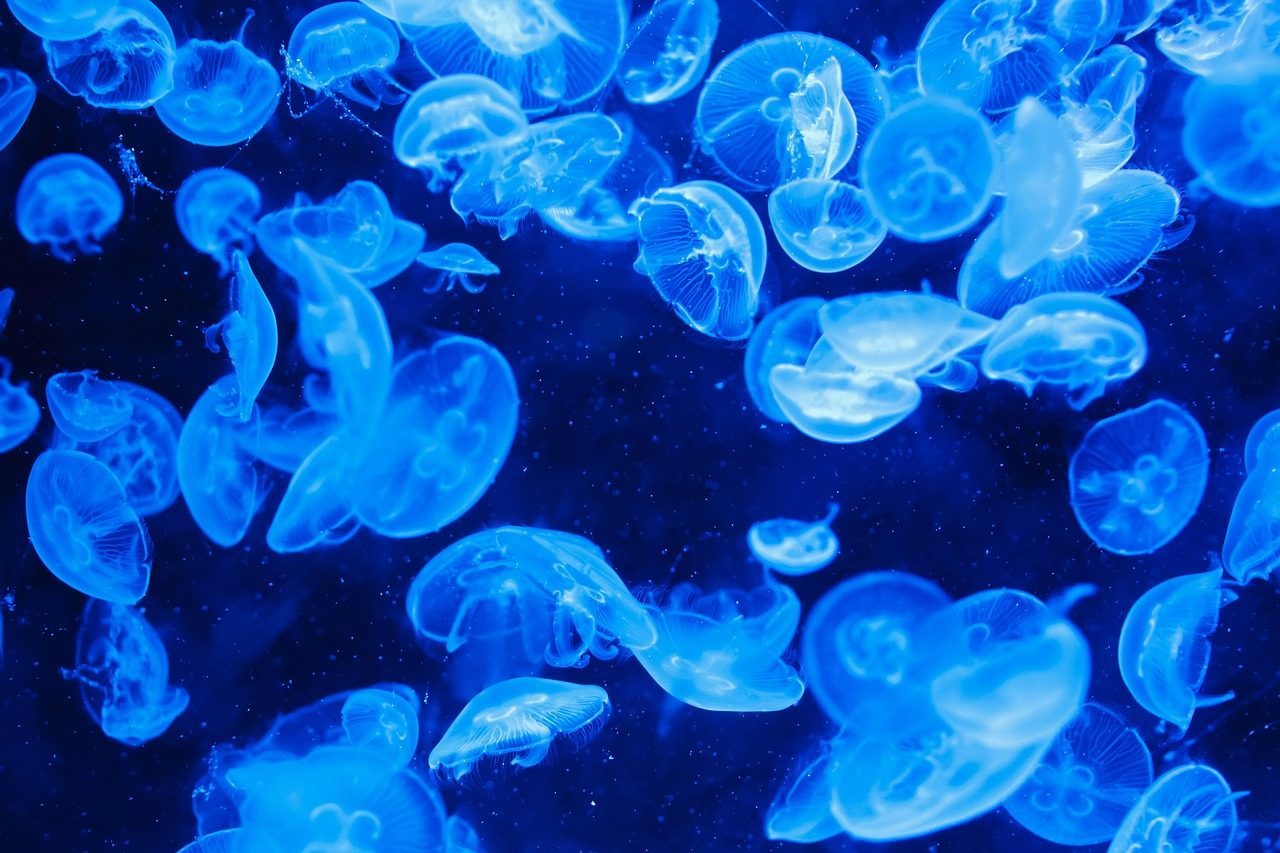
If you want to find bioluminescence in the ocean, look for jellyfish. 97 to 99.7 percent of the cnidarians in the videos are able to produce their own light. That’s nearly every single one. These gelatinous drifters come in countless shapes and sizes, and many can light up like living fireworks.
Some jellyfish flash when they’re disturbed, creating sudden bursts of light that can startle predators. Others glow steadily, possibly to attract mates or communicate with others of their kind. The variety is honestly staggering. You could study jellyfish bioluminescence your entire life and still discover something new.
Siphonophores, close relatives of jellyfish, take things even further. These aren’t single animals but colonies of specialized organisms working together, and many of them produce some of the most beautiful bioluminescent displays in the ocean. Watching them glow in the darkness is like witnessing an alien light show.
Hawaiian Bobtail Squid
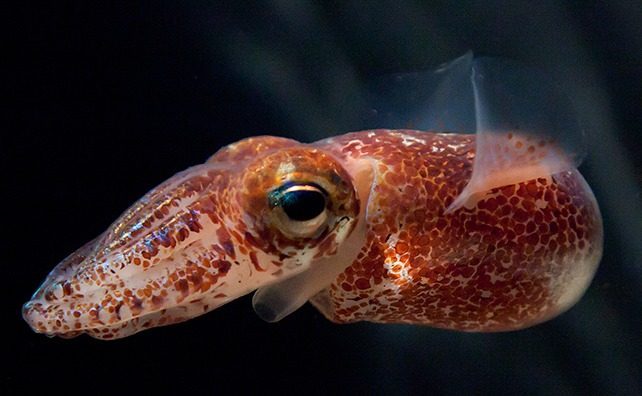
Hawaiian bobtail squid light up via bioluminescent bacteria living in one of their organs; the light camouflages them against moonlight on the surface and eliminates their shadow, obscuring them from predators. These tiny squid, which fit in the palm of your hand, have formed one of the most studied partnerships between animals and bacteria in the entire ocean.
Every night, newly hatched bobtail squid must find and collect the right species of glowing bacteria from seawater and cultivate them in a special light organ. The squid provides food for the bacteria, and in turn uses the bioluminescence for camouflage, with the resulting blue-ish glow helping the squid blend in with the moonlit waters. The squid can even control how much light shines through, adjusting its glow to match changing moonlight conditions.
Dragonfish
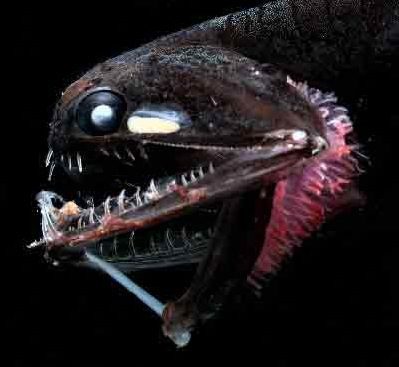
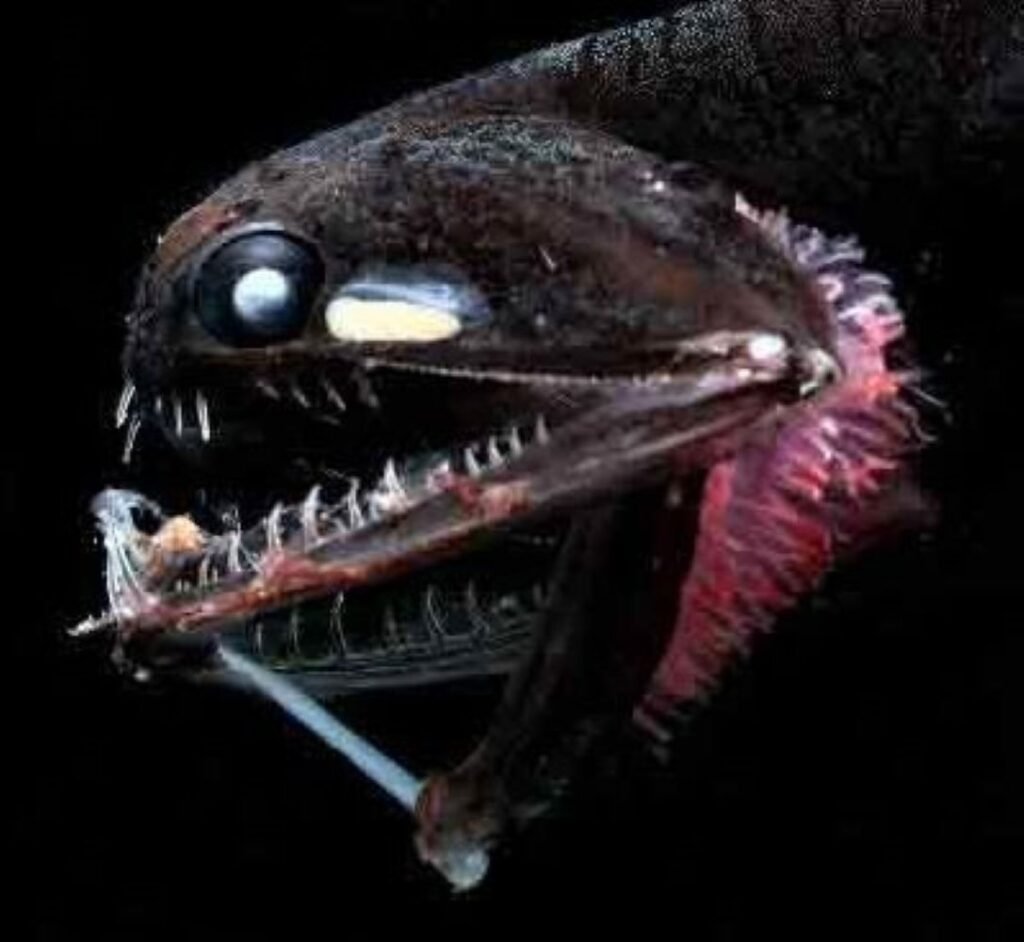
Some deep sea barbeled dragonfishes emit a red glow, an adaptation that allows the fish to see red-pigmented prey, which are normally invisible to other organisms in the deep ocean environment where red light has been filtered out by the water column, using the longer wavelength to act as a spotlight for its prey that only they can see. These fierce predators are equipped with enormous teeth, sometimes so large they can’t even close their mouths completely.
Dragonfish also have photophores scattered across their bodies, with particularly prominent light organs behind their eyes. Some species have bioluminescent barbels hanging from their chins, which they use to lure smaller fish and crustaceans close enough to strike. They’re like underwater dragons, complete with glowing red searchlights and impressive weaponry.
The combination of these light organs serves multiple purposes: attracting prey, startling predators, and possibly communicating with potential mates. Each species has developed its own unique lighting arrangement.
Comb Jellies
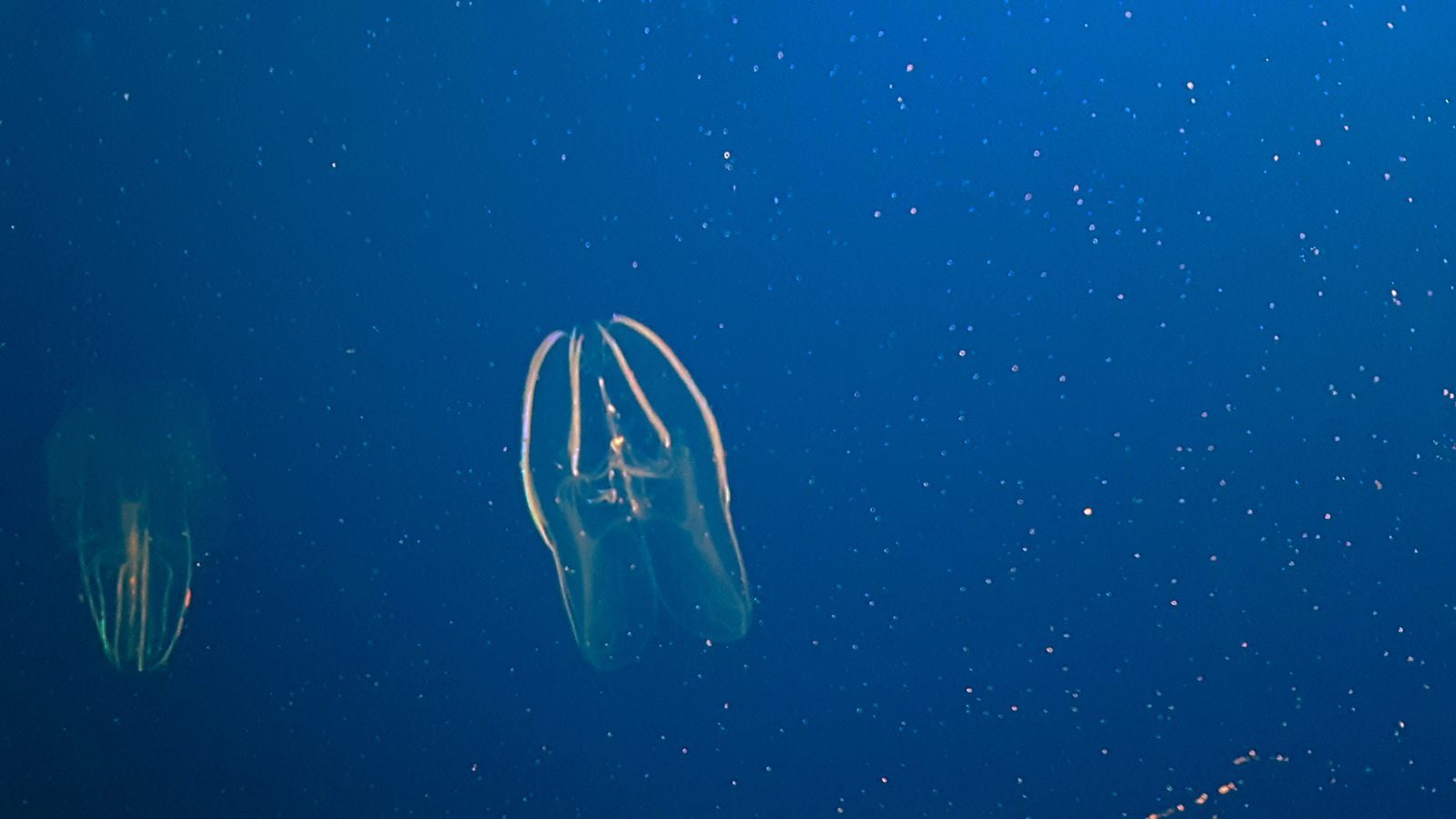
Comb jellies, or ctenophores, create one of the most mesmerizing light displays in the ocean. When you shine a light on them, you might see rainbow colors shimmering across their bodies, but that’s actually light refracting off their moving cilia, not true bioluminescence. Their true bioluminescence cannot be seen in light, with different species using light-producing chemicals in different ways, such as flashing the chemicals to deter predators.
These delicate, transparent animals pulse through the water using rows of hair-like cilia that beat in coordinated waves. Some species produce green bioluminescence when disturbed, creating sudden flashes that can startle whatever bumped into them. Let’s be real, anything that can produce both rainbow refractions and actual bioluminescence deserves recognition.
Despite looking fragile, comb jellies are actually voracious predators, capturing prey with sticky cells. Their combination of beauty and effectiveness makes them one of the ocean’s most successful hunters.
Deep-Sea Shrimp
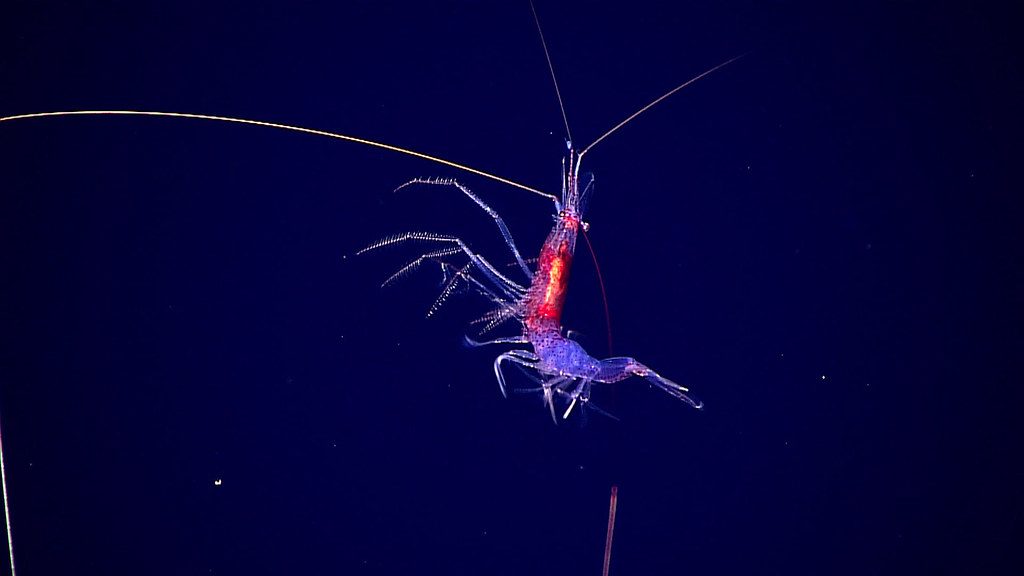
Some deep-sea shrimp have special glowing organs that they use to camouflage, defend themselves and maybe even communicate. Unlike many bioluminescent creatures that produce light inside their bodies, some shrimp species spew glowing liquid from specialized glands, creating luminous clouds in the water similar to how shallow-water squid release ink.
These shrimp have evolved visual systems with a diversity of special light-detecting proteins that can help them navigate their bioluminescent world. Recent research from 2025 revealed that these creatures have developed incredibly sophisticated eyes capable of distinguishing between different sources of bioluminescence. This helps them tell friend from foe in the darkness and navigate safely through different light environments as they migrate up and down through the water column.
The fact that shrimp need such complex vision just to survive in the deep sea tells you something important: bioluminescence down there isn’t rare or unusual. It’s absolutely everywhere, and you need to be able to read all those flashing signals to stay alive.
Conclusion
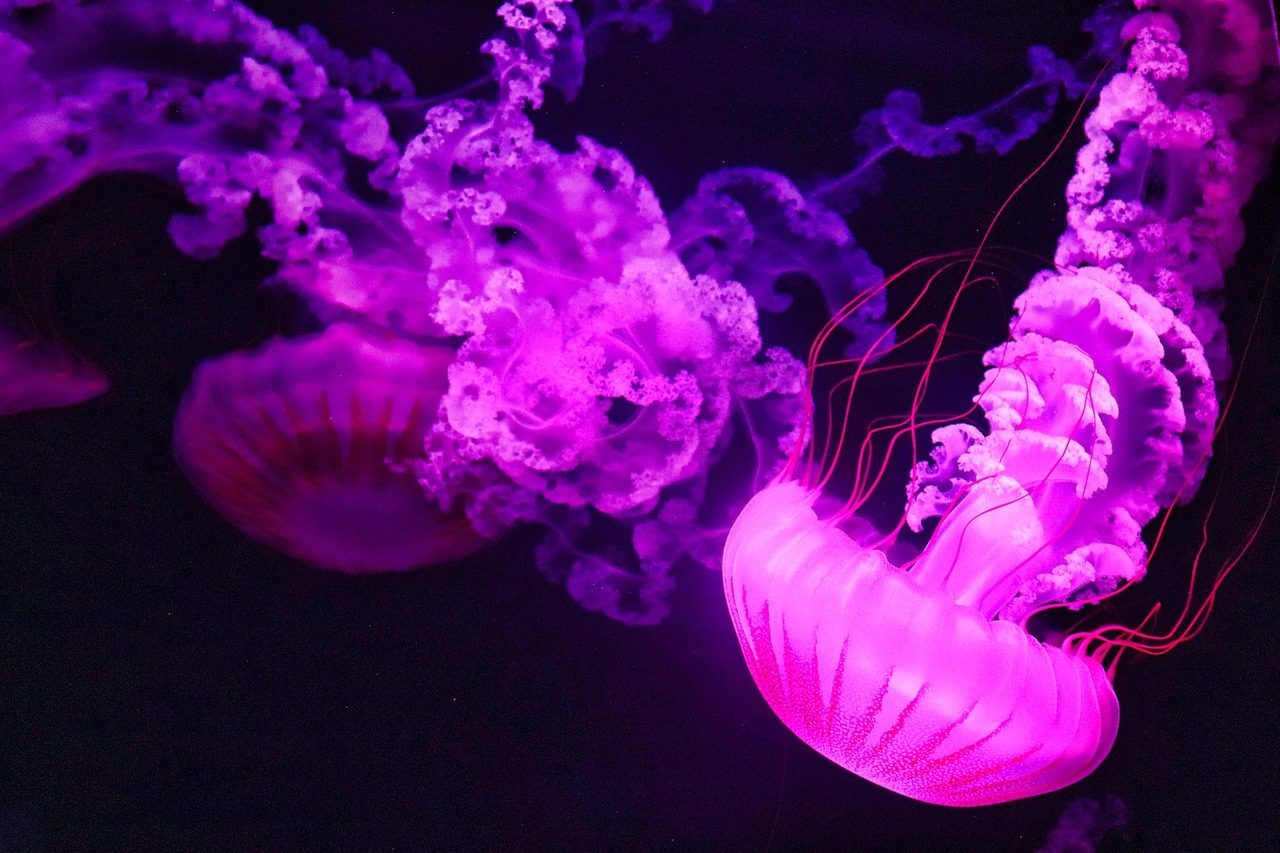
76% of the observed individuals have bioluminescence capability, meaning bioluminescence has to be considered an important ecological trait from the surface to the deep-sea. This isn’t just a neat trick that a few weird creatures developed. It’s actually the norm in the ocean’s depths.
From anglerfish waving glowing lures to jellyfish flashing warning signals, these nine creatures represent just a tiny fraction of the bioluminescent life thriving in Earth’s largest habitat. Every time scientists send cameras or submarines into the deep, they discover new glowing species. Each one has evolved its own unique way to produce, control, and use light for survival in a world without sunlight.
The deep ocean remains one of the least explored places on our planet, and bioluminescence research is helping us understand not just how these animals survive, but also how life itself has adapted to extreme environments. What glowing creature do you think is the most fascinating? Would you ever want to dive deep enough to see them in person?