Imagine holding a fossilized skull in your hands and realizing it doesn’t belong to any creature science has ever fully understood. That’s essentially what researchers are dealing with when they study ancient whale fossils, and the results are genuinely mind-bending. The story of how whales came to “hear” the ocean is far stranger and more fascinating than most people realize.
What started as a relatively niche area of paleontology has quietly become one of the most compelling puzzles in evolutionary biology. These aren’t just old bones. They’re time capsules, locked inside rock for millions of years, waiting to tell us something profound about how life adapts when it moves between worlds. So let’s dive in.
Fossils That Speak Louder Than Words
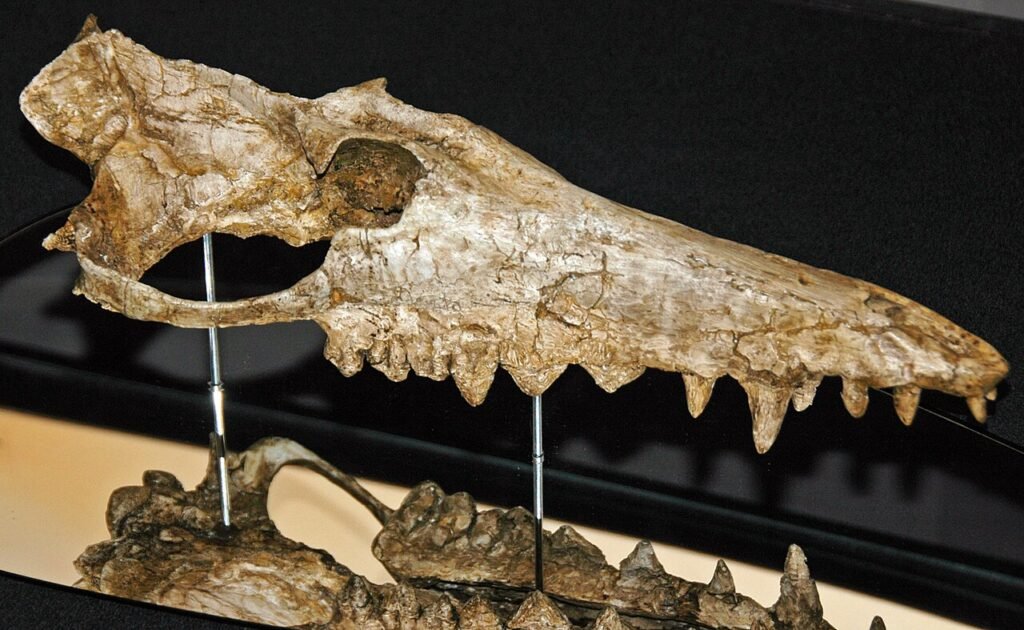
Here’s the thing most people don’t know: whale skulls are extraordinarily weird, even by mammal standards. The bones are asymmetrical, telescoped over one another in ways that took millions of years to evolve, and they contain some of the most specialized hearing structures in the entire animal kingdom. Scientists studying fossilized whale skulls have discovered that these adaptations didn’t appear overnight. They emerged gradually, in stages, over a span of time that’s honestly difficult to wrap your head around.
The most exciting part? Some of the transitional skull shapes recovered from fossil sites reveal intermediate hearing systems that researchers hadn’t predicted. It’s a bit like finding a half-built radio in an archaeological dig and realizing it was built by someone who had never seen a finished one. The evolutionary path was, apparently, more experimental than we assumed.
How Whales Moved From Land to Sea and Changed Their Ears Along the Way
Whales are descended from land-dwelling mammals, and that fact alone never gets old. Around fifty to fifty-five million years ago, their ancestors waded into shallow waters, and over vast stretches of time, their bodies transformed almost beyond recognition. One of the most dramatic transformations happened in the skull, specifically in the structures responsible for detecting sound.
Land mammals typically hear through a combination of external ear structures and bone conduction. Early whale ancestors retained some of these land-based features, which created a sort of acoustic hybrid system during the transitional period. Fossilized skulls from these early whale relatives show bones in positions that suggest they were still partly adapted to hearing airborne sounds, even as the animals spent more and more time underwater. That overlap, that blurry in-between state, is exactly what makes these fossils so scientifically valuable.
The Secrets Hidden Inside the Periotic Bone
Inside the dense, isolated bone structure called the periotic, researchers can find a blueprint of an ancient whale’s hearing capabilities. This bone houses the cochlea, and its shape directly reflects what frequencies an animal could detect. Honestly, it functions almost like a built-in audiogram, preserved in stone for millions of years.
In modern toothed whales, the periotic bone is incredibly dense and acoustically isolated from the rest of the skull, which allows for precise directional hearing underwater. In older fossil specimens, this isolation is incomplete, suggesting the animals could hear, but not with the pinpoint sonar-like precision we see today. Studying the gradual densification and repositioning of this bone across different fossil species gives scientists a detailed timeline of how underwater hearing was “engineered” by evolution, one generation at a time.
Baleen Whales vs. Toothed Whales: Two Very Different Evolutionary Paths
Let’s be real: people often lump all whales together as if they’re more or less the same animal. They’re not. Baleen whales and toothed whales diverged tens of millions of years ago and developed radically different hearing systems to match their different lifestyles. Fossilized skulls from both lineages tell completely separate evolutionary stories, and comparing them is like reading two novels set in the same universe but with completely different rules.
Toothed whales developed echolocation, a sophisticated biological sonar system that requires extreme precision in both sending and receiving sound. Baleen whales, on the other hand, communicate using low-frequency calls that can travel hundreds or even thousands of kilometers through deep ocean water. Their skull structures reflect this difference in remarkable detail, and fossil specimens show that these two paths began diverging earlier than previously estimated, a finding that has nudged scientists to reassess long-standing evolutionary timelines.
What Asymmetry in the Skull Actually Tells Us
One of the strangest features of modern whale skulls is their asymmetry. In toothed whales especially, the bones around the nasal passage are dramatically unequal on either side, a trait that appears to be directly linked to the production and reception of echolocation clicks. This asymmetry is so pronounced that it’s immediately visible even to a non-expert looking at the skull. And crucially, fossilized skulls show when this asymmetry first began to appear in the evolutionary record.
Early whale relatives have nearly symmetrical skulls, much like other mammals. The gradual shift toward asymmetry in the fossil record marks a specific evolutionary moment when the acoustic demands of life underwater began reshaping the very architecture of the face. I think that’s one of the most quietly awe-inspiring things in paleontology: the idea that a behavioral need, the need to hunt using sound, literally rearranged the bones of an animal’s skull over millions of years.
Modern Technology Is Unlocking What Fossils Couldn’t Show Before
For a long time, studying fossilized skulls meant physically cutting them open or making educated guesses about internal structures. That era is effectively over. CT scanning and advanced 3D modeling now allow researchers to digitally reconstruct the internal ear anatomy of fossil specimens without damaging them at all. The level of detail available today would have seemed almost impossible to scientists working just a few decades ago.
Using these tools, researchers have been able to virtually “dissect” ancient whale skulls and compare their internal geometries to both modern species and other fossil specimens. This has revealed subtle differences in cochlear shape and size that correspond to specific hearing frequency ranges. In other words, we can now estimate what sounds a whale that died millions of years ago was probably able to hear, and that’s an extraordinary leap in our understanding of ancient marine ecosystems.
Why This Research Matters Far Beyond Paleontology
It’s tempting to think of whale fossil research as a purely academic exercise, something for museum display cases and scientific journals. The truth is considerably more interesting. Understanding how hearing systems evolved in response to dramatic environmental change has real-world implications for fields ranging from bioengineering to conservation biology. Evolution, after all, is nature’s longest-running research and development program.
For marine conservationists, understanding the sensitivity of whale hearing systems at a deep evolutionary level helps clarify just how vulnerable these animals are to human-generated noise pollution in the ocean. Modern industrial shipping, sonar, and underwater construction create acoustic environments that whales have had no evolutionary time to adapt to. The fossil record essentially gives us the backstory of a hearing system that took tens of millions of years to perfect and is now being challenged in ways it was never built to handle.
Conclusion: Stone-Cold Evidence of Something Remarkable
Fossilized whale skulls are not just relics of the past. They are active sources of scientific discovery, and with every new specimen analyzed using modern imaging technology, the picture of whale evolution becomes sharper and more nuanced. The journey from shallow coastal waters to the deep ocean, with all the acoustic engineering that journey required, is one of the most dramatic transformation stories in the history of life on Earth.
What strikes me most is how much patience is baked into this science. Researchers spend careers piecing together timelines from fragments of bone, and yet the story keeps evolving. If anything, these fossils remind us that nature is far more inventive than we give it credit for. The whale didn’t just adapt to the ocean. It reinvented its own skull to hear it. What do you think that says about where evolution might take other species in the future? Drop your thoughts in the comments below.