
Imagine standing at the foot of a towering stone pyramid – then realizing that nearly identical structures exist on the other side of the planet, built by people who never could have met, in civilizations separated by thousands of miles and thousands of years. That thought alone should stop you cold. Something about it refuses to make comfortable sense.
The world is full of ancient structures that don’t fit neatly into any tidy historical narrative. Ancient civilizations accomplished feats of engineering that continue to challenge modern understanding, and despite advances in archaeology, materials science, and experimental reconstruction, several monumental structures and the methods by which they were built remain a mystery. You’d expect that with all of today’s technology, we’d have figured this out by now. Apparently, you’d be wrong. Let’s dive in.
The Pyramid Phenomenon: Why Did So Many Civilizations Build the Same Shape?

Here’s a question that doesn’t get asked enough: why did completely separate ancient cultures, on different continents, with zero documented contact, all independently decide to build enormous pyramid structures? It’s one of the most jaw-dropping patterns in all of human history. Think of it like this – if you and a stranger in a foreign country, without ever exchanging a single word, both drew the exact same house, you’d raise an eyebrow.
Ziggurats were huge pyramidal temple towers dedicated to the gods of the city in ancient Mesopotamia, while across the ocean, the Maya were doing the same thing. The Aztec architecture followed designing principles that were similar to other Mesoamerican civilizations, including the construction of large temples in the shape of a pyramid in the central part of the city. Egypt, Mesopotamia, Mesoamerica. Three civilizations. One unmistakable shape. The question of why remains genuinely, stubbornly open.
Göbekli Tepe: A Temple That Rewrites Everything You Know
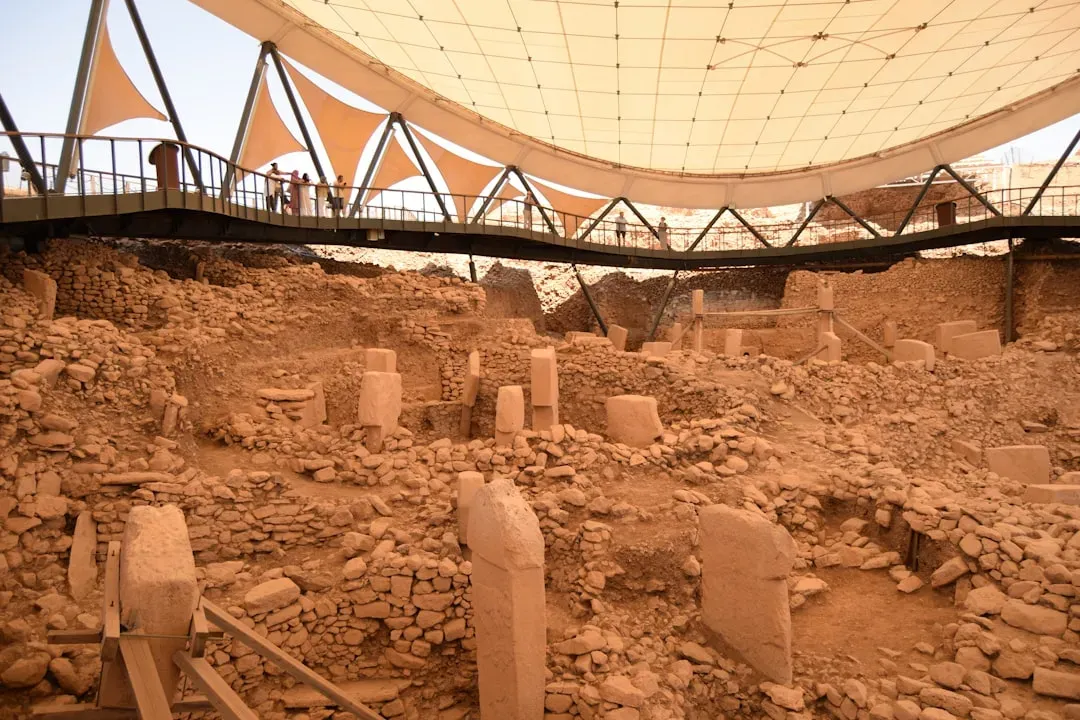
If there’s one site that genuinely shook the world of archaeology to its foundations, it’s Göbekli Tepe in modern Turkey. This place is almost offensively old. The complex was built around 11,500 years ago in what was Upper Mesopotamia and involves several circular structures containing massive T-shaped pillars, some of which have been decorated with intricate carvings. That predates writing. It predates pottery. It predates agriculture itself.
Built around 10,000 BCE, this complex features sophisticated architecture and astronomical alignments created by a hunter-gatherer society. The site’s construction required coordinated effort from hundreds of workers and advanced knowledge of stone-working, all before humans had developed pottery or metal tools. Honestly, the idea of nomadic hunter-gatherers coordinating a construction project of this scale is almost impossible to wrap your head around. It rewrites everything we thought we understood about the timeline of human civilization.
Mortar-Free Masonry: The Technique That Appears Worldwide
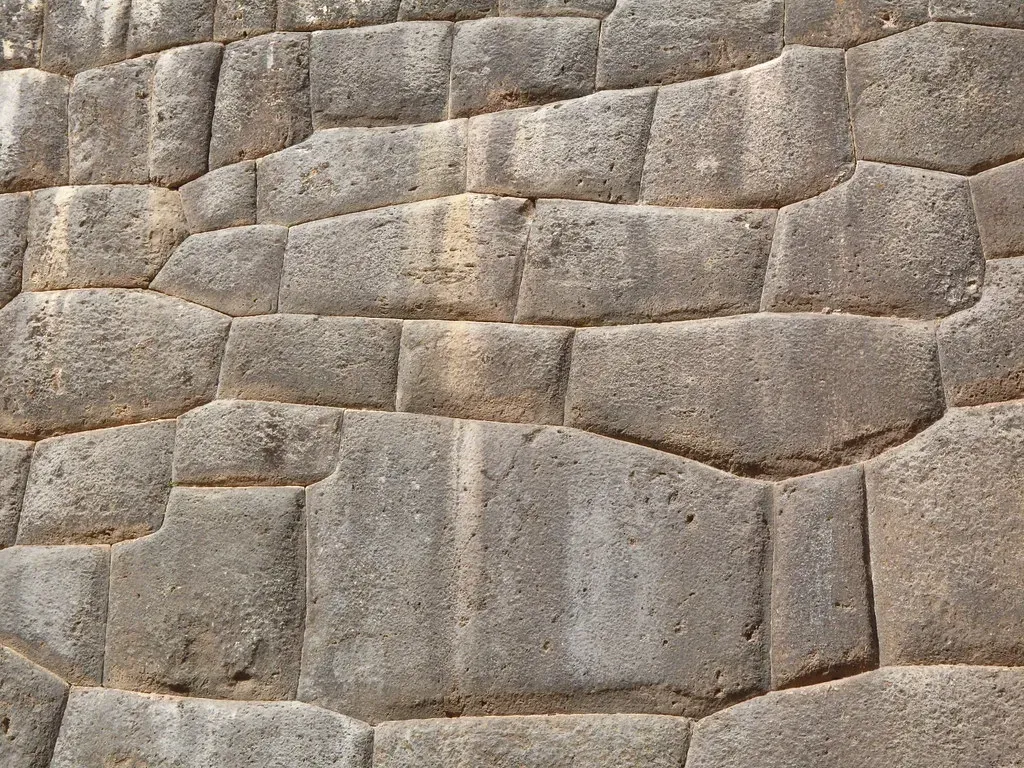
There are several specific construction techniques in the masonry of apparently unrelated cultures from around the ancient world. The specific similarity in design, technique and engineering skills is, in certain cases very suggestive of a common source of knowledge, or at the least, of contact between cultures. One of the most striking of these shared techniques is the building of enormous walls without a single drop of mortar. No glue. No cement. Just stone fitted against stone with inhuman precision.
You see this at Sacsayhuamán in Peru, at the Egyptian pyramids, and at Puma Punku in Bolivia. The massive walls of Sacsayhuamán are built from irregular stones weighing up to 200 tons, fitted so tightly that no mortar was required, and the structure has withstood earthquakes for centuries, demonstrating an advanced understanding of load distribution and seismic resilience. A structure that’s survived earthquakes for hundreds of years using no mortar. Let that sink in for a moment.
Puma Punku: The Stone That Defies Explanation
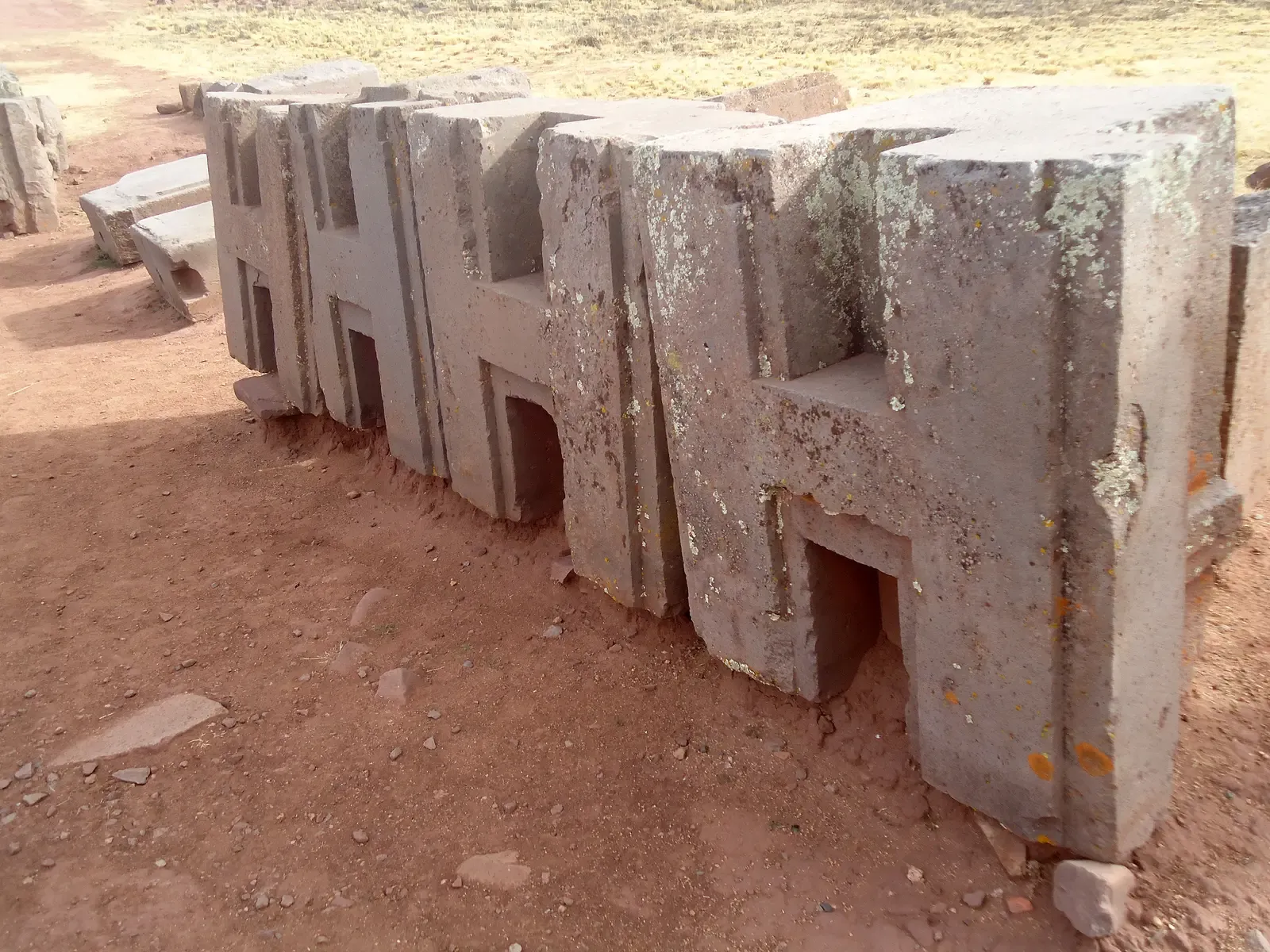
Few sites on Earth generate as much genuine bewilderment among engineers and archaeologists as Puma Punku, located high in the Bolivian Andes near Lake Titicaca. Puma Punku was a terraced earthen mound originally faced with megalithic blocks, each weighing several tens of tons. The red sandstone and andesite stones were cut in such a precise way that they fit perfectly into and lock with each other without using mortar. We’re talking about some of the hardest stone on Earth, shaped with the kind of accuracy that would challenge modern machining.
The largest of these blocks is 25.6 feet long, 17 feet wide and 3.5 feet thick, and is estimated to weigh 131 metric tons. Due to their size, the method by which they were transported to Puma Punku has been another topic of interest since the temple’s discovery. Chemical analysis reveals the red sandstone blocks were transported up a steep incline from a quarry near Lake Titicaca roughly 10 kilometers away. Moving 131 metric tons uphill. Without wheels. It’s hard to say for sure how they did it, but the fact that they did is indisputable.
Astronomical Alignments: Ancient Builders Who Watched the Stars

One of the most spine-tingling similarities across ancient structures worldwide is how precisely they were aligned with celestial events. Across the world, ancient builders aligned their most important monuments with the heavens. From the frozen plains of northern Europe to the arid valleys of Mesoamerica, great stone structures point to celestial events with suspicious accuracy. Civilisations with no known contact with each other somehow reached similar conclusions: the sky held meaning, and the monuments they built would reflect their understanding of its meanings.
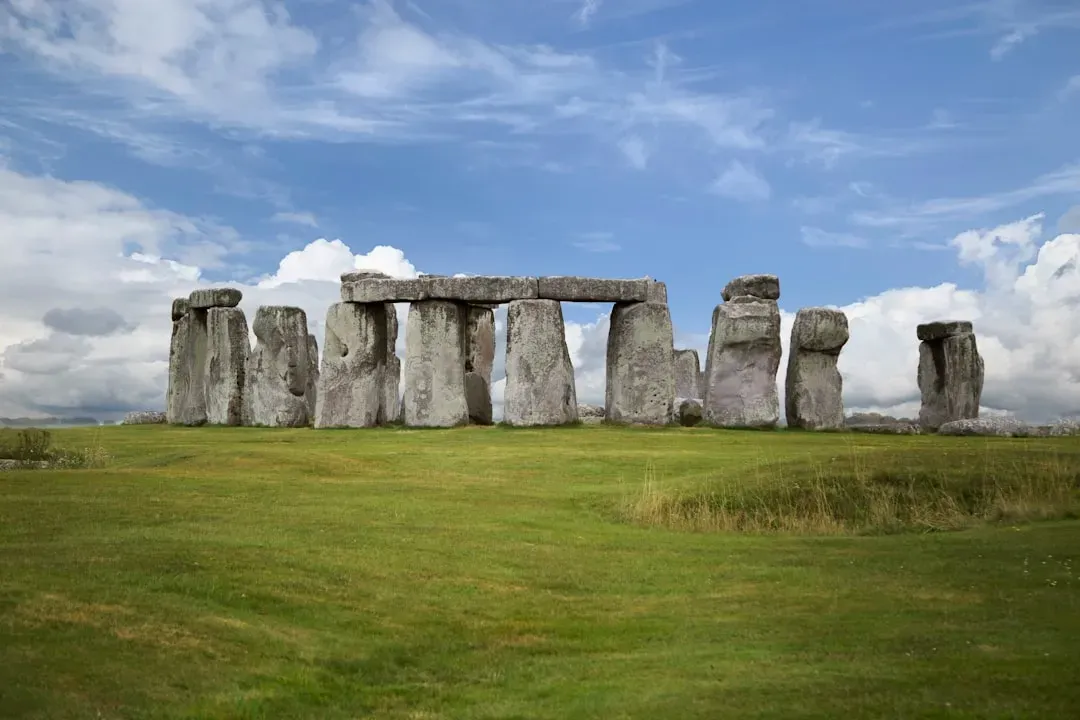
Stonehenge in England is aligned with the sun’s movements during solstices, showcasing a similar reverence for astronomical events. The Mayan pyramid of Kukulkan at Chichen Itza features a staircase that casts a serpent shadow during the equinox, indicating an advanced understanding of astronomy. Two cultures. Two continents. Both encoding the movement of the sun into stone with breathtaking deliberateness. You really have to ask yourself how people without satellites or computers figured this out.
Newgrange and Stonehenge: Europe’s Oldest Riddles
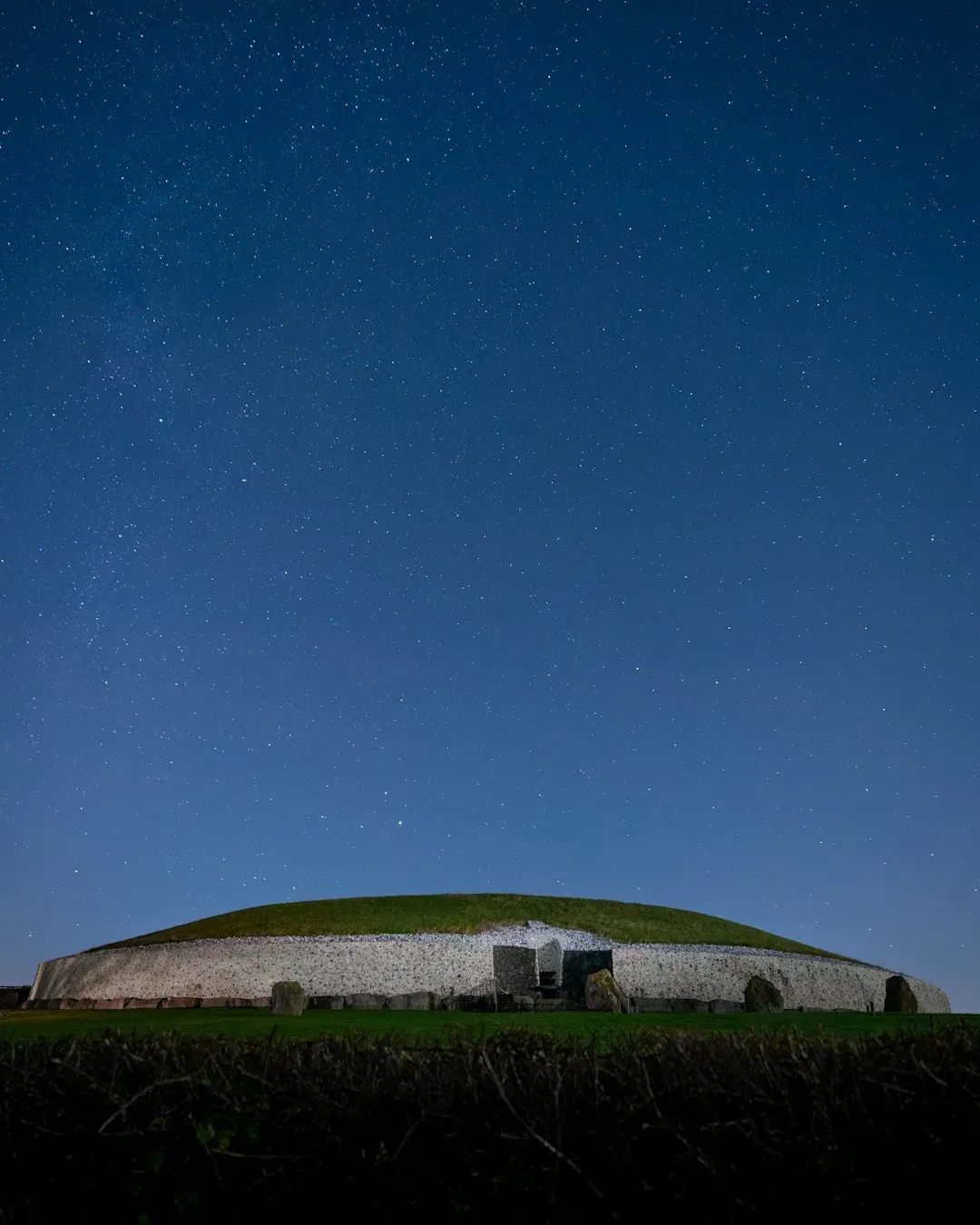
Most people know Stonehenge, but fewer know that Ireland holds its own remarkable prehistoric monument that’s actually older. The Newgrange Tomb, part of the extensive Brú na Bóinne complex in County Meath, is one of the most famous megalithic structures in the world. Carbon-14 dating methods indicate that Newgrange Tomb was constructed between approximately 3300 to 2900 BCE, which is six centuries older than the oldest pyramid in Egypt and seven hundred years older than the stone circle at Stonehenge. Six centuries older than the pyramids. That alone is extraordinary.
Most probably the best-known of ancient constructions aligned with the stars, Stonehenge draws thousands of people every summer to Wiltshire, England to see the massive stones which mark the summer solstice. The stones have been arranged in a circle since around 3000 BC, marking the sun’s effect on the generation of our planet’s seasons. When the sun rises directly above the Heel Stone at the entrance of the monument, it is the beginning of the summer solstice. That’s not coincidence. That’s deliberate engineering at a level that still astonishes researchers in 2026.
Megalithic Structures Without Borders: A Global Phenomenon
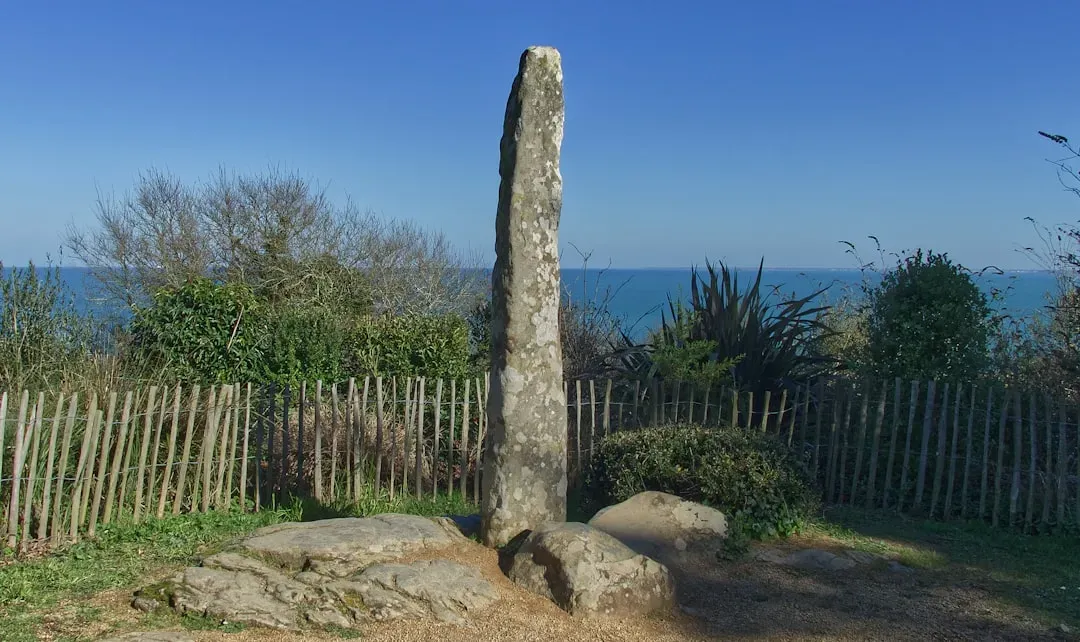
You might assume that megalithic building traditions were limited to a few famous hotspots. You’d be very wrong. More than 35,000 megalithic structures have been identified across Europe, ranging geographically from Sweden in the north to the Mediterranean Sea in the south. That’s a staggering number. Now add Asia, Africa, South America, and the Pacific Islands, and suddenly you’re looking at a worldwide pattern that feels impossible to dismiss.
Megalithic burials are found in Northeast and Southeast Asia, found mainly in the Korean Peninsula, and also in Liaoning, Shandong, and Zhejiang in China, the East Coast of Taiwan, Kyushu and Shikoku in Japan, and South Asia. It’s a tradition that stretched across virtually every corner of the inhabited world. The remarkable similarity in construction techniques found across different continents raises intriguing questions about potential connections between ancient cultures. Potential connections. That’s the polite, scientific way of saying: something here doesn’t add up.
The Precision Problem: How Did They Do It?
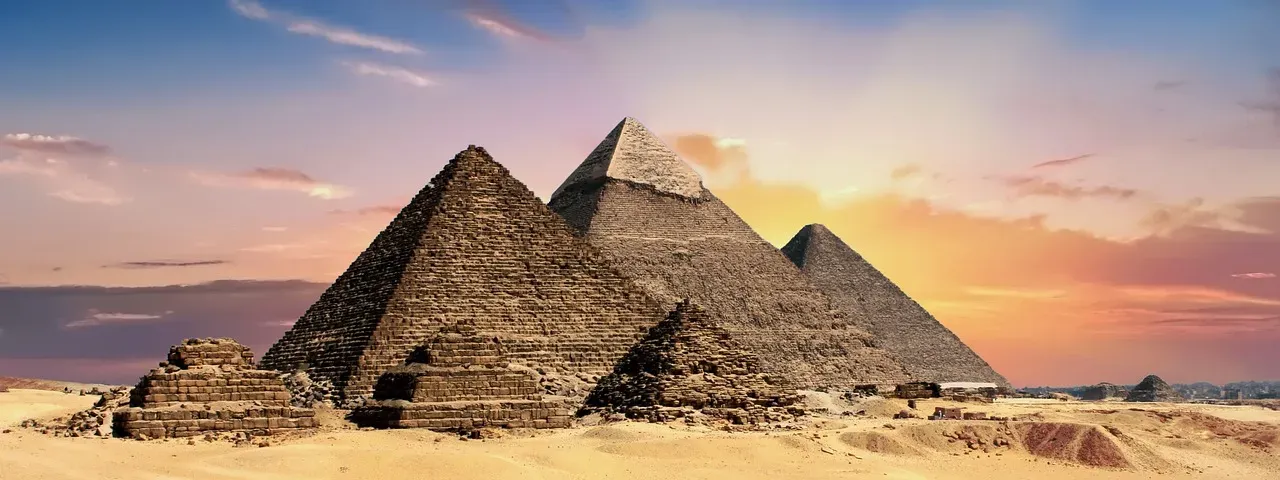
Let’s be real about something that often gets glossed over. The precision involved in many of these ancient structures is not just impressive by ancient standards. It’s impressive by any standard. At sites like the Great Pyramid of Giza, blocks are fitted with tolerances of less than 0.5 millimeters, a level of precision that would be impressive even by today’s standards. Half a millimeter. For stone blocks cut without laser-guided machinery.
The engineering precision demonstrated in these structures has puzzled modern experts. The stones feature complex geometrical cuts, perfectly straight edges, and precise right angles that would be challenging to achieve even with modern power tools. More intriguingly, many of these blocks incorporate sophisticated interlocking systems, similar to three-dimensional jigsaw puzzles, which enhance structural stability and earthquake resistance. A three-dimensional jigsaw puzzle carved from 100-ton blocks of stone thousands of years ago. If a modern architect proposed this method, we’d call it innovative.
Sacred Sites and Electromagnetic Energy: A Shared Secret?
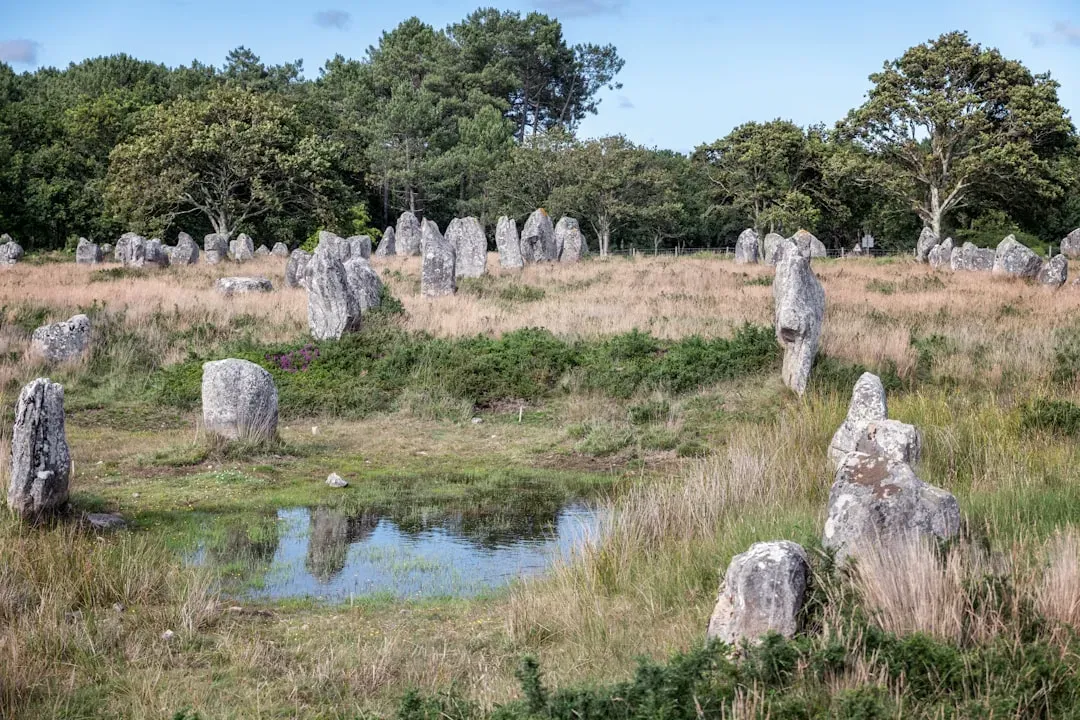
Here’s where things get genuinely fascinating, and perhaps a little strange. There’s a growing body of research suggesting that many ancient sacred sites were deliberately built on locations with unusual geological properties. Being very high in quartz, the specially chosen rocks are piezoelectric, which means they generate electricity when compressed or subjected to vibrations. The megaliths of Carnac, positioned upon thirty-one fractures of the most active earthquake zone in France, are in a constant state of vibration, making the stones electromagnetically active.
Ancient mystery traditions around the world share one peculiar aspect: they maintain that certain places on the face of the Earth possess a higher concentration of power than others. These sites, named “spots of the fawn” by the Hopi, eventually became the foundation for many sacred sites and temple structures we see today. The Hopi of North America and the megalith builders of France sharing the same instinct about sacred geography. That parallel is difficult to explain away as mere coincidence.
A Circular Stone Plaza in Peru That Matches Stonehenge
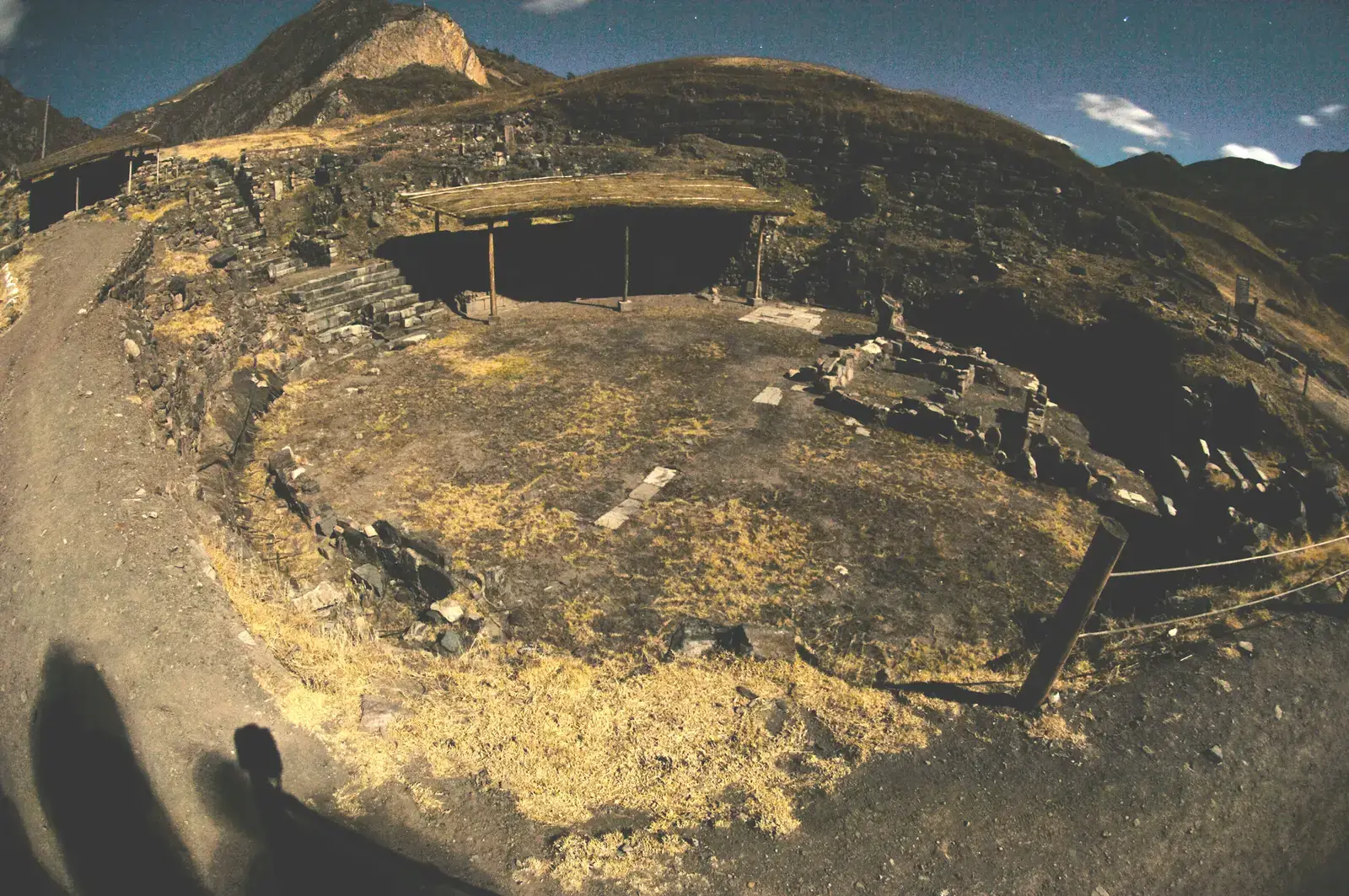
Just when you thought the pattern couldn’t get more striking, researchers discovered something remarkable in the Peruvian Andes. A team of anthropologists from the University of Wyoming and the University of California, Santa Barbara, discovered an ancient megalithic structure in the Peruvian Andes that is older than the Great Pyramids of ancient Egypt. Dated to around 2,750 B.C. using radiocarbon dating techniques, the circular stone plaza was built using massive vertical stones placed in upright positions, a construction method similar to other ancient sites from the ancient world, like Stonehenge.
Measured at around 60 feet in diameter, the ancient megalithic structure consists of two concentric circles of massive stones placed upright, and significantly, the huge stones are held in place without any mortar. A circular stone monument, mortar-free, built at the same time as Stonehenge, on the other side of the world. While no inscriptions describing the intended function of the ancient megalithic structure have been found at the site, the researchers say that it was probably a gathering place and ceremonial location for some of the earliest people living in that part of the Cajamarca Valley. A gathering place for ceremony. Sound familiar?
Conclusion: A Mystery That Keeps Growing
The more you look at the ancient world, the more the similarities refuse to go away. You could argue these parallels are the natural result of humans everywhere working with the same material, stone, and facing the same practical challenges. That’s a reasonable theory. In response, it has been argued that such similarities are “co-evolutionary,” being the natural result of working with stone. Honestly, that explanation works for some cases.
Yet it doesn’t fully account for the precision, the astronomical alignment, the shared reverence for specific geological sites, or the eerily similar construction methods used by people who had no documented contact. The precision and scale of these monuments challenge our assumptions about prehistoric technological capabilities and social organization. They suggest the existence of complex societies with advanced understanding of mathematics, astronomy, and construction methods that predate our earliest historical records. The remarkable similarity in construction techniques found across different continents also raises intriguing questions about potential connections between ancient cultures.
The ancient world is not done surprising us. Every few years, a new discovery reshapes what we thought we knew, and the picture only becomes more complex, more humbling. The discovery and study of unknown ancient civilizations through their monumental stone structures continue to reshape our understanding of human history, and these remarkable achievements demonstrate that our ancestors possessed sophisticated knowledge and capabilities far beyond what was previously believed.
Somewhere out there, a stone block cut with half-millimeter precision is still waiting to be discovered. The real question isn’t just how these structures were built. It’s what they tell us about human beings, across every culture and every century, reaching for the same stars. What do you think ties all of this together? Tell us in the comments.