
There’s something deeply unsettling and fascinating about the idea that ancient Romans feared their own dead. Not in a horror movie way, exactly, but in a very real, very human way that speaks to anxieties we still carry today. A remarkable archaeological find is pulling back the curtain on burial practices that were equal parts spiritual protection and raw, primal fear.
Researchers have uncovered iron nails in three Roman-era burials at a necropolis site, and these weren’t just structural leftovers from coffins. The placement, the number, the deliberate arrangement – all of it points to something far more intentional. If you’ve ever wondered how the Romans really felt about death and what came after it, this discovery might just change the way you think about them entirely. Let’s dive in.
The Discovery That Stopped Archaeologists in Their Tracks
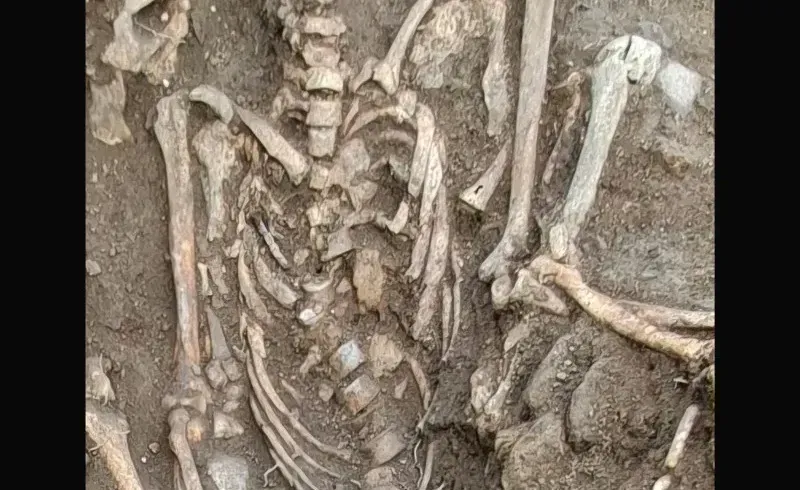
Picture this: a Roman necropolis, roughly 1,800 years old, and nestled within three of its graves are iron nails positioned in ways that go far beyond simple carpentry. Archaeologists working at the site found these nails not merely holding wooden coffins together but deliberately arranged around the bodies themselves. That distinction is everything.
The find was detailed by researchers studying the necropolis, and the unusual nail placement immediately raised questions about purpose and intent. Were these nails meant to hold something in? Or perhaps keep something out? Honestly, both possibilities are on the table, and that ambiguity is what makes this so compelling.
What Made These Nails Different From Ordinary Coffin Hardware
Let’s be real – finding nails in ancient burials isn’t exactly headline news on its own. Roman coffins used iron nails regularly, and archaeologists expect to find them. What sets these particular nails apart is their positioning relative to the skeletal remains inside.
In these three burials, nails were found driven into or placed around the bodies in patterns that don’t align with typical wooden coffin construction. Some were positioned near the feet, others near the head. The deliberate, almost ritual quality of the placement is what’s drawing so much attention from the research community. It’s a small detail that carries enormous implications.
The Roman Fear of the Restless Dead
Here’s the thing about Roman society that often gets glossed over in textbooks – they were genuinely afraid of certain types of dead people. Romans had a concept of the “restless dead,” individuals who died violently, too young, or without proper burial rites, and who were believed to linger between the world of the living and the underworld.
These spirits, sometimes called “lemures” or “larvae,” were considered dangerous and capable of causing harm to the living. The Romans had entire festivals, like the Lemuria in May, dedicated to appeasing and expelling these troubled spirits from households. So when you find nails strategically placed in burials, the cultural backdrop of fear and supernatural concern is absolutely impossible to ignore.
Nailing Down the Dead – A Practice Seen Across Cultures
The use of nails or sharp iron objects in funerary contexts to “bind” the deceased is not unique to Rome. Similar practices have been documented in various ancient cultures across Europe, and archaeologists have a term for this broader category of behavior – it falls under what’s often called “deviant burials” or “magical” burial practices.
The underlying logic, across many ancient societies, was that iron possessed protective or binding properties. It was thought to repel evil, contain harmful forces, or prevent the dead from rising and troubling the living. In these Roman graves, that same logic appears to be at work. I think what’s genuinely striking is how universal human anxiety about death turns out to be, regardless of geography or century.
Protection for the Living, Rest for the Dead
One of the more nuanced interpretations offered by researchers is that these nails may have served a dual purpose. Rather than just restraining a feared corpse, the nails might also have been meant to protect the deceased individual themselves, warding off malevolent forces that might disturb their rest in the afterlife.
This two-directional protection is a fascinating concept. The living feared the dead, yes, but the living also cared deeply about the wellbeing of the dead in the world beyond. Roman funerary culture was rich with offerings, rituals, and grave goods meant to ease the journey of the soul. Nails, in this interpretation, become less about fear and more about love expressed through the tools available at the time. It’s hard not to find that strangely moving.
The Necropolis Site and Its Broader Archaeological Significance
The three burials were part of a larger necropolis, which itself provides a rich context for understanding Roman attitudes toward death and community burial practices. Necropolises were not simply dumping grounds for bodies – they were carefully managed, socially significant spaces where the living regularly returned to tend to the graves of ancestors.
Finding ritualistic nail placements within this broader communal burial site adds another layer to our understanding of how individual families or burial practitioners may have responded to specific deaths. Not every burial at the site appears to have received this treatment, which suggests these three individuals were considered in some way different or requiring special precaution. Whether that difference stemmed from how they died, who they were, or what was feared about them remains an open and genuinely exciting question.
What This Tells Us About Roman Belief and Human Nature
Archaeology has a remarkable way of collapsing the distance between us and people who lived nearly two millennia ago. These three graves, with their carefully placed iron nails, remind us that Romans were not the toga-wearing marble statues of popular imagination. They were people who lay awake at night worrying about things they couldn’t see or explain.
The nail burials are a window into a belief system that blended the practical with the supernatural, the loving with the fearful. It’s hard to say for sure what exact thoughts ran through the mind of whoever placed those nails, but the gesture itself speaks volumes. Roughly two thousand years have passed, and we are still asking the same questions they were trying to answer with iron and ritual.
The discovery invites us to sit with a beautifully uncomfortable thought: our ancestors’ fears were not so different from our own. We’ve simply traded iron nails for different kinds of protection against things we cannot fully understand. What would you do if you truly feared what came after death? Something tells me the answer might be more ancient than you’d expect.