
There are questions in science that nag at researchers for decades. Not because the answers are just out of reach, but because the entire framework needed to find them keeps shifting. The origin of complex life on Earth is exactly that kind of question. It’s messy, ancient, and genuinely humbling.
For billions of years, life on this planet was remarkably simple. Then, seemingly out of nowhere, something extraordinary happened. A new kind of cell emerged, one with a nucleus, internal compartments, and a level of complexity that made everything before it look like a rough draft. Scientists call this moment eukaryogenesis, and honestly, figuring out how it happened has been one of the greatest puzzles in all of biology. Let’s dive in.
The Billion-Year Gap That Stumped Everyone
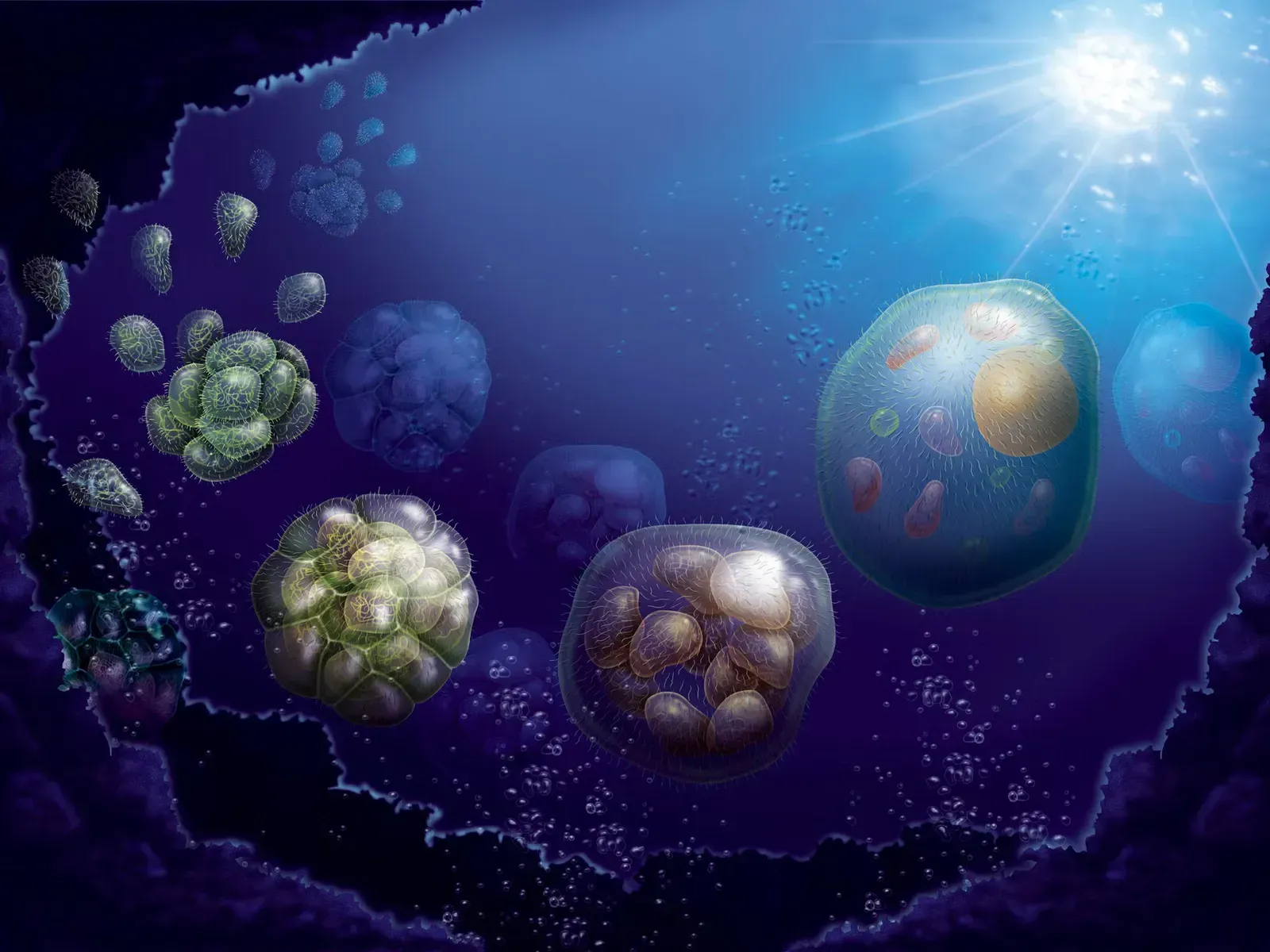
Here’s the thing about eukaryogenesis: it didn’t just produce more complicated microbes. It laid the biological foundation for every plant, animal, fungus, and human being that has ever lived on Earth. That’s not a small deal. That is, quite literally, the origin story of complex life as we know it.
For a long time, scientists understood that this leap happened somewhere between one and two billion years ago. What they couldn’t agree on was how. The gap between simple prokaryotic cells, like bacteria, and the far more sophisticated eukaryotic cell felt almost too vast to explain through gradual evolution alone.
Think of it like this: imagine trying to explain how a bicycle spontaneously became a commercial jet. The jump feels absurd without a clear mechanical pathway. That’s the feeling researchers have been grappling with for generations.
Two Very Different Cell Types at the Heart of the Mystery
To really appreciate the puzzle, you need to understand what separates prokaryotes from eukaryotes. Prokaryotic cells, like bacteria and archaea, are compact and efficient. No nucleus, no internal membrane structures. Everything happens in one shared space inside the cell.
Eukaryotic cells, on the other hand, are architecturally stunning by comparison. They have a nucleus that houses DNA, mitochondria that generate energy, and an elaborate internal membrane system. They’re bigger, more complex, and in many ways more fragile.
The sheer structural difference between the two is part of what made the origin question so stubborn. You can’t just add a nucleus to a bacterium and call it evolution. Something far more dramatic had to occur, and scientists have been fighting over the details for decades.
The Archaea Connection That Changed Everything
One of the biggest breakthroughs in this field came from a growing body of research pointing to a specific group of archaea called Asgard archaea as the likely ancestors of eukaryotes. These microbes, discovered relatively recently in deep-sea sediments, share a surprising number of molecular features with eukaryotic cells.
I think this discovery genuinely shifted the conversation. It wasn’t just another theoretical model. It was physical, sequenceable evidence that something archaea-like sat at the base of our evolutionary family tree. That matters enormously.
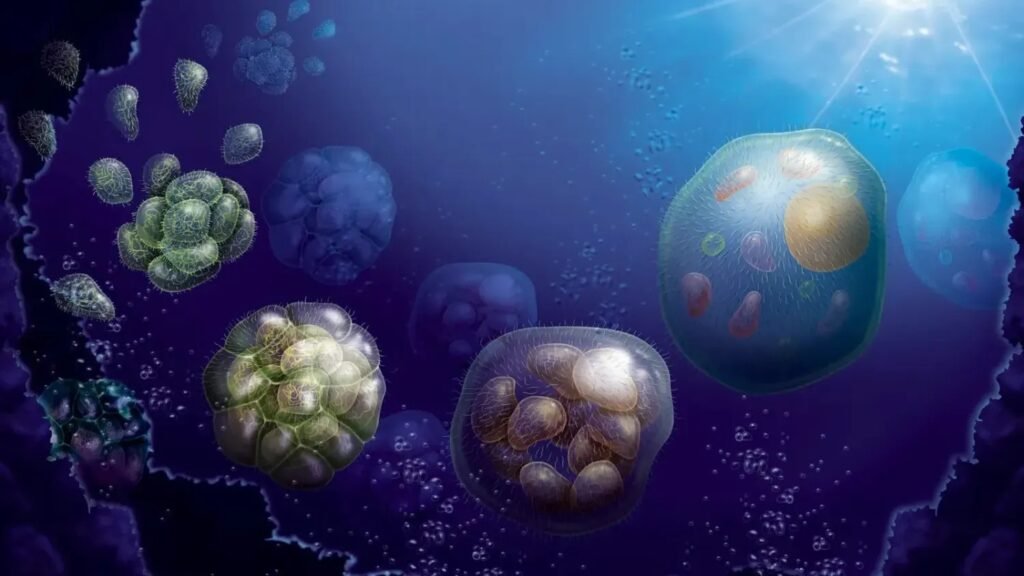
The leading hypothesis now involves a fateful merger, an archaeal host cell somehow incorporating a bacterial partner that eventually became the mitochondrion. Over unimaginable spans of time, this partnership deepened, and the resulting hybrid cell became something entirely new. It’s a story of collaboration at the microscopic scale that feels almost too cinematic to be real.
Why the Nucleus Is the Real Puzzle Piece
Of all the features that define a eukaryotic cell, the nucleus is the most structurally puzzling. Prokaryotes manage DNA just fine without one. So why did a membrane-bound compartment dedicated entirely to housing genetic material emerge? Researchers have proposed many explanations, but none has achieved full consensus.
One compelling idea is that the nucleus evolved as a kind of protective barrier. As the ancient host cell became more complex, safeguarding its DNA from the chaotic activity happening elsewhere in the cell became a survival advantage. The nucleus, in this view, is essentially a security system.
Others argue the nuclear envelope may have evolved from internal membrane systems that were already beginning to form in Asgard archaea ancestors. The truth is, it’s hard to say for sure, because structures don’t fossilize the way bones do. Researchers are essentially reconstructing a crime scene with no physical evidence, only molecular clues.
Mitochondria: The Bacterial Houseguest That Never Left
The endosymbiotic theory, the idea that mitochondria were once free-living bacteria that got absorbed into a host cell, is now broadly accepted as scientific consensus. What’s less appreciated is just how radical that idea once seemed. Lynn Margulis proposed it in the 1960s and was laughed out of academic circles for years before the evidence became undeniable.
Mitochondria still carry their own DNA, a remnant of their bacterial past. They replicate somewhat independently. They even have a double membrane, the outer one thought to be a gift from the host cell, the inner one an original bacterial feature.
Let’s be real: this is one of the most remarkable stories in all of biology. A bacterium got absorbed, didn’t get destroyed, and instead became the power generator for all complex life. Without that ancient accident, there are no animals, no humans, no anything beyond microbial mats. It’s almost too strange to fully internalize.
New Research Is Finally Filling the Gaps
Recent advances in genomics and single-cell sequencing have given scientists tools that simply didn’t exist even fifteen years ago. Researchers are now able to analyze the genomes of organisms that can’t even be cultured in a lab, including many Asgard archaea species, and extract clues about the ancient merger that created eukaryotic life.
Some newer models suggest the transition wasn’t a single dramatic event but a long, messy, incremental process spanning millions of years. Think of it less like a lightning bolt and more like a slow reshaping of clay. Various proto-eukaryotic features may have evolved gradually and in parallel before converging into the cell type we recognize today.
This is genuinely exciting territory. Researchers are piecing together a timeline that was previously thought to be forever lost to deep time. The idea that we might actually reconstruct the cellular history of all complex life, even partially, would have seemed absurd to biologists just a few decades ago.
What This Means for Understanding Life Beyond Earth
Here’s where things get philosophically interesting. If eukaryogenesis required a very specific and perhaps statistically rare sequence of events, that has profound implications for astrobiology, the search for life on other planets. Simple microbial life might be relatively common in the universe. Complex, nucleated life might be extraordinarily rare.
The Fermi Paradox, the question of why we haven’t detected intelligent life elsewhere despite the universe’s size, could have part of its answer right here. If the jump from prokaryote to eukaryote is improbable enough, complex life capable of building civilizations might be a one-time cosmic fluke.
Honestly, I find that both humbling and strangely comforting. It reframes the emergence of complex life not as an inevitability but as a miracle of circumstance. Understanding how eukaryogenesis happened on Earth might ultimately tell us just as much about the universe as it does about ourselves.
The Puzzle Is Not Fully Solved Yet
Despite decades of progress, researchers are still far from a complete picture of how eukaryogenesis unfolded. Key questions remain unanswered. How exactly did the internal membrane system develop? What drove the original symbiotic relationship between the host cell and the proto-mitochondrion? How did gene transfer between the two partners become so seamlessly integrated?
What makes this field so dynamic right now is the speed of discovery. New Asgard archaea lineages are still being identified. Comparative genomics is revealing unexpected connections between ancient microbes. Every year seems to bring a new piece of the puzzle into sharper focus, while simultaneously revealing how much more there is still to understand.
The story of complex life’s origin is not finished being told. Scientists are closing in, but the full answer remains just beyond reach, tantalizingly close and stubbornly elusive. Perhaps that’s exactly why it continues to captivate some of the sharpest minds in biology.
Conclusion: The Most Important Event You’ve Never Heard Of
Eukaryogenesis doesn’t get the cultural attention it deserves. People know about the Big Bang, about dinosaurs, about human evolution. Far fewer people have ever heard the word that describes the single event responsible for making all of that possible in the first place.
The emergence of the eukaryotic cell was not just an evolutionary milestone. It was the biological prerequisite for every complex organism that has ever drawn breath, grown roots, or looked up at the stars. Understanding how it happened isn’t just academic curiosity. It’s understanding the deepest chapter of our own origin story.
Science is getting closer to cracking this open, and when it finally does, the implications will ripple outward in ways that are hard to fully predict. What does it change for you, knowing that the entire history of complex life may hinge on a single ancient cellular partnership? Tell us what you think in the comments.