
There’s something almost poetic about the idea that the universe itself might be keeping records. Every civilization that has ever burned bright enough, built enough, consumed enough energy, may have left behind a kind of cosmic fingerprint. The question is whether we’ve been looking in the right places, or using the right tools.
Scientists are now suggesting that ancient starlight, light that has been traveling through space for billions of years, could potentially reveal whether other civilizations once existed in distant galaxies. Not just where life might be today, but where it might have flourished and faded long ago. It’s a staggering thought. Let’s dive in.
The Core Idea: Reading the Universe Like a History Book
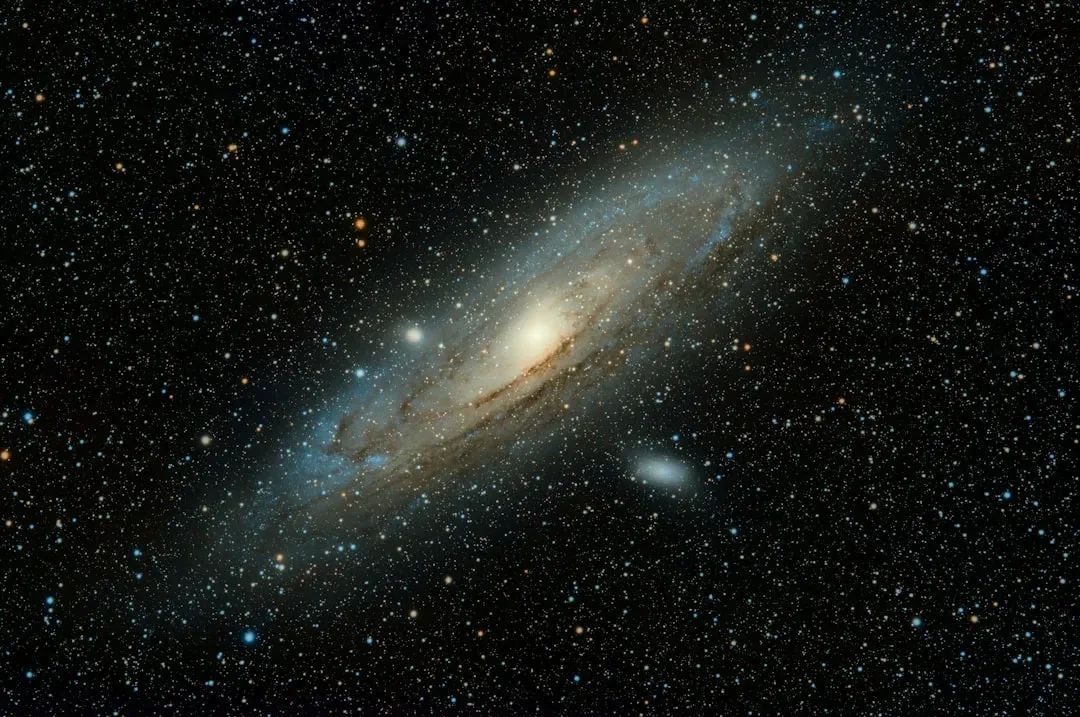
Here’s the thing most people don’t realize about light. It doesn’t just illuminate things. It carries information, and lots of it. When scientists observe galaxies billions of light-years away, they’re essentially looking into the deep past, seeing what those galaxies looked like when the light first left them.
Researchers are now proposing that this ancient light could encode evidence of technological civilizations, what scientists call “technosignatures.” These are measurable changes in a star system or galaxy caused by advanced intelligent activity rather than natural processes. Think of it like finding a thumbprint on a crime scene, except the crime scene is the entire observable universe.
The proposal is ambitious, honestly borderline audacious. Still, the underlying logic is surprisingly solid when you break it down.
What Exactly Is a Technosignature?
A technosignature is any detectable sign that technology exists or once existed somewhere in space. This isn’t limited to radio signals or laser pulses. It could include unusual heat signatures, abnormal light absorption patterns, or chemical imbalances in a planet’s atmosphere that nature alone couldn’t produce.
One of the most discussed examples involves something called a Dyson sphere, a hypothetical megastructure that an advanced civilization might build around its star to harvest massive amounts of energy. Such a structure would dramatically alter the way that star emits infrared radiation. Natural stars don’t do that. A civilization desperate for energy might, though.
The beauty of searching for technosignatures in ancient light is that you don’t need the civilization to still be alive. The signal, if it exists, would already be baked into the cosmic record. That changes everything about how we approach the search for intelligent life.
Why Ancient Galaxies Are the New Frontier
Most of our current search efforts, including those from programs like SETI, have focused on nearby stars and planets within our own galactic neighborhood. Honest assessment? That’s a tiny slice of what’s out there. By studying ancient light from distant galaxies, researchers can survey enormous numbers of star systems simultaneously, covering cosmic timescales that dwarf anything we’ve considered before.
There’s a staggering number of galaxies in the observable universe, something in the range of hundreds of billions. Even if only a minuscule fraction ever hosted a technologically advanced civilization, that’s still potentially millions of civilizations across cosmic history. Searching ancient galactic light could, in theory, capture signatures from civilizations that rose and fell billions of years before Earth even formed.
It’s a little like sifting through an ocean of old mail, hoping one letter tells you something extraordinary. The odds per letter are low. The sheer volume, however, makes it worth doing.
The Challenge of Separating Signal from Noise
Let’s be real for a moment. Space is messy. Stars explode, galaxies collide, dust clouds scatter light in confusing ways. Finding a technosignature in all of that is genuinely difficult, maybe brutally so. Natural astrophysical processes can mimic what artificial activity might look like, which makes false positives a serious concern.
Scientists acknowledge that distinguishing a true technosignature from natural phenomena requires extraordinary levels of data quality and analytical sophistication. Machine learning is increasingly being brought in to help sort through the sheer volume of astronomical data being collected. Think of it like training a dog to sniff out a specific scent in a room full of overwhelming smells.
The work requires patience, careful methodology, and a willingness to rule out mundane explanations before declaring anything remarkable. That’s science doing what it should. Cautious, rigorous, and relentlessly curious.
What This Means for the Fermi Paradox
The Fermi Paradox has haunted scientists and philosophers alike for decades. If intelligent life is so likely to exist in the universe, why haven’t we detected it? The silence has felt deafening. One explanation, sometimes called the “Great Filter,” suggests civilizations tend to destroy themselves before becoming truly spacefaring.
Using ancient light to look for past civilizations could actually help us probe this idea directly. If technosignatures are absent from thousands of ancient galaxies despite favorable conditions, that would be telling. It would suggest that the filter is real, and possibly that we’re either before it or just approaching it.
On the other hand, if even one confirmed technosignature turns up embedded in the light from an ancient galaxy, the implications would be nothing short of civilization-defining. I think that would honestly be the most important discovery in human history. Full stop.
The Technology That Makes This Possible Now
For most of human history, this kind of search was completely impossible. The telescopes didn’t exist. The computing power didn’t exist. The analytical frameworks barely existed either. What’s changed in the last decade is remarkable.
Instruments like the James Webb Space Telescope are delivering levels of spectral detail that previous generations of astronomers could only dream about. Combined with increasingly powerful AI systems capable of processing enormous datasets, researchers now have tools sophisticated enough to begin this kind of large-scale technosignature survey seriously. It’s not science fiction anymore. It’s infrastructure catching up to imagination.
There’s also a growing global willingness to fund and prioritize this research. Agencies and private organizations are increasingly viewing the search for extraterrestrial intelligence as a legitimate scientific endeavor rather than a fringe curiosity.
What Comes Next in This Research
Scientists involved in this type of research are proposing systematic surveys of ancient galactic light using existing and upcoming telescope arrays. The goal is to build a kind of catalog, a library of anomalies that could then be cross-checked against known natural phenomena. Anything that doesn’t fit gets scrutinized further.
It’s a slow burn, and results are likely years if not decades away. Still, the framework being developed right now could guide astronomical research for generations. Even a null result, finding nothing, would carry enormous scientific value by narrowing down the possibilities of where and how civilizations could exist.
Conclusion
There’s something quietly profound about using ancient light to ask whether we were ever alone. The universe has been running its experiment for nearly fourteen billion years, and we’ve only been aware enough to ask the question for a cosmically tiny sliver of that time. The search for technosignatures in deep galactic history is both humbling and thrilling in equal measure.
Honestly, I think this approach is one of the most creative and underappreciated shifts in how humanity searches for its cosmic companions. It moves us from waiting for a phone call to actively reading the universe’s old mail. Whether we find something or not, we’ll learn something extraordinary about our place in the cosmos. What do you think, are we brave enough to handle the answer if we actually find it? Drop your thoughts in the comments.