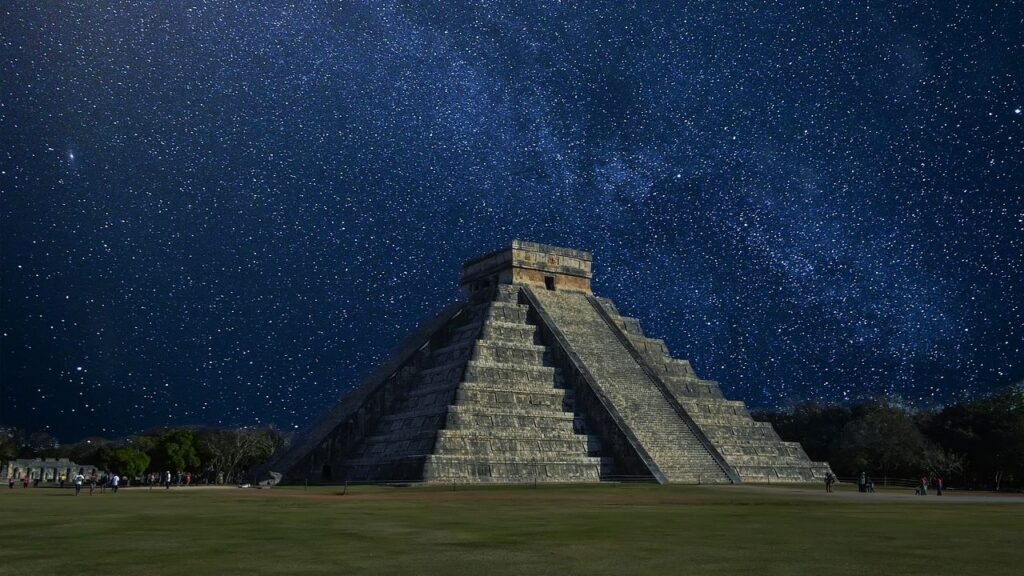

There is something deeply humbling about standing under an open night sky and realizing that people who lived thousands of years ago looked up at those same stars and actually understood them, deeply, systematically, and with a precision that still makes modern scientists stop and shake their heads. No telescopes, no satellites, no computers. Just raw human curiosity and relentless observation, generation after generation.
What they built, measured, and recorded would challenge even well-educated people today. You might assume ancient astronomy was primitive at best, mostly mythology wrapped in stargazing ritual. You’d be wrong. Let’s dive into what these civilizations actually knew, and why it still astonishes researchers in 2026.
The Babylonians: The World’s First True Astronomers
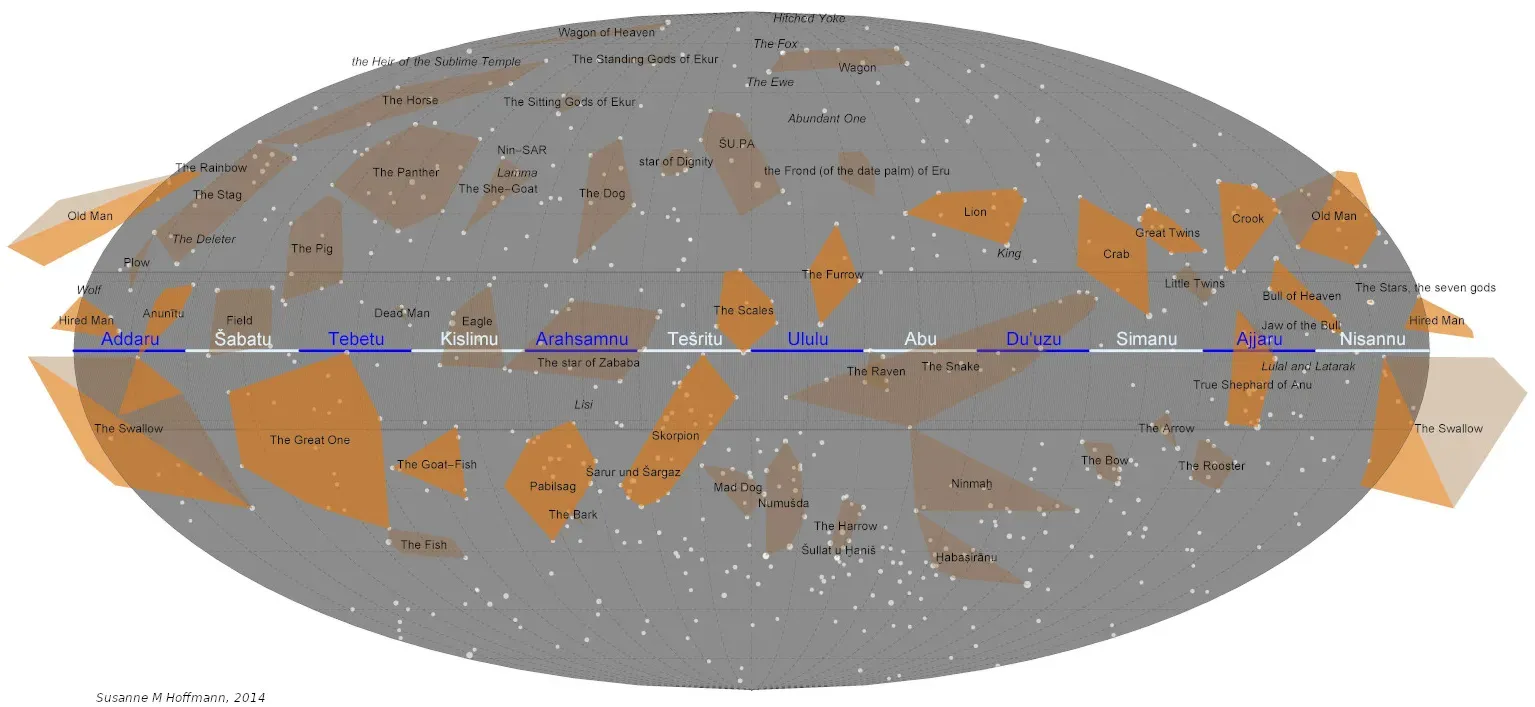
If you trace the roots of modern astronomy far enough back, you arrive in ancient Mesopotamia, in the land between the Tigris and Euphrates rivers. This region, in what is now modern-day Iraq and parts of Iran, Syria, and Turkey, witnessed the development of remarkably advanced astronomical systems. It is, honestly, one of the most underappreciated chapters in the story of human knowledge.
Considered the world’s first-known astronomers, the ancient Babylonians were avid stargazers who, some six thousand years ago, erected watch towers to scan the night sky, mapped the stars and visible planets, and recorded their observations on clay tablets. Their meticulously compiled data provided the foundation to create the first calendars, used to organize the growing and harvesting of crops and the timing of religious ceremonies. Think of it like the ancient version of a GPS system, agricultural, religious, and social life all synchronized to celestial movements.
Although their vision of the universe was based on mythological beliefs, the Babylonians’ astronomical observations and predictions were astoundingly accurate. They were the first-known people to predict eclipses, and they could track and predict the relative movements of the sun, the moon, Mercury, and Venus, even successfully calculating the length of a year. That is not mythology. That is science, centuries ahead of its time.
Egyptian Pyramids and the Stars: Precision That Defies Easy Explanation
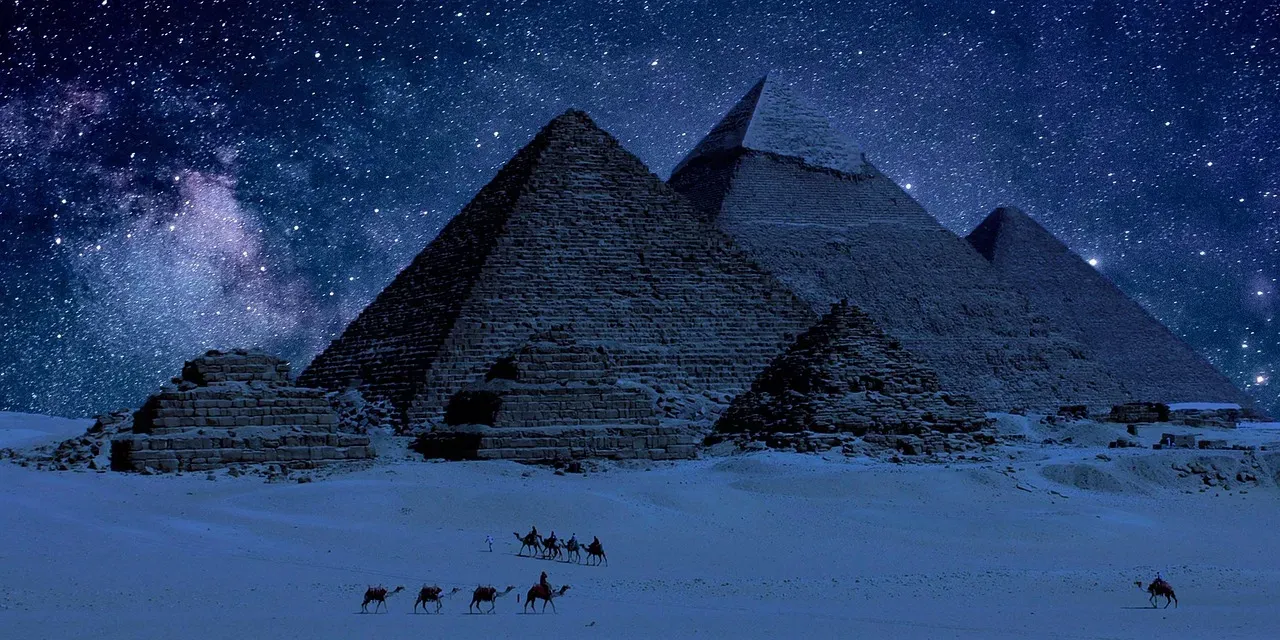
The pyramids of Egypt, particularly those of the fourth dynasty kings Cheops, Khephren, and Mycerinus, raised on the plateau of Giza some four thousand five hundred years ago, are oriented with extraordinary accuracy with the four cardinal points. That level of precision would challenge modern engineers equipped with laser levels and GPS equipment. The fact that ancient builders achieved it using the naked eye is, let’s be real, jaw-dropping.
One of the many mysteries of the pyramids is how and why each was built with such precise north-south alignment. The square base of the Great Pyramid of Cheops, for instance, is just 3.4 arcminutes off of true north, a precision of about 1 millimeter per meter. Researchers have proposed that the Egyptians aligned these structures to north by using the simultaneous transit of two circumpolar stars, and that modeling the precession of these stars yields a date for the start of construction of the Great Pyramid accurate to within roughly five years. That is not guesswork. That is genuine astronomical mastery.
The ancient Egyptians believed that their pharaohs became stars in the afterlife, ascending to join the gods in the sky. Aligning the pyramids with specific celestial objects symbolized this divine journey, making the pyramids not merely tombs but gateways to the heavens. Science and spirituality were never separate for them, which, if you think about it, makes the knowledge even more extraordinary.
The Antikythera Mechanism: A Computer from the Ancient World
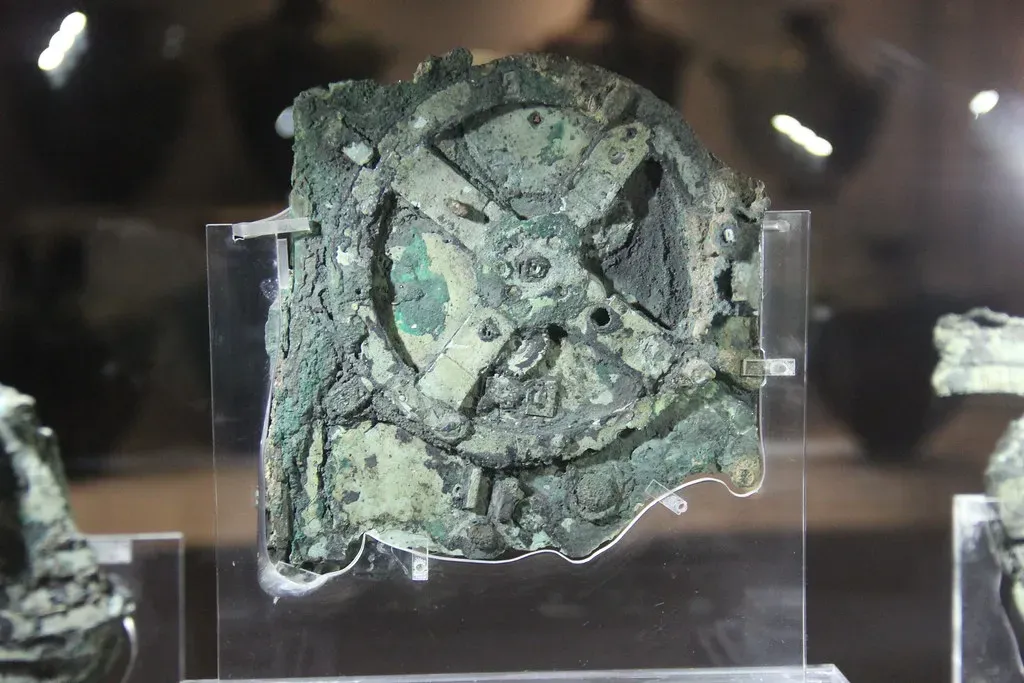
Here’s the thing about the Antikythera Mechanism. When you first hear about it, it sounds like a science fiction plot. This ancient Greek mechanical device, used to calculate and display information about astronomical phenomena, was recovered in 1901 from the wreck of a trading ship that sank in the first half of the first century BCE near the island of Antikythera, and its manufacture is currently dated to approximately 100 BCE. It sat corroded on the seafloor for two thousand years before anyone truly understood what it was.
The Antikythera mechanism had the first known set of scientific dials or scales, and its importance was recognized when radiographic images showed that the remaining fragments contained 30 gear wheels. No other geared mechanism of such complexity is known from the ancient world, or indeed until medieval cathedral clocks were built a millennium later. Let that sink in. A thousand years passed before humanity built anything close to it again.
It is the oldest known example of an analog computer, capable of predicting astronomical positions and eclipses decades in advance, and it could even track the four-year cycle of athletic games similar to the ancient Olympics. You could hold it in your hands, give it a small crank, and watch the cosmos move. The discovery of the Antikythera Mechanism revealed that the ancient Greeks had achieved a level of technological sophistication previously undreamed of.
Ancient Chinese Astronomy: Cataloguing the Sky With Extraordinary Detail
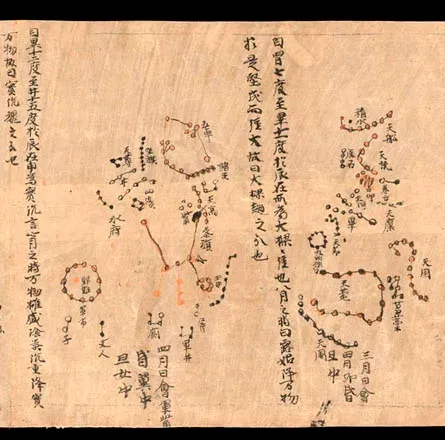
The Chinese have one of the most detailed documentations of astronomical observations in all of human history, which is saying something remarkable when you consider how many civilizations were gazing skyward. Their approach was systematic, almost obsessive, in the best possible way. Observation was not casual; it was a state institution.
Gan De was a well-known astronomer in ancient China who was the first to observe Ganymede, which he characterized at the time as a little reddish star orbiting Jupiter, centuries before Galileo pointed his telescope at the same planet. The Dunhuang Star Atlas was discovered by an archaeologist in a Buddhist cave in Dunhuang, China, and is said to be the earliest known preserved star map in the world, dating back before AD 700. These were not casual sketches. They were precise records built from generations of nightly observation.
The Maya: Tracking Venus With Breathtaking Accuracy
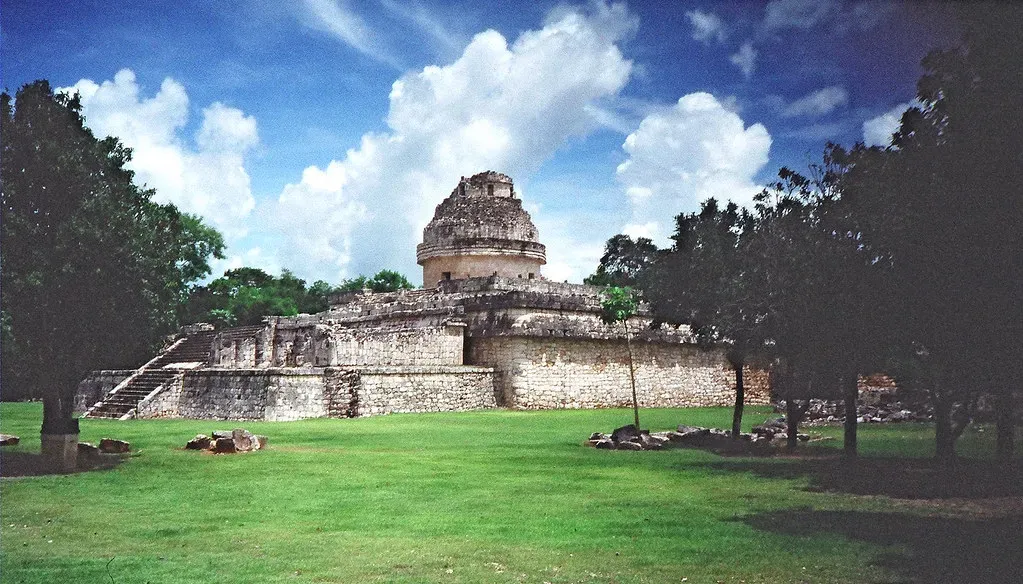
The Maya developed one of the most sophisticated astronomical systems of antiquity, without the aid of telescopes or optical instruments. Their meticulous observation of the sky over centuries allowed them to create calendars of remarkable precision and predict celestial events with impressive accuracy. If you ever thought Mayan knowledge was limited to doomsday prophecies, you have severely underestimated one of history’s most mathematically gifted civilizations.
The Maya had identified Venus as a planet and not a star, and they had determined its synodic cycle with astonishing precision: 583.92 days, while the modern value is 583.93 days. That is an error of just one hundredth of a day, achieved without any form of modern technology. The Maya associated the planet Venus with war, and battles would even be arranged to align with the movements of Venus, with captured enemies sometimes sacrificed according to Venus’ position in the sky. Astronomy was power, and they wielded it with extraordinary sophistication.
Researchers discovered that it takes 20 cycles of 819 days, which is about 45 years, to align with the synodic periods of all visible planets. Within 20 cycles, each planet goes through a whole number of synodic periods: Mercury every cycle, Venus every 5 cycles, Saturn every 6 cycles, Jupiter every 19 cycles, and Mars every 20 cycles. Honestly, this kind of multi-planet mathematical synchronization makes your head spin to even think about doing it by hand.
Ancient India and Aryabhata: Centuries Ahead of European Science

It’s hard to say for sure why ancient Indian astronomy doesn’t get nearly as much popular attention as its Greek or Egyptian counterparts, but the gap in recognition is genuinely unfair. The most important contribution of ancient India to astronomy was made by Aryabhata, who is credited with steering Indian astronomy away from the mystical and sacred and towards the scientific. He was, in many ways, a revolutionary figure in the truest sense of the word.
Aryabhata deduced that the Earth rotates on its axis and that the Moon and other planets glow through reflected sunlight. These were not fringe ideas whispered in private. They were published conclusions based on mathematical reasoning, centuries before European thinkers arrived at the same conclusions. Astronomy was used by early cultures for timekeeping, navigation, spiritual and religious practices, and agricultural planning, and ancient India contributed richly to every single one of those categories.
Greek Astronomy: Measuring Earth Without Leaving It

If we talk about astronomy, the Greeks definitely first come to mind, and they are popularly known as the fathers of ancient astronomy, formulating theories and mathematical equations in an attempt to explain the universe. Whether that reputation is fully deserved or slightly over-credited is a fun debate, but there is no question they produced some staggering intellectual achievements.
Eratosthenes measured the size of the Earth with surprising precision, calculating its circumference using little more than the angle of sunlight in two Egyptian cities. Eratosthenes first worked out the circumference of the Earth in 240 BCE, and Hipparchus was the first person to record the wobble of the Earth as it spins on its axis, a phenomenon we call precession, while also being the first to measure the distance to the Moon. These are not minor footnotes. They are foundational achievements that shaped everything that came after.
In the fifth century BCE, Empedocles and Anaxagoras offered arguments for the spherical nature of the Earth by identifying Earth’s shadow on the moon during a lunar eclipse. This is a critical point, as there is a widespread misconception that ancient peoples thought the Earth was flat, but this was simply not the case. They were watching shadows on the moon and drawing accurate geometric conclusions long before the modern era.
Stonehenge and Ancient Stone Observatories: Monuments Locked to the Cosmos
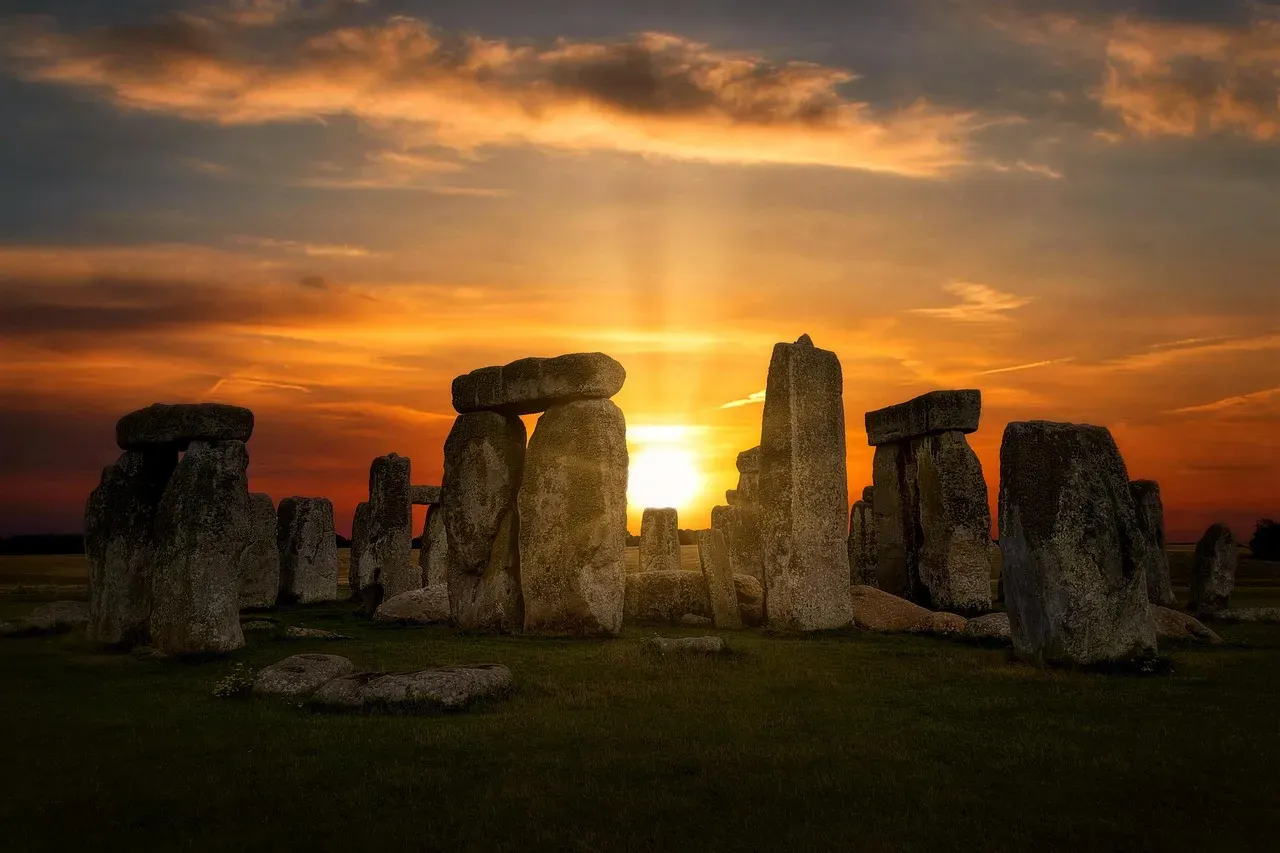
Many historic structures were designed by ancient civilizations to align with astronomical events like solstices and equinoxes, offering insights into how early civilizations understood, tracked, and utilized celestial cycles. Stonehenge is obviously the most famous example, but it represents something much larger: a global human instinct to build meaning, literally in stone, aligned with the sky.
Carbon dating and other studies show that Stonehenge was built during three periods ranging from about 2800 to 1500 BCE, with some of the stones aligned with the directions of the sun and moon during their risings and settings at critical times of the year, such as the summer and winter solstices. In Britain, before the widespread use of writing, ancient people used stones to keep track of the motions of the sun and moon, with some of the great stone circles dating as far back as 2800 BCE. These were not accidental arrangements. They were engineered calendars carved into the landscape itself.
A surge of interest in archaeoastronomy is reemerging among scholars and stargazers alike, and advances in satellite imaging, drone technology, and computational modeling allow researchers to reconstruct celestial alignments of ancient sites with precision, revealing insights into how early civilizations observed the cosmos. This renewed focus has led to discoveries of previously unnoticed alignments in ancient structures. In other words, we are still discovering just how much they knew.
Conclusion: They Were Watching the Sky Long Before We Gave Them Credit
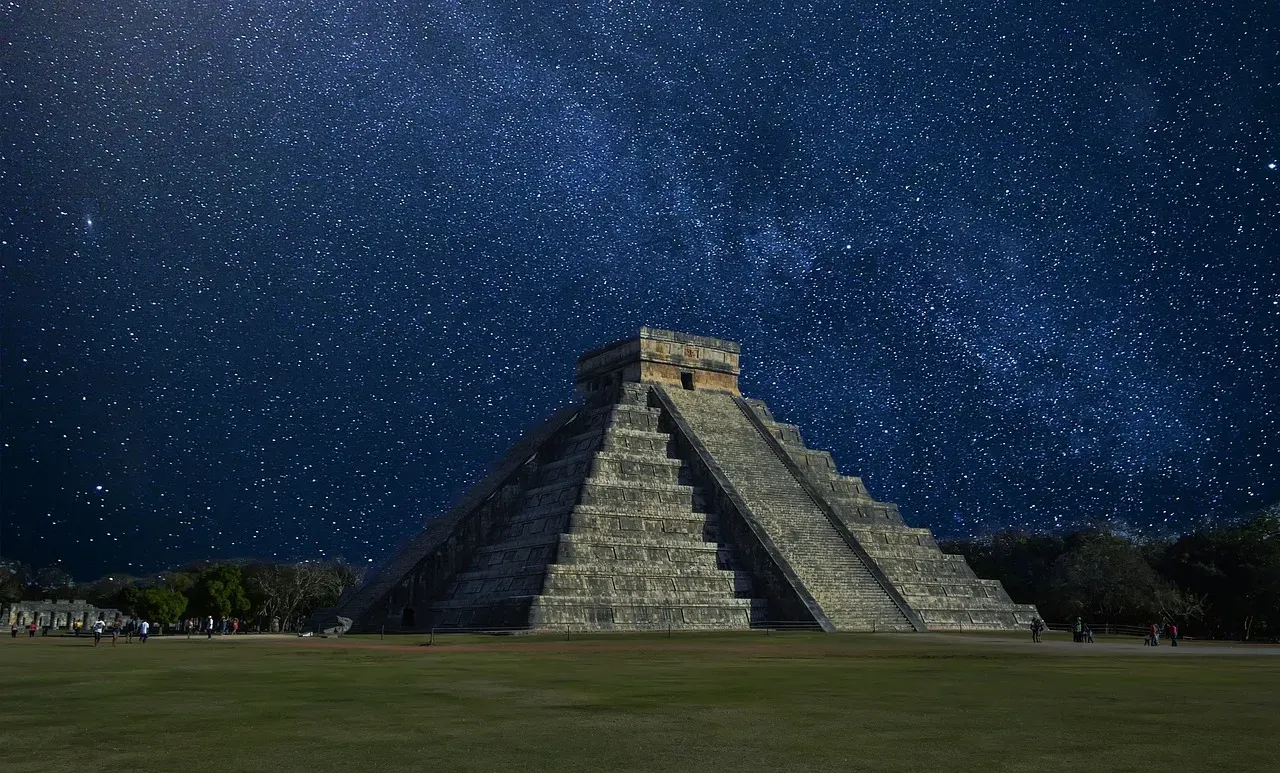
What you walk away with from all of this is a simple but powerful realization: ancient people were not waiting for us to invent science. They were already doing it, rigorously, passionately, and across every continent on Earth. How did ancient civilizations accomplish these feats of knowledge without the benefit of telescopes, satellites, or computer technology? The old-fashioned way: through careful observation, generational record-keeping, pattern recognition, and early mathematics.
The legacy of archaeoastronomy reminds us that the stars have been more than just distant lights: they were guides, calendars, deities, and storytellers. The careful alignment of ancient structures with celestial events speaks to a universal human desire to find meaning and order in the cosmos. That desire never went away. It just evolved into the science we practice today, built entirely on the foundations they laid.
The next time you look up at a clear night sky, consider this: someone stood in that same darkness thousands of years ago, without a single piece of modern technology, and still managed to calculate the circumference of the Earth, predict eclipses decades in advance, and align massive stone structures with extraordinary precision. The question worth sitting with is not whether they were capable. It is whether we give them enough credit for being exactly that. What do you think? Drop your thoughts in the comments below.