

Have you ever stopped to wonder if everything we celebrate as brand new might actually be something we’re just remembering? Think about it for a second. You’re standing in front of a museum display of ancient tablets or scrolls, and you realize these people figured out things thousands of years before computers existed. That’s not just impressive; it’s downright unsettling in the best way. The ancient world wasn’t just building monuments and telling stories around campfires. These civilizations were cracking codes about the universe that modern science is only now catching up to.
The lines between past and present blur when you consider how much knowledge vanished into history’s shadows. Libraries burned, empires collapsed, and with them went insights that took centuries to uncover again. Yet here we are in 2026, excavating both the ground beneath our feet and the digital archives above our heads, finding eerily familiar patterns in the wisdom of people who lived millennia ago.
The Mathematical Genius Hidden in Ancient Tablets
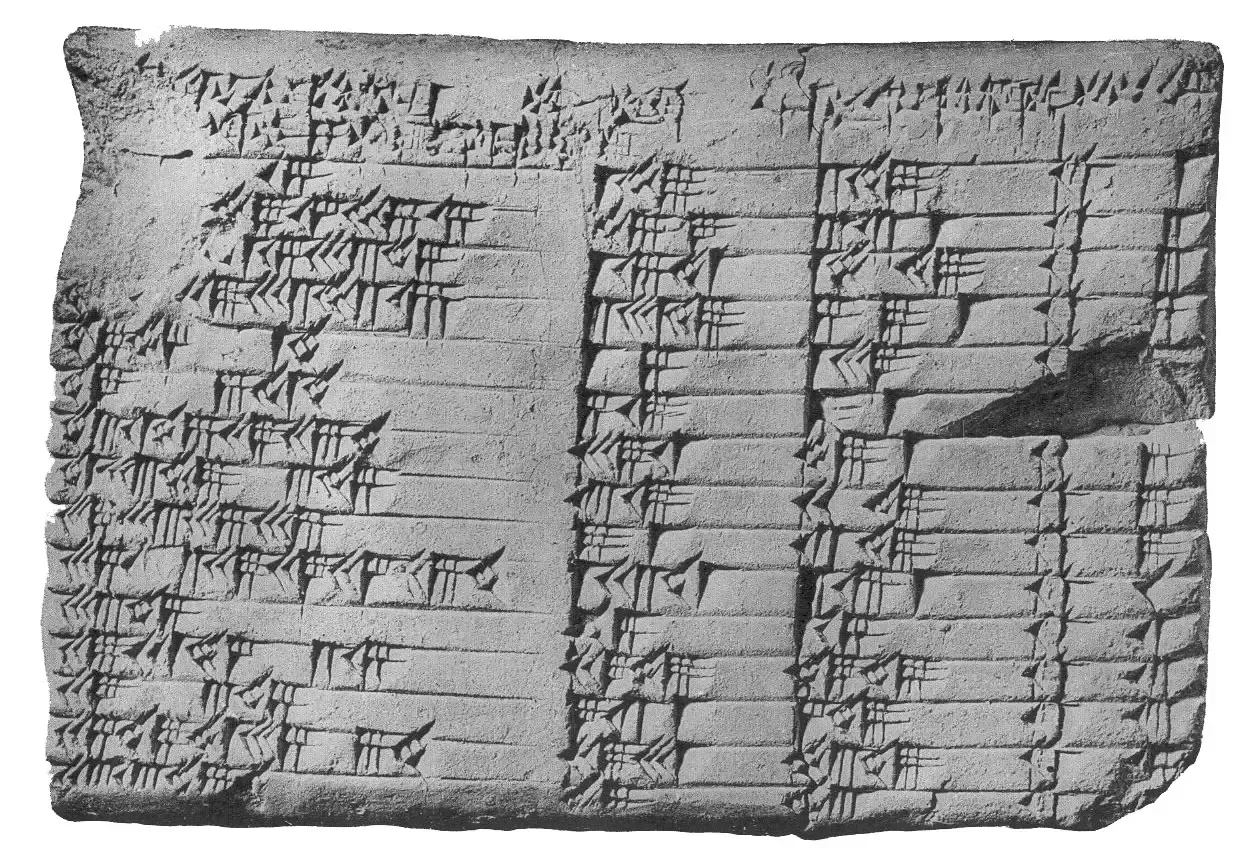
You probably learned about the Pythagorean theorem in school, right? Well, the Babylonians knew the essence of this mathematical principle roughly a thousand years before Pythagoras was even born. Imagine that. The ancient Babylonians used a sexagesimal numeral system, which is why you still count sixty seconds in a minute and three hundred sixty degrees in a circle today.
This wasn’t accidental or mystical. The Sumerians built the earliest civilization in Mesopotamia and developed complex metrology systems from around 3000 BC, dealing with multiplication tables and geometrical exercises. Their calculations for the square root of two were accurate to the equivalent of seven decimal places. Let’s be real, most of us wouldn’t attempt that without a calculator. The precision they achieved using clay tablets and reed styluses makes you question what else we’ve forgotten.
Astronomical Observations That Rival Modern Technology
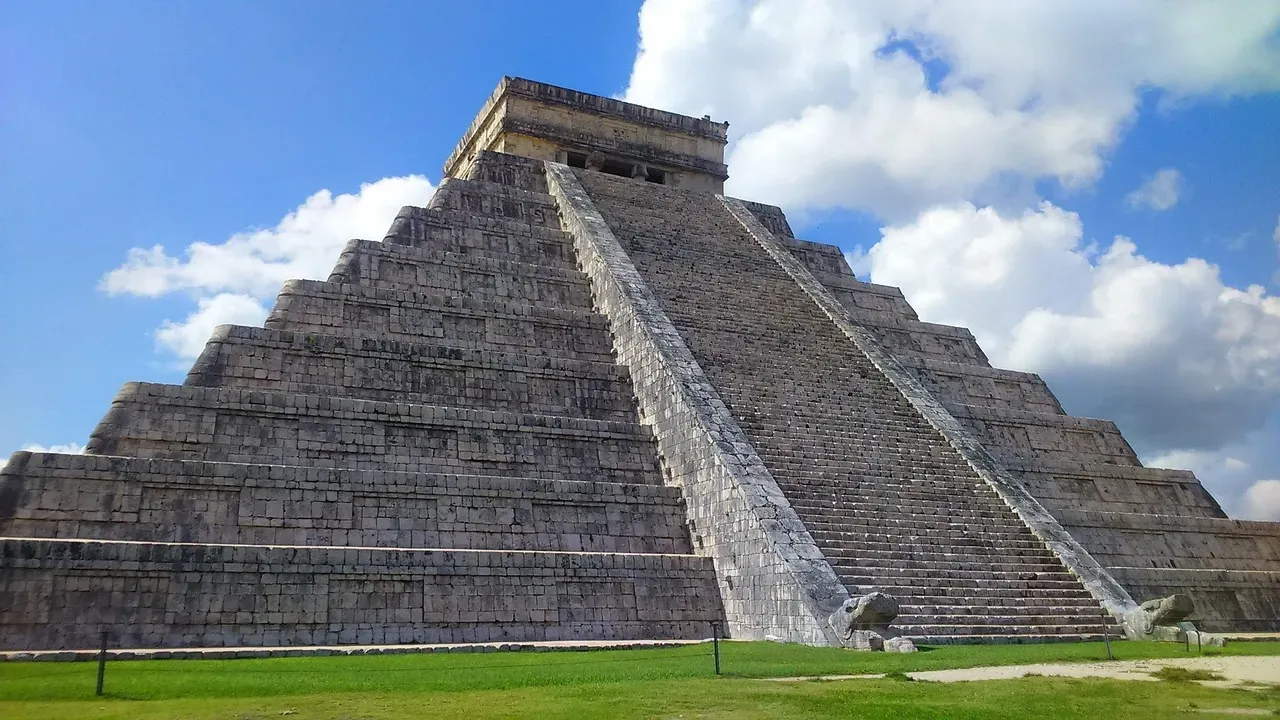
The Maya built entire cities and temples aligned to the movements of the sun, moon, and planets, observing and predicting astronomical events with remarkable accuracy. This goes far beyond simple stargazing. The Dresden Codex, one of only three Mayan codices to survive, includes charts based on hundreds of years of observations and predictions of eclipses and the cycles of Venus.
The ancient Maya had what might have been the most advanced mathematical system of any ancient civilization in the Americas, and quite possibly in Europe and Asia, being among the first to use the concept of zero. That’s huge. Zero seems simple, yet it revolutionized mathematics entirely. Meanwhile, the Babylonian sexagesimal system influenced modern timekeeping and angular measurements while Greek geometry served as the basis for mathematical education for centuries. These weren’t random achievements but systematic approaches to understanding cosmic patterns.
Engineering Marvels That Modern Science Struggles to Explain

Here’s the thing about ancient engineering: sometimes it seems too good to be true. Roman concrete, mixed with volcanic ash, seawater, and lime, has lasted millennia and possesses self-healing properties that modern concrete lacks. You read that correctly. Their concrete improves over time while ours crumbles. Scientists are actively studying this ancient formula to improve contemporary construction materials.
Ancient American civilizations, lacking wheeled transport or suitable beasts of burden, still produced advanced engineering including underground aqueducts, quake-proof masonry, artificial lakes, and complex terracing. How did they accomplish this without the mechanical advantages we take for granted? Roman engineers built a cascaded set of sixteen waterwheels in Spanish copper mines that lifted water approximately eighty feet from the mine’s sump. This level of hydraulic engineering demonstrates understanding of principles that took centuries to redevelop.
Medical Knowledge That Predates the Hippocratic Oath

The Nineveh Medical Encyclopaedia represents the world’s first standardized, structured, and systematized handbook on therapeutic medicine, created roughly 2,600 years ago. This predates Hippocrates, who’s typically called the father of medicine. The Roman physician Dioscorides wrote an encyclopedia describing over six hundred herbal cures that was used extensively for the following fifteen hundred years.
In ancient Egypt, vitiligo was treated using Ammi majus fruit, and scientists have recently extracted 8-methoxypsoralen from this same fruit to treat vitiligo and psoriasis today. Think about that. Ancient Egyptians used honey as medicine and had over eight hundred remedies documented in the Ebers Papyrus, including topical ointments, oral medications, and inhalation treatments. Many of those plant-based treatments align perfectly with what contemporary pharmacology has validated through rigorous testing.
Lost Libraries and the Knowledge They Contained
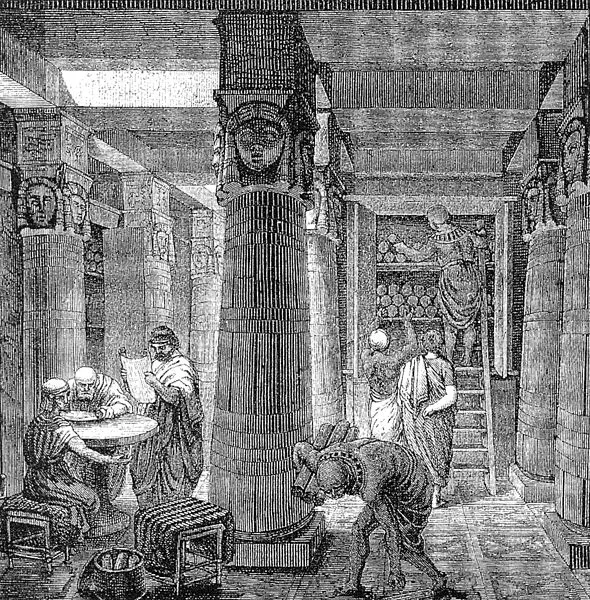
The burning of the Library of Alexandria during Julius Caesar’s Egyptian campaign resulted in the irretrievable loss of seven hundred thousand priceless scrolls. Imagine what was on those scrolls. Mathematical proofs, astronomical charts, medical texts, engineering diagrams – all turned to ash. The destruction of libraries often accompanies societal breakdowns, and countless manuscripts from ancient Egypt, Greece, and Rome were irreversibly destroyed.
The Alexandrian Library was also a university and research institute with faculties of medicine, mathematics, astronomy, and literature, plus a chemical laboratory, astronomical observatory, and botanical garden where fourteen thousand pupils studied. This wasn’t just a book repository; it was the ancient world’s equivalent of MIT, Oxford, and the Smithsonian combined. The loss set human knowledge back centuries, forcing future generations to rediscover what had already been understood.
Principles of Natural Law Embedded in Ancient Philosophy

While people in medieval times generally believed the earth was flat and rectangular, the Greek philosopher Pythagoras theorized in the sixth century BC that the earth must be a sphere, and Eratosthenes in the third century BC computed its circumference. This knowledge existed, then disappeared, then had to be rediscovered. Ancient Brahmin books estimated the Day of Brahma, the life span of our universe, to be roughly 4,320 million years, which isn’t far off from modern calculations.
How did they arrive at these figures without telescopes, computers, or particle accelerators? According to Benjamin Farrington, while people had been weighing for thousands of years before Archimedes, what he did was sort out the theoretical implications of practical knowledge and present it as a logically coherent system. Ancient thinkers weren’t just guessing; they were observing, testing, and systematizing their findings into frameworks that modern science would recognize as legitimate methodology.
Technologies Reinvented From Ancient Blueprints
Since its invention, the most common application of Archimedes’ Screw has been in irrigation, efficiently raising water from sources into ditches for agriculture. That’s still true today. Modern applications include using the screw design for hydroelectric power, where water pours through the screw generating kinetic energy in low-flowing rivers.
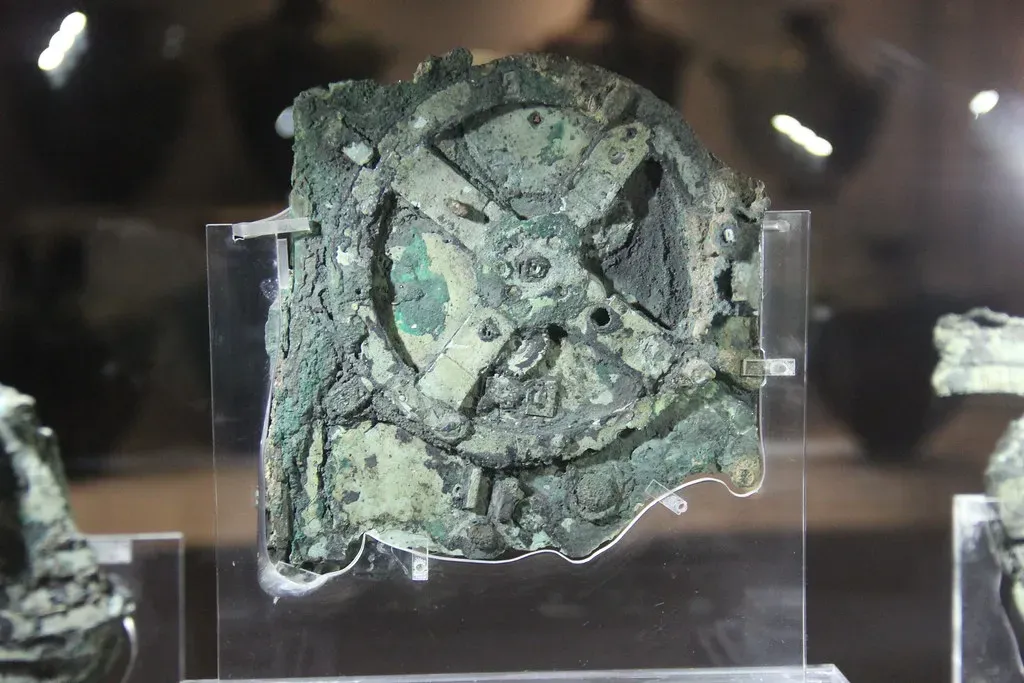
The Greeks in the second century BC invented an analog computer known as the Antikythera mechanism. This bronze device could predict astronomical positions and eclipses decades in advance. When it was discovered in a shipwreck, researchers were stunned by its complexity. The Baghdad Battery, consisting of a clay jar containing a copper cylinder and iron rod, could generate a small electrical charge when filled with acidic liquid, suggesting the Persians understood electrochemical processes long before modern electricity. Whether you call that proto-science or advanced technology, it challenges our assumptions about ancient capabilities.
The Cyclical Nature of Discovery and Rediscovery

Modern science emerged from medieval darkness during the Renaissance by studying classical sources, through which humanity rediscovered old truths known by the Babylonians, Ionians, Egyptians, Hindus, and Greeks for many centuries. This pattern repeats throughout history. Rediscovery of knowledge is surprisingly common throughout science history, particularly when communication was inefficient and information spread was difficult, making it easy for scientific knowledge to be discovered, lost, and rediscovered elsewhere.
In the Dark Ages, mankind experienced a fall in scientific progress, and only during the last three hundred years has science begun to pick up again. You have to wonder what we’re still missing. Today, scientists, historians, and engineers work to rediscover lost knowledge using technology like ground-penetrating radar, DNA analysis, and AI-driven reconstructions to uncover ancient recipes, fabrics, and construction methods. The irony is beautiful: we’re using cutting-edge technology to resurrect ancient wisdom that might make our modern methods obsolete.
Why Ancient Wisdom Matters More Than Ever
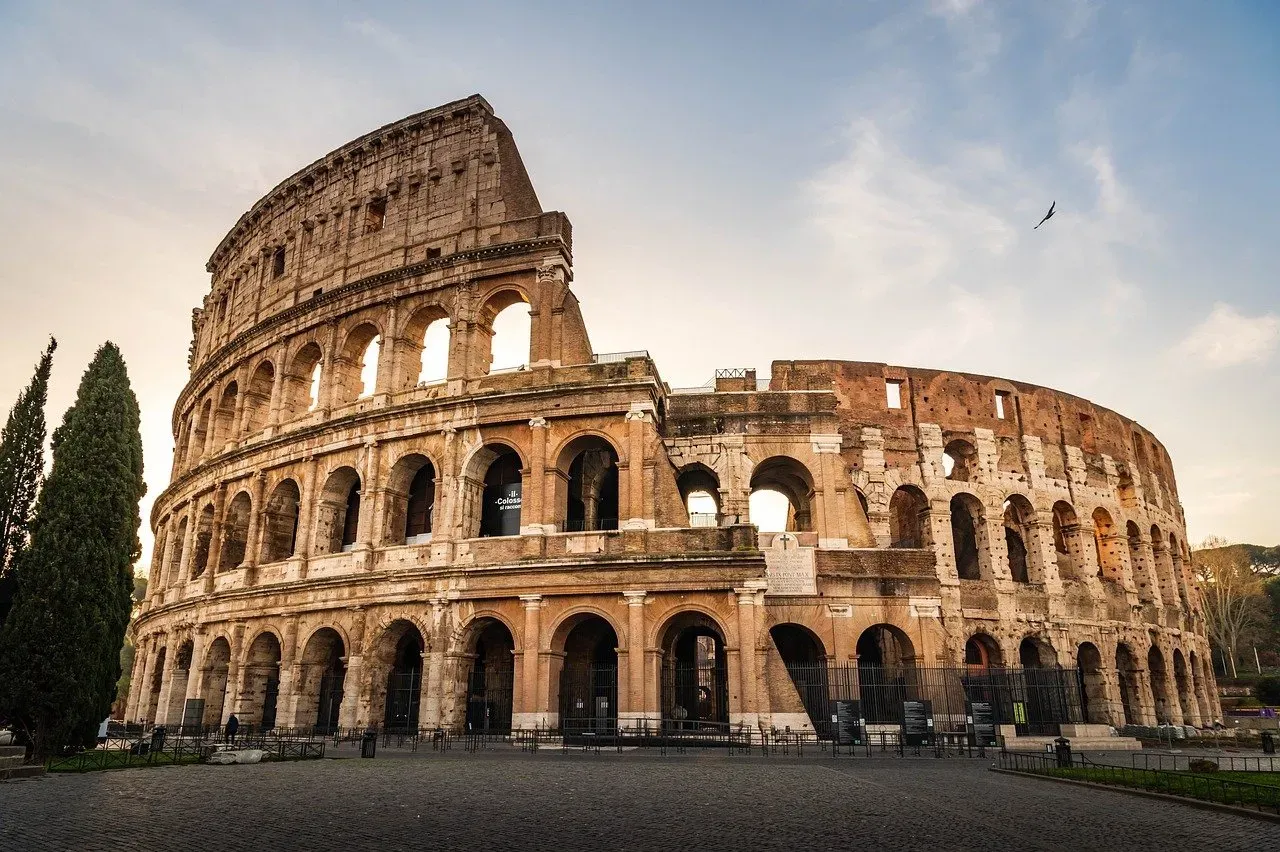
The principles behind ancient engineering are surprisingly modern, just underused, allowing us to re-embrace passive systems like ventilation through structure and orientation while designing with restraint. Sustainability wasn’t a buzzword for ancient builders; it was necessity. They worked with nature rather than against it. Four thousand years ago, private toilets with central stone drain systems and ceramic pipes were common in Knossos, Crete, and the Palace of Minos had air-conditioned chambers and excellent bathrooms as large as Buckingham Palace.
Many principles developed by Sumerian, Akkadian, and Babylonian societies formed the foundation for later scientific achievements in the Greco-Roman world, the Islamic Golden Age, and the European Renaissance. This knowledge didn’t vanish; it transformed, migrated, and resurfaced in different cultures and eras. The lesson? Human ingenuity operates on wavelengths that transcend individual civilizations. What one culture discovers, another will eventually rediscover, often without realizing the original source.
Standing at the intersection of ancient wisdom and modern innovation, you start to see the bigger picture. Maybe progress isn’t always linear. Perhaps it’s cyclical, with peaks of understanding followed by valleys of forgetting. The ancient civilizations weren’t primitive trial-and-error societies stumbling through darkness. They were sophisticated observers of natural law, mathematicians, engineers, astronomers, and physicians who documented their findings for future generations. That documentation, when it survived fire, flood, conquest, and time, reveals universal principles that remain constant regardless of the technology used to apply them. The keys to understanding our universe might not be hidden in some undiscovered equation but preserved in texts written on clay, papyrus, and stone thousands of years before you were born.
What discoveries do you think we’re on the verge of rediscovering? Tell us in the comments.