
There’s something quietly unsettling happening deep inside the Congo Basin, far from most people’s radar. The dark, tea-colored rivers and lakes that wind through one of Earth’s most remote ecosystems are releasing carbon that has been locked away for thousands of years. Not decades. Thousands of years.
This isn’t a distant, abstract climate story. It’s a real, measurable shift in how ancient ecosystems are behaving under modern pressures. The science behind it is fascinating, a little frightening, and honestly, more important than most headlines give it credit for. Let’s dive in.
What Are Blackwater Systems and Why Do They Matter
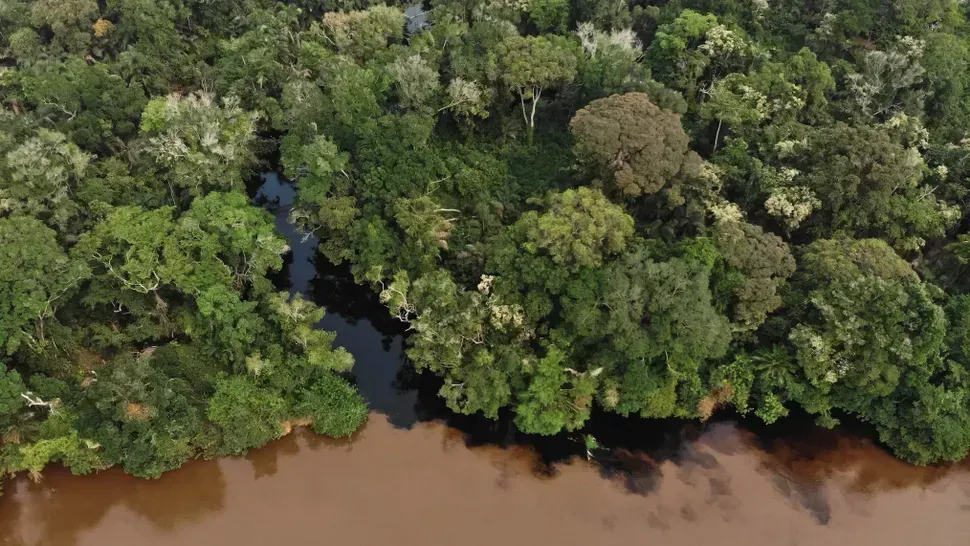
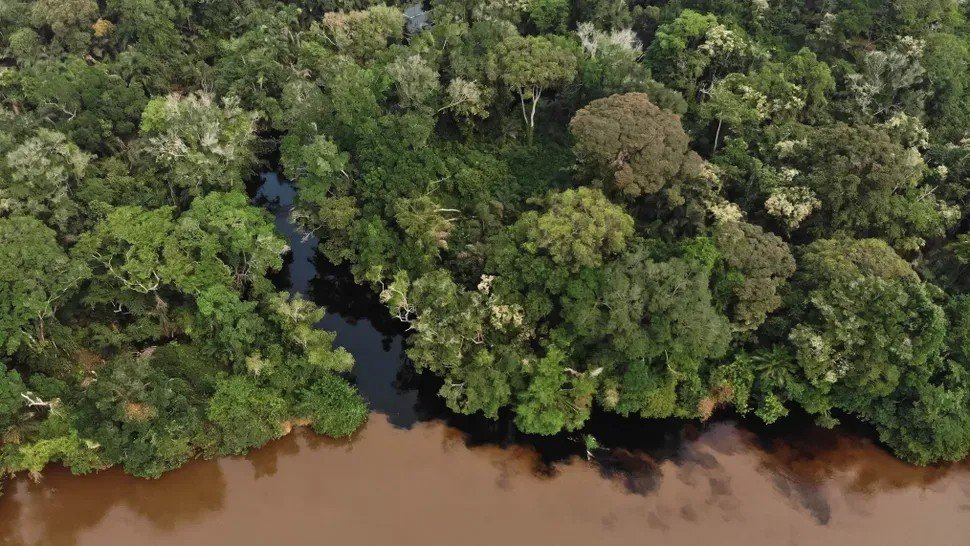
If you’ve never heard of blackwater rivers, picture the Amazon’s famous Rio Negro, that eerily dark, almost coffee-colored water that looks like it belongs in a fantasy novel. The Congo Basin has its own version of these systems, and they’re ecologically extraordinary. The dark color comes from dissolved organic matter, mainly tannins and humic acids leaching out of decaying plant material in surrounding peat swamps and forest soils.
These systems aren’t just visually striking. They act as massive carbon stores, holding ancient organic material that has been accumulating for millennia. For a long time, scientists assumed these waters were relatively stable in terms of their carbon behavior. That assumption is now being seriously challenged.
The Discovery That Changed the Conversation
Researchers studying the Congo Basin’s blackwater lakes and rivers have detected something that stopped them in their tracks. The carbon being emitted from the surface of these waters isn’t fresh, recently produced organic matter. It’s ancient. Some of it is thousands of years old, meaning it was captured during entirely different climate eras, long before modern human civilization as we know it.
Here’s the thing: when ancient carbon gets released into the atmosphere, it represents a net addition of greenhouse gas that the climate system hasn’t had to deal with for an extraordinarily long time. Think of it like cracking open a sealed vault. Once that carbon is out, it starts doing what carbon does, contributing to warming. The scale of the Congo Basin makes this especially significant.
Why the Congo Basin Is a Critical Climate Player
The Congo Basin is the second largest tropical rainforest on the planet and home to what scientists estimate to be the world’s largest tropical peatland. That peatland alone is thought to store the equivalent of roughly three years of global fossil fuel emissions. Let that sink in for a moment.
These peat swamps have been quietly locking carbon away for thousands of years. The blackwater systems running through and around them act as conduits between terrestrial carbon stores and the atmosphere. When those conduits start releasing ancient material, scientists essentially have a signal that the deep carbon reservoir beneath them may be destabilizing. That’s not a small problem.
What’s Actually Driving the Release
It’s hard to say for sure what single factor is most responsible, but the evidence points to a combination of climate-driven changes and land use pressures. Rising temperatures accelerate the decomposition of organic matter in soils and peat, pushing more dissolved carbon into waterways. Changes in rainfall patterns affect how water moves through the landscape, altering the chemistry of these blackwater systems in ways that promote carbon release.
Deforestation and land conversion in and around the Congo Basin also play a role. When trees are removed, the delicate hydrological balance that keeps peatlands wet and stable gets disrupted. Drier peat oxidizes, releasing carbon. That carbon eventually finds its way into rivers and lakes, and then into the atmosphere. It’s a chain reaction, and once it starts, reversing it is genuinely difficult.
The Age of the Carbon Is What Makes This Unusual
Most carbon emissions scientists track come from relatively recent sources, burned fossil fuels, recently decayed vegetation, agricultural activity. The striking element of what’s happening in the Congo Basin is the age signature of the carbon being emitted. Radiocarbon dating methods allow researchers to estimate when organic carbon was originally captured, and what they’re finding suggests material that has been stored for potentially thousands of years is now entering the active carbon cycle.
This is sometimes called “pre-aged” or “old” carbon, and its release represents a kind of ecological memory being erased. I think that’s worth sitting with. We’re not just seeing a contemporary carbon flux. We’re watching history, literally ancient organic history, being undone. That distinction matters enormously for climate modeling and for understanding what future scenarios could look like if similar processes accelerate elsewhere.
Implications for Global Climate Models
Most existing climate models don’t fully account for ancient carbon releases from tropical freshwater systems. That’s a significant gap. If the Congo Basin’s blackwater systems are already emitting at measurable rates, models that ignore this process could be systematically underestimating how much carbon the atmosphere is receiving. That means projections about future warming timelines could be off.
Tropical freshwater systems have long been recognized as carbon emitters, but the focus has historically been on respiration of recent organic matter. The discovery of ancient carbon fluxes adds a new layer of complexity. Scientists will need to rethink how they categorize and account for these sources, which is a big, time-consuming, resource-intensive undertaking. The science is catching up, but it has ground to cover.
What This Means Going Forward
The Congo Basin remains one of the least studied major ecosystems on Earth, which is equal parts humbling and concerning. Vast stretches of its peatlands and blackwater river systems have never been directly sampled or assessed. What researchers are finding in the areas they have studied suggests the situation could be much broader than current data reflects.
Protecting the Congo Basin’s forests and peatlands isn’t just a biodiversity issue or a local conservation priority. It’s a global climate necessity. Every hectare of intact peatland that stays wet and undisturbed is a vault staying sealed. Every hectare lost is potentially more ancient carbon entering a climate system that’s already under pressure. The stakes, honestly, couldn’t be much higher.
Conclusion: A Warning Written in Ancient Water
The Congo Basin’s blackwater rivers are telling us something important, if we’re willing to listen. Ancient carbon, locked away for thousands of years, is now surfacing into an atmosphere that’s already struggling with too much of it. This isn’t speculation or model output. It’s measured, observed, and deeply concerning.
What makes this story so striking is the timescale involved. We’re not talking about last season’s fallen leaves breaking down. We’re talking about organic material that predates written human history now joining a modern climate crisis. The planet’s deep memory is being disturbed, and the consequences of that are still being written. The real question is whether we’ll take it seriously before those consequences are locked in just as tightly as that ancient carbon once was. What do you think it will take for the world to pay real attention to what’s happening in the Congo? Share your thoughts in the comments.