Chemical Ingredients Delivered From Space (Image Credits: Getty Images)
For decades, scientists have debated one of the most profound questions in science: how life first emerged on Earth. Some theories suggest life began in the deep ocean near hydrothermal vents, where mineral-rich hot water created chemical conditions ideal for early biological reactions. Others argue that the building blocks of life may have arrived from space on meteorites and asteroids.
New research now suggests these two ideas may actually be connected. Scientists propose that asteroid impacts on early Earth could have created hydrothermal environments capable of nurturing the chemical reactions that eventually produced life. Rather than being purely destructive forces, these cosmic collisions may have provided the perfect ingredients and energy sources needed for biology to begin.
Asteroids as Unexpected Architects of Life
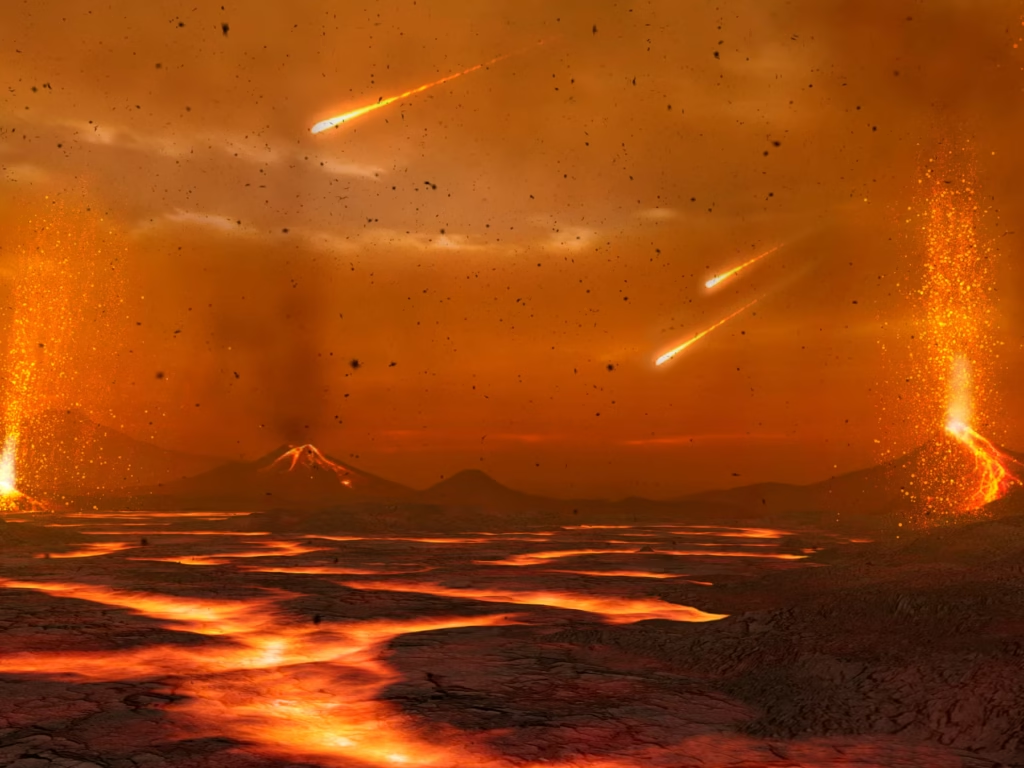
Asteroids are ancient rocky remnants left over from the formation of the solar system about 4.6 billion years ago. These celestial fragments once bombarded the young Earth frequently during a chaotic era known as the Late Heavy Bombardment.
While asteroid impacts are often associated with catastrophic events—such as the impact that ended the age of dinosaurs—scientists now believe they may also have played a constructive role in shaping Earth’s earliest ecosystems.
According to the new review study, asteroid impacts may have triggered geological processes that produced environments rich in heat, water, and chemical nutrients—conditions essential for the earliest forms of life.
The Power of Impact-Generated Hydrothermal Vents
Traditionally, scientists have considered deep-sea hydrothermal vents along ocean ridges as likely birthplaces for life. These vents release mineral-rich hot fluids that can drive complex chemical reactions, providing energy for microbial ecosystems. However, the new research highlights another possible origin: impact-generated hydrothermal vents formed when asteroids strike the planet’s surface.
The immense heat released during such impacts can fracture rocks and allow water to circulate through newly formed craters. This process produces hydrothermal systems similar to those found on the ocean floor, but formed directly by cosmic collisions.
Three Impact Sites That Tell the Story
Researchers examined several well-known impact craters to investigate whether these environments could support life-forming chemistry. One example is Lonar Lake, a crater created when a meteorite struck basaltic rock thousands of years ago. Another is the Haughton Impact Structure, a large Arctic crater often used as an analogue for extraterrestrial environments.
Scientists also analyzed the famous Chicxulub Crater, the massive impact site linked to the extinction of the dinosaurs about 66 million years ago. Evidence from these sites suggests that impact craters can host long-lasting hydrothermal systems rich in chemical ingredients important for life.
Chemical Ingredients Delivered From Space
Asteroids themselves may have delivered crucial organic compounds to early Earth. Analyses of asteroid samples returned to Earth show that space rocks can contain amino acids and other molecules essential for life.
For instance, samples from asteroid Bennu—collected by NASA’s OSIRIS-REx mission—revealed numerous amino acids used in biological processes. These findings suggest that the basic chemical building blocks of life may be widespread across the solar system.
When these compounds arrived on Earth through asteroid impacts, they could have mixed with hydrothermal environments created by the impacts themselves, forming a powerful combination for early chemistry.
A Laboratory for Prebiotic Chemistry
Impact craters may have provided ideal natural laboratories for prebiotic reactions—the chemical processes that precede the emergence of life. The intense heat of an impact can melt rock, release minerals, and create circulating water systems. Within these environments, chemical reactions could occur repeatedly over thousands or even millions of years.
Scientists believe such long-lived hydrothermal systems might have allowed complex molecules to form, interact, and gradually evolve toward the first primitive life forms.
Implications Beyond Earth
The idea that asteroid impacts can create life-friendly environments has implications far beyond our own planet. If this mechanism helped life arise on Earth, similar processes could occur on other worlds. Moons such as Europa and Enceladus possess subsurface oceans and may experience impact events capable of generating hydrothermal activity.
Such environments could potentially provide the same chemical and thermal conditions that early Earth once experienced, raising intriguing possibilities about the existence of life elsewhere in the universe.
Conclusion: Cosmic Destruction May Have Been Life’s First Catalyst
Asteroids have long been cast as villains in Earth’s history—agents of mass extinctions and planetary devastation. Yet this new research suggests they may also have been architects of life itself. By delivering organic molecules and generating hydrothermal systems through powerful impacts, asteroids may have created the very environments where biology first emerged. The same cosmic forces capable of wiping out species may also have helped spark the earliest living systems on our planet.
In many ways, this perspective reframes one of nature’s greatest paradoxes. The violence of the early solar system may not have been merely destructive—it may have been essential. Without the chaos of asteroid impacts, Earth might have remained a lifeless rock, never evolving into the vibrant world we inhabit today.