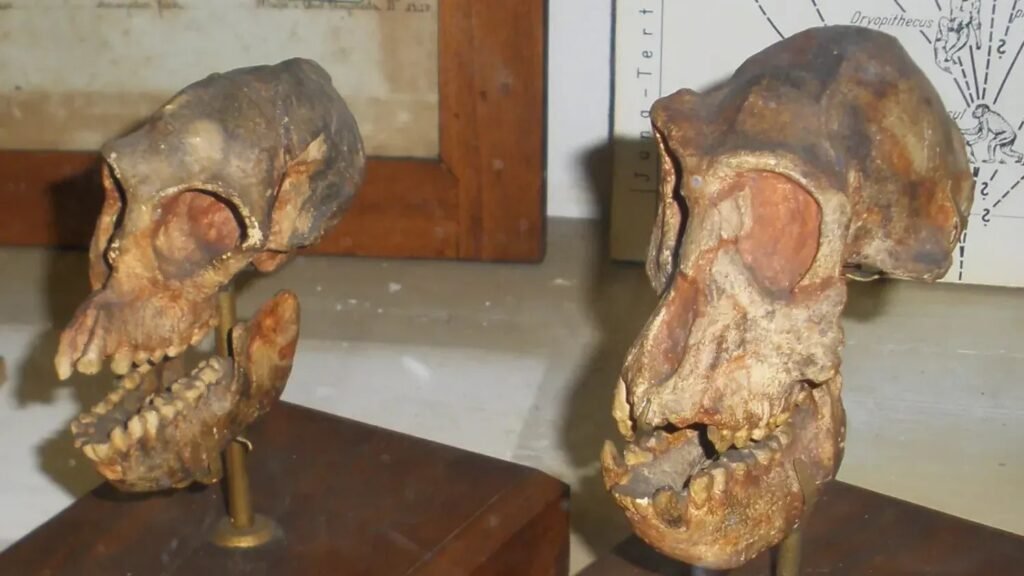

Somewhere beneath the sun-baked sands of Egypt, a 30-million-year-old secret had been waiting. A fossil so significant that its discovery is now forcing scientists to rethink everything they thought they understood about how modern apes and humans came to be.
It sounds dramatic, I know. But when a single ancient skull fragment can challenge decades of established evolutionary theory, “dramatic” might actually be underselling it. This is the kind of discovery that comes along once in a generation, and it’s happening right now. Let’s dive in.
Meet Masripithecus: The Ancient Ape Nobody Saw Coming
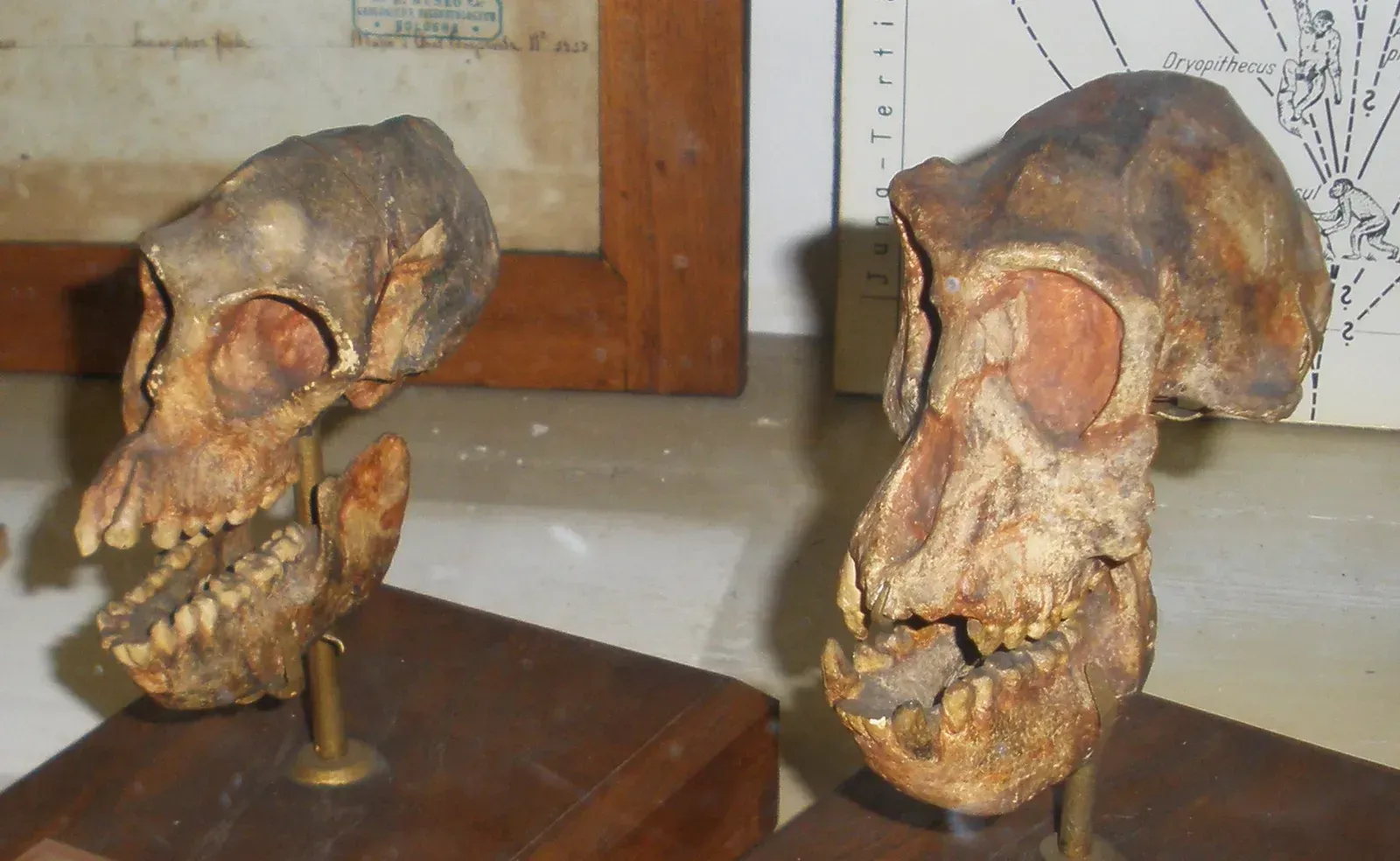
Let’s be real, most fossil discoveries make headlines for a day and then fade quietly into scientific journals. Masripithecus is different. This newly identified Miocene ape, unearthed from fossil-rich deposits in Egypt, is turning heads across the paleoanthropology world for very good reason.
The creature, formally named Masripithecus aegyptensis, is remarkable not just for its age but for what its anatomy reveals. Scientists believe it represents one of the earliest known relatives of the lineage that eventually gave rise to modern apes, including humans. That’s not a small thing. That’s the kind of find that reshapes textbooks.
Where and How It Was Found
The fossil was recovered from the Fayum Depression in Egypt, a region that has been a goldmine for early primate fossils for well over a century. It’s honestly one of the most important paleontological sites on the planet, and yet it keeps delivering surprises.
Researchers carefully extracted the specimen from Oligocene-era rock layers, though the ape itself is attributed to the Miocene epoch. The precision required in this kind of excavation is extraordinary. Think of it like trying to remove a fragile antique from inside a concrete wall, one millimeter at a time, without breaking anything.
What Makes Masripithecus Scientifically Significant
Here’s the thing that makes this discovery so intellectually exciting. The morphology of Masripithecus, meaning the physical structure of its teeth and jaw, shows surprisingly advanced features for its age. Features that were previously thought to have evolved much later in primate history.
Specifically, the dental characteristics of the fossil align closely with those found in modern apes. This suggests that the evolutionary lineage leading to apes and humans diverged earlier than previously estimated. It’s a bit like finding a smartphone prototype from the 1970s. Everything you assumed about the timeline suddenly needs adjustment.
Challenging What We Thought We Knew About Ape Evolution
Prior to this discovery, the conventional scientific understanding placed the emergence of distinctly ape-like characteristics at a later point in geological time. Masripithecus essentially pushes that window back further, complicating the already intricate puzzle of primate evolution.
It’s hard to say for sure exactly how dramatically the timeline will shift, because science rarely moves in straight lines. However, researchers are confident that this specimen demands a serious reassessment of existing phylogenetic models. In short, the family tree of apes and humans may need a significant redraw.
The Role of Africa in Early Primate History
One of the most compelling takeaways from this discovery is what it reinforces about Africa’s central role in early primate evolution. For a long time, there was genuine scientific debate about whether the origins of higher primates were rooted in Africa or Asia. Masripithecus adds another powerful data point to the African origin argument.
Egypt, sitting at the crossroads of Africa and the ancient Tethys Sea, was apparently a hotbed of primate diversification during the Miocene and Oligocene epochs. Discoveries like this one continue to cement the continent’s legacy as the cradle not just of humanity, but of our deepest evolutionary relatives. Africa, it seems, has always been where the real story begins.
What Researchers Are Saying About the Fossil’s Classification
Classifying a new species from fossil fragments is never straightforward, and scientists are understandably cautious about overclaiming. The research team behind Masripithecus has been careful to outline the limitations of their findings alongside the exciting implications. That’s good science in action.
The specimen has been formally analyzed and placed within the broader catarrhine group, which encompasses Old World monkeys, apes, and humans. Its specific positioning within that group is what sets it apart. The combination of primitive and derived features in its anatomy makes it, in the words of evolutionary biology, a transitional form. Those are genuinely rare and genuinely important.
Why This Discovery Matters Beyond the Laboratory
Honestly, it’s easy to dismiss fossil discoveries as niche academic news. Something for specialists in dusty university offices, not for the rest of us. Yet the story of Masripithecus is really a story about us, about where we come from, and how extraordinarily deep our roots go.
Every time science pushes the origins of our lineage further back in time, it does something quietly profound. It reminds us that we are the product of an almost incomprehensibly long chain of survival, adaptation, and change. We didn’t just appear. We were shaped, slowly and painstakingly, over tens of millions of years. Masripithecus is one more extraordinary chapter in that story.
Conclusion
The discovery of Masripithecus is one of those moments that deserves more attention than it will probably get in the daily news cycle. A 30-million-year-old ape from Egypt, quietly rewriting the timeline of human evolution. It’s the kind of story that puts everything else into perspective.
I think what I find most striking is how much we still don’t know. For all our scientific progress, the ancient world keeps revealing surprises that humble our assumptions. Masripithecus is proof that the ground beneath our feet still holds answers to questions we haven’t even thought to ask yet. What other chapters of our evolutionary story are still waiting to be uncovered? Tell us what you think in the comments.