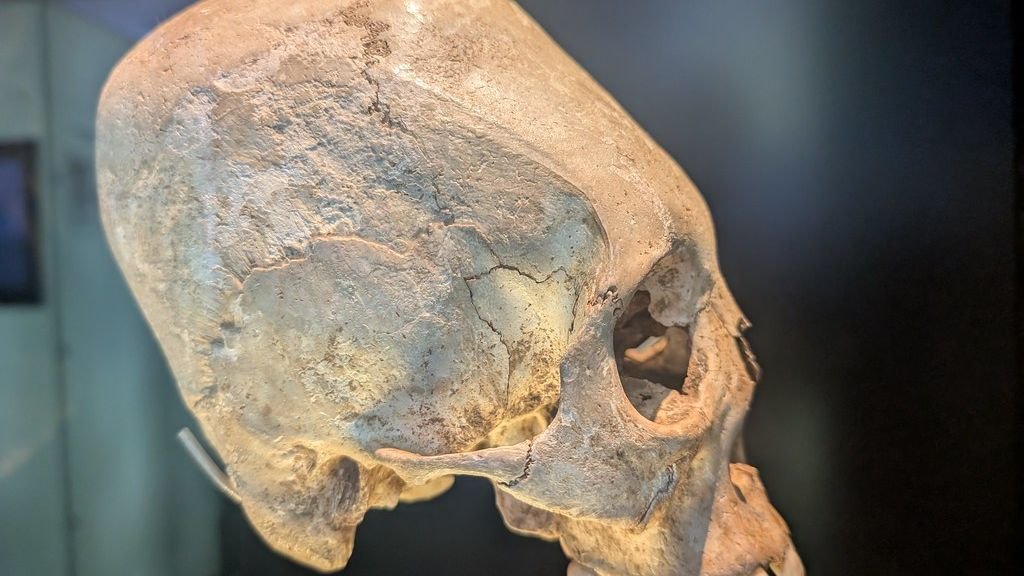

There’s something deeply unsettling about seeing a human skull that doesn’t quite look… human. Elongated, stretched, almost alien in shape – these strange relics have turned up in tombs, burial mounds, and archaeological sites scattered across the globe. For decades, fringe theorists jumped on them as proof of extraterrestrial visitors. Honestly, the real story is far more fascinating than that.
From the highlands of Peru to the sands of Egypt, from the steppes of Central Asia to the islands of the Pacific, these unusual skulls keep appearing. Scientists are now piecing together a surprisingly complex picture of why ancient cultures on opposite ends of the earth all seemed to share the same strange habit. Let’s dive in.
What Exactly Are These “Alien” Skulls?
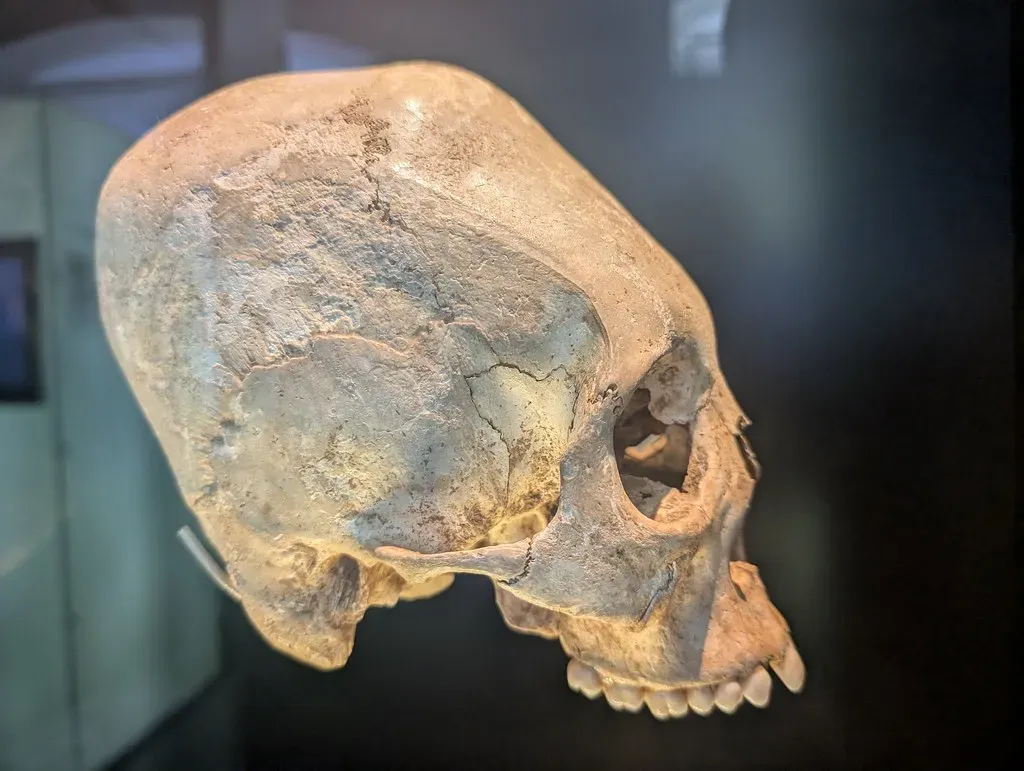
Here’s the thing – when most people first see photos of elongated skulls, the brain genuinely struggles to categorize them. They’re unmistakably human in most respects, yet the cranium stretches upward or backward in a way that feels deeply wrong to modern eyes. Some specimens show a cranial vault nearly twice the height you’d expect from a typical adult skull.
These are not mutations. They are not the result of disease in most documented cases. Anthropologists classify them under the term “artificial cranial deformation,” meaning the elongation was deliberately induced during infancy. The human skull, particularly in the first year of life, is extraordinarily malleable. Apply consistent pressure with boards, bandages, or padded wrappings, and you can reshape the growing skull into almost any form you want.
What makes this genuinely astonishing is the sheer scale of the practice. Researchers have now confirmed examples on every single continent except Antarctica, spanning thousands of years of human history. The oldest confirmed cases date back roughly twelve thousand years, making this one of the longest-running body modification practices ever documented.
The Global Spread That Baffles Researchers
You’d think a practice this specific and this visually dramatic would trace back to a single cultural origin. That’s the logical assumption. Yet the evidence stubbornly refuses to support it.
Elongated skulls have been found among ancient Huns in Central Asia, among indigenous groups in the Americas including the Paracas culture of Peru, in ancient Egypt during certain dynastic periods, across sub-Saharan Africa, in Melanesia, and throughout parts of Bronze Age Europe. The geographic spread is staggering. Some of these populations had virtually no contact with each other, which is precisely what makes the pattern so puzzling to explain.
Anthropologists are increasingly converging on the idea that this represents a case of what’s called “convergent cultural evolution.” Essentially, different societies independently arrived at the same practice because it served similar social functions, not because they copied each other. Think of it like how multiple ancient civilizations independently developed writing systems – similar pressures, similar solutions, very different contexts.
Why Did Ancient People Do This to Their Children?
Let’s be real, from a modern standpoint this seems extreme. Deliberately reshaping an infant’s skull sounds alarming. Yet when you examine the anthropological evidence, the motivations were deeply rooted in cultural identity, social status, and group belonging.
In many societies, the elongated skull was an unmistakable visual marker of elite status. It literally set the ruling class apart from everyone else. You couldn’t fake it as an adult – the modification had to happen in infancy, which meant only families with the knowledge and resources to do it could pass it down through generations.
In other cultures, the practice appears to have been more widely distributed across the population rather than restricted to elites. This suggests it also functioned as a tribal or ethnic identity marker, something that said “we are this people, and this is what we look like.” It’s not so different, when you think about it, from the elaborate tattoo traditions or scarification practices still found in various cultures today. The body as a canvas for communicating social identity is a genuinely universal human impulse.
The Paracas Skulls and the DNA Controversy
No discussion of elongated skulls would be complete without addressing the Paracas culture of coastal Peru. Discovered in the 1920s, these remains have attracted more wild speculation than perhaps any other ancient skulls on record. Their elongation is extreme, even by the standards of documented cranial deformation, and fringe communities latched onto early claims that their DNA showed non-human markers.
Here’s where the science becomes important. Reputable geneticists who have examined the Paracas skulls confirmed they are fully human. The DNA analysis, where reliable sampling has been achieved, shows these individuals belonged to populations consistent with ancient South American ancestry. The earlier sensationalist claims were based on poorly conducted or outright fabricated tests.
What is genuinely remarkable about Paracas is the sheer volume of remains and the quality of preservation. The dry coastal environment of Peru mummified not just bone but tissue, hair, and burial textiles. This gives researchers an unusually rich dataset to work with. The scientific story here is compelling enough without needing any alien intervention.
How The Skull Reshaping Was Actually Done
The mechanics of cranial deformation are, in a word, fascinating. There are two primary techniques that anthropologists have identified across different cultures. The first is called “tabular” deformation, which involves pressing flat boards against the front and back of the skull, flattening and elongating it simultaneously. The second is “annular” or circular deformation, using tight bandages or cloth wrappings wound around the head.
Both methods were applied to infants typically within the first month of life. The process continued for anywhere from six months to several years. Because infant skull bones haven’t fully fused at the suture lines, the pressure gradually redirects growth without causing the kind of brain damage you might assume. Studies of preserved Paracas skulls have shown that the brain itself adapted to the new shape of the cranial cavity over time.
I think what strikes me most here is the combination of deliberate intent and genuine anatomical knowledge these ancient practitioners possessed. They understood, at least empirically, that the infant skull was responsive to pressure in ways the adult skull was not. That’s a sophisticated working knowledge of human biology, developed without textbooks, without modern medicine, passed down through observation and practice across countless generations.
New Research Is Changing the Conversation
Anthropologists are currently shifting from the question of “whether” these practices were widespread to the question of “how connected” ancient populations actually were. Some researchers are examining whether certain concentrations of elongated skulls along known ancient trade routes suggest the practice spread through cultural contact rather than independent invention.
There’s also growing interest in what elongated skulls reveal about ancient migration patterns. If a population in Eastern Europe shares a very specific style of cranial deformation with a population in Central Asia from the same time period, that’s potential evidence of movement, intermarriage, or cultural exchange. It becomes an unexpected archaeological tool for tracing human movement across continents.
Recent advances in ancient DNA analysis are making this work dramatically more precise. Researchers can now cross-reference the genetic profile of an individual with the style of their cranial deformation to test hypotheses about whether the practice traveled with people or was adopted independently. It’s a genuinely exciting methodological moment for the field.
What This Really Tells Us About Human Nature
Strip away the alien theories and the sensationalism, and what you’re left with is something I find profoundly humanizing. Every culture that practiced cranial deformation was doing so because they cared deeply about identity, belonging, and status. These are not alien motivations. They are the most human motivations imaginable.
The fact that this practice appeared independently on nearly every continent speaks to something fundamental about how humans organize themselves socially. We have always found ways to mark our bodies as belonging to a particular group. We have always used appearance to communicate hierarchy and identity. The elongated skulls are, in a strange way, just an extreme version of something every human culture does.
Honestly, the real revelation isn’t that these skulls look alien. It’s that they look so deeply, specifically human. They represent a form of parenting, of cultural transmission, of social engineering that required extraordinary commitment and communal knowledge. Each one of those skulls was once a child, raised in a community that cared enough about its own identity to leave a permanent mark.
Conclusion: The Faces Behind the Mystery
The elongated skull phenomenon is one of those rare archaeological mysteries where the scientific explanation turns out to be richer than any supernatural alternative. Thousands of years of deliberate human behavior, spanning nearly the entire globe, motivated by identity, status, and belonging. That is not a story that needs aliens to be extraordinary.
What lingers, though, is the sheer audacity of it. These were not accidental forms. They were chosen, maintained, and passed down with intention. Every culture that practiced this was making a statement about who they were and who they wanted their children to be.
The question worth sitting with is this: knowing that virtually every human civilization has found some way to permanently mark the body as belonging to a group, what does that tell us about the universal human need to be recognized as part of something larger than ourselves? What do you think about it? Tell us in the comments.