
There’s a puzzle hiding inside every elephant, every whale, and every tiny field mouse that scientists have been wrestling with for decades. The bigger you are, the more cells your body contains. More cells should mean more chances for a cancerous mutation to occur. So why do elephants almost never get cancer while humans, with far fewer cells, deal with it at alarming rates?
It sounds like one of those questions a curious child might ask, the kind adults awkwardly dodge. The reality is that the answer cuts deep into the foundations of evolutionary biology, and the implications are nothing short of mind-bending. Let’s dive in.
Peto’s Paradox: The Rule That Shouldn’t Exist
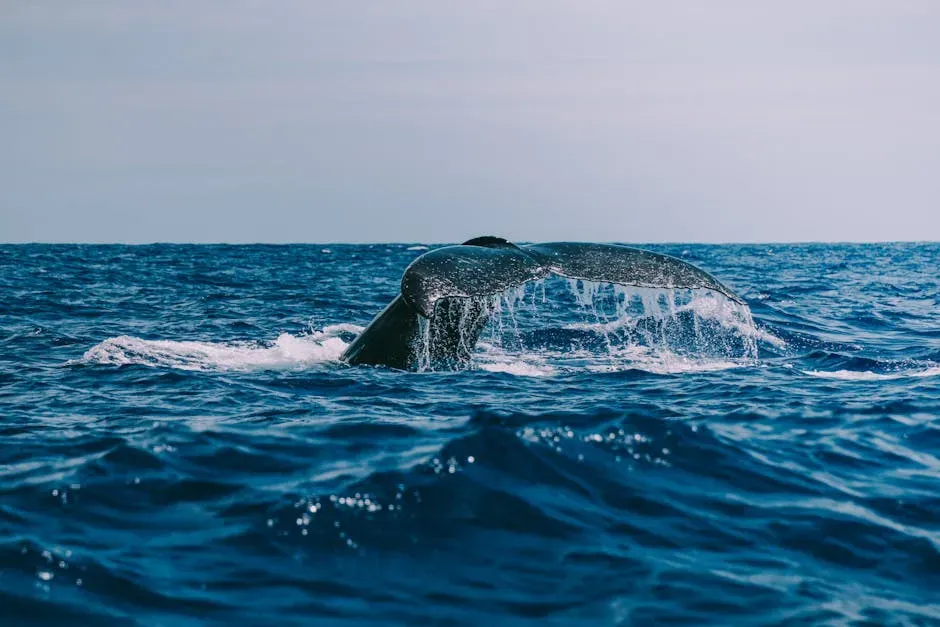
Here’s the thing. According to basic probability, larger animals should be drowning in cancer. A blue whale has roughly a thousand times more cells than a human being. More cells dividing over a longer lifespan equals more opportunities for something to go catastrophically wrong at the genetic level.
Yet that’s not what we observe. Whales, elephants, and other giant mammals show remarkably low cancer rates compared to what the math predicts. Epidemiologist Richard Peto first identified this contradiction back in the 1970s, and the phenomenon has carried his name ever since. Peto’s Paradox, as it’s now called, is essentially nature defying its own rulebook.
What makes this so fascinating, honestly, is that it suggests evolution has been quietly solving a problem we didn’t even know it was working on. Across millions of years, large-bodied animals have independently developed biological tricks to suppress cancer. The question is how.
Elephants and Their Secret Genetic Arsenal
Elephants are probably the most studied example when it comes to Peto’s Paradox, and for good reason. Researchers have found that African elephants carry around twenty copies of a gene called TP53, a well-known tumor suppressor. Humans, by comparison, carry just two copies.
Think of TP53 as a quality control inspector on a factory floor. When it detects damaged or abnormal cells, it triggers self-destruction before those cells can multiply into something dangerous. Having twenty copies of that inspector instead of two is a significant biological advantage.
This discovery, confirmed in research published in the journal JAMA in 2015, was a genuine turning point in how scientists think about cancer biology. It suggested that evolution doesn’t just stumble into solutions randomly. Sometimes, over long stretches of time, it engineers them with surprising precision.
Whales Have Their Own Evolutionary Tricks
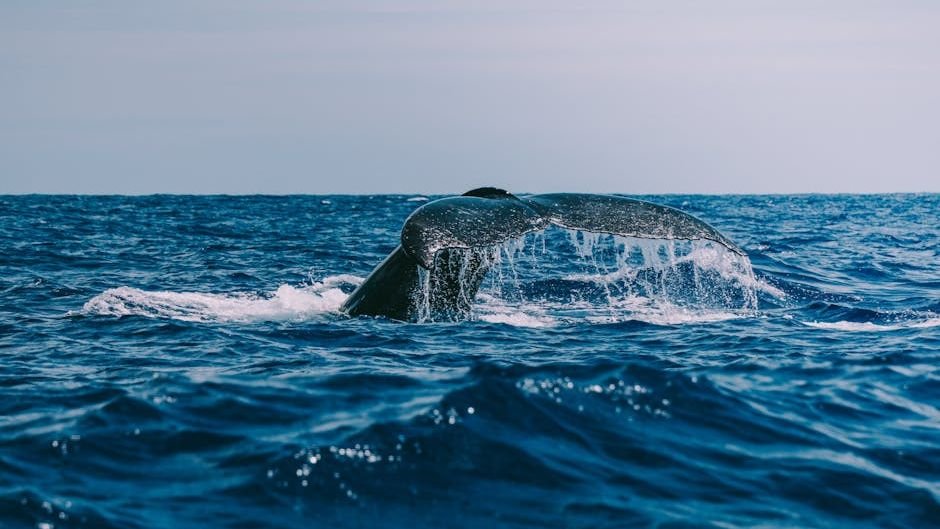
Bowhead whales are extraordinary creatures. They can live for over two hundred years, which means their cells are dividing and potentially mutating for an almost unimaginable stretch of time. Yet cancer in bowhead whales is vanishingly rare.
Scientists studying the bowhead whale genome have identified unique mutations in genes associated with DNA repair and cell cycle regulation. Their bodies appear to be exceptionally good at catching and correcting genetic errors before they escalate. It’s like having an incredibly efficient proofreading system built directly into the cellular machinery.
I think what makes this particularly stunning is the convergence. Elephants and whales arrived at similar outcomes through completely different genetic pathways. Evolution essentially solved the same problem twice, using different tools, on different continents, in entirely different ecosystems. That’s not coincidence. That’s biology doing something almost elegant.
Smaller Animals and Why They Age So Fast
On the flip side of the size scale, you’ve got animals like mice and rats. They live fast, burn bright, and die young. A typical laboratory mouse lives for roughly two to three years, and cancer is a common cause of death. Their cells divide rapidly, their metabolism runs hot, and there’s simply not much evolutionary pressure to invest in long-term cancer suppression.
Here’s a useful way to think about it. A mouse in the wild is unlikely to survive long enough to die of cancer. Predators, starvation, and environmental hazards usually get to it first. So from evolution’s perspective, building elaborate cancer-fighting machinery into a mouse would be like installing a state-of-the-art security system in a house made of paper. It just doesn’t make economic sense in terms of biological resources.
This trade-off is one of the core insights that Peto’s Paradox has led scientists toward. The investment an organism makes in cancer suppression is tightly linked to how long it’s expected to live, and how long it’s expected to live is tightly linked to its size and ecological niche.
What This Means for Human Cancer Research
Now, this is where things get genuinely exciting for medicine. Researchers are looking at the biological mechanisms employed by elephants and whales not just out of curiosity, but with real therapeutic intent. If we can understand how these animals suppress tumors so effectively, there may be ways to replicate or mimic those mechanisms in humans.
Some research teams have been exploring whether artificially boosting TP53 activity in human cells could reduce cancer risk without triggering dangerous side effects. It’s a delicate balance, because overactivating tumor suppressor genes can also lead to premature cell death and accelerated aging. The biology is genuinely tricky.
Still, the direction is promising. Several laboratories around the world have been developing experimental approaches inspired directly by elephant and whale genetics. It’s hard to say for sure when any of this will translate into actual treatments, but the conceptual foundation is solid and getting stronger.
The Broader Evolutionary Picture
Peto’s Paradox doesn’t just apply to a handful of large mammals. It appears to hold across the animal kingdom, from giant tortoises to large birds of prey, many of which live unusually long lives with surprisingly low cancer rates. The pattern keeps showing up wherever researchers look for it.
What this tells us is something profound about the nature of evolution itself. Natural selection doesn’t just shape body shape, diet, or behavior. It shapes the microscopic rules governing how every cell in the body behaves over an entire lifetime. The pressure to suppress cancer isn’t unique to one lineage. It’s a challenge that any large, long-lived organism has had to face and solve.
Let’s be real, there’s something almost humbling about this. The same evolutionary pressures that gave elephants their tusks and whales their sonar also gave them cancer-fighting genetics that our most advanced medicine is only beginning to understand.
Conclusion: Nature Got There First
Peto’s Paradox is one of those beautiful scientific puzzles that reveals just how much we still don’t understand about life itself. It took decades just to properly describe the phenomenon, and decades more to begin uncovering the mechanisms behind it.
What strikes me most is the sheer inventiveness of evolution under pressure. Given enough time and enough generations, life finds a way to solve problems that seem mathematically insurmountable. The elephant doesn’t know it has twenty copies of TP53. The bowhead whale isn’t aware of its superior DNA repair systems. They simply survived long enough for those traits to stick.
For human medicine, the takeaways are still unfolding. Researchers are genuinely optimistic that studying these animals could reshape how we approach cancer prevention and treatment in the coming decades. The natural world, it turns out, has been running experiments far longer and far more rigorously than any laboratory ever could.
Next time you see a photo of an elephant, consider that you’re looking at one of nature’s most sophisticated cancer-fighting machines. What would you have guessed was hiding in that giant genome?