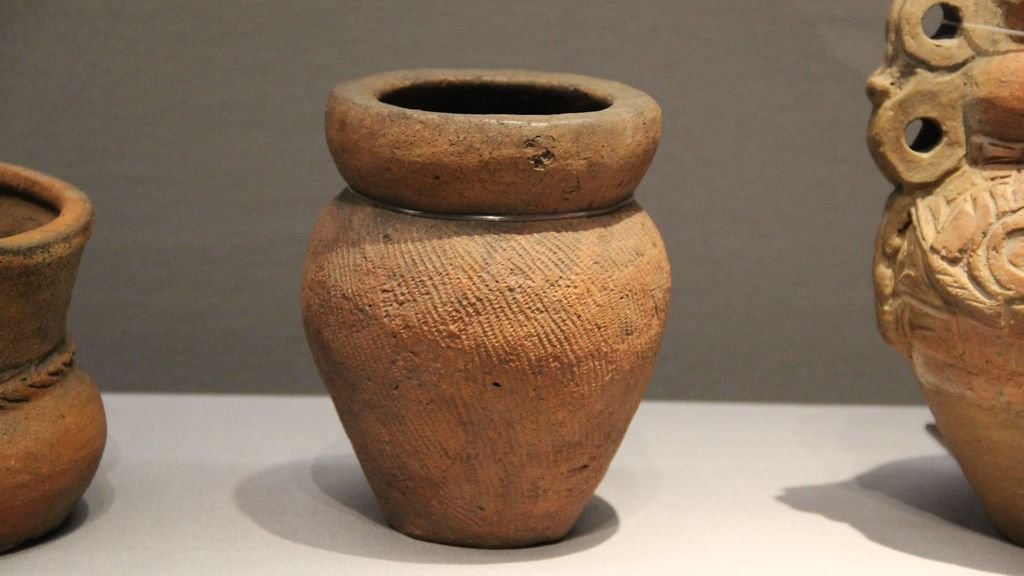

There’s something almost poetic about using one of humanity’s most cutting-edge technologies to unravel one of its oldest mysteries. Japanese pottery, some of it thousands of years old, has long challenged archaeologists who rely on painstaking manual analysis to date and classify fragments that look, to the untrained eye, like little more than decorated clay.
Now artificial intelligence is stepping into that ancient world, and the results are turning heads across the archaeological community. What researchers have managed to achieve with AI pattern recognition on Jomon-era pottery is the kind of story that makes you stop and think about just how much buried knowledge is still waiting to be unlocked. Let’s dive in.
The Ancient Pottery That Stumped Experts for Decades
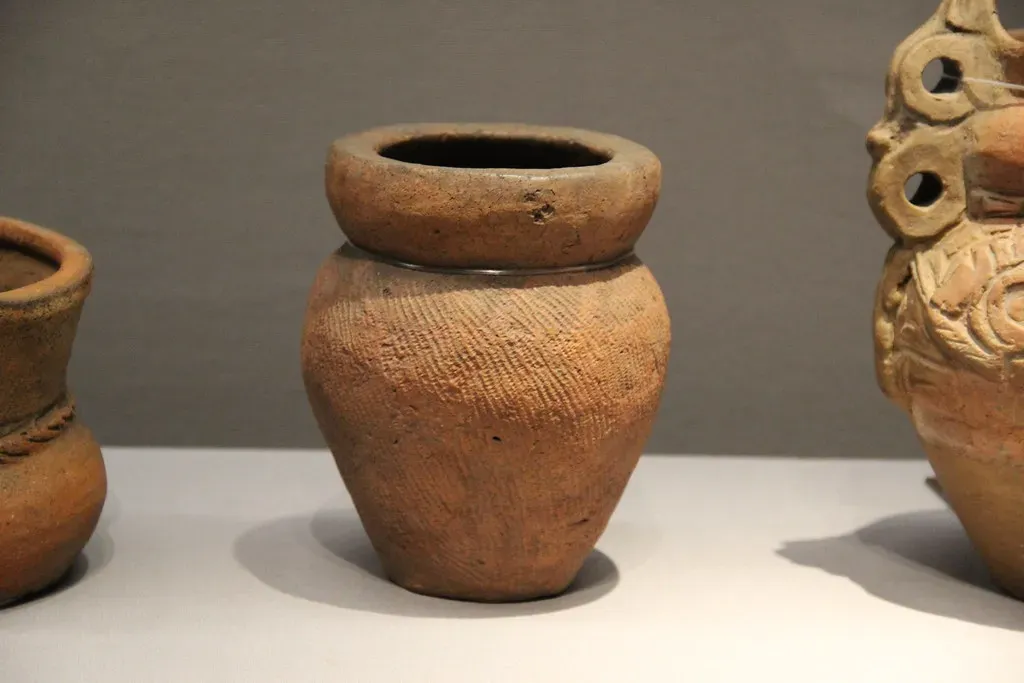
Jomon pottery is among the oldest in the world. Some pieces date back over 16,000 years, placing them at a remarkable crossroads between prehistory and the earliest stirrings of settled human culture in Japan. For decades, classifying these fragments has been an almost entirely manual process, requiring trained specialists to visually assess patterns, shapes, and surface decorations.
Here’s the thing though – even among experts, disagreements happen. The classification of Jomon pottery into its various cultural phases is a nuanced and sometimes contentious field. Small regional variations, overlapping stylistic periods, and the fragmentary nature of many finds make it genuinely difficult work. That’s exactly why the arrival of AI into this space feels like such a significant turning point.
How Researchers Trained AI to Read Pottery Patterns
The research team developed a machine learning system trained on thousands of pottery images drawn from archaeological databases. The AI was taught to recognize the intricate cord-marked patterns, rim shapes, and decorative motifs that define different Jomon periods, essentially learning to see the way a specialist sees, only faster and without fatigue.
What’s fascinating is the sheer volume of information the system could process in a fraction of the time a human analyst would need. Think of it like teaching someone to recognize bird species from photos. At first it seems impossible, but given enough examples and enough feedback, the pattern recognition becomes almost instinctive. The AI, in a sense, developed its own version of that instinct, and it worked remarkably well.
The Accuracy Rates That Genuinely Surprised Scientists
This is where things get really interesting. The AI system achieved classification accuracy rates that reportedly rivaled or even surpassed those of human experts in certain test conditions. That’s not a small claim. We’re talking about a domain where experienced researchers spend years, sometimes entire careers, developing the kind of visual literacy the AI appears to have developed from structured data alone.
Honestly, even I find that a little hard to fully wrap my head around. It’s one thing to hear that AI can beat humans at chess or Go. It’s another to hear it can outperform a specialist archaeologist at reading ancient cultural artifacts. The researchers themselves described the results as exceeding their initial expectations, which is a fairly telling sign that even the people building this system were caught off guard by how well it performed.
Why Jomon Pottery Is Such a Compelling Test Case
Jomon culture spanned an extraordinary length of time, from roughly 14,000 BCE to around 300 BCE. That’s a span of over ten thousand years, during which pottery styles evolved significantly across different regions of Japan. This makes it one of the most complex and richly layered classification problems in East Asian archaeology.
The diversity within Jomon pottery is, in some ways, like trying to classify thousands of regional dialects of a spoken language. Subtle differences matter enormously for understanding migration patterns, cultural exchange, and social evolution. Getting those classifications right isn’t just an academic exercise. It has real implications for how we understand the deep roots of Japanese civilization, and that’s a pretty weighty thing to get wrong.
The Broader Implications for Archaeology as a Field
Let’s be real, archaeology has always been a labor-intensive discipline. Physical excavation, careful documentation, and expert analysis take enormous amounts of time and human resources. AI tools like this one represent a genuine shift in what’s possible, especially for institutions with large collections that simply can’t be analyzed fast enough with current staffing levels.
Museums and research institutions around the world are sitting on vast archives of unclassified or partially classified artifacts. A scalable AI classification system could open up those archives in ways that would have seemed almost fantastical even ten years ago. It’s a bit like suddenly being handed a very fast, very tireless intern who has already memorized every relevant textbook. The democratizing potential here is enormous, particularly for smaller institutions in countries where archaeological resources are stretched thin.
Challenges and Limitations the Researchers Are Honest About
It’s hard to say for sure how universally applicable this approach will be outside of the Jomon pottery context. The AI’s effectiveness depends heavily on the quality and quantity of training data, and not every archaeological tradition has the same depth of digitized, well-labeled archives that Japanese institutions have built up. That’s a real constraint worth acknowledging.
There are also legitimate questions about interpretive nuance. An AI can classify a visual pattern with high accuracy, but it can’t yet explain the cultural meaning behind that pattern in the way a human researcher can. Classification is only one part of archaeological analysis. Understanding context, human behavior, and the social stories embedded in material culture still requires the kind of interpretive thinking that remains deeply human. The researchers appear to be genuinely thoughtful about these limits, which is reassuring.
What This Means for the Future of AI in Cultural Heritage
The success of this project is likely to inspire similar efforts across different archaeological traditions, from ancient Greek ceramics to pre-Columbian textiles. Once a proof of concept this strong exists, it tends to open doors that were previously considered closed. Researchers in related fields are already paying attention, and it would be surprising if we didn’t see a wave of comparable studies emerge over the next few years.
What I find most compelling about this story isn’t just the technology itself. It’s what it says about the relationship between human knowledge and machine learning. The AI didn’t invent new understanding. It absorbed the accumulated expertise of generations of human scholars and then applied it at a scale and speed no human team could match. In a very real sense, it’s standing on the shoulders of giants. The giants just happened to be archaeologists.
A Final Thought Worth Sitting With
There’s something genuinely moving about the idea that patterns pressed into clay by human hands over ten thousand years ago can now be read by an intelligence that didn’t exist until a few decades ago. The clay survived. The patterns survived. Now, with the right tools, the stories they carry might finally be told in full.
I think this research is a genuine milestone, not just for Japanese archaeology, but for the broader question of how we preserve and understand human history. The past is vast and largely unread. AI might just be the reader we’ve been waiting for. What do you think? Could artificial intelligence fundamentally change how we understand ancient civilizations? Drop your thoughts in the comments.