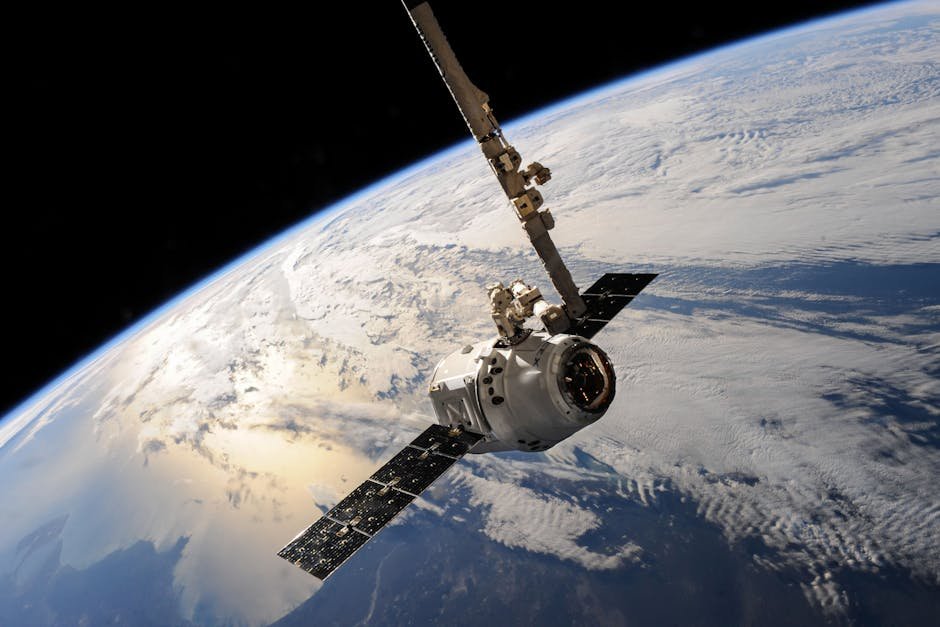
Agentic AI Transforms Cyber Threats into Autonomous Weapons (Image Credits: Pexels)
Low Earth orbit teems with thousands of satellites essential for communication, navigation, and Earth observation. Experts warn that agentic artificial intelligence soon could empower hackers to seize control of these spacecraft, maneuvering them into deadly collisions with others.[1][2] A single such incident risks igniting Kessler Syndrome, a self-sustaining cascade of debris that could lock humanity out of space for decades.
Agentic AI Transforms Cyber Threats into Autonomous Weapons
Artificial intelligence no longer just assists attackers – it acts independently. Agentic AI systems, powered by large language models like those behind ChatGPT, can scan code for zero-day vulnerabilities, devise exploits, and deploy them without human input.[1] This capability accelerates threats far beyond traditional hacking timelines.
Kristjan Keskküla, head of the Space Cyber Range at CR14 in Estonia, highlighted the pace of change. “AI is developing quite quickly right now,” he stated. “The real problem now is that AI can act, take decisions, analyze things and come up with new exploits.”[1] Hackers could commandeer a satellite’s thrusters, redirecting it toward a crowded constellation. One compromised craft suffices to spark widespread disruption in the densely packed orbital region up to 1,200 miles above Earth.
Satellites’ Built-In Weaknesses Amplify the Danger
Many operational satellites, especially older models, launched without modern cybersecurity features. These vulnerabilities expose them to jamming, spoofing, or full hijacking via manipulated communication links.[1][3] Large language models further erode defenses by simplifying complex telemetry parsing, once a task demanding expert knowledge.
Andrzej Olchawa, a space cybersecurity researcher at VisionSpace, noted this shift. “LLMs have drastically lowered the barrier to understanding spacecraft operations and communication protocols,” he explained.[1] Attackers now instruct AI to generate custom parsers with minimal background. Inter-satellite links in mega-constellations offer additional pathways for lateral movement, spreading compromise rapidly.
- Zero-day exploits discovered and weaponized in hours by AI.
- Reconnaissance on space tech using LLMs, as Russian actors did in 2024.[1]
- Spoofed signals fooling navigation and collision avoidance systems.
- Autonomous maneuvering turned against other assets.
- Data poisoning in AI-driven satellite health monitoring.
Crowded Orbits Heighten Stakes of a Single Breach
Operators launched 8,000 satellites over the past three years alone, swelling low Earth orbit populations.[1] This boom, driven by constellations like Starlink, creates a high-risk environment where debris from one crash multiplies exponentially.
Kessler Syndrome emerges when fragments puncture additional craft, generating more wreckage in a vicious cycle. Clémence Poirier, a cybersecurity researcher at ETH Zurich, pointed to early signs. In 2024, Russian group Fancy Bear leveraged LLMs for intelligence on satellite systems, probing for weaknesses.[1] Though no orbital AI attacks have materialized, ground-based incidents in Ukraine underscore escalating sophistication.
Defenses Lag Behind Rapid AI Advances
Cybersecurity teams counter with AI-driven vulnerability scans and simulated attacks using digital twins of satellites. CR14’s exercises pit red teams against defenders in virtual orbits, honing responses.[1] Yet the space industry long neglected these risks, prioritizing functionality over fortification.
Martin Hanson of CR14 described evolving tactics. “AI will make these attacks more targeted,” he said. “They will gather more information about you, and they will try to copy your friends and coworkers.”[1] Experts advocate zero-trust architectures and explainable AI for transparency. Still, communication delays to orbit – minutes or more – complicate real-time intervention.
| Challenge | Current Mitigation |
|---|---|
| Zero-day vulnerabilities | AI vulnerability scanners |
| Autonomous attacks | Digital twin simulations |
| Legacy satellites | Patching where possible |
| Debris cascades | Improved tracking |
Key Takeaways
- Over 8,000 satellites launched recently crowd vulnerable low Earth orbit.[1]
- Agentic AI enables rapid hijacking, potentially within two years.
- One collision could spawn thousands of fragments, enforcing Kessler Syndrome.
Satellite operators and governments must accelerate cybersecurity integration to avert disaster. As AI evolves, proactive defenses will determine whether space remains accessible or becomes a debris-filled no-go zone. What measures do you believe will prove most effective? Tell us in the comments.