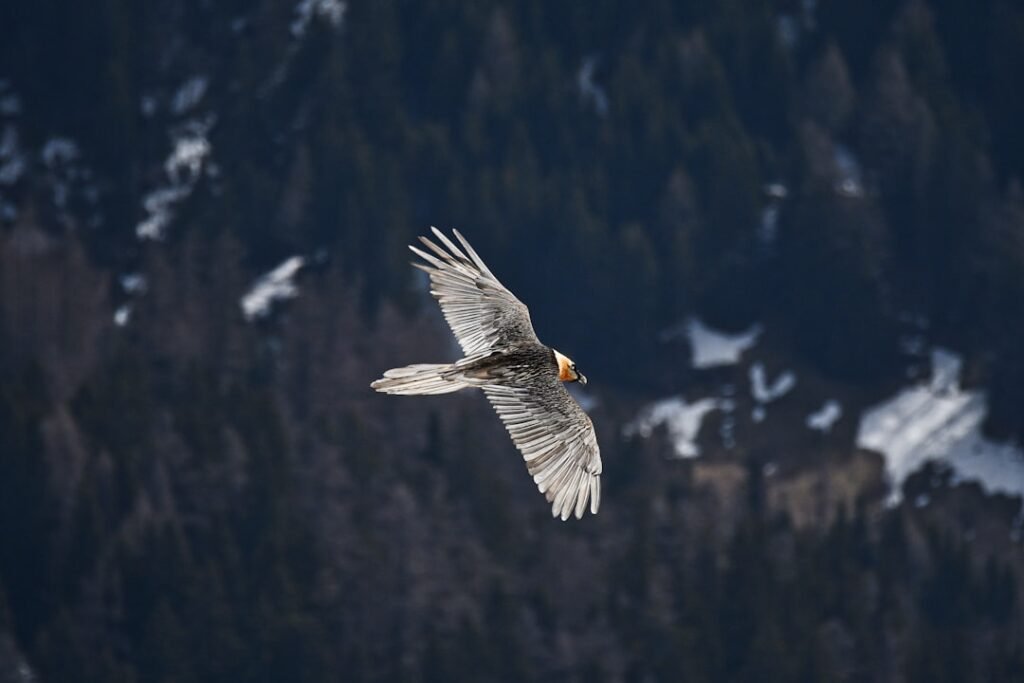

A Century Without Vultures Ends in Revival (Image Credits: Unsplash)
The Alps – Bearded vultures, once driven to extinction across these rugged peaks, now thrive with more than 100 breeding pairs in a testament to persistent conservation work.[1][2]
A Century Without Vultures Ends in Revival
Persecution and habitat pressures wiped out bearded vultures from the Alps by the early 1900s, leaving vast skies empty of these distinctive scavengers.[3] Conservationists launched an ambitious reintroduction program in 1986, sourcing young birds from captivity to repopulate the region. This multinational effort involved zoos, breeding centers, and organizations like the Vulture Conservation Foundation. Releases continued methodically for decades. The first wild breeding occurred after eleven years, signaling early promise. Today, the population stands self-sustaining, a rare feat in wildlife recovery.
Experts hail the project as one of Europe’s standout success stories, with the birds adapting to their ancestral home.[4] Higher reproductive rates than in source populations underscore the program’s effectiveness.[5]
Milestones Built Through Persistent Releases
Teams released 264 young bearded vultures between 1988 and 2025 across Alpine countries, from Switzerland to France and Austria.[3][6] Each bird underwent careful preparation, including hacking stations to mimic natural fledging. Genetic diversity received priority through birds from varied origins. Monitoring via satellite tags and cameras tracked dispersal and survival. By mid-2025, the population hit over 100 breeding pairs, second only to the Pyrenees in Europe.[1]
- 1986: Program launches with first releases.
- 1997: Initial wild chick hatches.
- 2025: Record fledglings, exceeding 26 in Switzerland alone.[7]
- Ongoing: Self-sustaining growth without further releases needed.
Balthazar Embodies the Project’s Legacy
One bird’s saga captures the reintroduction’s drama: Balthazar, released in 1988, became the first reintroduced male to breed successfully in 1997, raising 15 chicks over his life.[8] Thought lost after nearly a decade off radar, he reappeared in France’s Haute-Savoie in October 2025 at over 37 years old – the oldest wild bearded vulture on record.[6] Rescuers captured him on November 27, ensuring his comfort in captivity where the species can live up to 50 years.[9] His endurance mirrors the species’ resilience.
Balthazar’s rediscovery thrilled teams, affirming long-term survival rates.[10] He symbolized the shift from vulnerability to stability.
2025 Sets New Benchmarks for Productivity
The year 2025 brought unprecedented breeding success, with dozens of fledglings taking flight across the Alps.[2] Switzerland recorded 26 young, a national high. Nest cameras aided monitoring of select pairs. The population’s expansion now supports ecological roles, like carcass cleanup. Challenges persist, including human-wildlife conflicts, but productivity outpaces mortality.
Demographic studies confirm the group’s viability, with reproduction surpassing expectations.[11]
Key Takeaways
- 264 birds released since 1988 built a self-sustaining Alpine population.
- Over 100 breeding pairs by 2025, with record fledglings.
- Balthazar’s 37+ years highlight individual and species resilience.
This Alpine revival offers a blueprint for other endangered species, proving coordinated action yields lasting results. What lessons can other regions draw from the bearded vultures’ return? Share your thoughts in the comments.