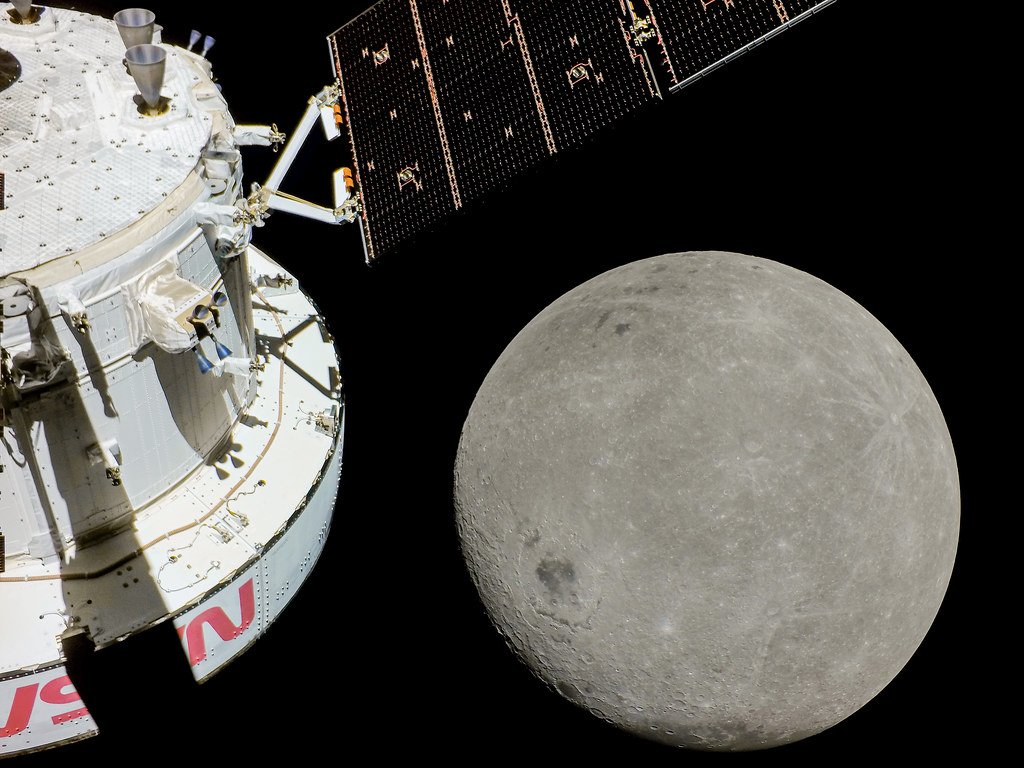
Artemis 2 Sets the Stage for Deeper Exploration (Image Credits: Flickr)
The crew of NASA’s Artemis 2 mission returned safely to Earth on April 10, 2026, after a groundbreaking 10-day journey that took them around the Moon – the first crewed deep-space flight since Apollo 17. This success marked a pivotal step in NASA’s renewed push toward lunar exploration.[1][2] Agency officials hailed the mission for validating the Space Launch System rocket and Orion spacecraft in human spaceflight beyond low Earth orbit. With this foundation laid, NASA outlined revised plans that prioritize rigorous testing before attempting surface landings.
Artemis 2 Sets the Stage for Deeper Exploration
Four astronauts launched aboard Orion atop the SLS rocket from Kennedy Space Center on April 1, 2026. They conducted critical tests during the outbound phase, including manual flight controls and life support systems.[3] The crew achieved a closest approach to the Moon, capturing unprecedented views and reestablishing contact with mission control after passing the far side.
Mission controllers monitored re-entry closely, addressing prior concerns from the uncrewed Artemis 1 flight about the heat shield’s performance. The capsule splashed down in the Pacific Ocean off California, where recovery teams swiftly retrieved the crew. This flawless execution boosted confidence in the hardware for upcoming missions.[4]
Artemis 3 Focuses on Critical Docking Trials in Earth Orbit
NASA restructured Artemis 3 into a low Earth orbit demonstration, slated for mid-2027, to test rendezvous and docking with commercial human landing systems.[5] The mission will pair Orion with landers from SpaceX’s Starship HLS program and potentially Blue Origin’s Blue Moon, simulating transfers astronauts will perform en route to the lunar surface.
This shift from an original lunar landing plan stemmed from delays in lander development and Orion heat shield ablation observed in prior tests. Officials compared it to Apollo 9, which proved docking feasibility in Earth orbit before Apollo 10’s lunar rehearsal. Crew details and exact configurations remain forthcoming, with launch from Kennedy Space Center aboard SLS.[2][6]
The Road to Lunar Landings: Artemis 4 and Beyond
Artemis 4 targets early 2028 as the program’s first crewed Moon landing since 1972. Astronauts will dock Orion with a commercial lander in lunar orbit, transfer for descent, and conduct at least two extravehicular activities near the lunar south pole – a region rich in scientific potential due to water ice deposits.[7] The mission duration could extend to about 30 days.
Following closely, Artemis 5 in late 2028 will deliver a second landing and initiate moon base construction, incorporating a Lunar Terrain Vehicle for mobility. NASA envisions annual missions thereafter to establish sustained presence, leveraging commercial partnerships for logistics and infrastructure.[2]
| Mission | Target Date | Key Objectives |
|---|---|---|
| Artemis 3 | Mid-2027 | LEO docking with HLS |
| Artemis 4 | Early 2028 | First lunar landing |
| Artemis 5 | Late 2028 | Second landing, base start |
Core Technologies and Long-Term Vision
The SLS Block 1 configuration will standardize launches from Artemis 4 onward, paired with Orion’s crew module and European Service Module for propulsion. Commercial landers require orbital refueling – up to 10 tanker flights per mission for Starship HLS – highlighting reliance on private industry.[2]
Plans emphasize phased development: modular equipment deliveries every six months, evolving to semi-permanent habitats and a full base. This architecture supports scientific discovery, resource utilization, and preparation for Mars missions, where Orion will play a central role in crew transport.[7]
- Rendezvous precision in orbit
- Astronaut transfer protocols
- Spacesuit mobility testing (AxEMU)
- Heat shield and re-entry validation
- Commercial refueling operations
Key Takeaways
- Artemis 3 prioritizes safe docking demos over immediate landings.
- First Moon boots touch down in 2028 with Artemis 4.
- Sustained lunar presence builds toward Mars exploration.
NASA’s methodical approach after Artemis 2 ensures reliability amid complex challenges, positioning humanity for enduring lunar footholds. What aspect of these missions excites you most? Share in the comments.