Most people assume ancient inscriptions get “cracked” once, then everyone moves on. That’s not how it works. For dozens of famous tablets, museums display confident placards while the scholars behind closed doors are still screaming at each other in academic journals.
Some tablets have been “deciphered” a dozen different times, with a dozen contradictory results, and reputable universities somehow keep publishing all of them. The tablet at the center of this list isn’t rare – it’s one of several that have humiliated generations of linguists, statisticians, and self-declared codebreakers who all insist they solved it first. Here’s what the actual translators say when you ask them directly.
#1 – The Phaistos Disc Still Has Zero Agreed-Upon Words
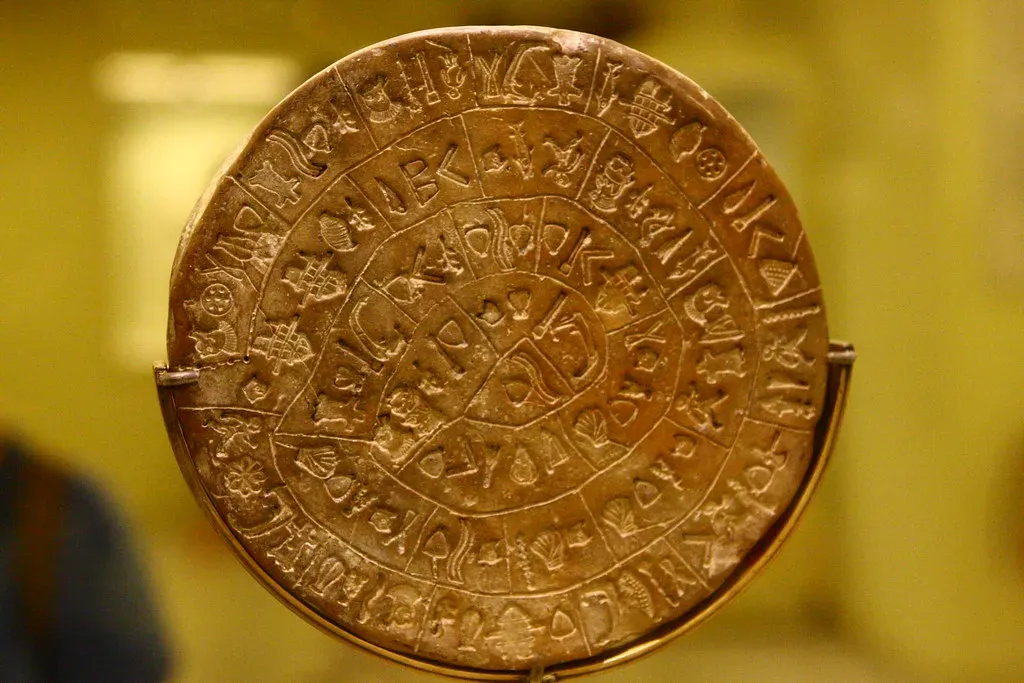
A 3,700-year-old clay disc from Crete has been “translated” so many times that the translations cancel each other out.
The Phaistos Disc was pulled from a Minoan palace basement in 1908, stamped with a spiral of hieroglyphic symbols found nowhere else on Earth in that exact combination. Gareth Owens, a linguist at the Technological Educational Institute of Crete, claims the disc is a Minoan prayer to a mother goddess. Other researchers have pushed wildly different readings – Proto-Slavic, Proto-Georgian, Egyptian hieroglyphic systems – and none of them agree.
The real problem is structural, not stubbornness. No translation can be accepted as certain because the disc is still unique, with no second copy, no larger archive, and no matching text that lets any theory actually be tested. Even the field’s biggest names have basically given up on certainty.
No decipherment can be considered sufficiently safe.
Louis Godart, 1995
Jean-Pierre Olivier put it even more bluntly in 1975, writing that nothing suggests a verifiable decipherment will ever be achieved. Some scholars, including an editor at Minerva Magazine, have even argued the whole disc might be a forgery. And the mystery gets stranger from here – the next tablet on this list might not even be a European invention.
#2 – Easter Island’s Wooden Tablets Might Predate Contact With Europe
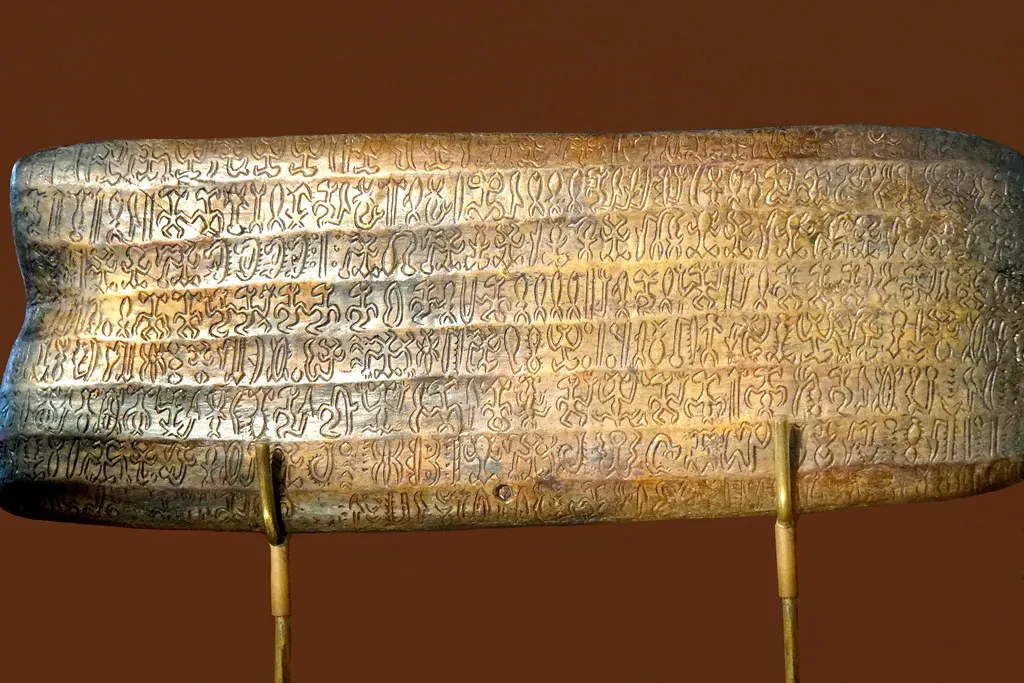
Rongorongo isn’t just undeciphered – nobody can even agree whether the islanders invented it themselves or copied it from outsiders.
Just 27 tablets inscribed with the intricate rongorongo script are known to survive, packing in roughly 15,000 characters and more than 400 different glyphs. That’s an enormous vocabulary for a tiny population, and it’s part of why every attempt to crack it keeps failing. Rongorongo has the appearance of writing or proto-writing, and despite numerous serious attempts at decipherment, none have succeeded.
Fast Facts
- Only 27 known tablets survive worldwide
- Roughly 15,000 characters, 400+ distinct glyphs recorded
- One tested tablet dated to the mid-1400s; others to the 1800s
- Only a lunar-calendar fragment is partially understood
Radiocarbon dating just made the mystery worse, not better. Researchers dated four Rongorongo tablets preserved in Rome, and one specimen came back with a unique, secure mid-fifteenth-century date, while the others landed firmly in the nineteenth century. If that early date holds, the script could be one of the only truly independent inventions of writing in human history.
Apart from a fragment of one tablet that appears to deal with a lunar calendar, none of the texts are understood – and even the calendar section can’t actually be read start to finish. Nobody alive knows how to read it, because the priests who could were wiped out before anyone bothered to write it down. Up next is a civilization that built entire cities with working plumbing, yet somehow left behind a writing system nobody can prove is even a language.
#3 – The Indus Valley Left Behind 4,000 Seals and Zero Sentences
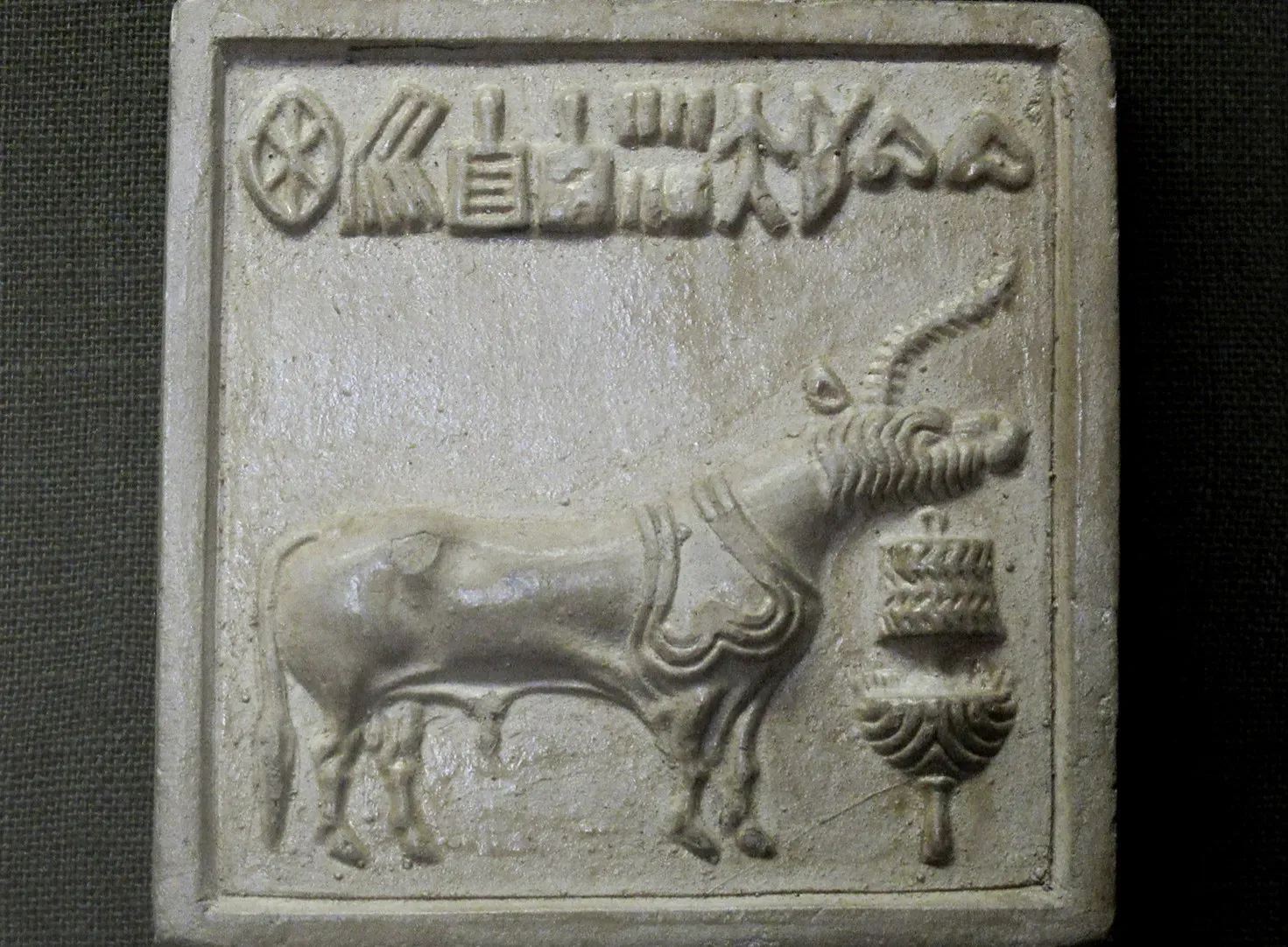
The Harappans built cities with sewer systems more advanced than some modern towns, yet nobody can prove their writing was actually a language.
The Indus Valley script appears on more than 4,000 seals and inscriptions, and UNESCO estimates it contains somewhere between 400 and 600 unique symbols. The brutal catch is length. Almost every inscription found so far is shorter than 30 signs, which makes it nearly impossible to spot recurring grammar patterns.
Most seals carry only a handful of characters – nowhere near enough text to reconstruct anything resembling sentence structure. Translators can’t even agree on which language family it belongs to. Indo-European and Dravidian are the two most commonly favored candidates, but Austroasiatic, Sino-Tibetan, and even a lost language family entirely have all been seriously proposed.
Some researchers don’t think it’s writing at all. Scholars like Steve Farmer and Peggy Mohan argue the symbols may be non-linguistic – political, economic, or religious markers rather than language in any real sense. Without a Rosetta Stone equivalent, this argument may never actually get settled, and the next script on this list came agonizingly close to solving that exact problem before it didn’t.
#4 – Minoan Linear A Sits One Step Away From Being Solved – Forever
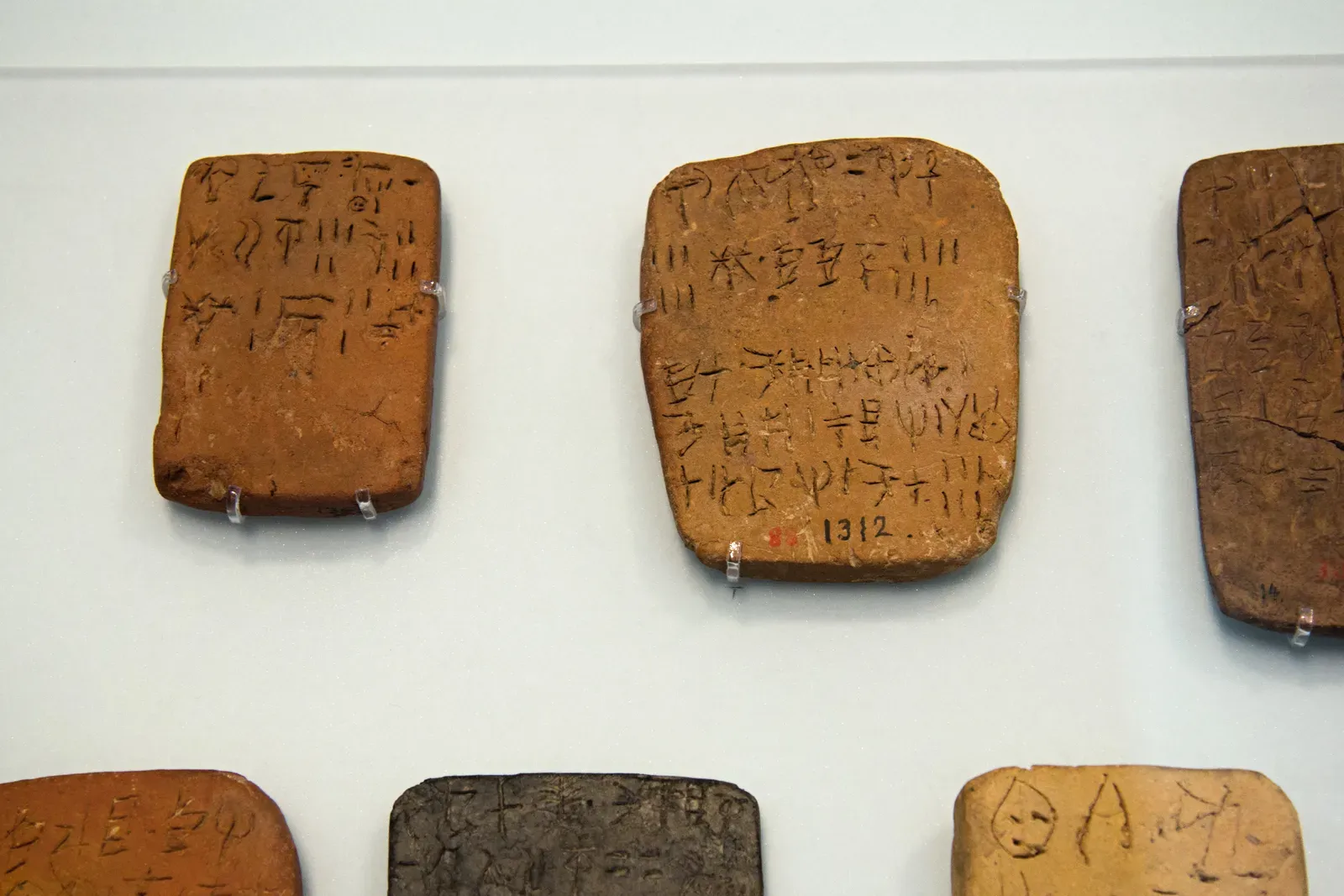
Linear A is the writing system that got so close to decipherment that its failure feels almost cruel.
Linear A was used by the Minoan civilization between roughly 1800 and 1450 BCE, found on clay tablets, libation tables, and other artifacts scattered across Crete. Here’s the maddening part: its sister script, Linear B, was fully cracked decades ago because it turned out to record an early form of Greek. Linear A never got that lucky – it’s thought to represent a completely different, unidentified language.
That single fact wrecks most translation attempts before they even start. Translators can read the symbols phonetically using Linear B’s sound values, but the resulting words match no known language on Earth. It’s like sounding out a foreign menu perfectly and still having no idea what you ordered.
This is arguably the most frustrating case on the entire list, because researchers have every phonetic tool they need except the one that actually matters – a language to plug them into. Every few years someone announces a breakthrough tying Linear A to Anatolian or Semitic roots, and every few years the claim quietly fades away. The next tablets on this list are older than almost anything else humans have ever written.
#5 – Proto-Elamite Tablets Are the Oldest “Writing” Nobody Can Actually Read
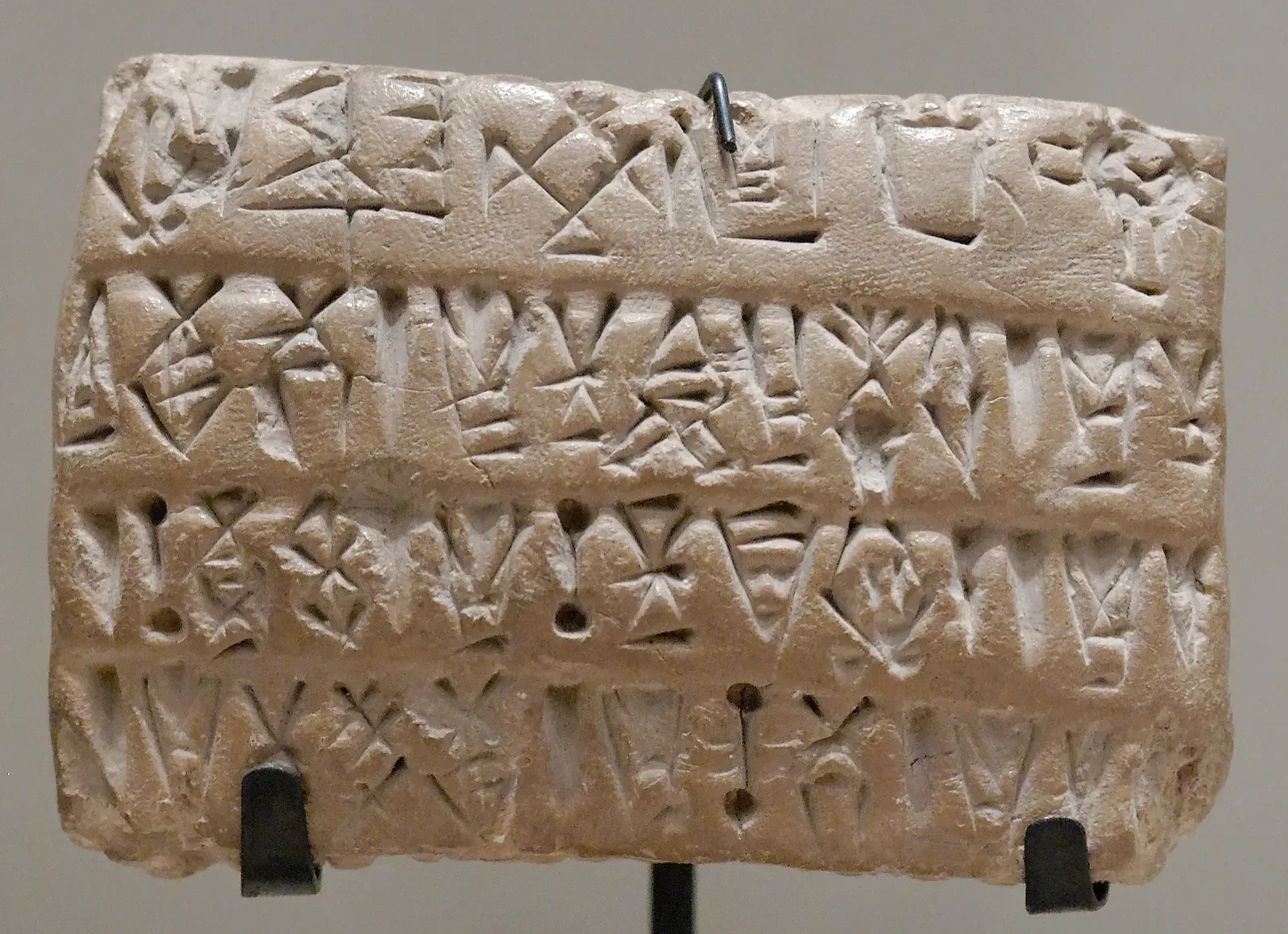
Buried in southwestern Iran are clay tablets older than Egyptian hieroglyphs, and translators still can’t confirm what they were counting, taxing, or naming.
Proto-Elamite emerged around 3200 BCE, placing it among the earliest writing systems anywhere on the planet, arriving in roughly the same window as early cuneiform and Egyptian hieroglyphics. Thousands of tablets survive, mostly from administrative and accounting contexts, packed with numerical notations and abstract signs. The trouble is that the script seems to have been used briefly and then abandoned, leaving almost no continuous tradition for later scribes to build on or explain.
Worth Knowing
- Dates to roughly 3200 BCE – among the oldest scripts on Earth
- Thousands of tablets exist, mostly accounting and tax records
- The script was abandoned quickly with no later version to help decode it
- No phonetic reading of the signs has reached broad consensus
Because Proto-Elamite never evolved into a clearly readable later script the way early cuneiform eventually did, translators are stuck guessing at meaning from context alone – mostly numbers, commodities, and personal or place names, with no way to sound out a full sentence. Researchers generally agree it recorded economic transactions, but the exact underlying language remains a mystery, and nobody has produced a broadly accepted phonetic reading of the signs. It’s a writing system that helped run an empire’s economy, and modern experts still can’t read the receipts – and the next artifact on this list was found in, of all places, a highway construction pile.
#6 – Mexico’s Cascajal Block Might Be the Americas’ Oldest Text – Or a Modern Fake
A slab of stone found in a highway construction pile might rewrite the history of writing in the Western Hemisphere, if it’s real.
The Cascajal Block is a tablet-sized slab of serpentinite incised with previously unknown characters, claimed to represent the earliest writing system in the New World. Brown University archaeologist Stephen Houston said the discovery links the Olmec civilization to literacy – an enormous claim, and not everyone bought it right away. Debate lingered for years over the object’s authenticity, dating, and cultural affiliation, though recent digital imaging and materials analysis now support it as a genuine Olmec artifact.
Even with authenticity mostly settled, translation is a completely separate battle. Nobody has produced a widely accepted reading of a single sentence on the block. The signs don’t clearly match any later Mesoamerican script, and there’s no bilingual companion text to test any theory against.
Skeptics have also pointed out that the block was found without secure archaeological context – it turned up loose in a gravel pile rather than a sealed dig site, exactly the kind of provenance gap that fuels forgery accusations for any ancient artifact. The next entry on this list split an entire country’s archaeologists into two furious camps.
#7 – Romania’s Tărtăria Tablets Split Archaeologists Into Two Furious Camps
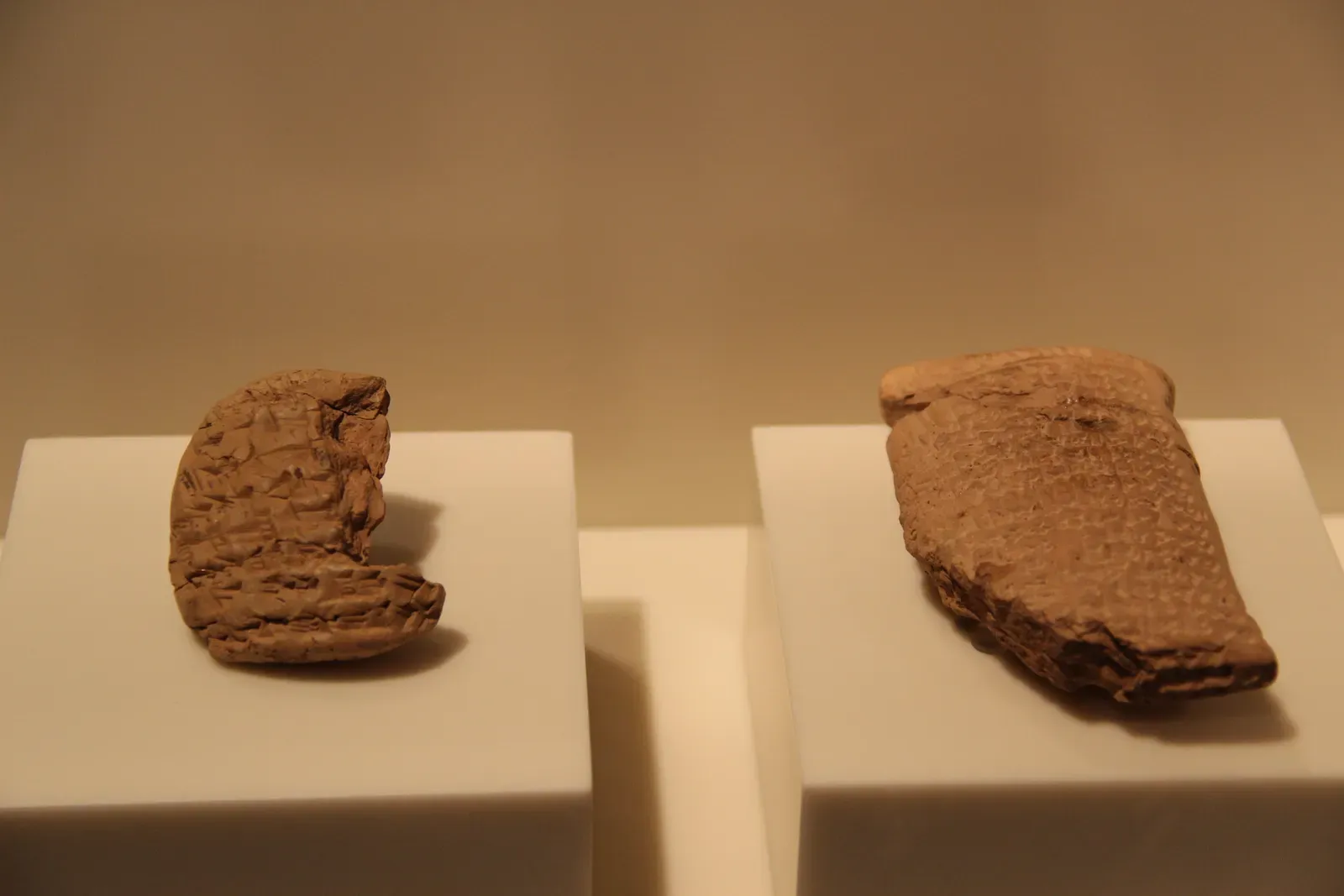
Three small clay tablets dug up in Romania in 1961 either prove writing existed 1,000 years before Sumer – or prove nothing at all.
The Tărtăria tablets were found alongside burned human remains and carry symbols that superficially resemble early Sumerian pictographs, despite coming from a culture separated from Mesopotamia by enormous distance. Some researchers dated the site to roughly 5300 BCE, which – if accurate – would make these tablets older than any confirmed writing system on the planet, including Sumerian cuneiform. That single claim turned a small regional dig into an international controversy almost overnight.
Quick Compare
- Camp One: Genuine writing dated to roughly 5300 BCE, predating Sumer
- Camp Two: Intrusive artifacts deposited later into an older soil layer
- Camp Three: Decorative or symbolic marks, not a functioning script
The counterargument is just as loud. Critics argue the tablets could be intrusive, meaning they may have been deposited into an older soil layer at a much later date, which would turn the “oldest writing” claim into a dating error rather than a discovery. Others suggest the marks are decorative or symbolic rather than a functioning script at all.
Translators genuinely cannot agree whether this is a message, a tally, or coincidence carved by potters who never intended to write anything down. The next tablet on this list was pulled from underwater, and the claim attached to it is even bigger.
#8 – Greece’s Dispilio Tablet Might Be Older Than the Written Word Itself
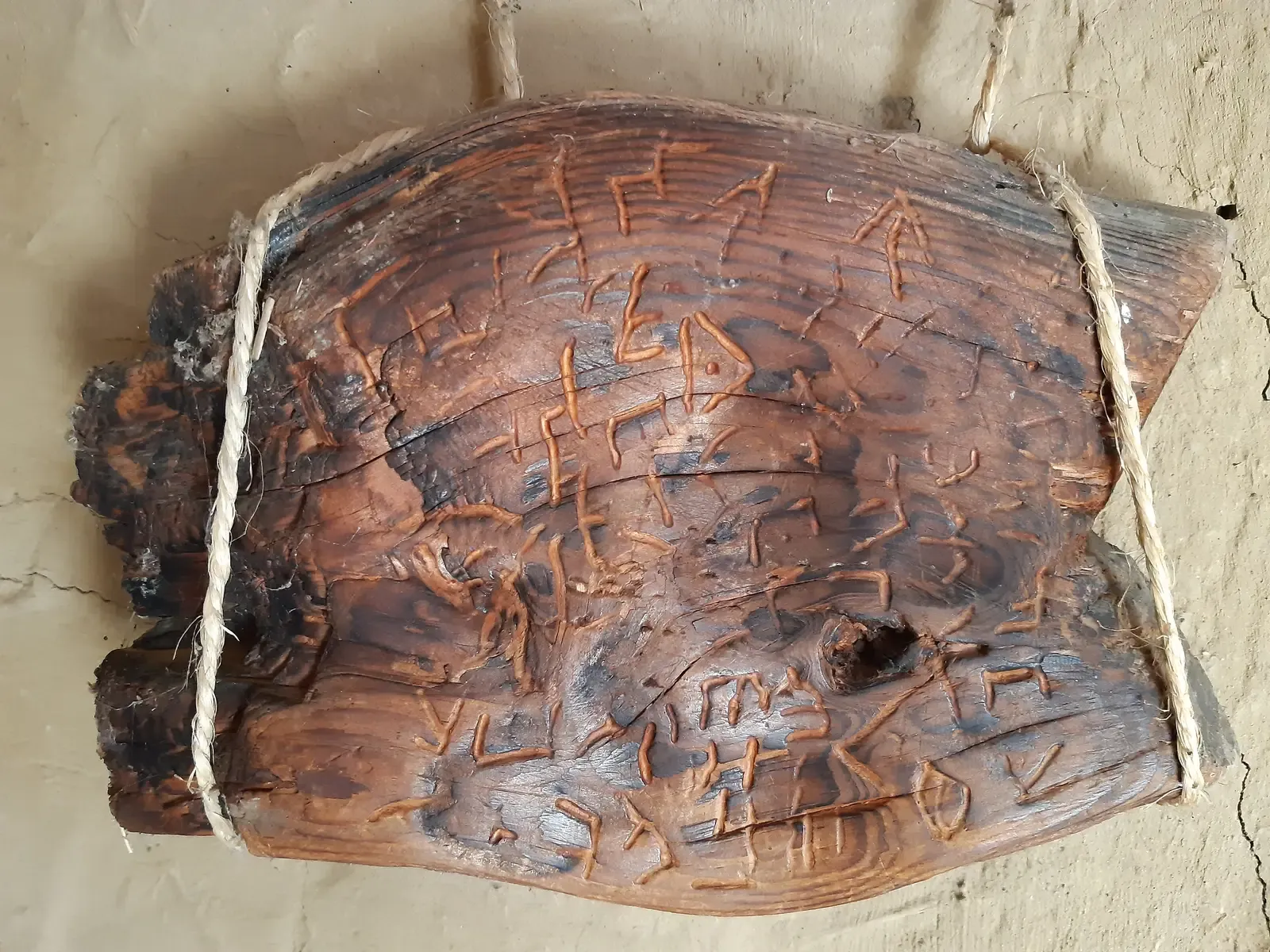
A wooden tablet pulled from a lakebed in northern Greece carries markings that some researchers insist predate every other writing system on this list – by thousands of years.
The Dispilio Tablet was recovered from a submerged Neolithic settlement near Lake Kastoria, in a layer some researchers associate with dates as early as 5200 BCE. If that dating and interpretation hold up, it would make the markings older than Sumerian cuneiform, Egyptian hieroglyphs, and every other candidate on this list combined – an explosive claim for one waterlogged piece of wood.
Mainstream archaeology remains deeply skeptical, and for good reason: preservation conditions for organic material that old are extraordinarily rare, and a single artifact without a broader supporting corpus is nearly impossible to verify independently. Most specialists treat the symbols as proto-writing or decorative marks rather than a functioning script, the same caution applied to other early “writing” candidates around the world.
Until more comparable material surfaces from the same region and period, this one stays firmly in the “unresolved” pile rather than the “solved” one. The next case on this list isn’t ancient at all – it’s a 19th-century farm discovery that still divides believers and skeptics today.
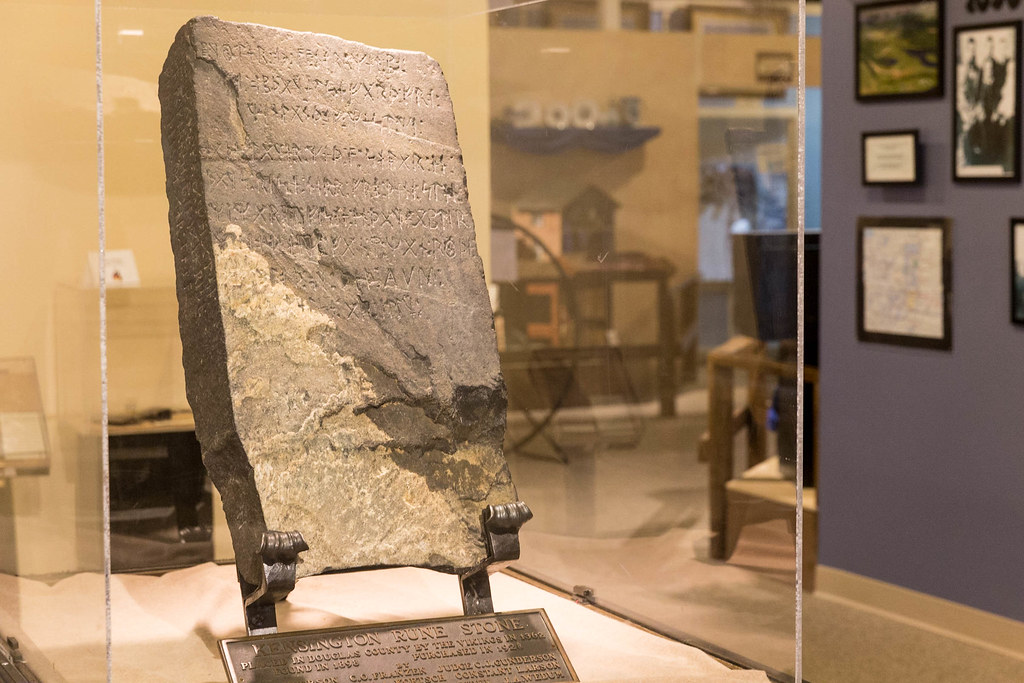
#9 – The Kensington Runestone Turned a Minnesota Farm Into a Battlefield
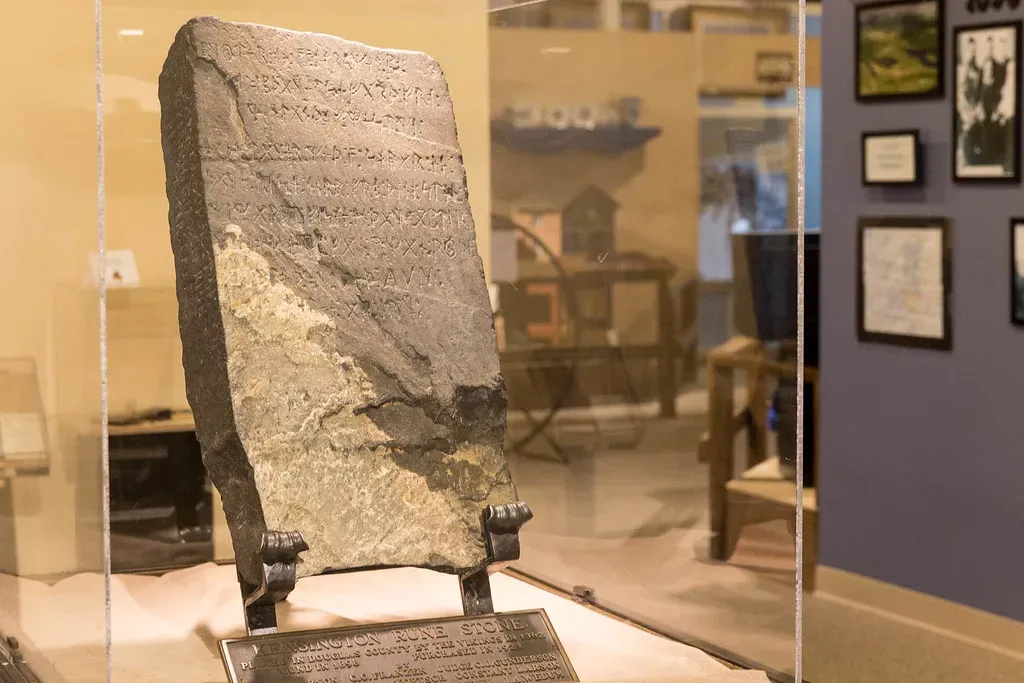
A Swedish immigrant claimed he dug up proof that Vikings reached Minnesota in 1362 – and the argument over his stone hasn’t stopped in over a century.
The inscription is internally dated to 1362 and claims to record Scandinavian explorers, but since the first scientific examination in 1910, scholarly consensus has classified it as a 19th-century hoax. The translated text sounds dramatic enough to fuel the fight regardless: eight Götalanders and 22 Northmen on an exploration journey from Vinland far to the west, who found ten men red from blood and dead, and prayed “Ave Maria” to save them from evil.
Linguists shredded the language almost immediately. One early researcher, Breda, believed it to be a poor attempt at forging an eleventh-century text – an illiterate mixture of Norwegian, Swedish, and English, exactly what you’d expect from a forgery cooked up by a nineteenth-century Scandinavian settler in Minnesota. Geological analysis piled on even more evidence against it, since the weathering and fabrication pattern line up with an 1898 date, not a 1362 one – the letters are virtually unweathered.
Yet despite every red flag, a devoted community – fueled largely by enthusiasts with no background in Scandinavian linguistics – remains convinced the stone is genuine. The next artifact on this list caused a scandal for a very different reason: religion, race, and a discoverer who found “evidence” a little too conveniently.
#10 – Ohio’s Newark Holy Stones Turned Into an Instant Religious Scandal

A set of stones “discovered” in an Ohio burial mound in the 1860s seemed to prove ancient Israelites had walked across America – and the discoverer conveniently found them himself, twice.
The Newark Holy Stones include a small stone bowl and inscribed tablets carrying Hebrew-like text, unearthed by a local surveyor named David Wyrick during excavations of the famous Newark Earthworks. The timing was suspicious from the start: the stones surfaced right as heated 19th-century debates raged over whether Native American mound-building cultures could possibly have built such structures without outside “civilized” help – a deeply racist assumption that shaped a lot of period archaeology.
Most modern archaeologists and epigraphers consider the inscriptions a hoax, pointing to Hebrew lettering styles that look far more consistent with 19th-century religious texts than with any plausible ancient migration. The translation itself was never really the hard part – reading Hebrew-style characters is straightforward for trained linguists.
The dispute is entirely about authenticity and motive, not meaning, which makes this one of the rare cases on this list where translators agree on the words but not on whether the words should exist at all. The next stone on this list got debunked in the most embarrassing way possible – somebody just turned it upside down.
#11 – Tennessee’s Bat Creek Stone Might Just Be Upside-Down Freemasonry

A small inscribed stone pulled from a Tennessee burial mound in 1889 was called proof of ancient Hebrew contact with North America – until someone flipped a reference book upside down.
The Bat Creek Stone carries a short line of characters that early investigators matched to ancient Paleo-Hebrew script, sparking decades of claims about pre-Columbian Old World contact with the southeastern United States. For years, this reading anchored an entire ecosystem of “lost tribes in America” theories, treated as one of the strongest physical artifacts supporting transoceanic contact claims.
Then skeptical researchers noticed something embarrassing: flipped upside down, the inscription closely resembles a 19th-century Masonic reference phrase rather than ancient Hebrew at all, undercutting the entire pre-Columbian contact theory in one move. That single orientation flip turned decades of confident translation into a cautionary tale about seeing what you want to see.
Mainstream archaeology now treats the stone as most likely a 19th-century artifact tied to the same excavation team rather than genuine ancient evidence, though a small number of independent researchers still push back on that conclusion. The final entry on this list is arguably the most important one – because it may have helped invent the alphabet you’re reading right now.
#12 – The Byblos Syllabary Tablets Are the Missing Link Nobody Can Fully Read
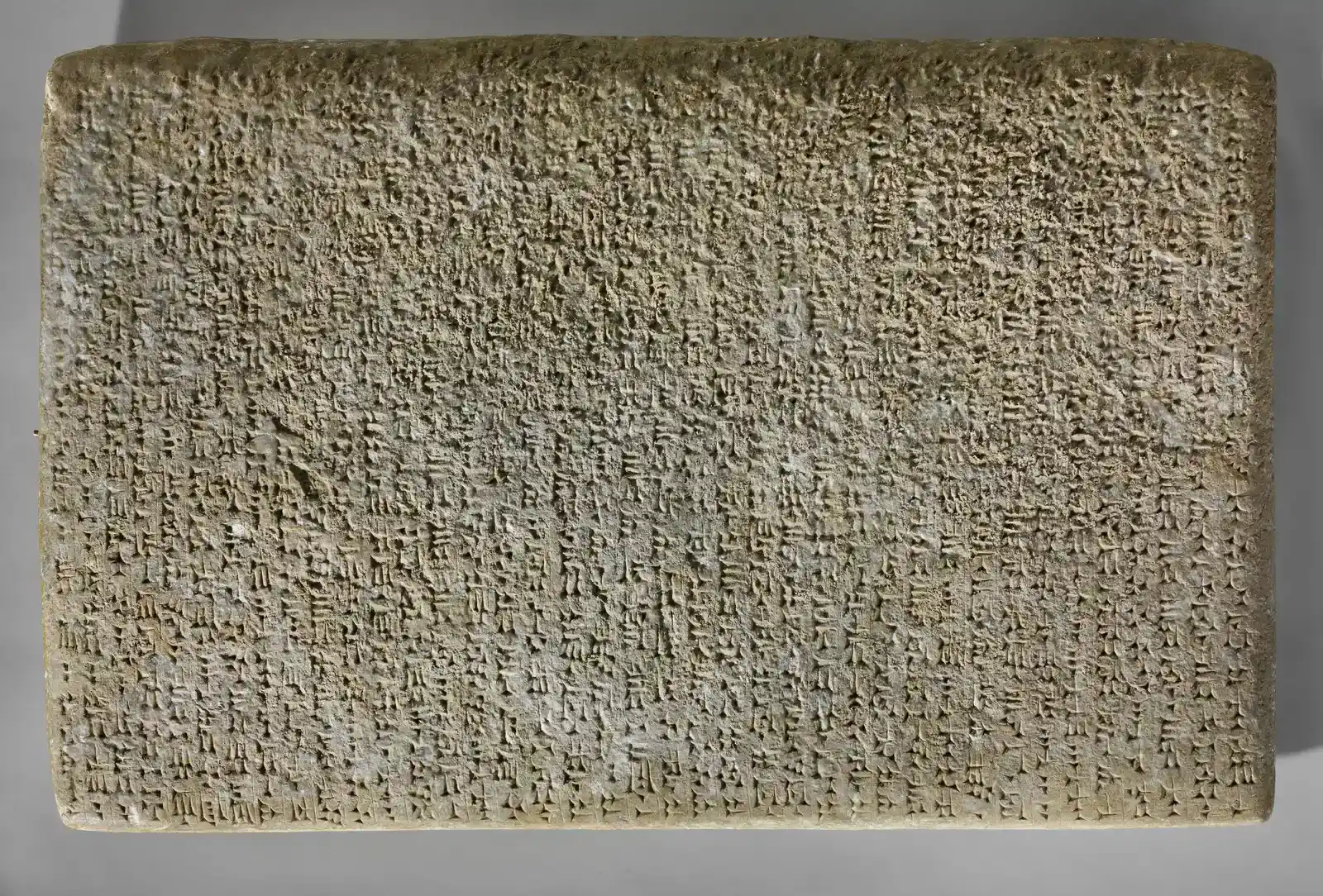
Along the coast of ancient Lebanon sits a writing system that helped invent the alphabet as we know it – and translators still can’t agree on how to sound most of it out.
The Byblos syllabary appears on a handful of bronze and stone tablets from the ancient Phoenician port city, dated to roughly the second millennium BCE, sitting chronologically between Egyptian hieroglyphic influence and the emergence of the Phoenician alphabet that eventually shaped Greek, Latin, and nearly every Western writing system in use today. That position makes it historically enormous despite the tiny number of surviving examples.
At a Glance
- Dated to roughly the second millennium BCE
- Sits between Egyptian hieroglyphic influence and the Phoenician alphabet
- Only a small handful of inscribed tablets survive
- No full tablet has a lasting, peer-reviewed translation
The problem is scarcity, the same enemy that cripples half the scripts on this list. Only a small handful of inscriptions survive – nowhere near enough material to confidently assign sound values to every symbol or confirm sentence structure. Some researchers have proposed partial phonetic readings tying certain signs to early Semitic sounds, but no complete, peer-reviewed translation of any full tablet has achieved lasting consensus.
A writing system that arguably shaped how billions of people write today remains, in its own original form, only partially readable by the very tradition it helped create.
The Bottom Line
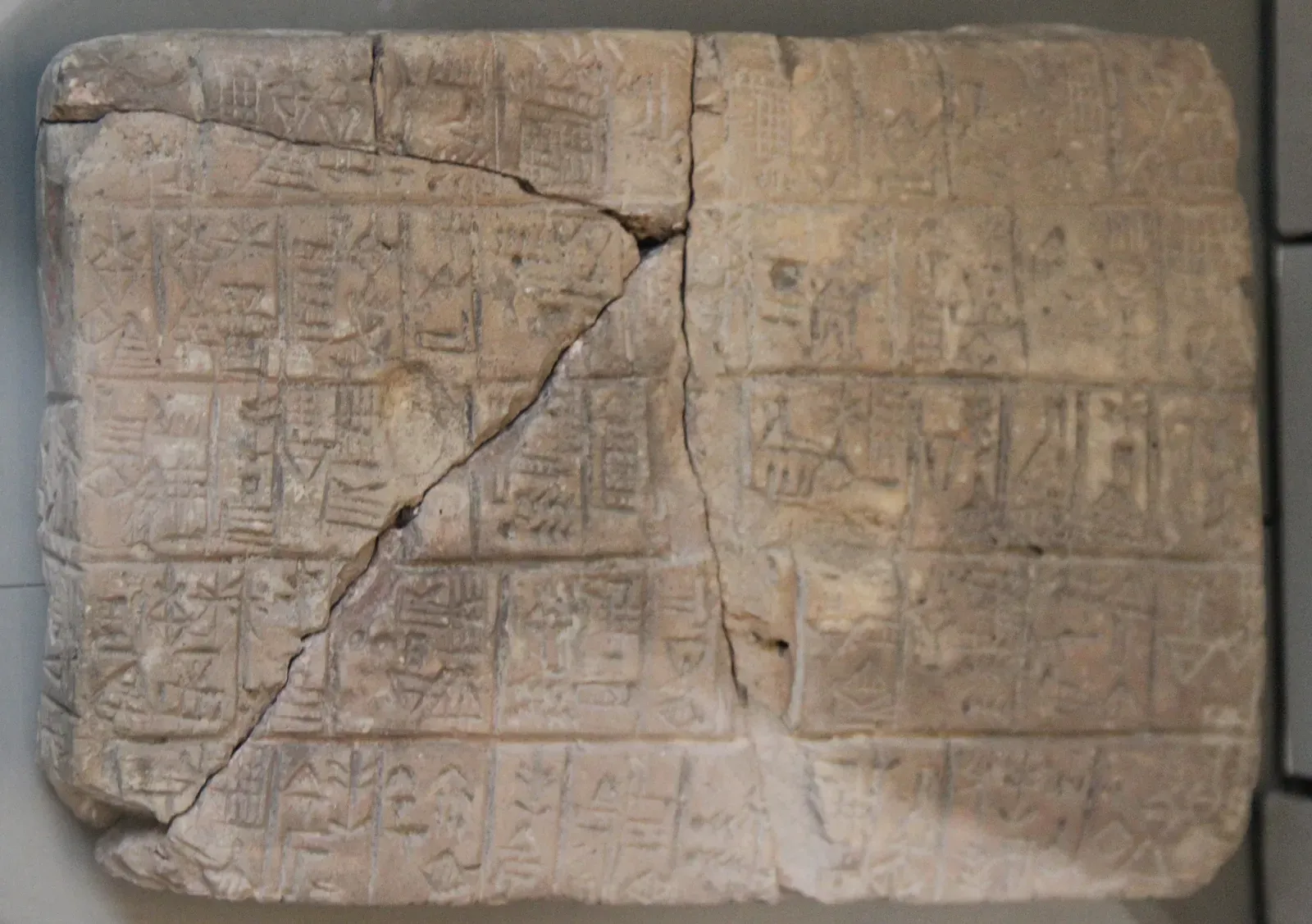
Across every tablet on this list, the same pattern repeats: too little text, no bilingual key, and translators racing to publish “the answer” before anyone can properly check their work. The Phaistos Disc alone has survived over a century of confident, contradictory decipherments, and scripts like Linear A and the Indus Valley signs remain unread simply because nobody has found the ancient equivalent of a dictionary.
Stones like Kensington and Bat Creek prove these fights aren’t always about ancient mystery – sometimes they’re about 19th-century fraud dressed up as history. My honest opinion: the Indus Valley script is the most likely to fall first, not because the puzzle is easier, but because it has the largest, best-funded research community actively chasing it. The Phaistos Disc might never be solved at all, simply because there’s only one of them – and without a second data point, any “answer” is just an educated guess wearing a lab coat. The real lesson buried in all twelve of these tablets isn’t that ancient languages are unbreakable. It’s that we’re usually missing the other half of the conversation.