Most people assume a “landmark discovery” means the science is settled – verified, peer-reviewed, bulletproof. Actually, some of history’s biggest breakthroughs collapsed the moment anyone looked closely. They were announced with fanfare, splashed across front pages, and taught in classrooms – until a skeptic with a microscope, an X-ray machine, or a spreadsheet asked one simple question: does this actually hold up?
Turns out, a shocking number of “revolutionary” findings were too neat, too convenient, and too good to be true. Some fooled entire nations for decades. Others fell apart in under a year. Here’s what the record actually shows.
#1 – The “Missing Link” That Was Just a Filed-Down Jaw
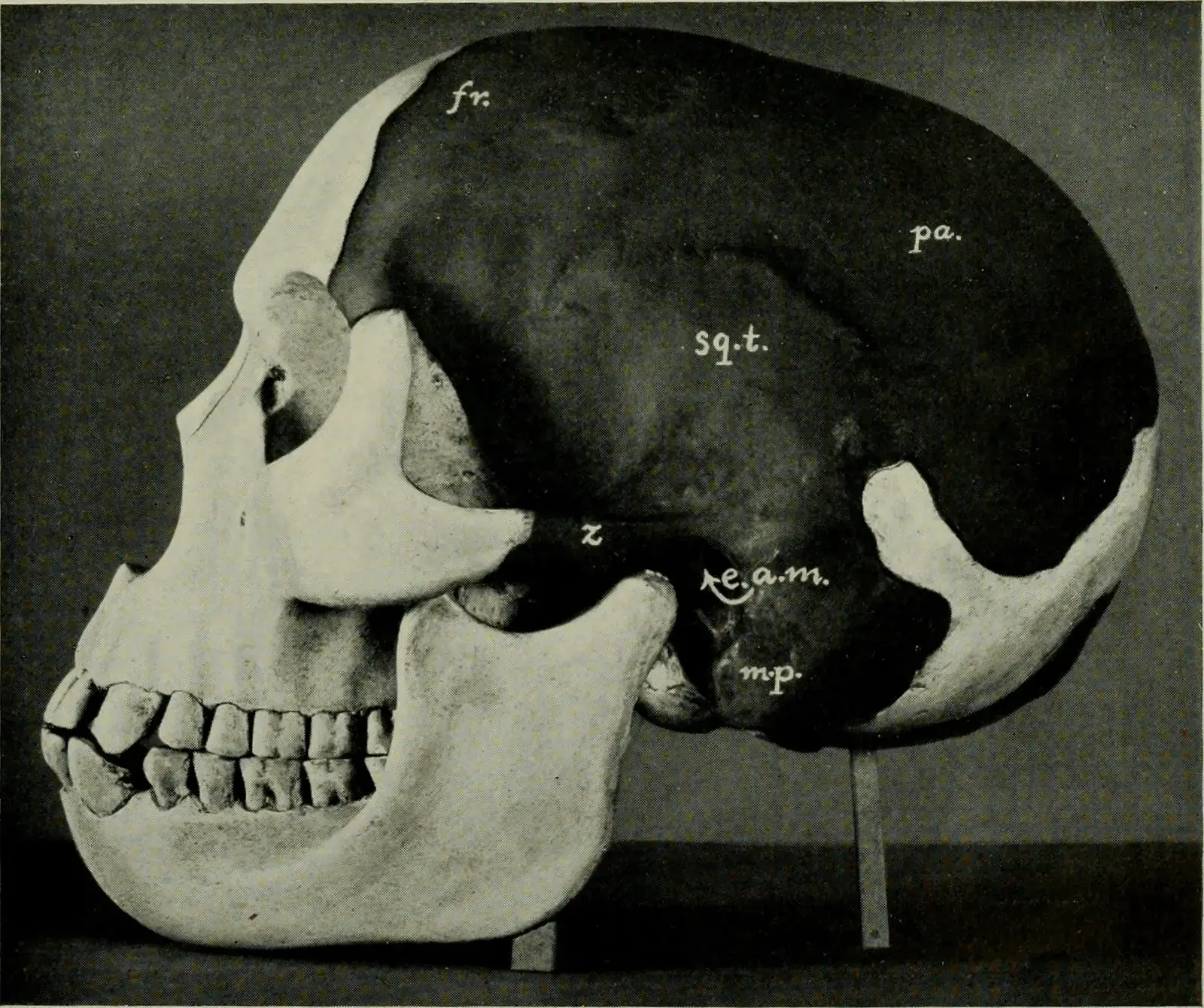
Piltdown Man was supposed to be the fossil that proved England’s place at the center of human evolution – and for 41 years, nobody wanted to admit it was fake.
In 1912, amateur archaeologist Charles Dawson claimed he’d found the skull of the “Earliest Englishman,” a supposed missing link between apes and humans. The scientific establishment was thrilled.
But when researchers finally ran proper tests in 1953, they discovered the skull and jaw fragments actually came from two different species – a human and an ape, probably an orangutan. Scratches visible under a microscope revealed the teeth had been filed down to look human, and most of the finds from the site had been artificially stained to match the local gravels.
The wildest part? The hoax stood unchallenged for four decades while respected scientists built entire theories around it. A 2016 genetic review confirmed the deception had been perpetrated by Dawson himself, apparently in pursuit of recognition from other archaeologists.
Fast Facts
- Discovered in 1912 near Piltdown, England
- Not exposed as a fraud until 1953 – 41 years later
- Culprit finally confirmed by a 2016 genetic review
- Made from a human skull fused with a filed-down orangutan jaw
#2 – The Rays That Existed Only in One Scientist’s Head
In 1903, a respected French physicist announced he’d discovered an entirely new form of radiation. The problem? It only ever showed up when he was the one looking.
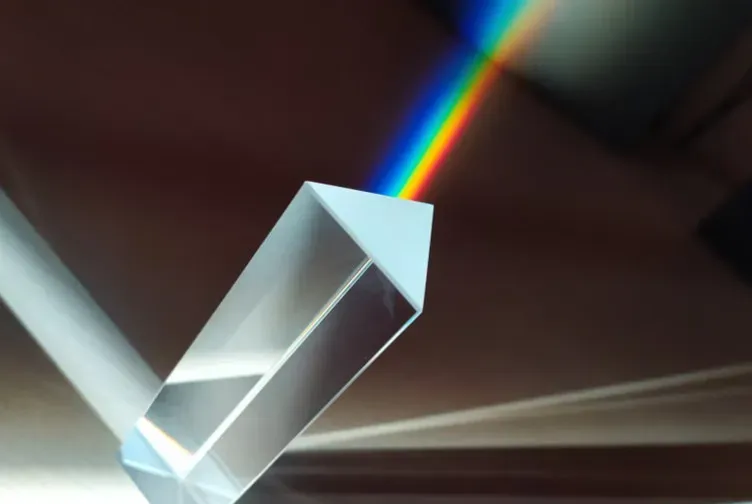
Prosper Blondlot, a well-regarded scientist at the University of Nancy, claimed to have detected “N-rays” – a mysterious radiation that supposedly bent light and could be spotted with nothing but the naked eye watching a faint glow shift on a screen. Dozens of other French scientists rushed to confirm the discovery, publishing over 300 papers on N-rays within a few years.
The catch: no lab outside France could ever reproduce it. When American physicist Robert Wood visited Blondlot’s lab and secretly removed a critical prism from the apparatus mid-experiment, Blondlot kept “detecting” the rays anyway – because there was nothing there to detect in the first place.
The first principle is that you must not fool yourself – and you are the easiest person to fool.
Richard Feynman
The entire field evaporated within a year, becoming one of science’s earliest and most cited examples of pure observer bias. Experts still use N-rays as the textbook case for why “I saw it with my own eyes” isn’t evidence of anything at all.
#3 – The Dino-Bird That National Geographic Bet Its Reputation On
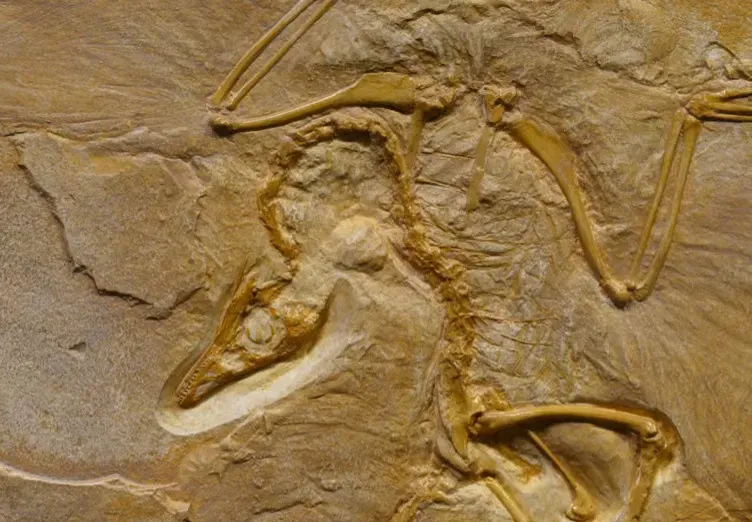
In 1999, the world’s most trusted nature magazine declared it had found solid proof that birds evolved from dinosaurs. It hadn’t.
“Archaeoraptor” was the informal name for a fossil chimera from China, unveiled in National Geographic as a “missing link” between birds and terrestrial dinosaurs. The specimen was smuggled out of China and sold to a private collector before scientists ever got to examine it properly. Two peer-reviewed journals, Nature and Science, had already rejected the accompanying research – but the magazine ran the story anyway.
The fossil turned out to be 88 fragments of rock and bone cemented together by a farmer trying to make his find more valuable. A Chinese paleontologist eventually proved it was fake after finding the counter-slab of the tail attached to the legs of an entirely different, undescribed dinosaur.
National Geographic conducted its own investigation, confirmed the fossil was essentially two separate fossils glued together, and issued one of the most embarrassing retractions in its 125-year history.
#4 – The Water That Wasn’t Actually Water

For nearly a decade, chemists around the world believed they’d discovered a brand-new form of water – one that could reshape industrial chemistry forever.
“Polywater” emerged from Soviet research in the 1960s, when scientists noticed that water condensed inside extremely narrow glass tubes seemed to behave differently – freezing at lower temperatures, boiling at higher ones, and appearing more viscous than normal water. Western labs scrambled to replicate the effect, and by the early 1970s, hundreds of papers had been published on this mysterious “anomalous water.” Cold War anxieties even fueled fears that polywater could escape into the environment and convert Earth’s oceans into a syrupy, uninhabitable sludge.
The embarrassing truth: it was just contaminated tap water. The narrow glass tubes were leaching silica and other impurities into the samples, which explained the strange properties.
Once labs switched to properly cleaned glassware, “polywater” vanished from scientific literature almost overnight. It remains one of chemistry’s most cited lessons in why extraordinary claims demand extraordinarily clean lab equipment.
#5 – The Energy Breakthrough That Died in Under a Year
In March 1989, two chemists claimed they’d solved the biggest energy problem in human history – using little more than a jar, some electrodes, and heavy water.
Martin Fleischmann and Stanley Pons, two respected chemists from the University of Utah, told a receptive media they had achieved nuclear fusion at room temperature – a discovery that could have made unlimited clean energy a reality. Governments took notice. Universities scrambled to replicate it. The press called it the discovery of the century.
Then the wheels came off almost immediately. Labs across the world reported a failure to replicate the results, and critics raised questions about the duo’s methodology, pointing to a suspicious lack of neutrons that should have been produced in genuine fusion reactions.
By October 1989, a US Department of Energy panel concluded there was nothing to cold fusion, delivering the final blow to what had briefly been hailed as humanity’s energy salvation.
#6 – The Cancer Cure That Was Just a Sharpie
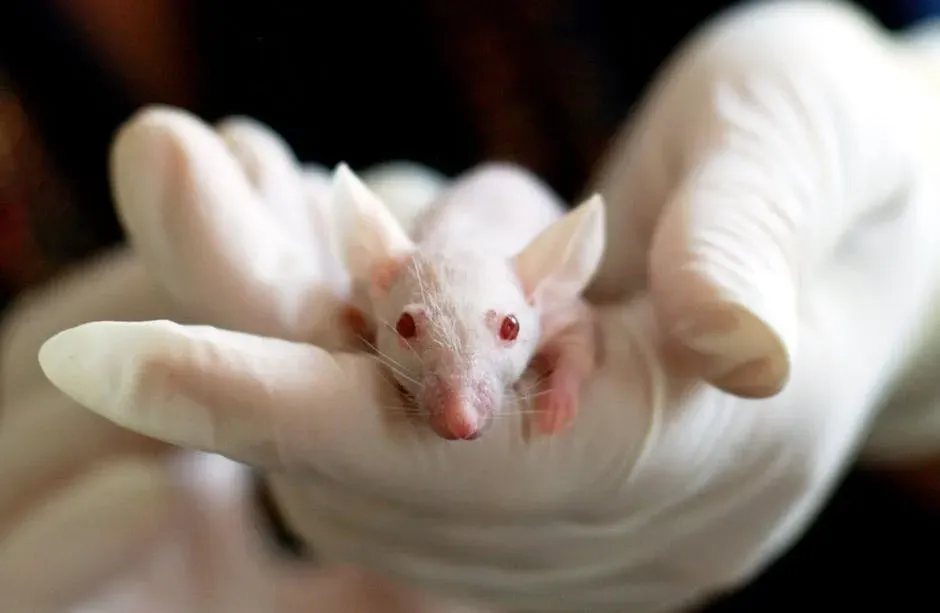
In 1974, a promising young immunologist at a top New York cancer center claimed he’d successfully transplanted skin between genetically unrelated mice – a result that would have upended everything scientists understood about immune rejection.
William Summerlin told colleagues at Memorial Sloan-Kettering Cancer Center that his tissue-culturing technique let skin grafts bypass the immune system entirely, evidenced by black patches of “successfully transplanted” skin on white lab mice. It was hailed as a potential breakthrough for organ transplant patients everywhere.
The dark patches, however, weren’t grafted tissue at all – they were drawn on with a felt-tip marker. A lab assistant caught Summerlin coloring in the mice just before a scheduled inspection, and the deception unraveled within days.
An internal investigation found no evidence the underlying technique worked at all. The scandal is still taught in research ethics courses today, as a case study in how career pressure can push even trained scientists toward outright fabrication rather than admitting failure.
#7 – The Twin Studies That Never Existed
For decades, one British psychologist’s research on separated identical twins was the gold-standard evidence that intelligence was almost entirely inherited. Then people started checking his numbers.
Sir Cyril Burt was one of the most influential educational psychologists of the 20th century, and his studies comparing IQ scores of identical twins raised apart were cited to justify sweeping education policy, including the UK’s tracked school system. His data appeared remarkably clean and consistent across decades of publication.
That consistency turned out to be the problem. Statisticians later noticed his correlation coefficients stayed suspiciously identical even as his supposed sample sizes grew – a near-impossible outcome in real data.
After his death, investigators could find no trace of two named research assistants credited on his papers, raising serious doubts they ever existed at all. Burt’s reputation never recovered, and his twin data was quietly dropped from serious heritability research.
Quick Compare
- Burt’s claim: near-identical correlation coefficients even as his sample sizes supposedly grew over decades
- Statistical reality: that kind of consistency almost never happens in genuine data
- Missing pieces: two named research assistants no investigator could ever trace
- End result: heritability estimates once used to justify UK school tracking, quietly abandoned
#8 – The Vaccine Study That Sparked a Global Health Panic

In 1998, a single study published in one of medicine’s most respected journals claimed to find a link between a childhood vaccine and autism. It ignited a fear that still hasn’t fully died down.
Andrew Wakefield’s paper, based on just twelve children, suggested the combined measles-mumps-rubella (MMR) vaccine could trigger autism. The claim spread instantly through media coverage, and vaccination rates in parts of the UK and beyond dropped sharply within a few years.
What Wakefield didn’t disclose: he’d been paid by lawyers building a case against vaccine manufacturers, and investigators later found he’d manipulated patient data to fit his conclusion.
The Lancet fully retracted the paper in 2010, and Wakefield was stripped of his medical license in the UK. Multiple large-scale studies involving millions of children since have found no link whatsoever between MMR and autism – yet the damage was already done.
#9 – The Cloning Breakthrough That Turned Out to Be Photoshop
In 2004 and 2005, a South Korean scientist was celebrated as a national hero for supposedly cloning human embryos and extracting patient-matched stem cells – a discovery that could have revolutionized regenerative medicine.
Woo-Suk Hwang, a highly regarded, highly funded researcher at Seoul National University, achieved international fame for his work on embryonic stem cells. His papers, published in the journal Science, claimed to have created eleven patient-specific stem cell lines through cloning – a feat researchers worldwide had been chasing for years.
The truth was almost the exact opposite of what he claimed. An investigation revealed at least nine of the eleven stem-cell lines were not what the paper claimed them to be, and the remaining two didn’t even match the DNA of the patients they were supposed to come from.
Investigators eventually determined Hwang had falsified all the data in his paper – not a single human embryonic stem cell existed. Both papers were retracted, and Seoul National University fired him.
#10 – The Physicist Whose Data Was Too Perfect to Be Real

Between 1998 and 2001, a young physicist at Bell Labs published a jaw-dropping string of breakthroughs – nearly one every eight days – claiming to have created molecular-scale transistors that could reshape electronics.
Jan Hendrik Schön was hailed as a rising star, racking up papers in Nature and Science at a pace that made colleagues both awed and suspicious. His work on organic semiconductors suggested a future of ultra-small, ultra-efficient computer chips built from simple molecules instead of silicon.
The problem: other labs could never replicate a single one of his headline results. When a physicist at Lucent Technologies noticed identical noise patterns in graphs from two supposedly different experiments, an investigation was launched.
Bell Labs ultimately found Schön guilty of scientific misconduct in at least 16 papers, concluding he had fabricated or falsified data outright. He was fired in 2002, and journals retracted his papers en masse – one of the largest coordinated retractions in physics history.
#11 – The “Alien-Like” Life Form That Broke the Rules of Biology

In 2010, NASA called a press conference so dramatic that people speculated it might be an announcement of extraterrestrial life. What they actually revealed was almost as shocking to biologists.
Researchers claimed to have found a bacterium, dubbed GFAJ-1, living in California’s toxic Mono Lake that could substitute arsenic for phosphorus in its DNA – something long considered biochemically impossible, since phosphorus was thought to be one of six non-negotiable elements for life as we know it. The paper was published in Science and framed as a potential redefinition of biology itself.
Independent labs, however, couldn’t confirm the core claim. Within a year, multiple research teams published rebuttals showing the bacterium’s DNA still relied on phosphorus, and the “arsenic-based life” was more likely just an unusually arsenic-tolerant organism rather than a biochemical revolution.
NASA never formally retracted the paper, but the scientific consensus shifted hard against it, and the case became a widely cited example of a space agency overselling a finding before it survived peer scrutiny.
Worth Knowing
- Found in Mono Lake, California – one of Earth’s most toxic environments
- Claimed to swap phosphorus for arsenic in its own DNA, once thought impossible
- Multiple independent labs published rebuttals within a year
- NASA never formally retracted the paper despite the shifted consensus
#12 – The Psychologist Who Invented His Own Data From Scratch

For years, a Dutch social psychologist was one of the most prolific and widely quoted researchers in his field, publishing dozens of studies on everything from meat consumption to how mess affects discrimination. None of it was real.
Diederik Stapel’s papers appeared in top journals and were regularly covered by major news outlets because his findings were so clean, so intuitive, and so quotable. The truth came out when his own graduate students noticed his datasets were suspiciously perfect – no missing values, no outliers, results that matched hypotheses almost too neatly.
An investigation by Tilburg University found Stapel had fabricated data in at least 30 published papers, sometimes never running the experiments at all and simply inventing results that confirmed his hypotheses. He resigned in disgrace, and the scandal triggered a broader reckoning across psychology about how easily fabricated results could sail through peer review simply because they told a compelling, publishable story.
#13 – The Study That Convinced Political Science It Had Found a Miracle Fix

In 2014, a graduate student published a study claiming a single 20-minute conversation with a gay canvasser could permanently shift someone’s views on same-sex marriage. It was hailed as one of the most important findings in modern political science – until other researchers tried to check the data.
Michael LaCour’s study, co-authored with a respected UCLA professor and published in the prestigious journal Science, claimed to show a persuasion effect so powerful and so durable that it reshaped how campaigns and nonprofits thought about changing minds on divisive issues. The study looked almost too good – because it was. When two graduate students tried to replicate the findings using the same survey vendor LaCour claimed to have used, the vendor said it had never run the survey at all.
LaCour had fabricated the entire dataset, including thousands of supposedly real survey responses. Science formally retracted the paper within months, and LaCour’s academic career collapsed overnight. The case remains one of the most-cited modern examples of how a compelling, socially appealing result can bypass scrutiny simply because everyone wants it to be true.
Why It Stands Out
- Published in Science, co-authored with a respected UCLA professor
- Claimed one 20-minute chat could permanently shift views on same-sex marriage
- The survey vendor said it had never even run the study
- Retracted within months; LaCour’s academic career ended overnight
The Pattern Nobody Wants to Admit
Here’s the uncomfortable truth: peer review and prestigious journals didn’t catch a single one of these cases before publication. Outsiders, skeptics, and sometimes pure luck did – a lab assistant with a memo, a grad student trying to book a survey vendor, a physicist who noticed the same noise pattern twice.
From filed-down ape teeth to Photoshopped stem cells to a graduate student’s fabricated survey data, the pattern never changes: a result feels too clean, too convenient, too perfectly aligned with what everyone already wanted to believe. That’s usually the tell, not the triumph.
Science eventually corrected itself in every one of these stories, but only after real damage – to public trust, to careers, to entire fields of research – was already done. If there’s one lesson worth taking from all thirteen, it’s this: the more a discovery seems built to make headlines, the harder it deserves to be questioned. Which of these surprised you the most? Did we miss a scientific “discovery” that deserved a spot on this list? Drop it in the comments.