
Most of us like to think our brain is a camera: you open your eyes, hit record, and reality streams in, crisp and faithful. But that comforting idea is wrong in quiet, astonishing ways. Your brain is less a recorder and more a movie director, constantly editing, cutting, and even inventing scenes so the story of your life feels smooth and believable.
What makes this both unsettling and exciting is that it all happens behind the scenes. You do not feel the edits; you only experience the final cut. Once I realised this, I started double‑checking not just my memories, but even my moment‑to‑moment reactions. The better you understand these strange tricks, the less you’re fooled by them – and the more compassion you can have for how messy human perception really is.
Your Brain Sees the Future Before It Sees the Present
Here is a wild thought: part of what you experience as “now” is your brain’s best guess about what will happen a tiny moment in the future. Incoming signals from your eyes, ears, and skin take time to travel, but your brain does not want you living permanently a fraction of a second behind. So it quietly predicts what will be true when the information fully arrives, then serves that up as your reality.
This predictive trick is why you can catch a ball or follow a fast‑moving object without feeling a delay, even though your nervous system absolutely has one. It is also why illusions that play with timing can feel so bizarre; your brain has already placed events on a mental timeline that is slightly different from the physical one. You are not just sensing; you are constantly forecasting, like a weather app for reality that quietly updates every split second.
Color Is a Story Your Brain Tells, Not a Property You See
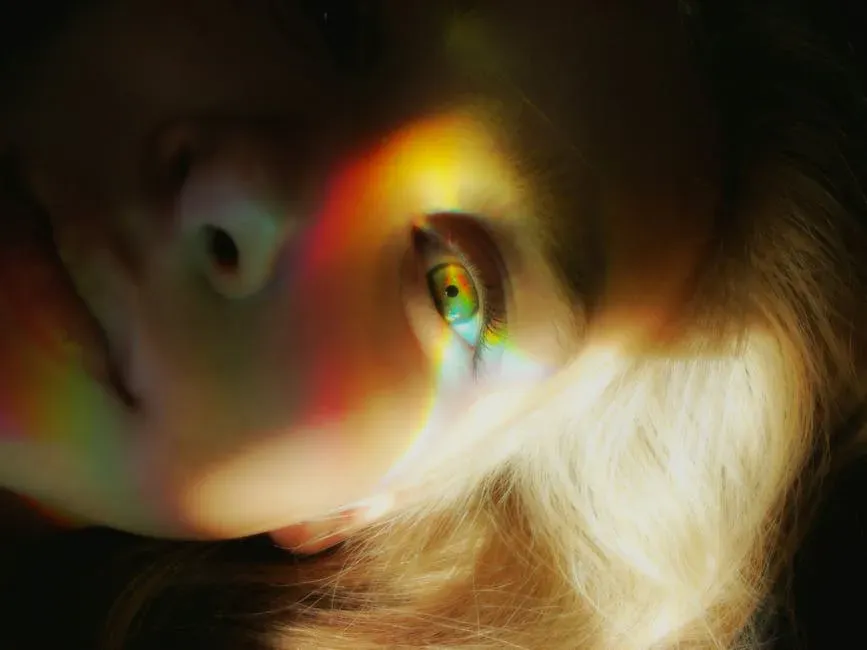
We talk about colors as if they live out there in the world, ready to be plucked by our eyes. In truth, color is something your brain invents to interpret different wavelengths of light. Your eyes send raw data about how much various light‑sensitive cells are being stimulated, and your brain turns that into “red,” “blue,” “golden hour,” or “that weird greenish office light” so it can make fast, useful judgments.
Because the brain is doing this work, it also cheats to keep colors stable when lighting changes. A banana looks “banana yellow” in bright sun, dim kitchen light, or under a cloudy sky, even though the actual light bouncing off it is very different. That viral dress that some people saw as white and gold and others as blue and black was a perfect example: different brains made different assumptions about the lighting, and simply invented different colors as a result.
Your Eyes Jump, but Your Mind Glues the World Together

When you look around a room, it feels like a smooth, continuous view, like a wide‑angle image you could screenshot. In reality, your eyes are constantly jerking from point to point in rapid movements called saccades. During those jumps, your visual system partly shuts down, and your brain fills in the gaps so you perceive an unbroken scene instead of a chaotic stutter.
That mental glue is so strong you usually cannot see your own eyes move in a mirror; the brain simply edits those unstable frames out. You remember a world that looks still and clear, but much of that “clarity” is reconstruction, stitched from a handful of detailed snapshots plus a lot of smooth guessing. It is like watching a perfectly edited vlog and forgetting how many shaky, messy clips were cut from the final upload.
You Remember the Gist, Then Rebuild the Details on Demand
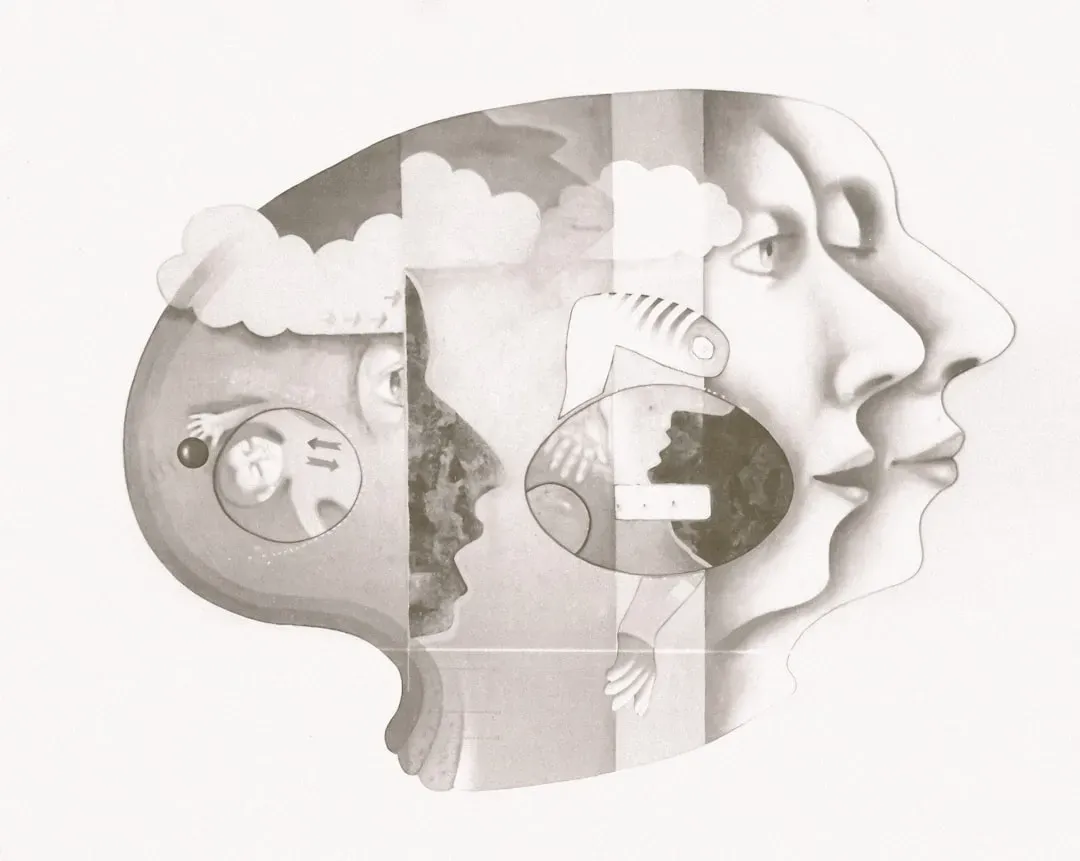
Memory feels like a mental hard drive where experiences get stored, waiting to be replayed. A more accurate picture is a set of notes and fragments that your brain uses to reconstruct an event each time you recall it. You usually keep the overall meaning or emotional tone, then fill in visual details, dialogue, and timing as needed, blending real bits with plausible fillers.
That is why two people can “swear” they remember the same event differently and both feel completely honest. Each brain saved a slightly different gist, and each is now rebuilding the moment with those pieces plus fresh assumptions. In a way, your memories are like a recipe you cook from scratch every time; over the years, the dish can drift from the original, even if you are convinced you have never changed it.
Your Brain Smooths Over Time Gaps You Never Notice
Life can involve surprisingly many tiny pauses: blinking, shifting attention, momentary distractions, or even brief lapses when you are tired. Yet you do not experience your day as a broken series of frames with black screens in between. Your brain quietly edits time, blending moments into a continuous film and often back‑filling what must have happened in the gaps.
This time‑smoothing shows up in experiments where events are shuffled or delayed by fractions of a second; people often report a coherent story that never physically happened in that order. On a smaller scale, think about driving on “autopilot” and suddenly realising you passed your exit; your brain seamlessly filled in the missing stretch of road with a sense of having been aware, even though your detailed attention checked out for a while. The story stays smooth, even when reality was a bit jumpy.
Expectation Can Overpower What Your Senses Actually Receive

What you believe you are about to see or hear quietly shapes what you think you did see or hear. If someone tells you a sound clip is saying one phrase, you will often “hear” that phrase, even when the ambiguous audio could fit several options. Your brain uses expectations as shortcuts, because guessing successfully most of the time is faster and cheaper than checking every detail from scratch.
This can be helpful, like when you can understand a friend in a noisy bar because your brain predicts missing words from context. It can also mislead you, especially around people and social situations. If you expect someone to be rude, your brain will notice and amplify anything that fits that story and quietly downplay the opposite. It is not just perception; confirmation bias is your brain’s editorial policy applied to reality itself.
Your Brain Auto‑Corrects Language Like a Hyperactive Spellchecker
When you read a sentence with a missing word or a small typo, your brain often fixes it so quickly you do not consciously register the error. The same thing happens when you listen to muffled speech: your language system uses context, grammar rules, and prior knowledge to patch over gaps. You are not passively receiving language; you are actively predicting the next word and adjusting your understanding in real time.
This predictive repair explains how you can read jumbled text where letters are slightly scrambled yet still “see” the intended message. It also explains amusing mishearings of song lyrics and embarrassing misunderstandings in conversation. Your brain is running its own aggressive autocorrect, and just like your phone, it is brilliant most of the time and hilariously wrong on occasion, all while insisting it understood correctly the whole time.
Your Body Sensations Are a Best‑Guess Composite, Not Raw Feeds

Even sensations that feel unmistakably physical – pain, hunger, heartbeat – are interpreted and partly constructed by your brain. It takes signals from nerves, hormones, and internal organs, then combines them with expectations, emotions, and past experiences to decide what you are “feeling.” That is why anxiety can show up as a tight chest, a churning stomach, or buzzing limbs, even when nothing has changed in the outside world.
This best‑guess process helps explain why people can feel phantom limb pain after an amputation, or why you might suddenly notice your heartbeat pounding only after someone mentions it. Your brain is constantly writing the story of “how my body feels right now,” and it can update that story based on new information, attention, or context. The raw signals matter, but they do not get to define your reality alone; the brain is always editing the script.
Your Brain Quietly Fills Blind Spots – Literally and Figuratively
Each of your eyes has a literal blind spot where the optic nerve exits the retina, and there are no light‑sensing cells. You do not see a black hole floating in your vision, though. Instead, your brain patches that hole by borrowing information from the surrounding area and your other eye, delivering a continuous view that hides the missing data completely from your awareness.
That same fill‑in habit shows up in more abstract ways. When information is missing in a story, a news snippet, or a friend’s vague explanation, your mind often fills the gap with assumptions that feel like facts. You rarely label these as guesses; they just slide into your internal picture of what happened. Blind spots are not just in your eyes; they are in your beliefs, and your brain is very good at painting over them so you will not notice the empty space.
Emotions Color Reality Like Filters on a Camera Lens

We like to think we first see the world and then have feelings about it, but it often runs the other way. Your current emotional state quietly colors what you notice, what you ignore, and even how you interpret neutral events. On a stressed day, a delayed text can feel like rejection; on a relaxed day, the exact same delay barely registers.
In brain terms, emotional circuits are tightly wired into perception and attention, so the lens is never completely clear. This is why the same room, job, or relationship can feel utterly different when you are hopeful versus when you are burned out. You are not just seeing what is there; you are seeing what is there plus a heavy overlay of your inner weather, a bit like putting the same photo through different filters and insisting each one is the original.
Conclusion: Reality Is Negotiated, Not Given

When you put all of this together, the comforting idea of a neutral, camera‑like mind falls apart. Your brain predicts the future, smooths time, fills gaps, colors the world with emotion, and rewrites memories on the fly, all while swearing it is simply reporting what happened. I think it is a mistake to treat perception as a pure truth detector; it is more like an improvising storyteller trying to keep things coherent enough that you can function.
That does not mean nothing is real or that all viewpoints are equally valid; it means we should hold our own experience with a bit more humility and curiosity. The way your brain reconstructs reality is an incredible survival feature, but it also means you will sometimes be confidently wrong, especially about other people’s motives and your own memories. If anything, the strangest and most hopeful takeaway is this: the story in your head is flexible, and with awareness and practice, you can nudge your brain toward kinder, more accurate edits. Knowing that, what part of your “reality” are you suddenly a little more willing to question?